
Enhancing critical thinking Normal Numbers Worksheets for 8-Year-Olds
3 filtered results
Difficulty Level
Grade
Age
-
From - To
Subject
Activity
Standards
Explore our Enhancing Critical Thinking Normal Numbers Worksheets designed for 8-year-olds. At Kid’s Academy, we provide engaging and educational printable worksheets that promote critical thinking and problem-solving skills. Our expertly crafted activities make learning numbers fun and interactive, helping students grasp fundamental mathematical concepts. These worksheets challenge young minds with carefully structured tasks, assisting in cognitive development and logical reasoning. Perfect for both classroom and at-home practice, our resources cater to various learning styles, ensuring every child can thrive. Empower your 8-year-old with the essential tools for academic success and a love for math.
Favorites
With answer key
Interactive
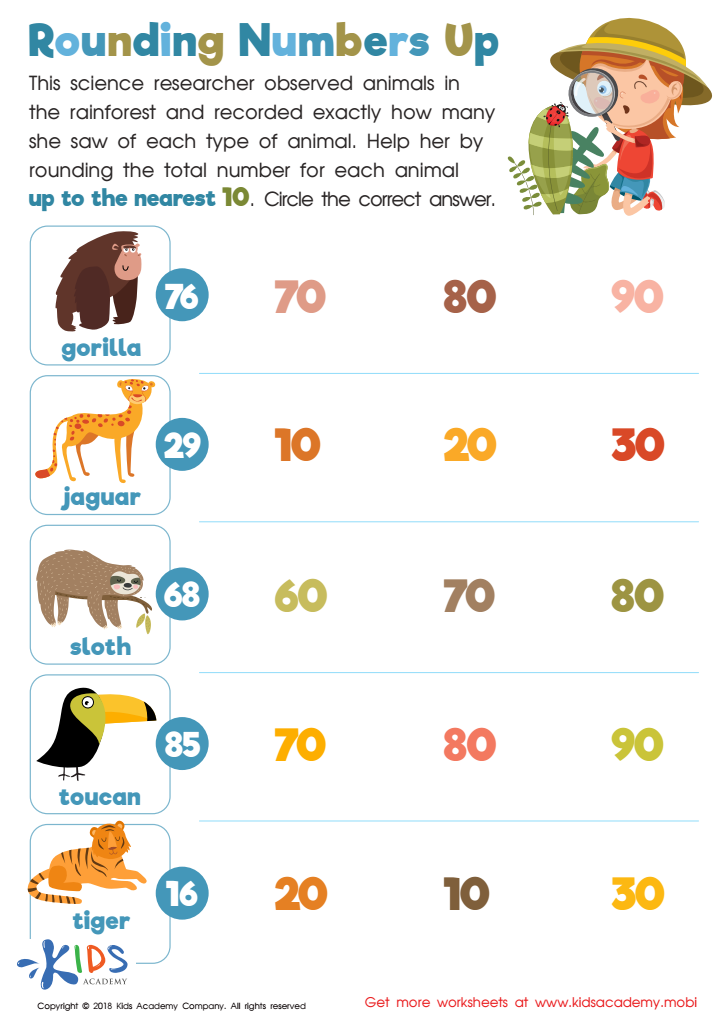
Rounding Numbers Up Worksheet
Does your child want to be a science researcher? If so, they share something in common with the person in this worksheet. She observed rainforest animals and counted them. Your child can help by rounding the totals to the nearest 10 and circling the correct answer for each type.
 Assign to My Students
Rounding Numbers Up Worksheet
Worksheet
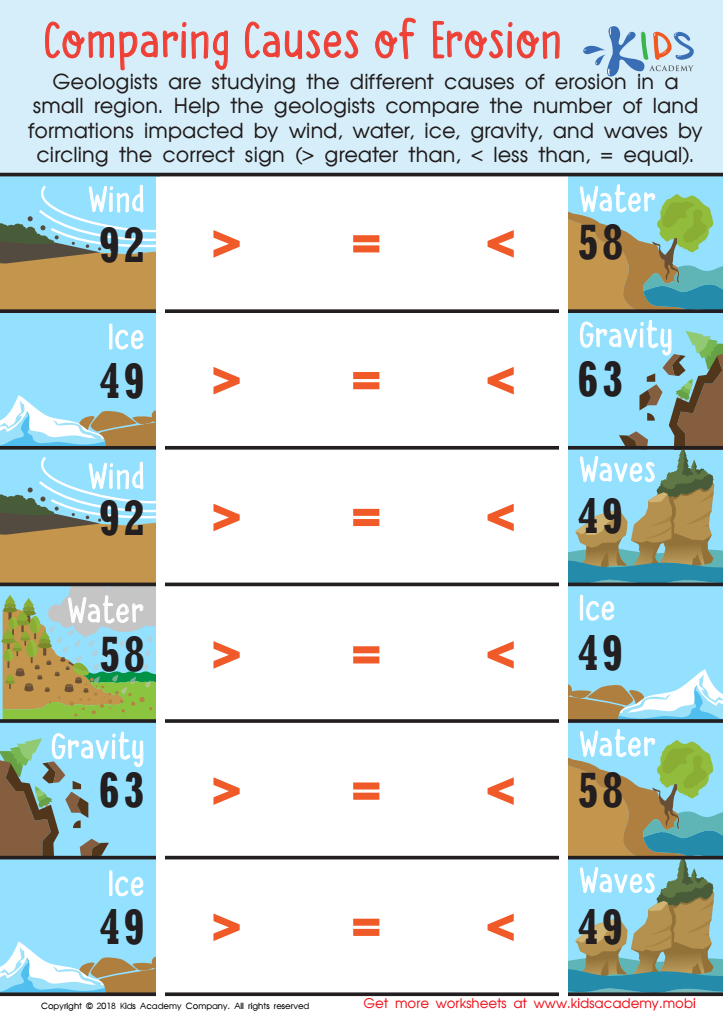
Comparing Causes of Erosion Worksheet
This free PDF worksheet combines science, number sense and comparing numbers to teach kids about the causes of erosion. They'll compare numbers related to ice, wind, water, gravity and waves and decide if each cause is greater, less than or equal to another. It's an interdisciplinary and meaningful way to learn that kids will enjoy.
Comparing Causes of Erosion Worksheet
Worksheet
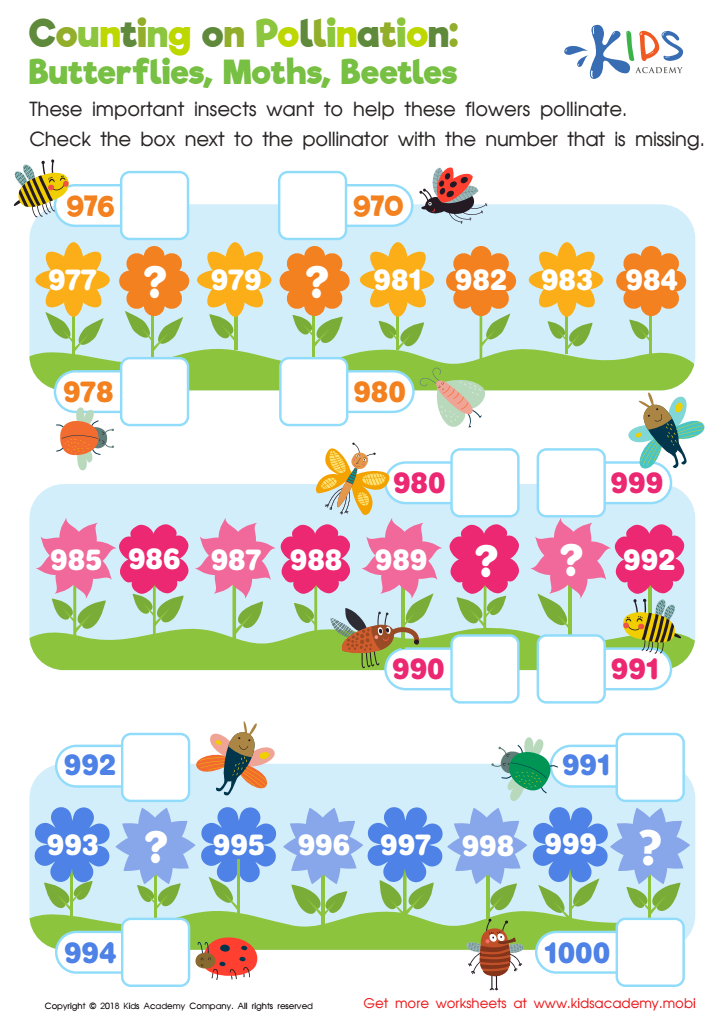
Counting on Pollination: Butterflies, Moths, Beetles Worksheet
A number line can help boost computation accuracy and efficiency. It can also be used with more advanced numbers. Help your child practice by having them identify missing numbers in sequences. This fun worksheet lets them help the pollinators in the process, as they strengthen their number sense.
Counting on Pollination: Butterflies, Moths, Beetles Worksheet
Worksheet
Join Kids Academy for Free
Who is primarily going to use this learning content?




%20(1).jpg)



Parents and teachers play a crucial role in enhancing critical thinking skills for 8-year-olds because it lays the foundation for effective problem-solving and decision-making in their later lives. At this formative age, children's brains are highly adaptable and can benefit substantially from activities that promote analytical thinking.
First and foremost, critical thinking allows children to evaluate information and situations logically and from different perspectives. This skill is essential not only academically, preparing them for more complex subjects such as math, science, and reading comprehension, but also in daily life for making informed decisions.
Parents and teachers who cultivate an environment where questioning and curiosity are encouraged set the stage for lifelong learning. Critical thinkers are better equipped to face challenges with confidence. Furthermore, these skills foster independence and resilience because children become more adept at working through problems on their own.
Normal numbers (concepts like averages, modes, medians, ranges) are a significant part of early math education tied to critical thinking. Understanding these concepts helps children interpret data and real-world scenarios, such as comparing test scores or understanding weather patterns.
Investing time and resources into developing these skills in young children yields dividends as they grow, making them capable, thoughtful, and resourceful members of society.








