
Basic Addition Normal Math Worksheets for 8-Year-Olds
5 filtered results
Difficulty Level
Grade
Age
-
From - To
Subject
Activity
Standards
Discover a collection of Basic Addition Normal Math Worksheets tailored for 8-year-olds at Kids Academy. These engaging worksheets help young learners master foundational math skills while having fun. Each activity is designed to enhance numeric fluency and boost confidence in basic addition. With colorful illustrations and varying difficulty levels, these worksheets make learning addition both enjoyable and educational. Perfect for at-home practice or classroom use, our resources ensure students build a strong math foundation. Boost your child's math skills today with our expertly crafted worksheets and watch them succeed in math and beyond! Visit Kids Academy now.
Favorites
With answer key
Interactive
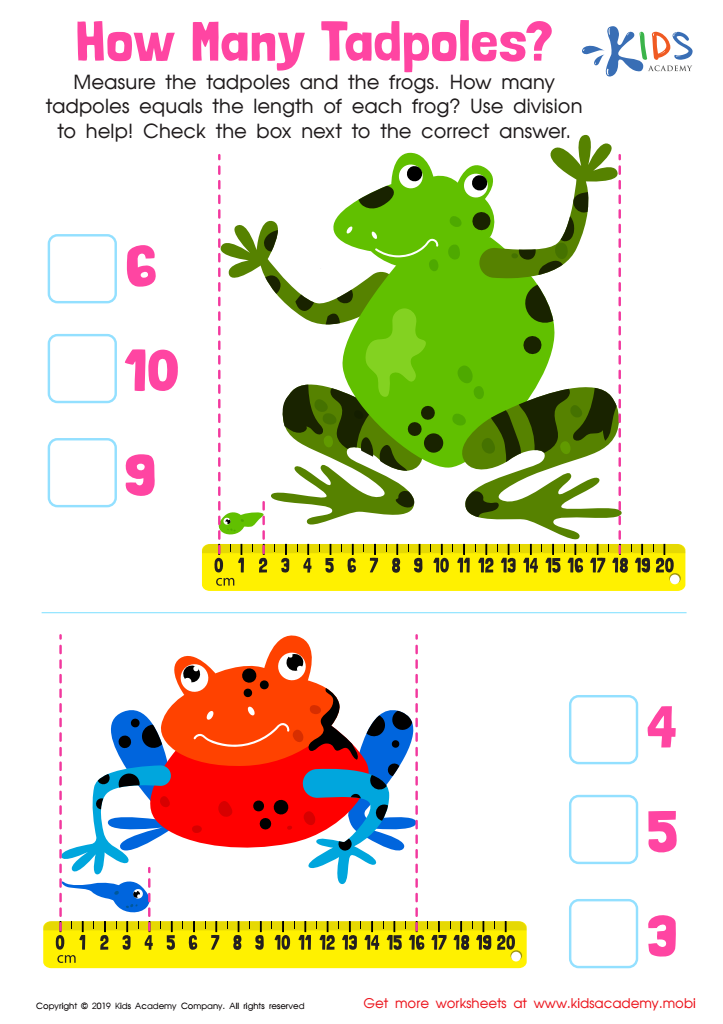
How Many Tadpoles Worksheet
Kids love tadpoles! They'll have fun using them to work out the measurements of their frog friends. By dividing the length of the frogs by the length of the tadpoles, children can deduce how many tadpoles it takes to equal a frog. With the use of 'how many' and 'each' they'll solve math problems without realizing it!
 Assign to My Students
How Many Tadpoles Worksheet
Worksheet
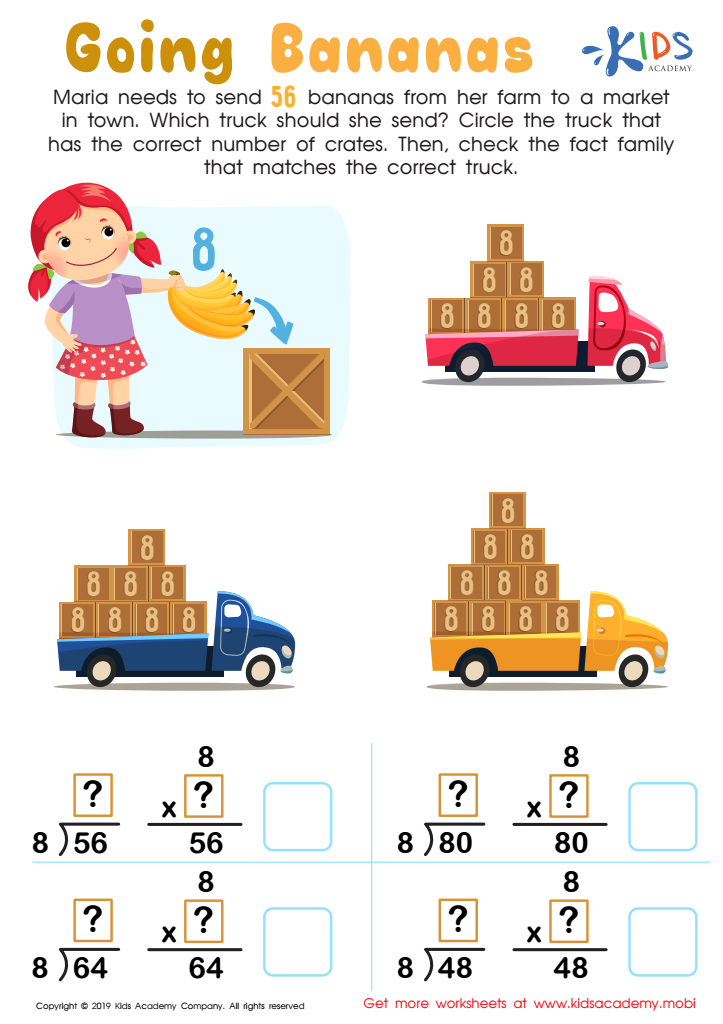
Going Bananas Worksheet
Marla needs to send 56 bananas in batches of 8. Help your child practice division and learn about fact families with this free worksheet. It'll help boost their multiplication skills and increase speed when solving problems.
Going Bananas Worksheet
Worksheet
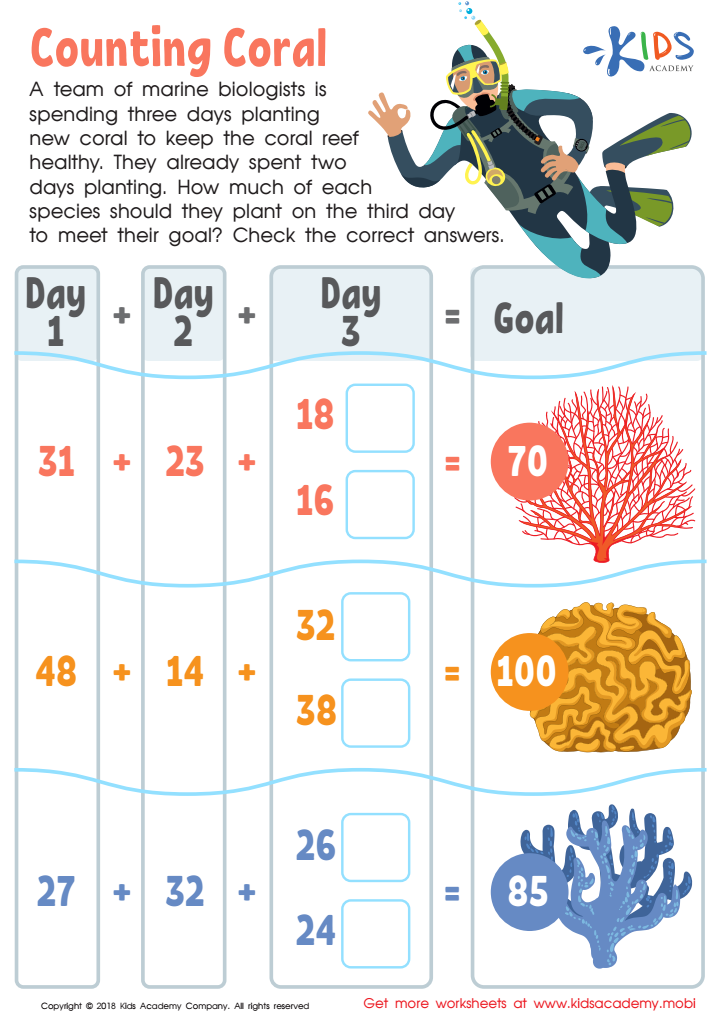
Counting Coral Worksheet
Introduce your child to the team of marine biologists planting coral to keep a reef healthy. They've planted for two days and need to figure out how much of each specie to plant on the third day to reach their goal. Help your child answer the questions on the printout and learn what it takes to be a marine biologist.
Counting Coral Worksheet
Worksheet
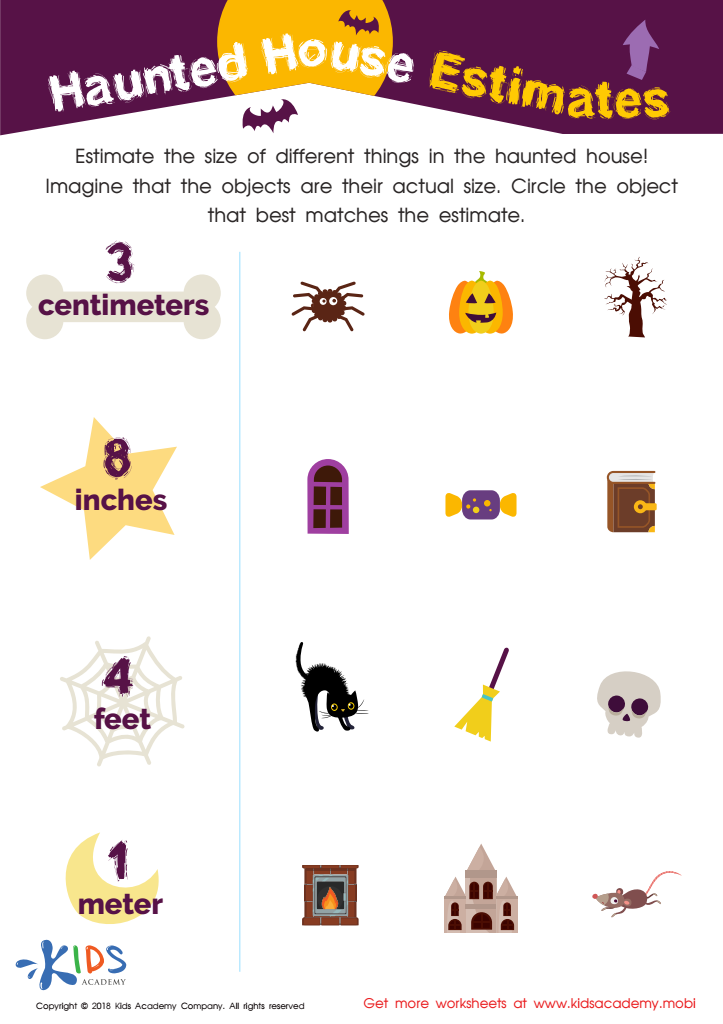
Haunted House Estimates Worksheet
Enliven your kid's learning with this printable worksheet! Have them estimate the size of objects and creatures in a haunted house, then circle the ones that match their estimates. They'll need to understand different measuring units beforehand. It's an exciting way to learn!
Haunted House Estimates Worksheet
Worksheet
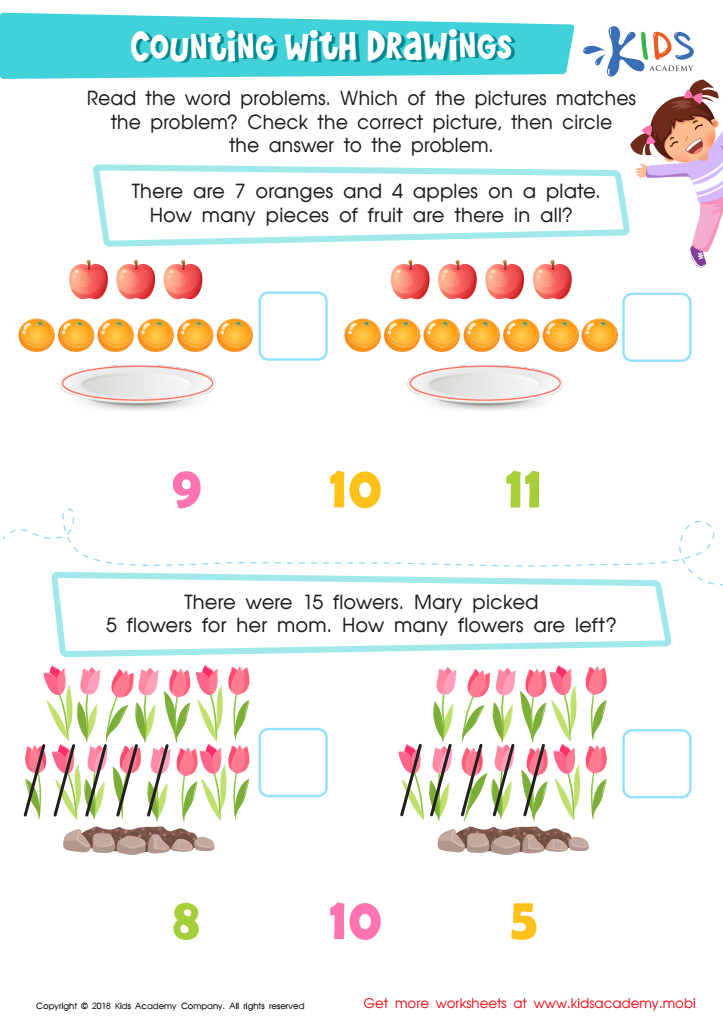
Counting with Drawings:Fruits & Flowers Worksheet
At Kids Academy, we know pictures make math come alive and make sense. This worksheet is perfect for early learners to practice word problems. Kids read each problem and count the images that represent the numbers, then solve the problem with addition or subtraction to get the right answer.
Counting with Drawings:Fruits & Flowers Worksheet
Worksheet
Join Kids Academy for Free
Who is primarily going to use this learning content?





Parents and teachers play pivotal roles in fostering foundational math skills in 8-year-olds, with basic addition being a cornerstone. Grasping basic addition lays the groundwork for future mathematical concepts, making it vital for educational development. Mastery of these skills not only enhances problem-solving abilities but also builds confidence in young learners, creating a positive attitude towards math.
Understanding and practicing basic addition helps children develop logical thinking and attention to detail, which are essential cognitive skills. These abilities extend beyond math, influencing other academic areas such as reading comprehension and science, where analytical skills are crucial. Integrating basic math exercises into daily routines can also improve memory and concentration, aiding overall cognitive development.
Moreover, proficiency in basic addition is crucial for real-life applications. Everyday scenarios like counting money, measuring ingredients for a recipe, or calculating time intervals rely on basic math. Early competence in these skills fosters independence and practical problem-solving in day-to-day activities.
Parents and teachers should collaborate in creating an engaging learning environment that incorporates games, practical applications, and positive reinforcement. This approach ensures that learning is enjoyable and effective, cultivating a solid foundation that supports future academic achievement and a lifelong appreciation for mathematics.








