Understanding biodiversity Normal Math Worksheets for 8-Year-Olds
3 filtered results
-
From - To
Explore our engaging "Understanding Biodiversity Math Worksheets" designed specifically for 8-year-olds. These worksheets blend critical math skills with fascinating biodiversity concepts, helping children grasp the importance of different species and ecosystems while practicing math. The activities include arithmetic, geometry, and data interpretation, making learning seamless and fun. By integrating environmental education into math lessons, kids not only improve their numeracy skills but also develop an early appreciation for the natural world. Ideal for classroom use or homeschooling, our worksheets make learning about biodiversity enjoyable and educational. Start your child’s journey to becoming a math and nature enthusiast today!
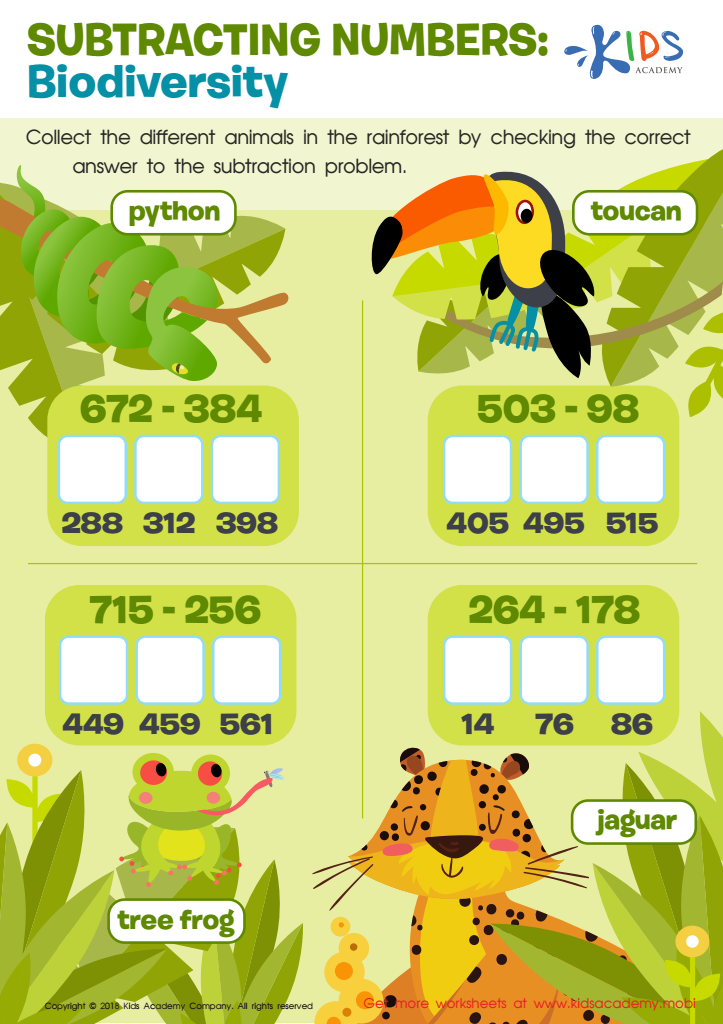
Subtracting Numbers: Biodiversity Worksheet
 Assign to My Students
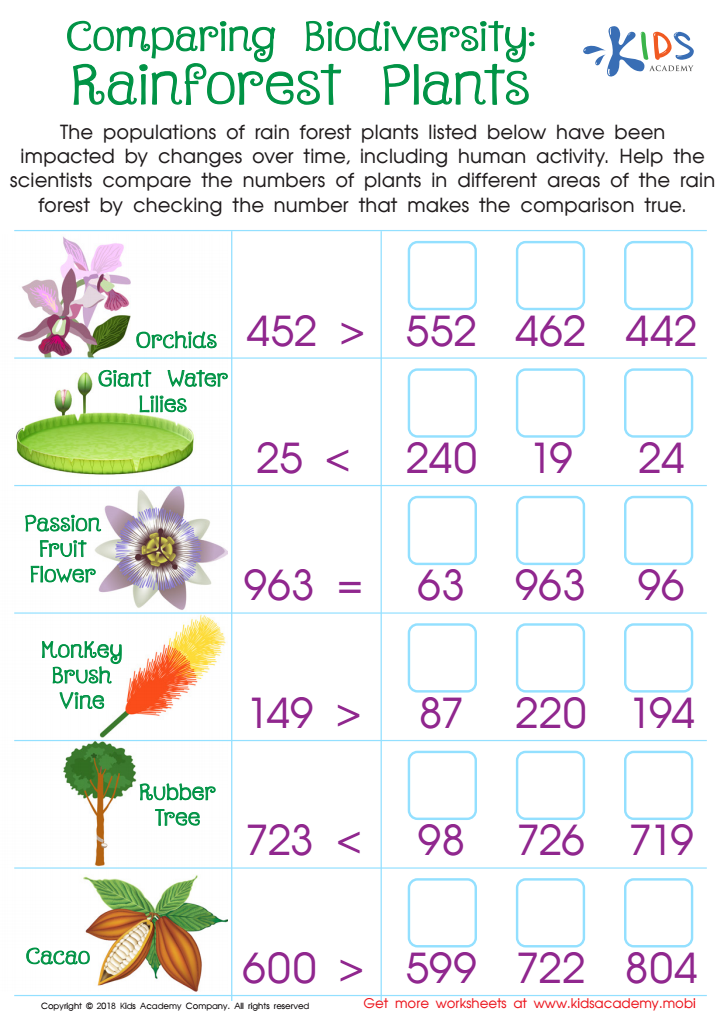
Comparing Biodiversity: Rainforest Plants Worksheet
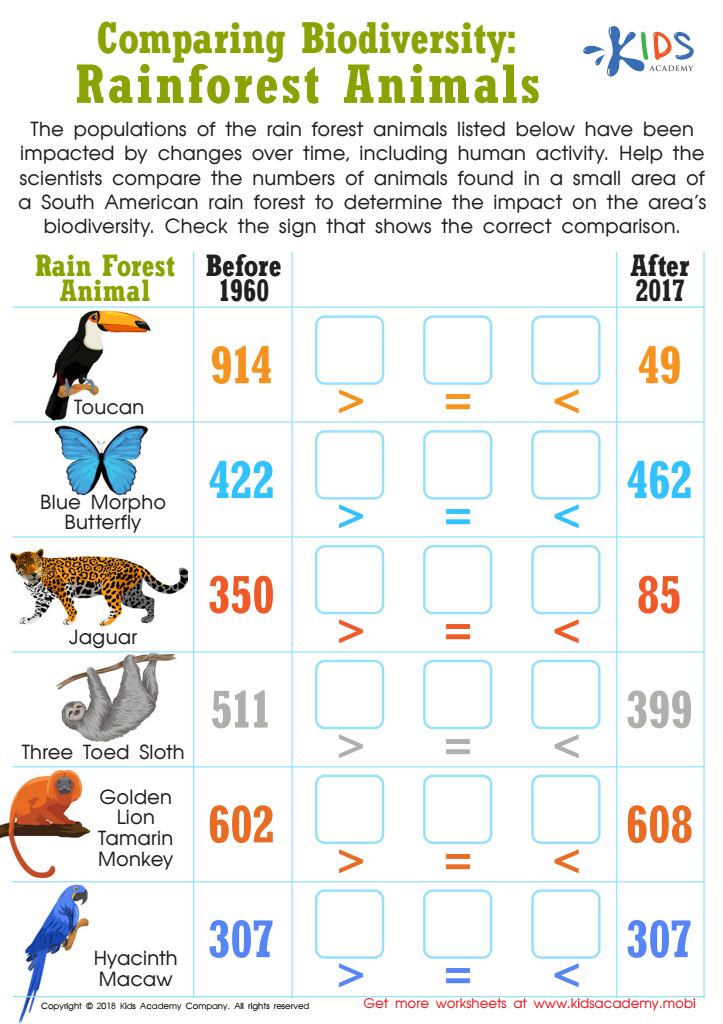
Comparing Biodiversity: Rainforest Animals Worksheet





Understanding biodiversity is important for 8-year-olds because it fosters a sense of connection and responsibility towards the natural world. For parents and teachers, introducing this concept helps children appreciate the variety of life forms—from plants to animals to microorganisms— and understand their roles in ecosystem health and balance. Early exposure to biodiversity encourages curiosity and respect for nature, laying the foundation for sustainable practices in the future.
Moreover, understanding biodiversity aligns with fundamental learning areas like science and math. For instance, counting different species can improve basic arithmetic skills, while observing patterns in nature strengthens analytical abilities. Biodiversity lessons can be interactive and engaging, involving nature walks, hands-on activities, and projects that make learning fun.
From an emotional perspective, nurturing a child's relationship with nature can be incredibly rewarding. Children who feel connected to their environment are more likely to develop empathy and the ability to care for others. They become more attentive and mindful individuals.
Ultimately, teaching 8-year-olds about biodiversity prepares them to become informed, conscientious adults. This single concept can shape their future actions toward conservation, sustainability, and active involvement in community and environmental issues. Therefore, both parents and teachers play a crucial role in paving the way for a more biodiverse-friendly society.








