Reading comprehension Normal Multiplication Worksheets for 8-Year-Olds
5 filtered results
-
From - To
Boost your child's math and reading skills with our "Reading Comprehension Normal Multiplication Worksheets for 8-Year-Olds." These engaging, printable worksheets are designed to help young learners master multiplication while enhancing their reading comprehension abilities. Each worksheet combines multiplication problems with short reading passages, ensuring a holistic learning experience that strengthens both math and literacy skills. Ideal for reinforcing classroom learning or providing extra practice at home, these worksheets make grasping multiplication concepts and improving reading comprehension fun and interactive. Explore our collection today to give your child the tools they need for math success while avidly reading!
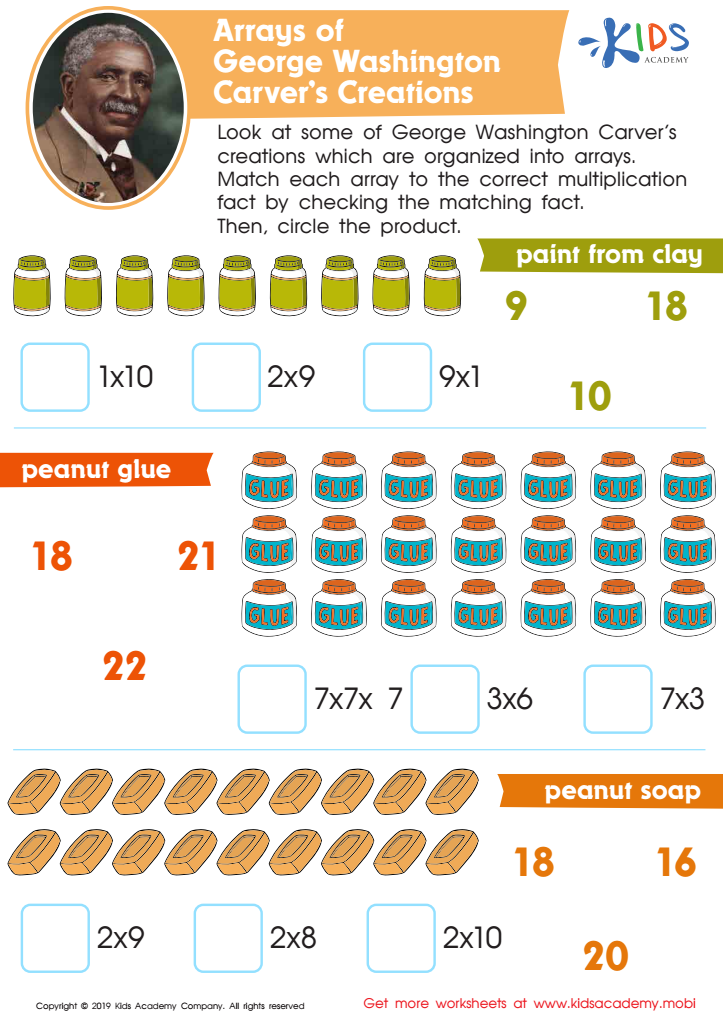
Arrays of George Washington Carver’s Creations Worksheet
 Assign to My Students
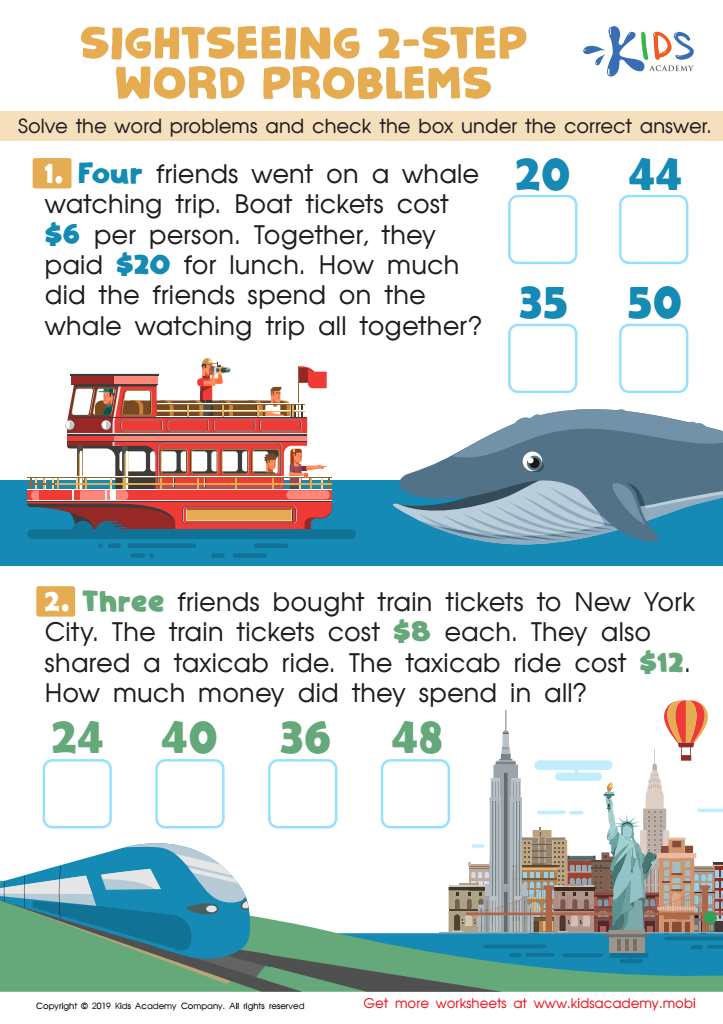
Sightseeing 2-Step Word Problems Worksheet
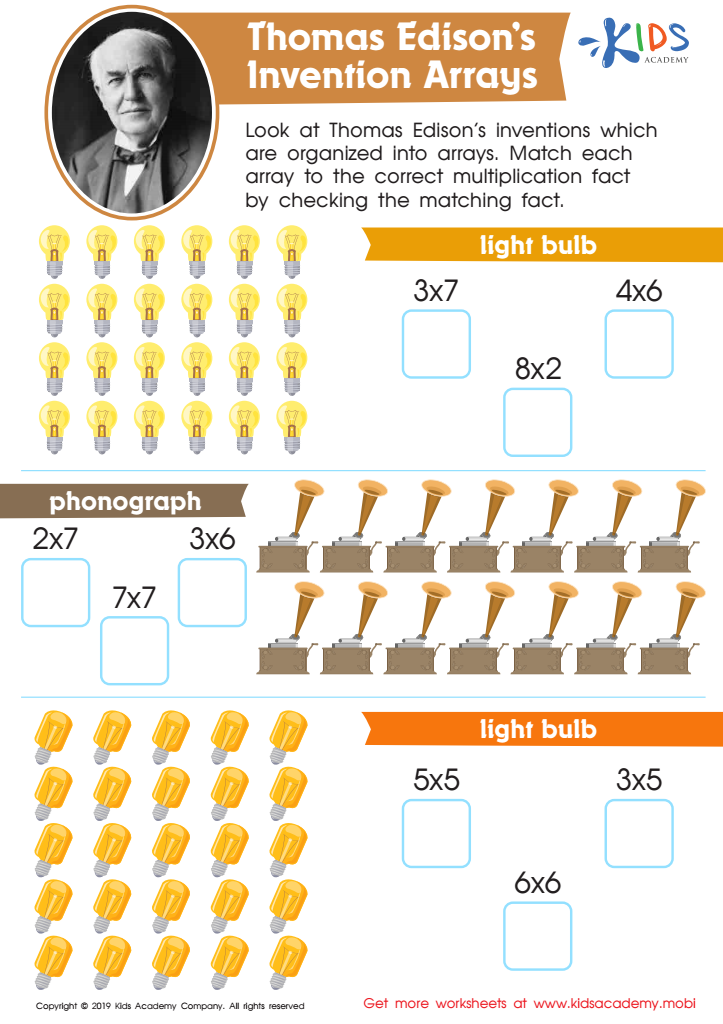
Thomas Edison’s Invention Arrays Worksheet
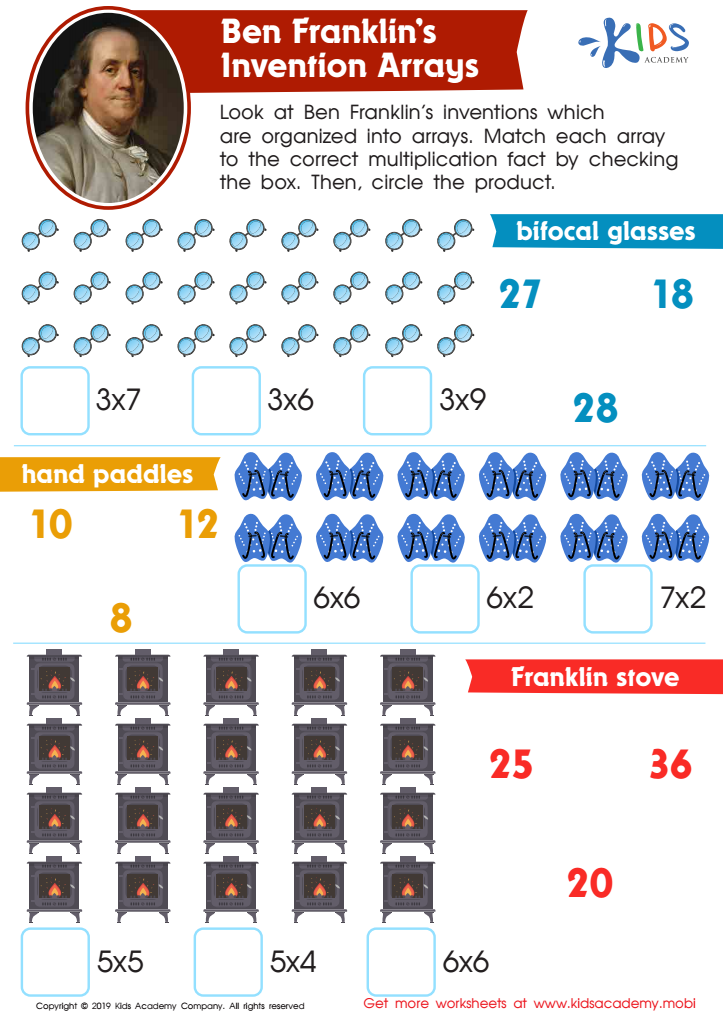
Ben Franklin’s Invention Arrays Worksheet
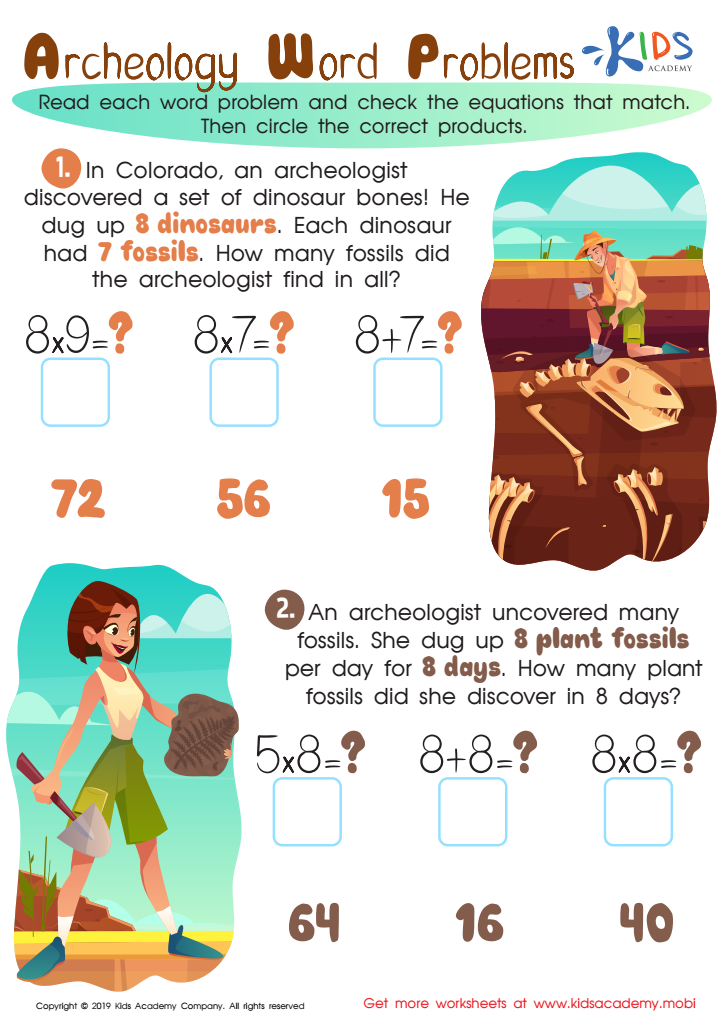
Archeology Word Problems Worksheet








Reading comprehension and understanding of basic multiplication are foundational skills for an 8-year-old, making them crucial for both parents and teachers to prioritize. At this developmental stage, children are transitioning from "learning to read" to "reading to learn." Strong reading comprehension skills enable them to grasp and internalize new information across all subjects, from science to social studies. If children struggle with reading, they may find it difficult to follow instructions, understand textbooks, and complete assignments, impeding their overall academic progress.
Similarly, normal multiplication skills form the basis for more complex math concepts like division, fractions, and algebra. Mastery of multiplication builds confidence in math and helps children solve everyday problems, fostering logical thinking and problem-solving abilities.
Teacher and parental involvement are key in this developmental phase. Parents can nurture these skills by reading together daily, discussing stories, and encouraging questions. Teachers can provide guided practice, use engaging materials, and create interactive learning experiences to reinforce these concepts.
By focusing on developing proficiency in reading comprehension and multiplication, we ensure children are well-prepared for higher learning stages, setting a solid academic foundation that supports future educational and personal success. Ignoring these skills can lead to learning gaps, diminishing a child's potential and self-esteem.








