Counting skills Normal Word Problems Worksheets for 8-Year-Olds
4 filtered results
-
From - To
Foster your child's mathematical prowess with our "Counting Skills Normal Word Problems Worksheets for 8-Year-Olds." Designed for young learners, these engaging worksheets combine fun and education to enhance essential counting skills. Each worksheet presents age-appropriate word problems that challenge students to apply their counting knowledge in real-world scenarios. This helps build a strong foundation in basic math, critical thinking, and problem-solving. Ideal for home or classroom use, our worksheets provide a diverse range of activities to maintain interest and promote consistent practice, ensuring kids develop the confidence to tackle more complex math concepts in the future.
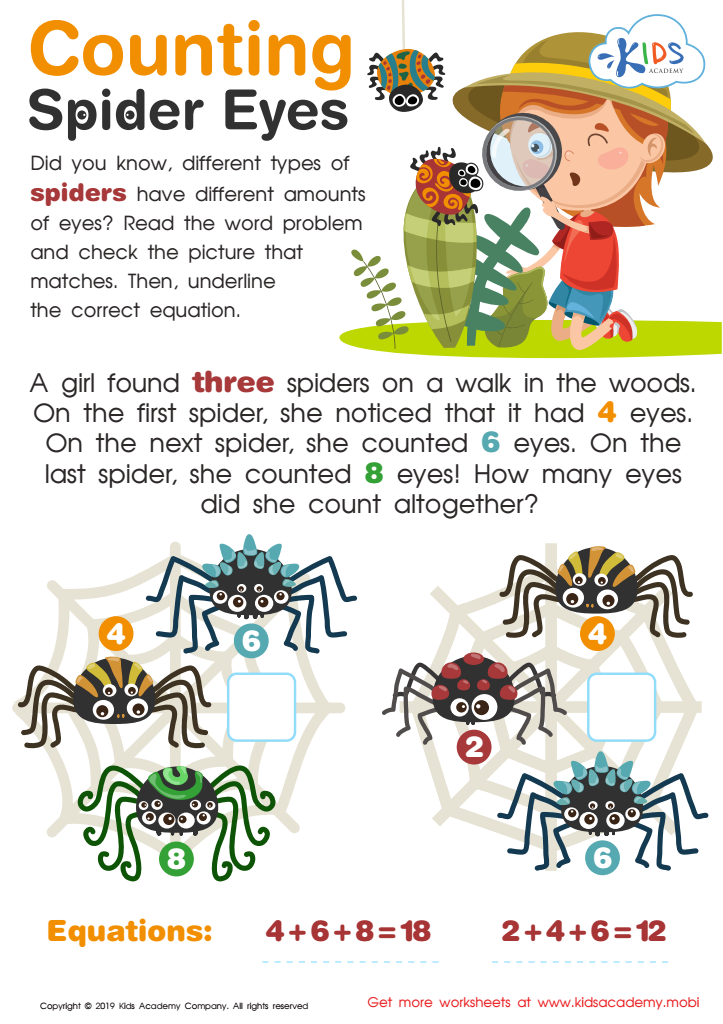
Counting Spider Eyes Worksheet
 Assign to My Students
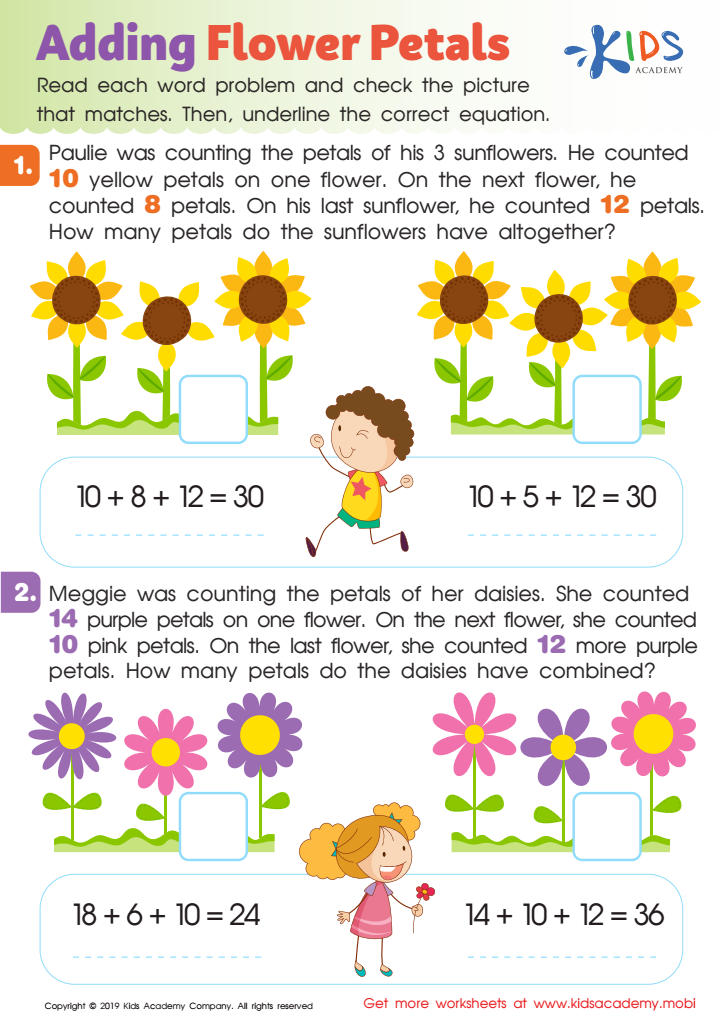
Adding Flower Petals Worksheet
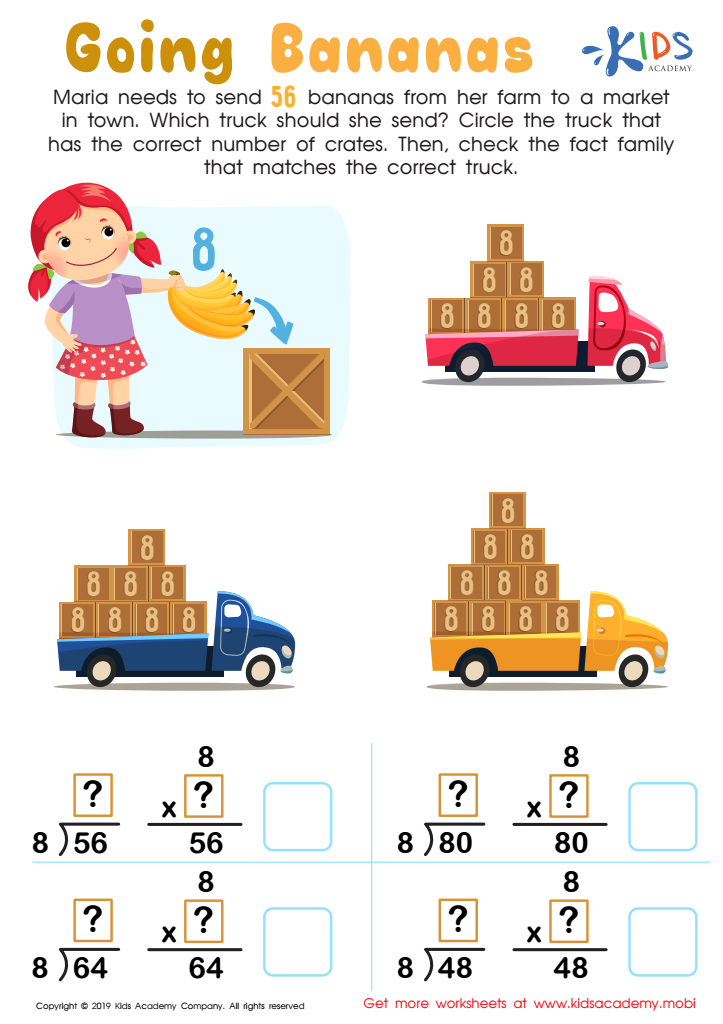
Going Bananas Worksheet
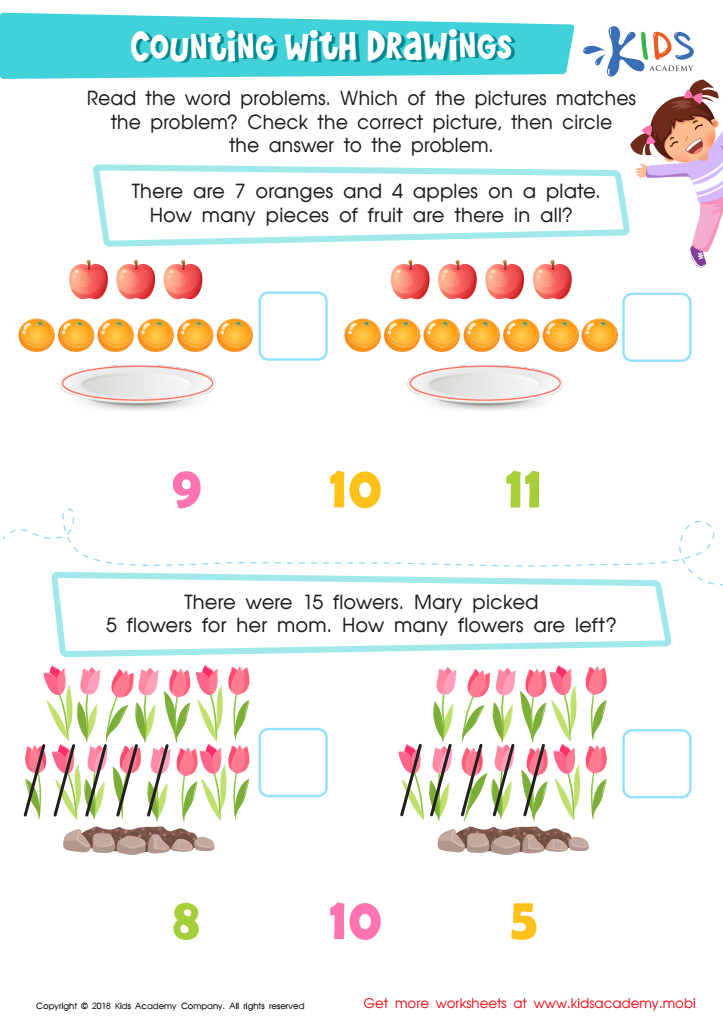
Counting with Drawings:Fruits & Flowers Worksheet








Counting skills and solving word problems are fundamental elements of a child’s early mathematical development, and thus every parent or teacher should prioritize these skills for 8-year-olds. Proficiency in counting lays the groundwork for more complex arithmetic, number sense, and logical reasoning. It helps children understand basic mathematical concepts such as addition, subtraction, and the value of numbers, which are crucial for their future education.
Word problems, on the other hand, develop a child’s ability to apply mathematical thinking to real-world situations. They foster comprehension skills, as word problems require understanding the context and the question being asked before applying arithmetic operations. When children tackle such problems, they practice identifying relevant information and disregarding extraneous details, enhancing their critical thinking.
Moreover, facing word problems can improve a child's reading and problem-solving skills simultaneously, as they need to decipher textual information and convert it into a mathematical equation. This blend of verbal and numerical exercise promotes cognitive flexibility and patience.
Ultimately, focusing on counting skills and word problems builds a robust mathematical foundation. It equips children with the mental tools to tackle more challenging subjects in the future, fostering self-confidence and a positive attitude towards learning. Therefore, this form of learning is essential for children's holistic academic and personal development.








