Understanding suffixes Normal Reading Worksheets for 8-Year-Olds
3 filtered results
-
From - To
Explore our "Understanding Suffixes" Normal Reading Worksheets designed specifically for 8-year-olds! These engaging resources help young learners grasp the concept of suffixes, enhancing their vocabulary and reading skills. With a variety of fun activities, children will identify and use common suffixes, unlocking new word meanings and improving their comprehension. Perfect for classroom use or at-home practice, our worksheets are tailored to make learning enjoyable and effective. Strengthen your child’s reading abilities while fostering a love for language. Dive into these educational worksheets and watch your child boost their skills in no time! Start exploring and learning today!
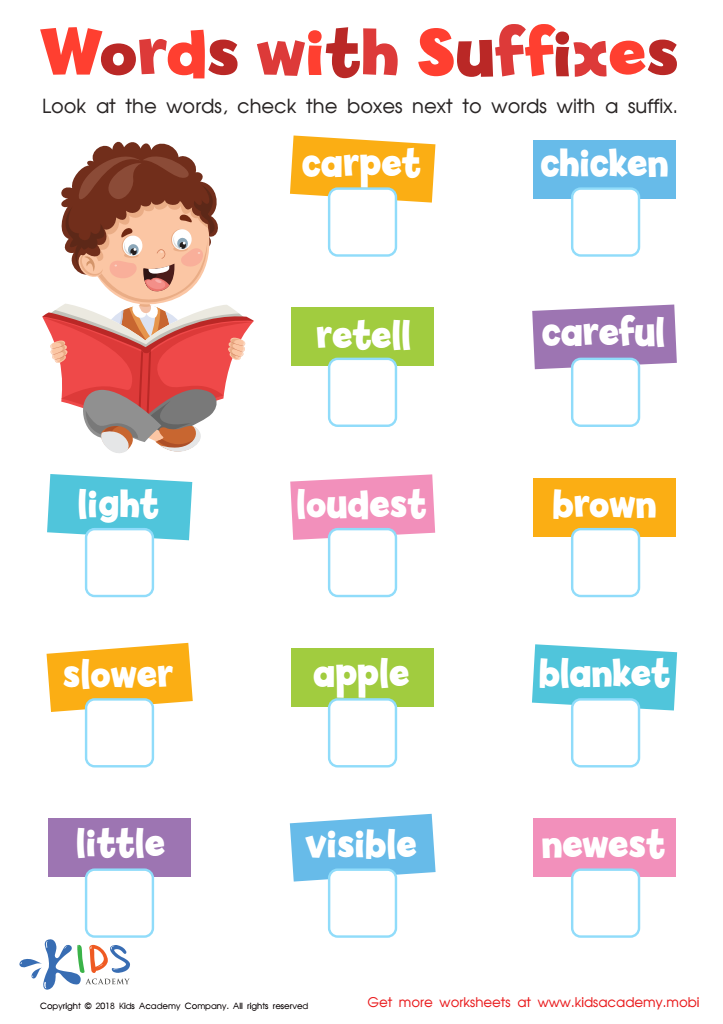
Reading: Words With Suffixes Worksheet
 Assign to My Students
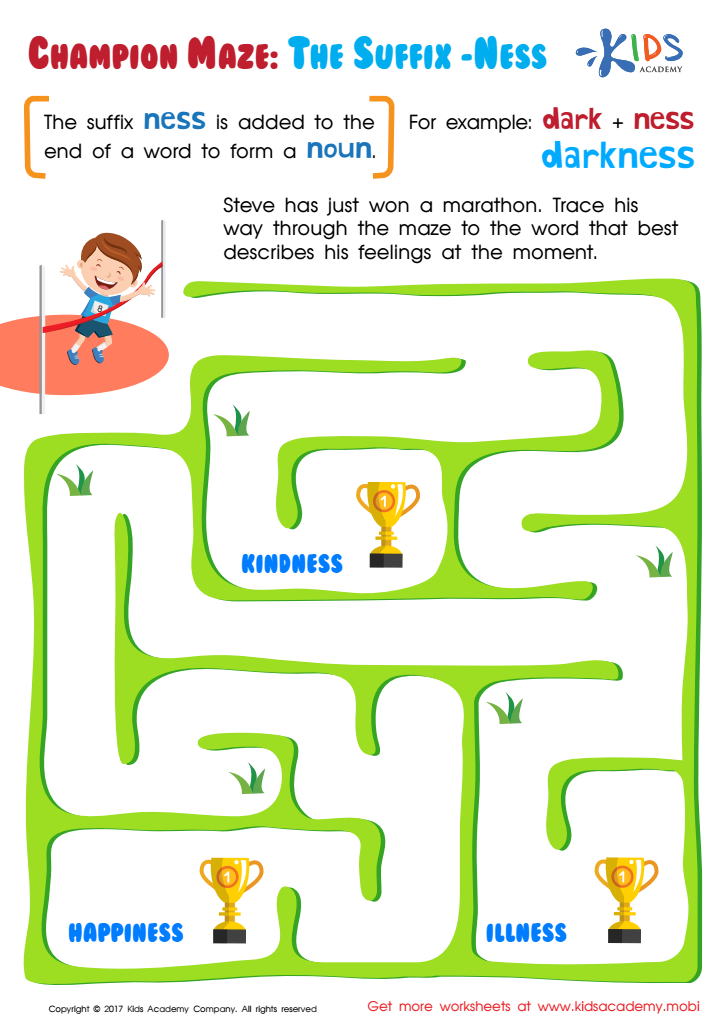
Suffix Ness Worksheet
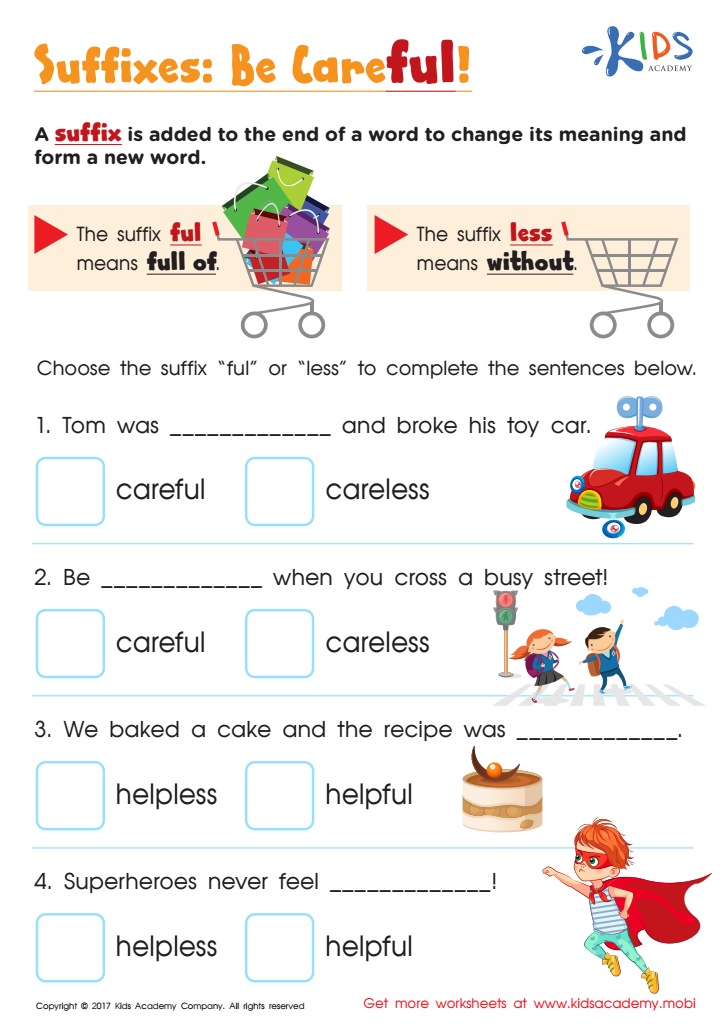
Suffixes Ful and Less Worksheet








Understanding suffixes is essential for 8-year-olds, and parents or teachers should prioritize this aspect of literacy for several reasons. Firstly, suffixes are vital components of language, enabling children to expand their vocabulary. By adding a suffix, children can transform a base word, creating new meanings and parts of speech. For example, adding “-ing” turns “play” into “playing,” enhancing their ability to express thoughts accurately and creatively.
Moreover, recognizing suffixes aids in reading comprehension. When children can decode words with suffixes, they become more fluent readers, understand what they are reading better, and enjoy stories more fully. This comprehension boosts their confidence and encourages a lifelong love for reading.
Additionally, instruction around suffixes allows educators and parents to support children as they tackle more complex texts in higher grades. Developing these skills early ensures children are better equipped for future learning challenges, including standardized tests.
Lastly, fostering an understanding of suffixes can enhance critical thinking skills. Children learn to analyze and infer meanings from unfamiliar words, a skill that transcends language and supports problem-solving abilities. In essence, teaching suffixes provides foundational skills that significantly benefit a child's overall academic growth and enthusiasm for learning.








