Historical Knowledge Normal Science Worksheets for 8-Year-Olds
5 filtered results
-
From - To
Discover a collection of engaging "Historical Knowledge Normal Science Worksheets" designed specifically for 8-year-olds! These worksheets aim to ignite curiosity and foster a love for history and science by exploring significant events and figures in a fun, interactive way. Ideal for enhancing critical thinking skills, each worksheet incorporates visuals, puzzles, and thought-provoking questions that inspire young learners to connect scientific concepts with historical milestones. Perfect for home or classroom use, these printable resources ensure your child deepens their understanding of the past while developing essential learning skills. Bring history to life and watch your child excel with these thoughtfully crafted worksheets!
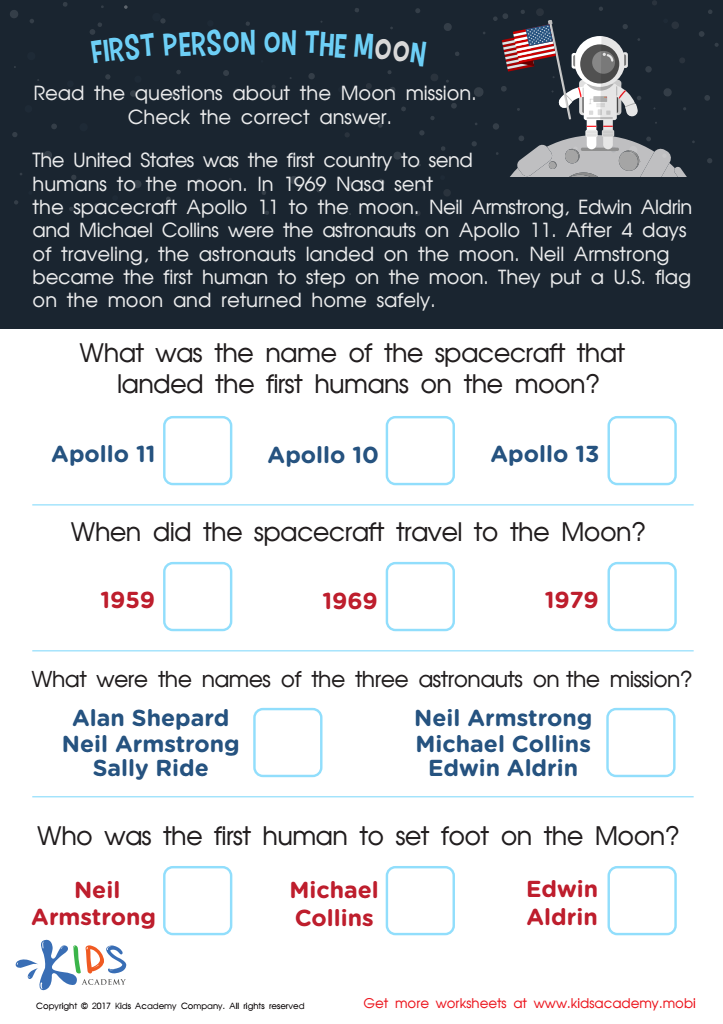
First Person on the Moon Worksheet
 Assign to My Students
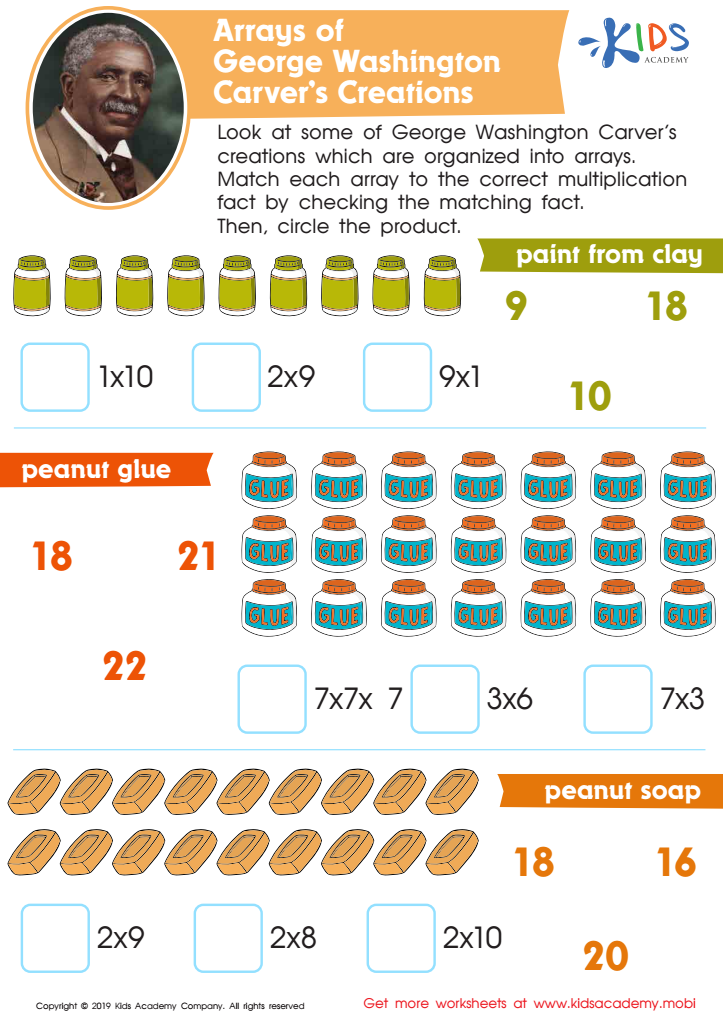
Arrays of George Washington Carver’s Creations Worksheet
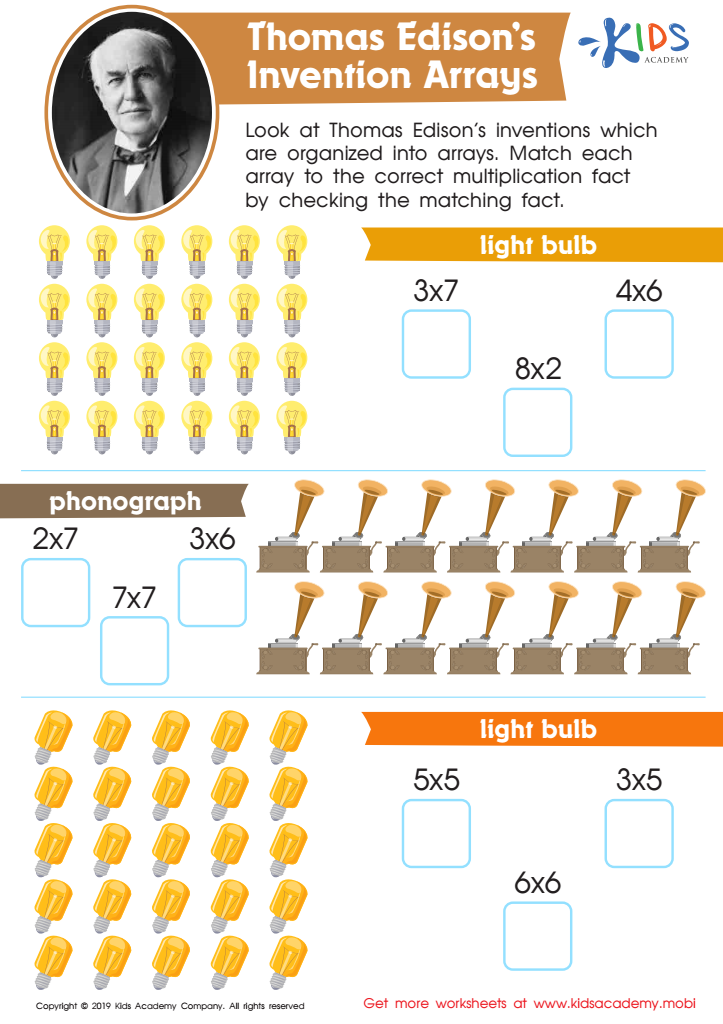
Thomas Edison’s Invention Arrays Worksheet
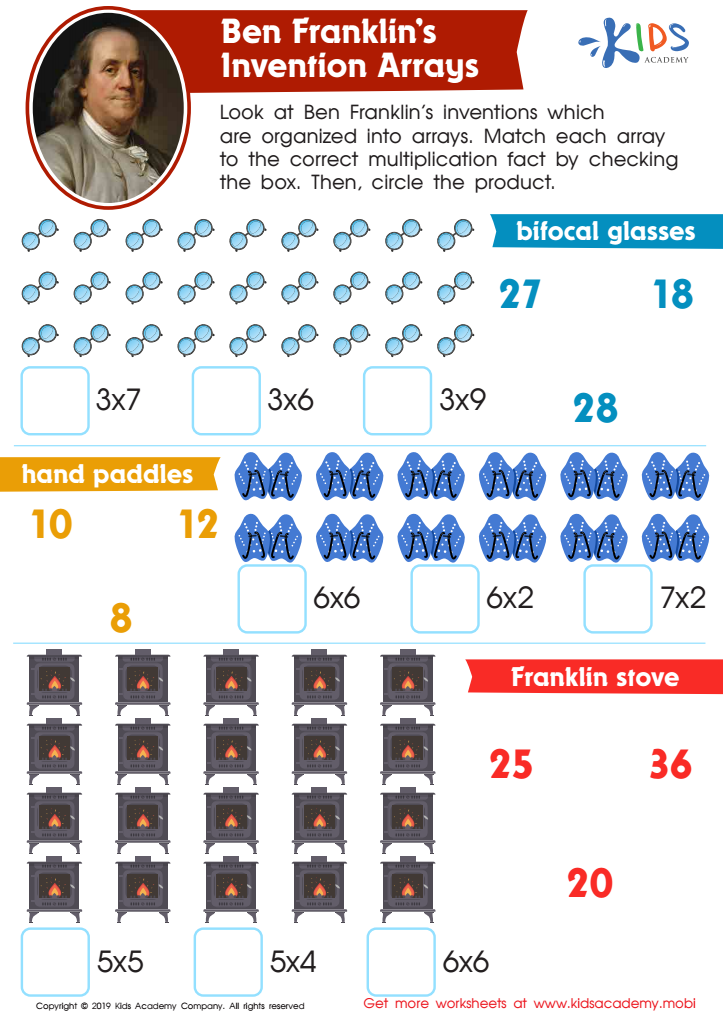
Ben Franklin’s Invention Arrays Worksheet
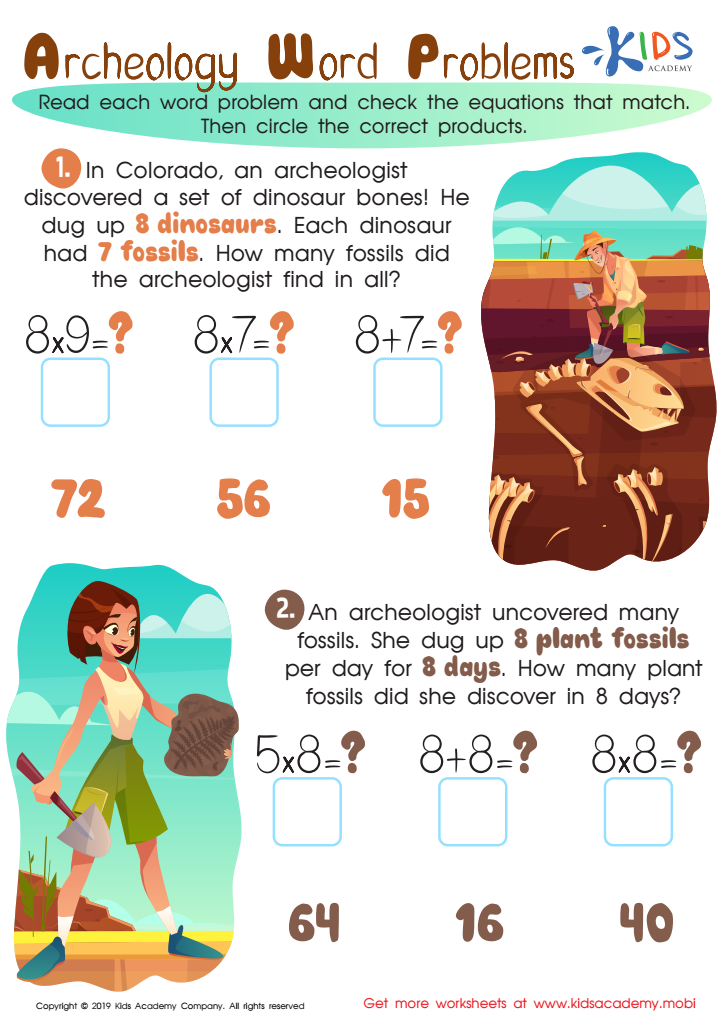
Archeology Word Problems Worksheet


%20(1).jpg)




Parents and teachers should recognize the importance of Historical Knowledge Normal Science for 8-year-olds as it lays a vital foundation for understanding the world. At this age, children are extremely curious and capable of grasping complex ideas when presented in an engaging manner. Introducing them to the history of scientific thought and discovery helps foster critical thinking skills, encouraging them to ask questions, draw connections, and appreciate the evolution of ideas.
Moreover, by learning about historical figures in science, children can develop role models and understand that innovation stems from creativity and perseverance. This perspective encourages resilience and promotes the idea that failure is often a step towards success. Exposure to diverse scientific contributions broadens students’ worldviews and nurtures inclusivity, as they learn about scientists from various backgrounds.
Teaching the history of science also ties in with literacy, as students read stories and accounts of discoveries, which enhances their language skills. Understanding scientific breakthroughs within their historical context allows kids to appreciate the relevance and impacts of science on society. Ultimately, fostering Historical Knowledge Normal Science at this crucial stage plants the seeds for scientific literacy and a lifelong enthusiasm for learning, which are essential in navigating an increasingly complex world.







