Elevate your child's language skills with our Vocabulary Enhancement Normal Phonics Worksheets designed for 9-year-olds! These meticulously crafted printables provide a balanced blend of alphabet practice and phonics activities, making vocabulary building both fun and effective. Our worksheets focus on essential learning skills, helping young learners recognize letter sounds, blend phonemes, and expand their word knowledge with ease. By incorporating engaging tasks and incremental challenges, these worksheets ensure your child remains motivated while mastering critical language concepts. Perfect for complementing classroom lessons or as part of a homeschooling curriculum, our resources empower kids to excel in reading and writing.

Check out this FREE Trial Lesson on Phonics for age 9!

Read Grade-Appropriate Irregularly Spelled Words

Favorites
With answer key
Interactive
  • 9
  • Vocabulary enhancement
  • Phonics
  • Normal
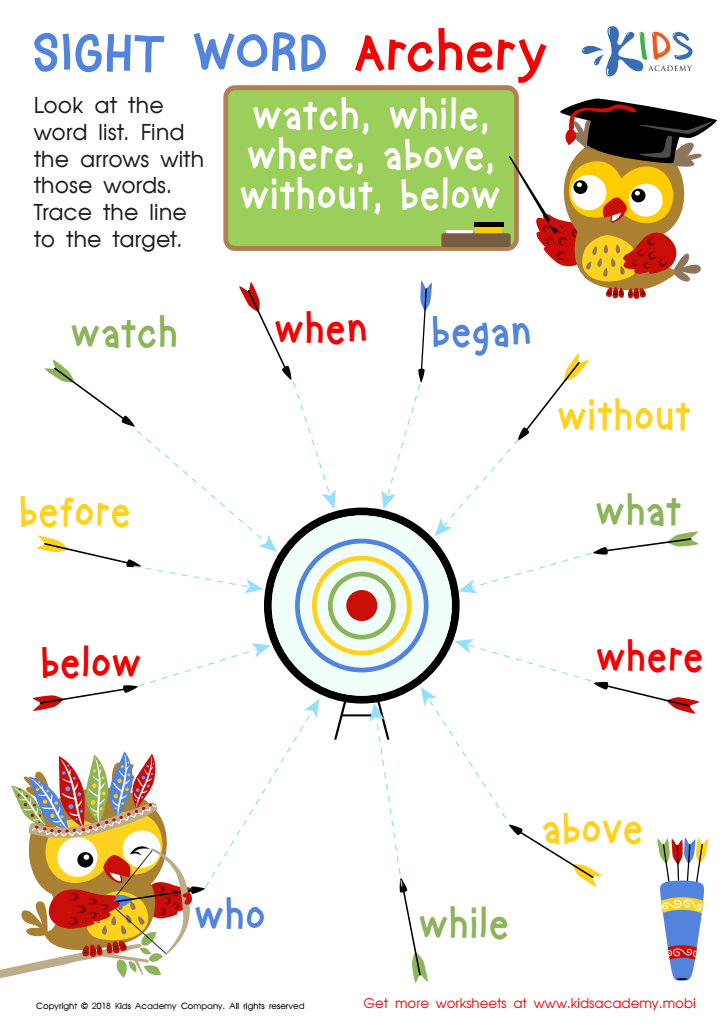
Sight Word Archery Worksheet

Sight Word Archery Worksheet

Read the words list with your kids, pointing at each one. Ask them to do the same. Help them find the arrows with those words and trace the line to the target in the centre.
Sight Word Archery Worksheet
Worksheet
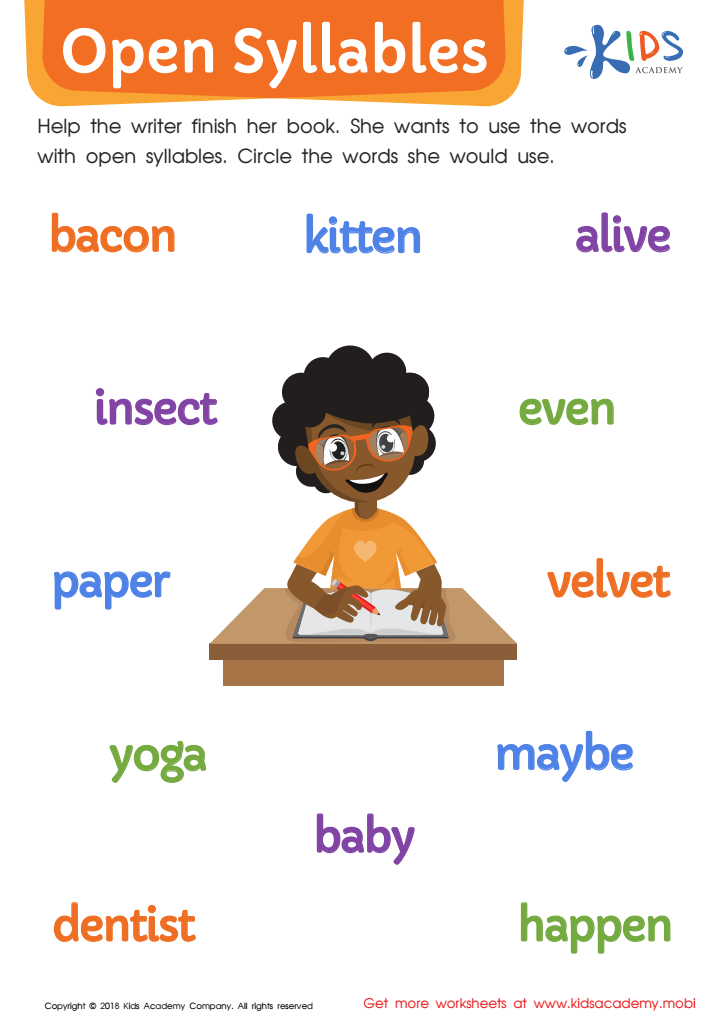
Open Syllables Worksheet

Open Syllables Worksheet

Before beginning this worksheet, make sure your child knows what open syllables are. If not, take time to teach them with examples. Then, help the writer finish her book by circling words with open syllables. She needs your child's help!
Open Syllables Worksheet
Worksheet
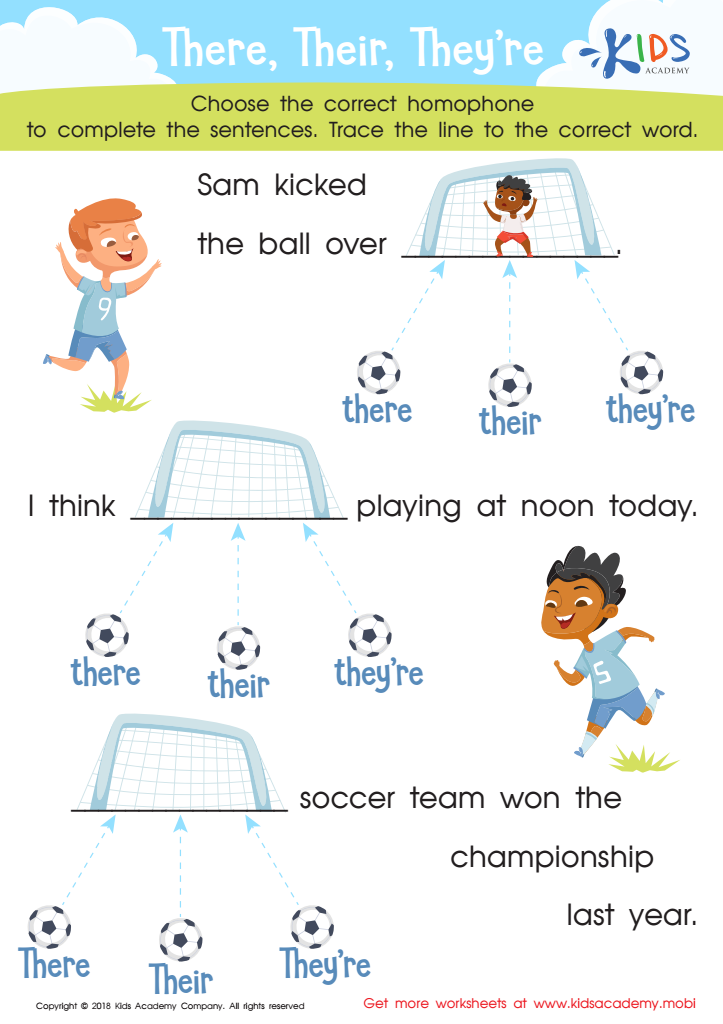
There, Their, They're Worksheet

There, Their, They're Worksheet

Explain to your kids the difference between 'there', 'their' and 'they're'. These three words are homophones - spelt similarly but with different meanings. Help them choose the correct homophones when completing sentences, and trace the line to the right word.
There, Their, They're Worksheet
Worksheet
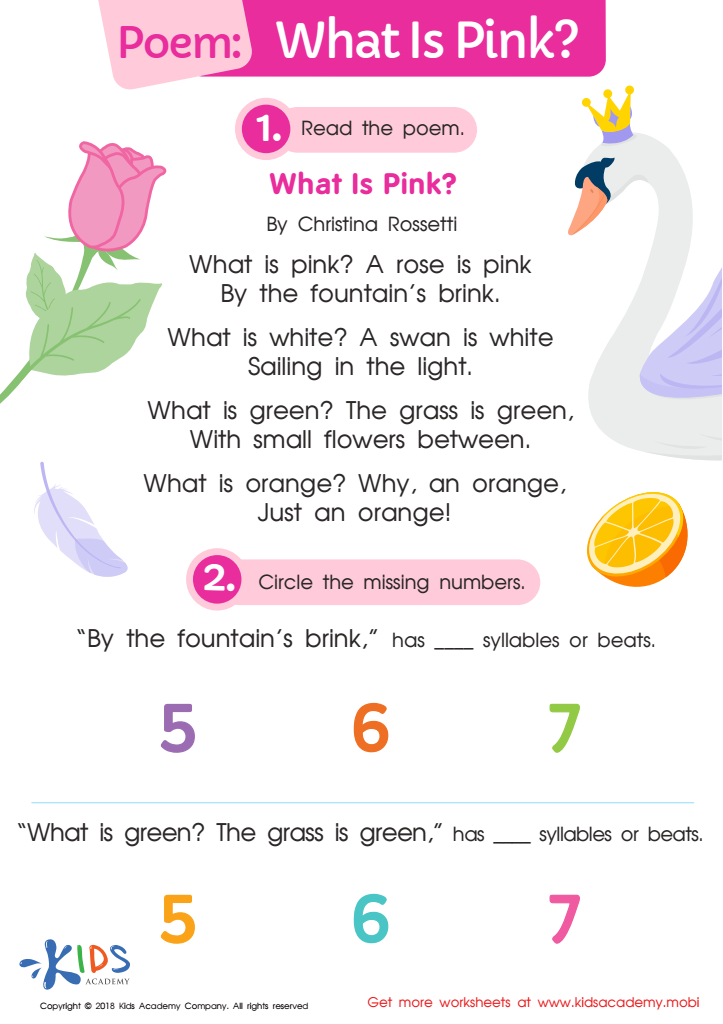
Poem: What Is Pink? Worksheet

Poem: What Is Pink? Worksheet

Help your kids learn with short, fun, interesting poems! Read it aloud to them and point out the rhyme patterns. Have them circle the missing numbers to answer two questions. Show examples of objects with the colors in the poem. This will help them learn to read, and also understand colors better.
Poem: What Is Pink? Worksheet
Worksheet
Homophones: Crayons Worksheet

Homophones: Crayons Worksheet

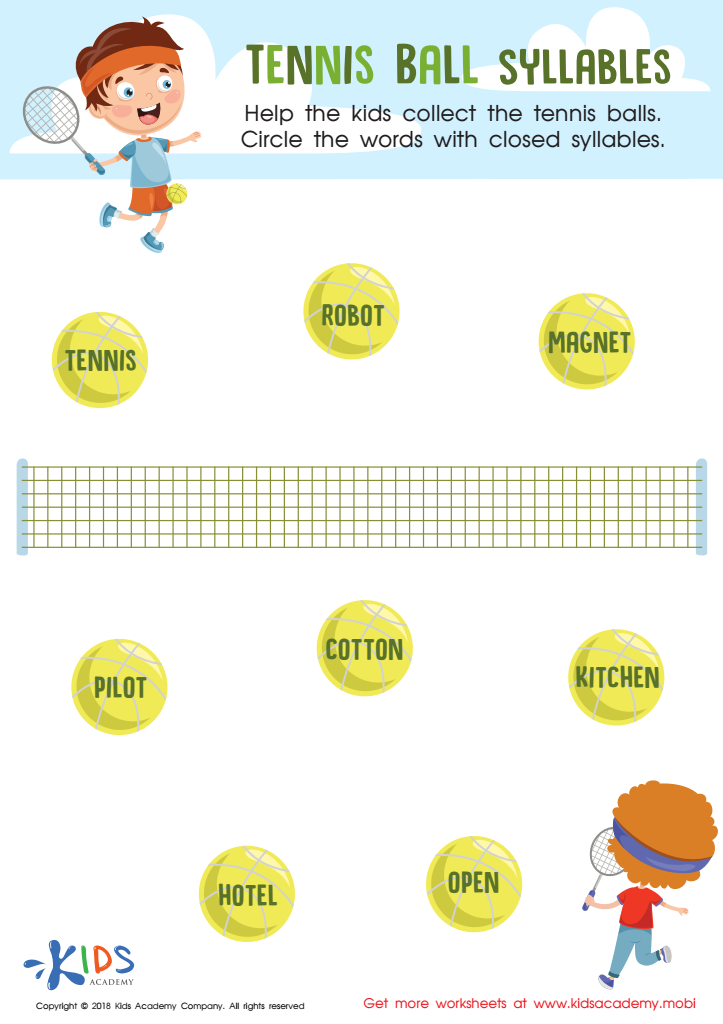
Ask your kids: "What are homophones?" Explain that homophones are words that sound alike but have different meanings, like 'dare' and 'deer'. Ask them to identify homophones by putting the crayons in this printout away according to the words.
Homophones: Crayons Worksheet
Worksheet
Tennis Ball Syllables Worksheet

Tennis Ball Syllables Worksheet

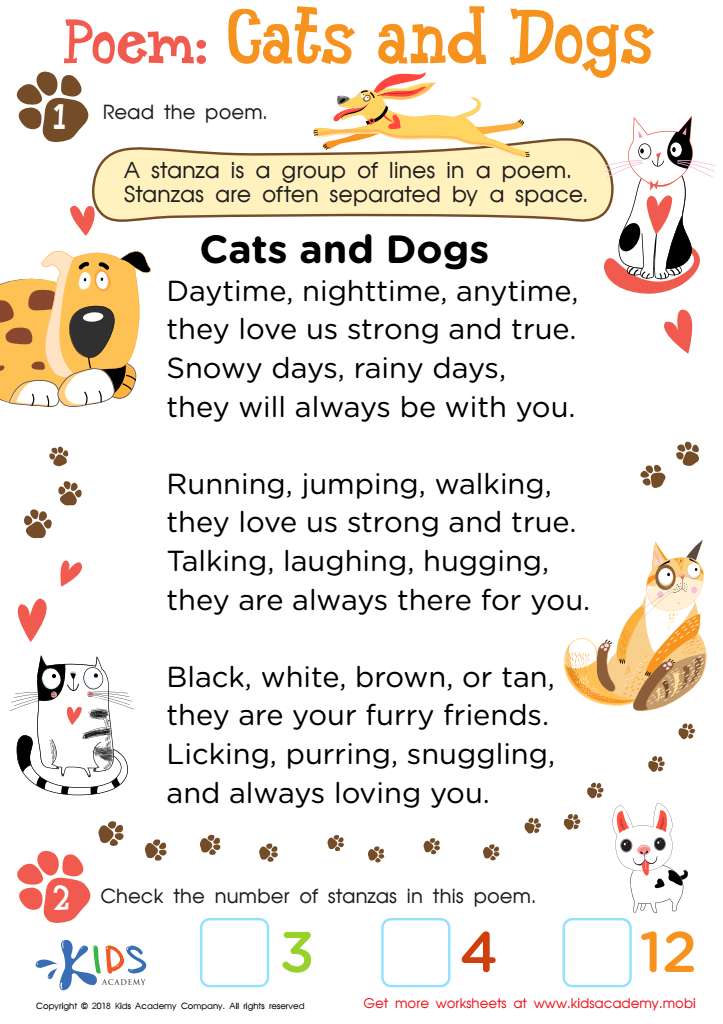
To help your kids become fluent speakers, they need to learn syllables. A word can have one to seven syllables, with longer words having more. For this level, they will be working with one or two syllables. Assist them as they circle the words with closed syllables in this worksheet.
Tennis Ball Syllables Worksheet
Worksheet
Poem: Cats and Dogs Worksheet


Poem: Cats and Dogs Worksheet

Read the poem to your child and point out where each stanza ends. Ask if they know what a stanza is (if not, explain it's a group of lines in a poem). Help them answer the question at the bottom of the printout. This simple, sweet poem about cats is easy for your child to relate to.
Poem: Cats and Dogs Worksheet
Worksheet


Vocabulary enhancement and phonics development are foundational to a child's literacy, especially around the 9-year-old mark. At this age, children transition from learning to read to reading to learn, and a robust vocabulary helps them navigate more complex texts and subjects. First, a rich vocabulary facilitates better comprehension, allowing children to grasp the meanings of words and contexts, leading to more profound understanding and improved academic performance. Phonics, on the other hand, is the connection between sounds and their spelling. Mastery in phonics supports accurate reading and writing, enabling children to decode new words efficiently and spelling them correctly.

Furthermore, vocabulary and phonics intertwine to aid communication skills. Children with a strong lexicon can express thoughts more clearly and precisely, enhancing their social interactions and self-confidence. This has long-term impacts, paving the way for effective communication skills that are critical in everyday life and future professional arenas.

Parents and teachers play a pivotal role in fostering these skills. Engaging in diverse reading activities, utilizing word games, and structured phonics practice can make learning interactive and fun. Supporting vocabulary enhancement and normal phonics is investing in a child’s overall literacy, essential for their academic success and lifelong learning aptitude.