
Alphabetical order understanding Normal Worksheets for 9-Year-Olds
3 filtered results
Difficulty Level
Grade
Age
-
From - To
Subject
Activity
Standards
Explore our engaging Alphabetical Order Understanding Worksheets, designed specifically for 9-year-olds! These printable resources help young learners grasp the concept of organizing words and items alphabetically. Through fun activities and exercises, children can enhance their vocabulary, improve their reading skills, and develop critical thinking. Our comprehensive worksheets cater to various learning styles, ensuring that every child can succeed. With clear instructions and vibrant illustrations, these worksheets make learning enjoyable. Ideal for home or classroom use, parents and educators will find these tools valuable in nurturing a love for reading and enhancing organizational skills. Start your journey into the world of letters today!
Favorites
With answer key
Interactive

Letter G Tracing Page
Get ready to trace the letter "G" – with a big red spot as the starting point, trace the lines and watch the letter appear. Uppercase and lowercase letters are both easy and fun to write. Give it a go and finish the word "go". Play the guitar and say "hello" to a funny ghost!
Letter G Tracing Page
Worksheet
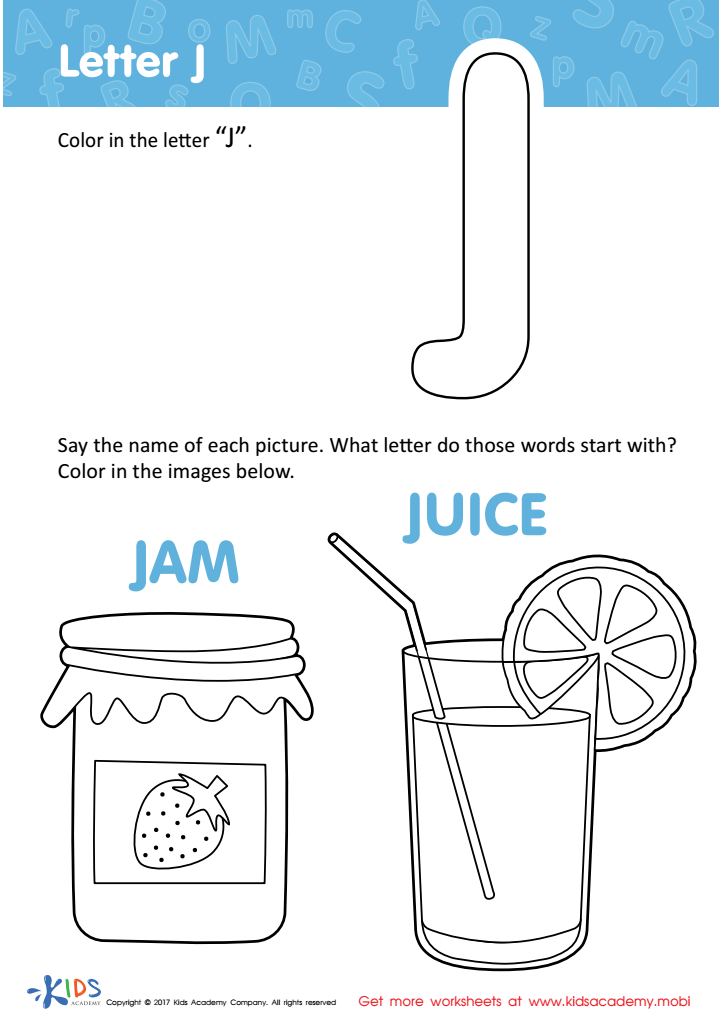
Letter J Coloring Sheet
Practice the letter 'J' with your little one with this fun coloring page! Pictures of jar, juice, jam and jelly make it an enjoyable experience for kids. Learning the letter and coloring is fun for even the youngest learners.
Download (PDF)
 Assign to My Students
Assign to My Students
Letter J Coloring Sheet
Worksheet
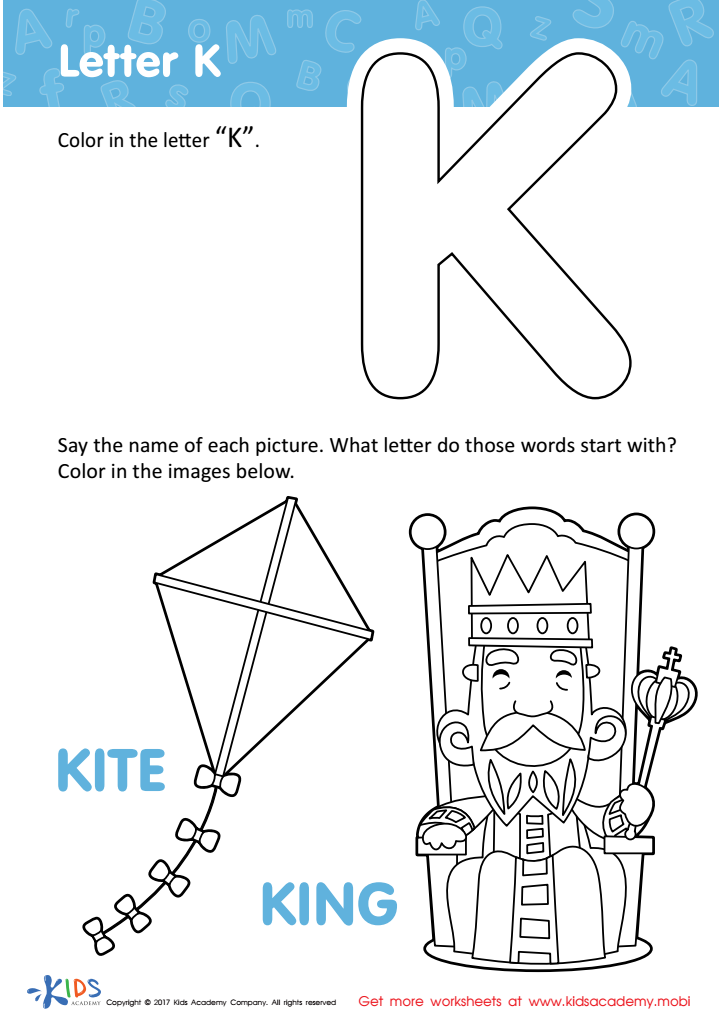
Letter K Coloring Sheet
This letter K coloring page captivates your child's creativity while learning the letter! Showcasing a king and kite, common words for their age group, it's sure to spark their imagination.
Download (PDF)
Assign to My Students
Assign to My Students
Letter K Coloring Sheet
Worksheet
Join Kids Academy for Free
Who is primarily going to use this learning content?


.jpg)



.jpg)

Understanding alphabetical order is crucial for 9-year-olds, as it lays the foundation for various literacy and organizational skills. In an age where children are learning to read and write independently, knowing how to arrange words alphabetically can enhance their ability to locate information swiftly within books, dictionaries, or digital resources. This skill fosters a sense of autonomy in learning, enabling children to engage more actively with text.
Moreover, emphasizing alphabetical order helps improve spelling and vocabulary. As children practice this concept, they become more familiar with the spelling of words and their relative positions. This reinforces phonemic awareness, aiding in reading proficiency.
For parents and teachers, fostering knowledge of alphabetical order not only complements academic skills but also teaches children how to sort and categorize information, an essential life skill. Whether organizing lists for school projects or keeping personal items in order, mastery of this concept promotes neatness, responsibility, and critical thinking.
Ultimately, understanding alphabetical order is more than just a classroom exercise; it equips children with tools they will use throughout their lives, ensuring they approach learning with confidence and clarity. Thus, it warrants attention from both parents and educators.








