Understanding economics Normal Worksheets for 9-Year-Olds
3 filtered results
-
From - To
Discover our "Understanding Economics" worksheets designed specifically for 9-year-olds! These engaging resources help young learners explore fundamental economic concepts in a fun and interactive way. With colorful illustrations and age-appropriate language, children will grasp key ideas such as money management, basic trade principles, and the importance of saving and spending wisely. Each worksheet encourages critical thinking, promotes financial literacy, and fosters an early appreciation for economics. Ideal for classroom use or at-home learning, our worksheets provide a solid foundation for budding economists and prepare them for future financial decision-making. Start their economic journey with us today!
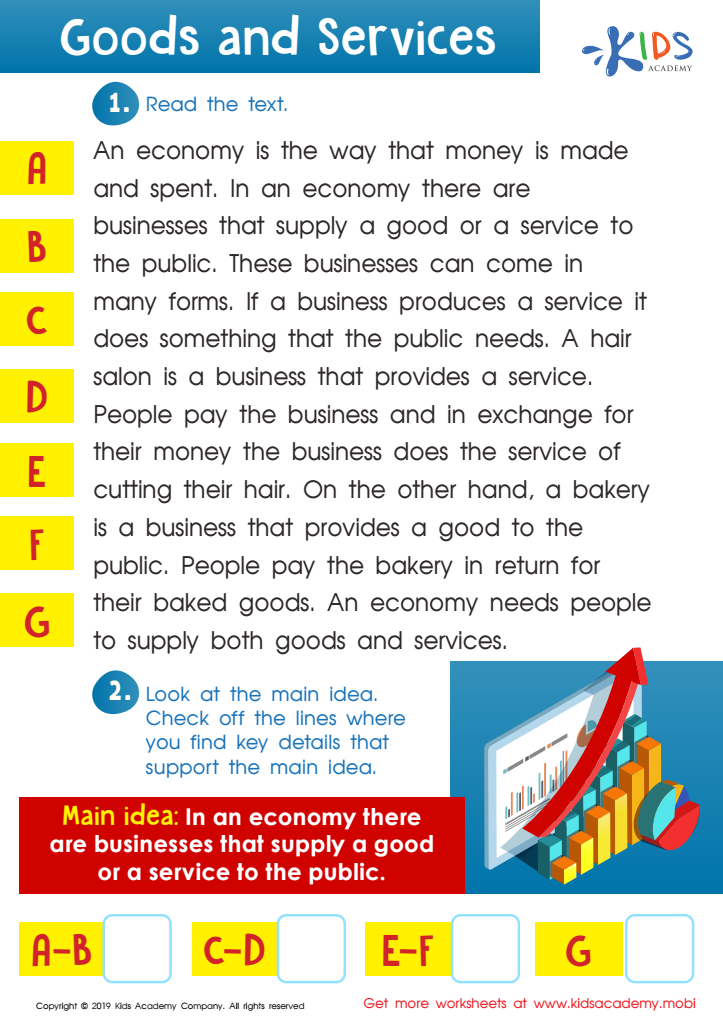
 Assign to My Students
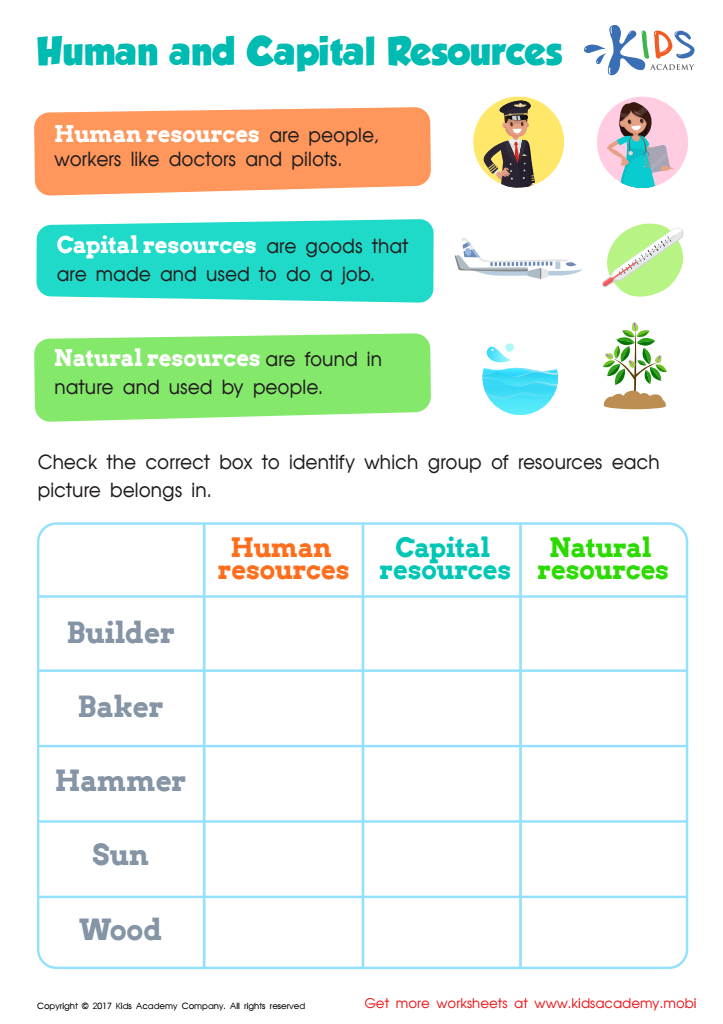
Human and Capital Resources Worksheet
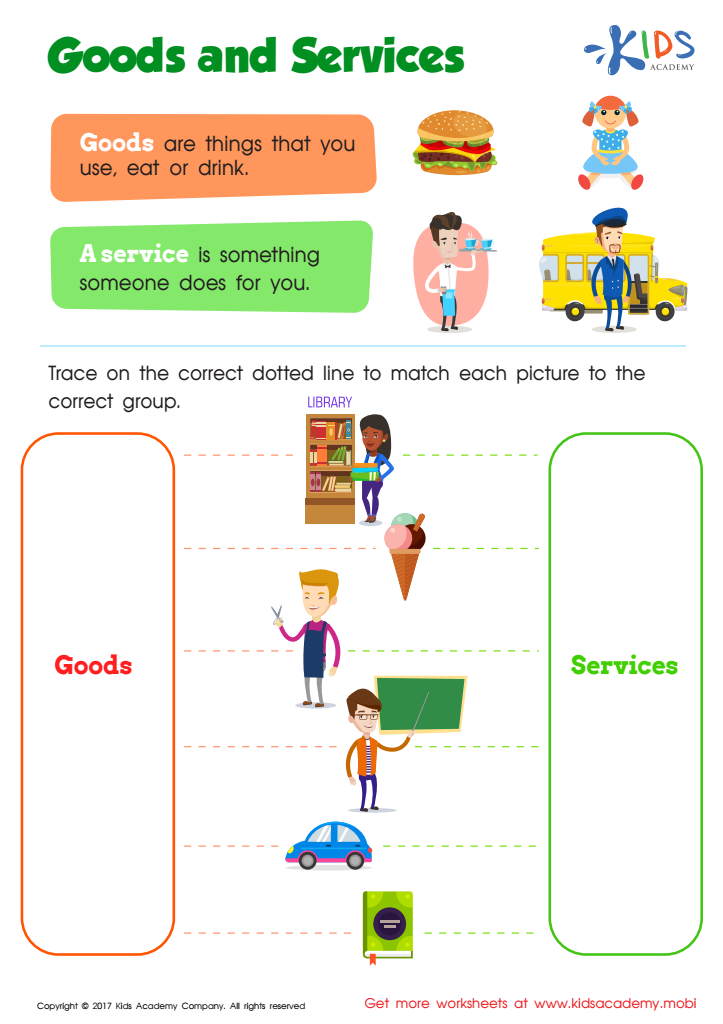
Goods and Services Worksheet


.jpg)




Understanding economics is essential for 9-year-olds, and parents and teachers play a vital role in fostering this knowledge. First, it helps children develop critical life skills. By learning core economic concepts such as supply and demand, budgeting, and the importance of saving, children can make informed decisions about money, which is foundational for their future.
Furthermore, basic economic understanding enhances problem-solving and analytical skills. Children begin to see the interconnectedness of their choices and the world around them, fostering a greater sense of responsibility and decision-making capabilities.
Teaching economics at an early age promotes awareness of social and global issues. Children who grasp these concepts become more empathetic, better understanding issues like poverty, trade, and the environment.
Moreover, economic literacy can inspire entrepreneurial thinking. Children who learn to recognize market opportunities and understand how businesses function may be more inclined to innovate or even start their own ventures.
By making economics accessible and engaging, parents and teachers empower children to navigate an increasingly complex world effectively, preparing them for responsible citizenship and thoughtful participation in their communities. Ultimately, instilling economic knowledge nurtures well-rounded, critical thinkers who can contribute positively to society.








