Syllable identification Normal Writing Worksheets for 9-Year-Olds
3 filtered results
Difficulty Level
Grade
Age
-
From - To
Subject
Activity
Standards
Help your child master the basics of reading and writing with our Syllable Identification Normal Writing Worksheets, tailored for 9-year-olds. These engaging activities are designed to strengthen syllable recognition and improve overall literacy skills. By practicing with varied words, children learn to break them down into syllables, making reading and writing more manageable. Perfect for honing phonological awareness, these worksheets provide a fun and effective approach to language learning. Download now and watch your child's confidence soar as they become proficient in identifying syllables, paving the way for advanced reading skills. Exclusively tailored to meet educational standards.
Favorites
With answer key
Interactive
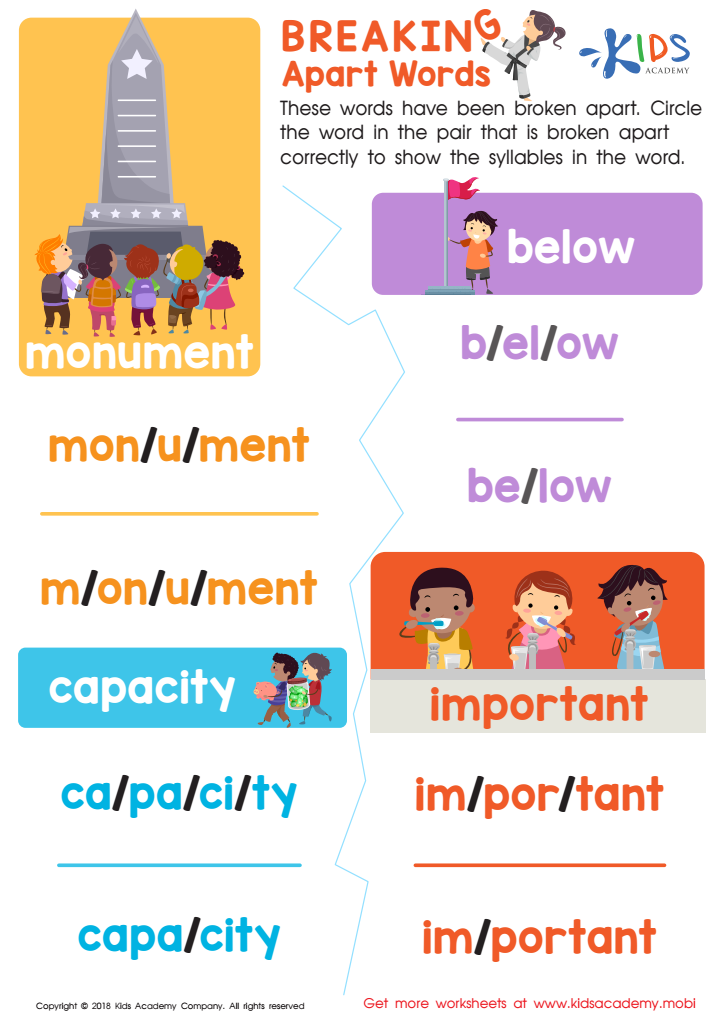
Breaking Apart Words Worksheet
Break words into syllables to make them easier to say correctly. Say each word carefully aloud and get kids to circle the correctly broken apart word in the pair to show the syllables. This worksheet has four words to practice with.
 Assign to My Students
Breaking Apart Words Worksheet
Worksheet
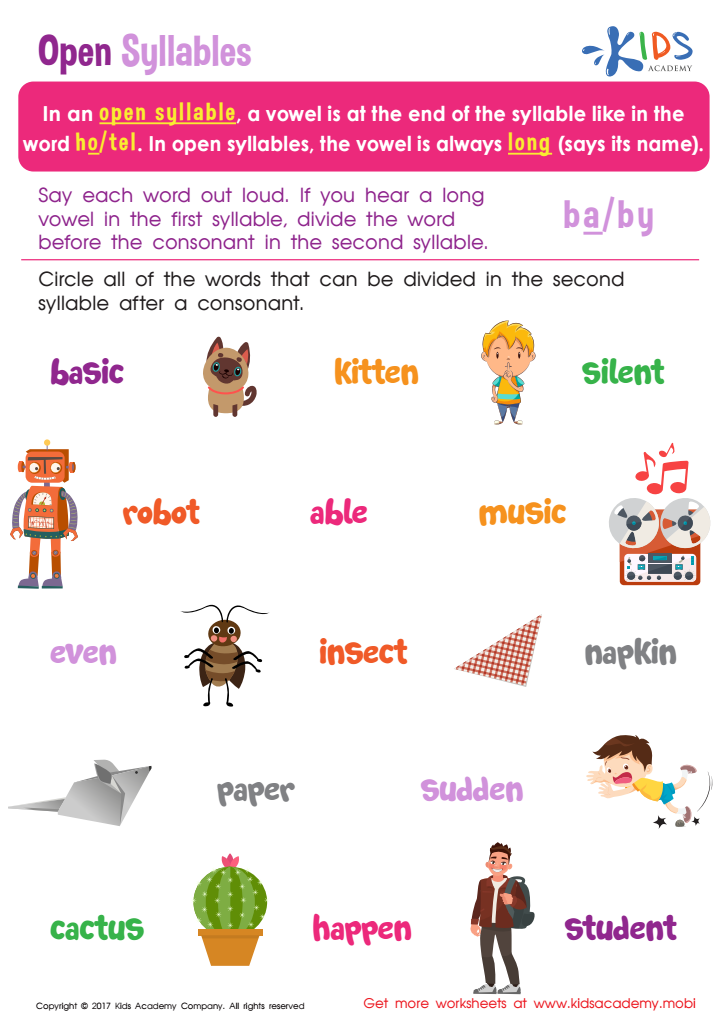
Open Syllable Printable Worksheet
Kids will have fun recognizing open syllables with this colorful worksheet. All they have to do is look for long vowel sounds and read each word aloud. With cute illustrations, they can easily discover the right answers!
Open Syllable Printable Worksheet
Worksheet
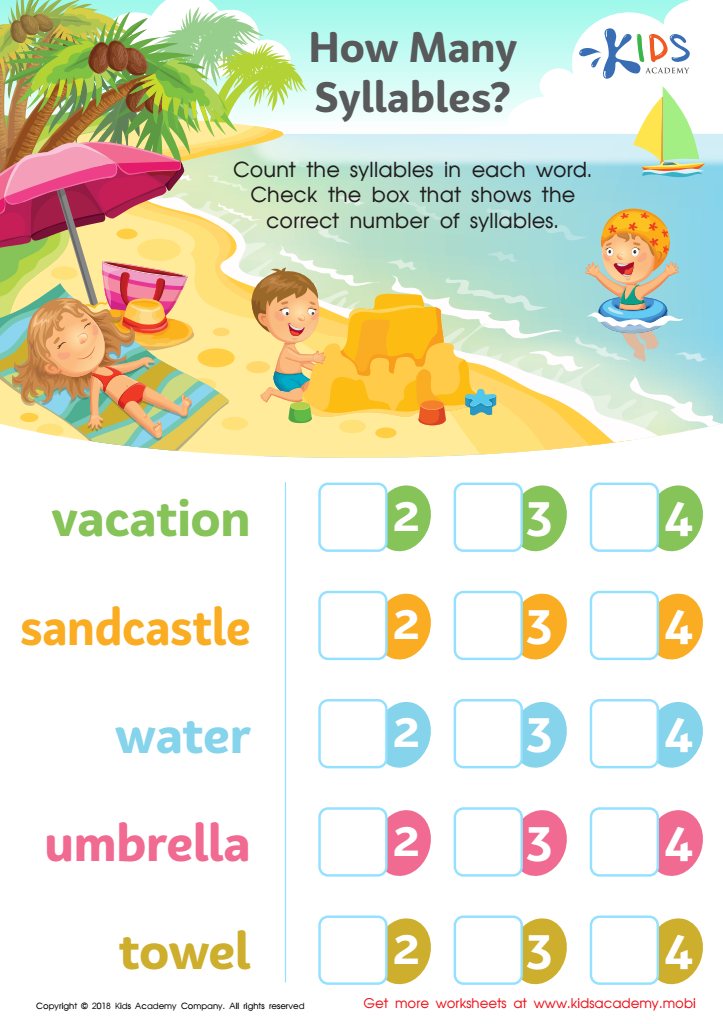
How Many Syllables Worksheet
Draw up memories of sunny beach days with your child. Ask them to tell you their favourite activities, objects seen. Read the words in the picture aloud and help them count the syllables. Then check the box with the right number of syllables.
How Many Syllables Worksheet
Worksheet
Join Kids Academy for Free
Who is primarily going to use this learning content?







Syllable identification is a critical component in a child's literacy development and is particularly relevant for 9-year-olds, who are at a crucial stage of building foundational language skills. Understanding syllables helps children improve their reading fluency, spelling, and writing abilities. By recognizing where words are divided into syllables, children can decode unfamiliar words more efficiently, enhancing their reading proficiency and fostering a love of reading.
Moreover, correct syllable identification supports spelling accuracy by highlighting sound patterns, enabling children to break words into manageable chunks and apply phonetic rules consistently. This skill not only bolsters their spelling but also aids in vocabulary expansion, as children become more adept at tackling multi-syllabic words.
In writing, knowledge of syllable divisions supports better word choices and writing flow. Young writers can construct more complex sentences with confidence, improving both their written expression and comprehension. For teachers and parents, emphasizing the importance of syllables makes the learning process engaging and interactive, fostering a positive educational environment. The resultado of invested attention in syllable identification is overall superior language competence. Ensuring children master this skill is an investment in their academic journeys, equipping them with essential tools for success in both their current and future educational endeavors.