Vocabulary enhancement Normal Elementary Phonics Worksheets
6 filtered results
Difficulty Level
Grade
Age
-
From - To
Subject
Activity
Standards
Enhance your child's vocabulary with our engaging Vocabulary Enhancement Normal Elementary Phonics Worksheets! Designed to make learning fun and effective, these worksheets provide various activities that help young learners build their word recognition and phonics skills. With diverse exercises, including matching words, fill-in-the-blanks, and phonetic puzzles, your child will develop a robust vocabulary foundation. Perfect for educators and parents alike, these printable resources can effortlessly integrate into any lesson plan. Give your child the tools they need to succeed in reading and communication. Explore our collection today and unlock a world of learning possibilities!
Favorites
With answer key
Interactive
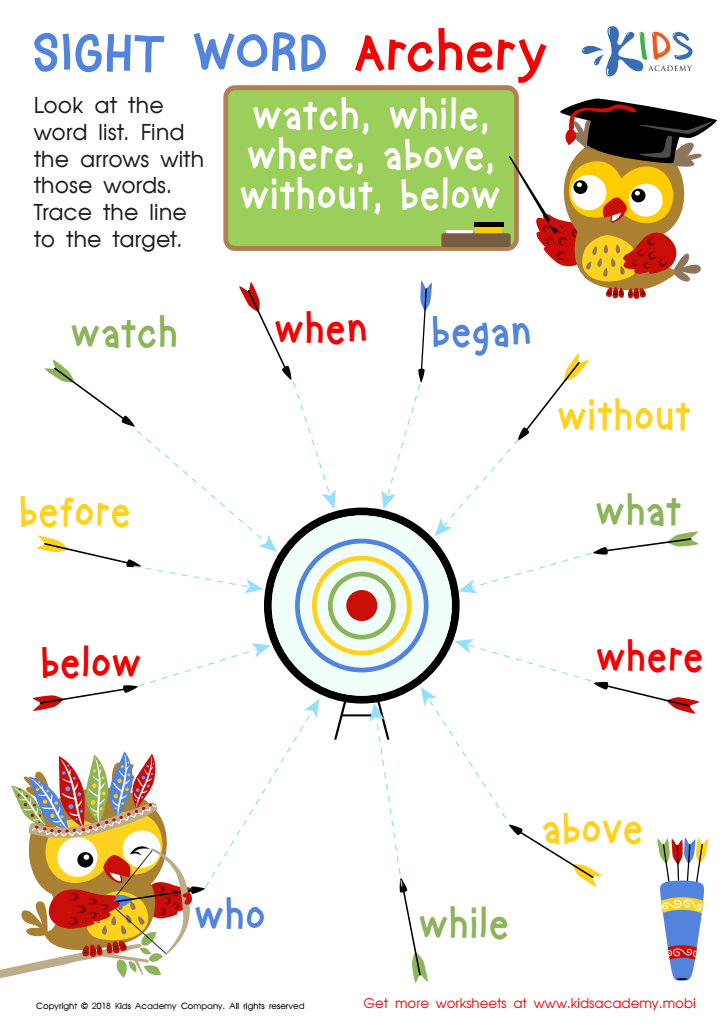
Sight Word Archery Worksheet
Read the words list with your kids, pointing at each one. Ask them to do the same. Help them find the arrows with those words and trace the line to the target in the centre.
 Assign to My Students
Sight Word Archery Worksheet
Worksheet
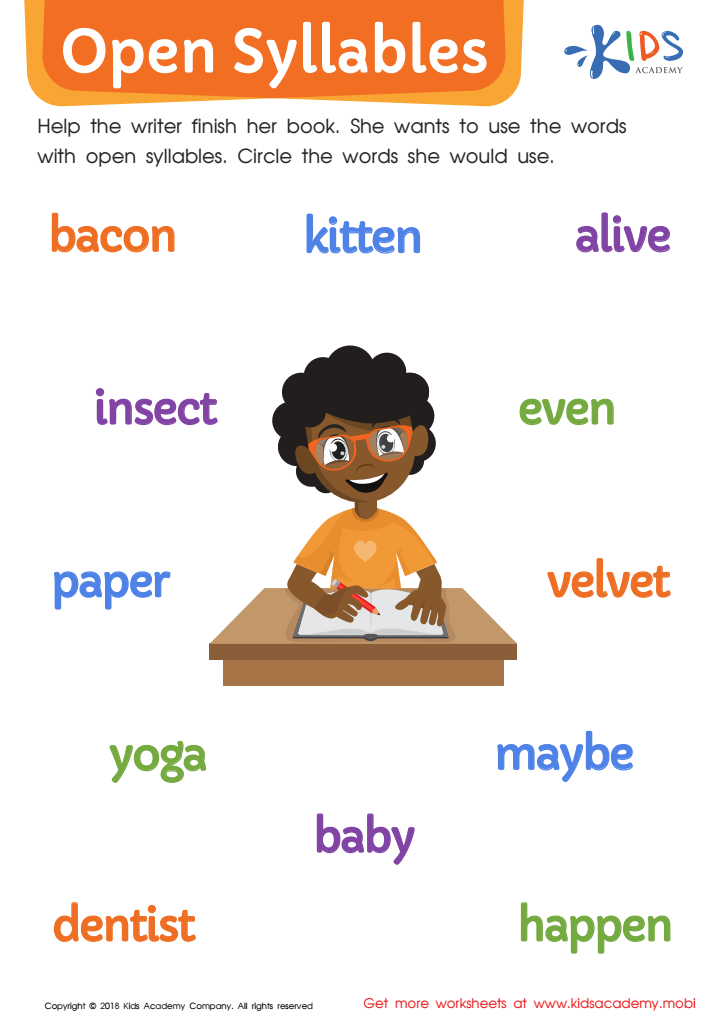
Open Syllables Worksheet
Before beginning this worksheet, make sure your child knows what open syllables are. If not, take time to teach them with examples. Then, help the writer finish her book by circling words with open syllables. She needs your child's help!
Open Syllables Worksheet
Worksheet
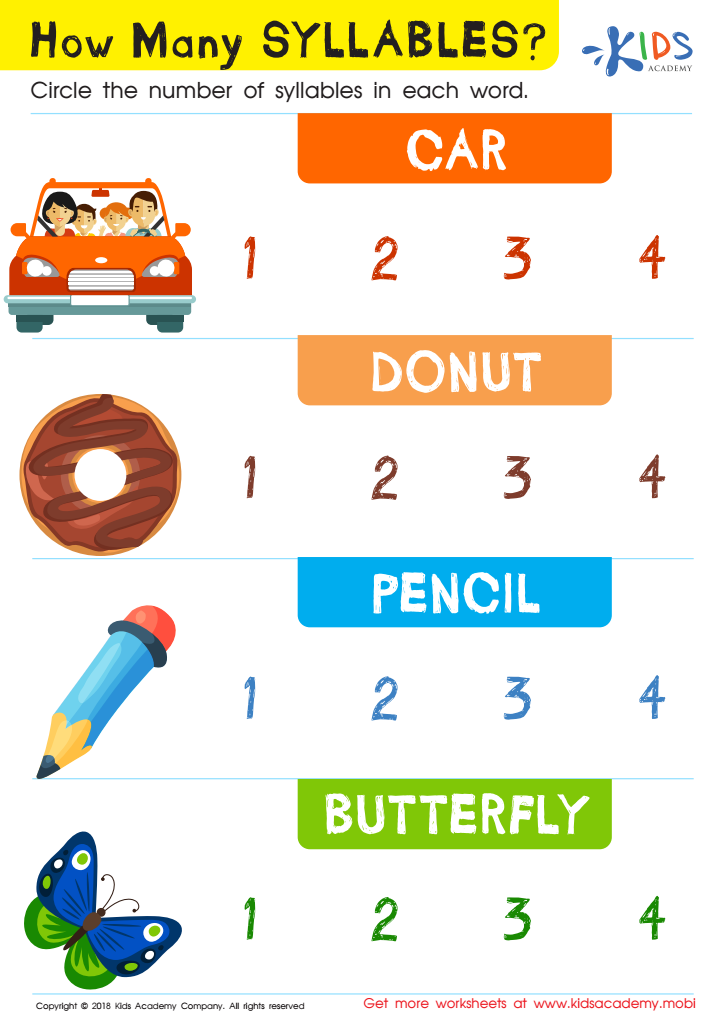
How Many Syllables? Worksheet
Syllabication or 'chunking' helps students decode words more quickly and increase fluency. This traceable worksheet is great for emerging readers, combining fun and fine motor practice with chunking words and counting syllables.
How Many Syllables? Worksheet
Worksheet
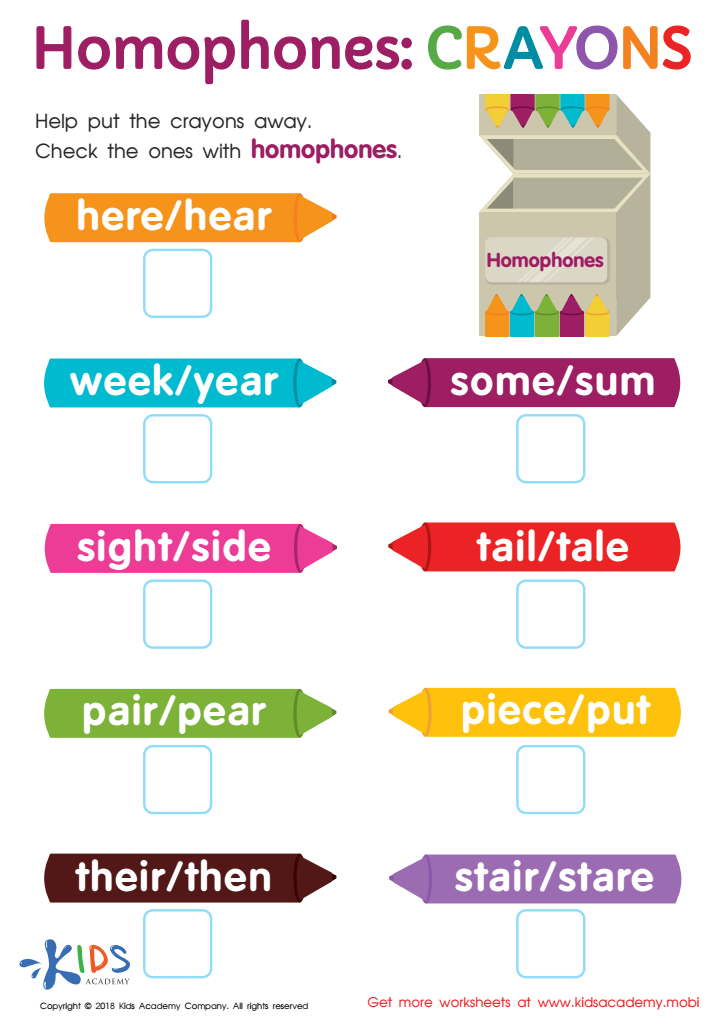
Homophones: Crayons Worksheet
Ask your kids: "What are homophones?" Explain that homophones are words that sound alike but have different meanings, like 'dare' and 'deer'. Ask them to identify homophones by putting the crayons in this printout away according to the words.
Homophones: Crayons Worksheet
Worksheet
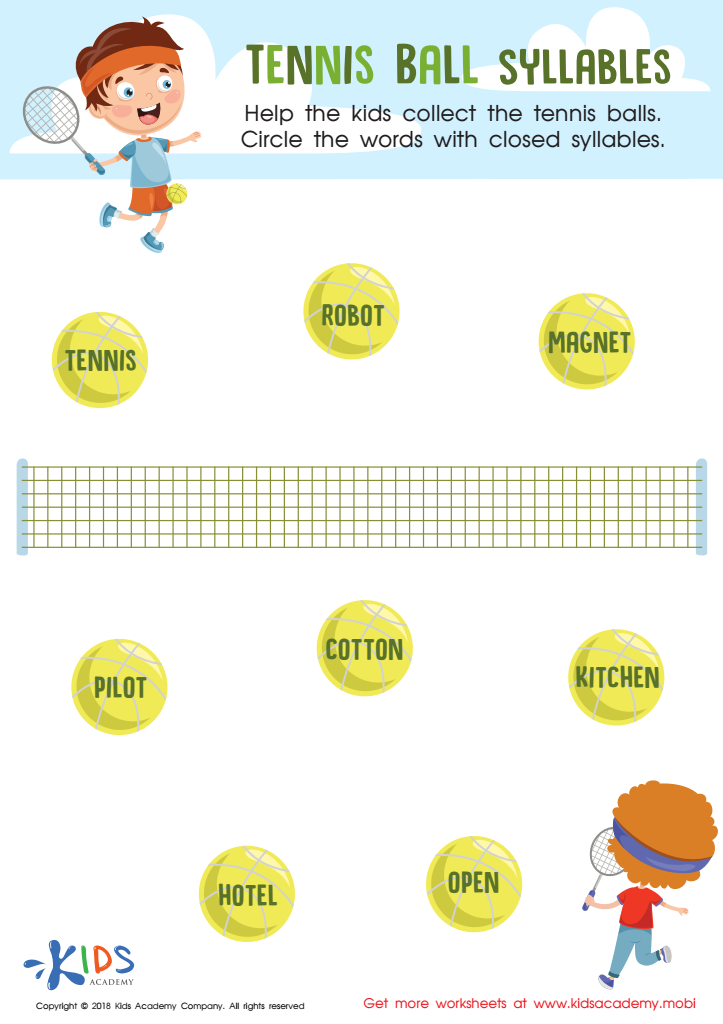
Tennis Ball Syllables Worksheet
To help your kids become fluent speakers, they need to learn syllables. A word can have one to seven syllables, with longer words having more. For this level, they will be working with one or two syllables. Assist them as they circle the words with closed syllables in this worksheet.
Tennis Ball Syllables Worksheet
Worksheet
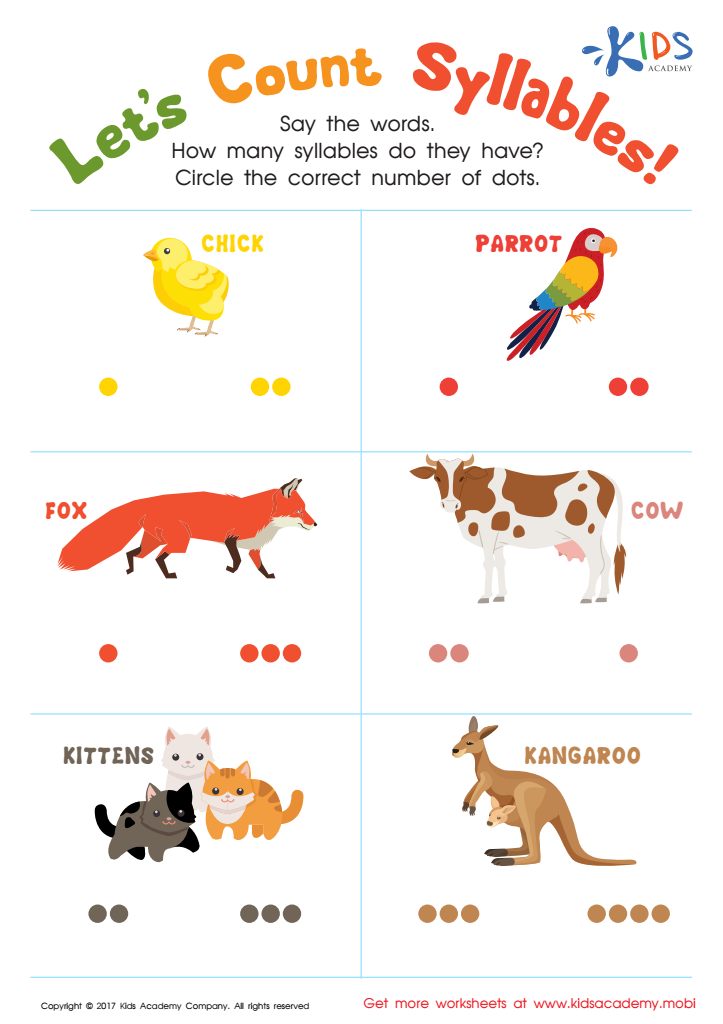
Lets Count Syllables Worksheet
This fun animal worksheet makes learning to read easier by breaking words into syllables. Bright, cheery pictures give context and help kids choose the right syllable count. Count together and enjoy as your child learns and gains success!
Lets Count Syllables Worksheet
Worksheet
Join Kids Academy for Free
Who is primarily going to use this learning content?




Vocabulary enhancement through Normal Elementary Phonics is crucial for parents and teachers for several reasons. First and foremost, a strong vocabulary supports reading fluency and comprehension, enabling children to decode words effectively and understand the texts they encounter. Proficient phonics instruction not only aids in recognizing words but also promotes spelling and writing skills. As children learn the relationship between letters and sounds, they become more confident readers and communicators.
Additionally, a rich vocabulary fosters cognitive development and critical thinking. When children have access to a wide range of words, they are better equipped to express their thoughts and ideas, engage in discussions, and participate fully in classroom activities. This linguistic foundation lays the groundwork for success across all subjects, contributing to improved academic performance.
Encouraging vocabulary enhancement also promotes a love for reading and learning. When students can understand and freely use words, they become more engaged readers, developing an intrinsic motivation to explore books and knowledge. For educators and parents, investing time in phonics and vocabulary development is investing in a child’s future—one that is characterized by effective communication, enhanced learning, and lifelong educational success. Therefore, vocabulary enhancement is both a foundational skill and a critical pathway for holistic development in children's education.