Phonological awareness Normal Alphabet Worksheets
3 filtered results
-
From - To
Boost your child's reading skills with our Phonological Awareness Normal Alphabet Worksheets! Designed for early learners, these engaging and interactive worksheets help children recognize sounds, syllables, and letter patterns, fostering a strong foundation for literacy. With a variety of activities, including identifying beginning sounds, rhyming, and segmenting words, our resources make learning fun and effective. Each worksheet encourages critical thinking and promotes a love for reading, making them perfect for classroom use or at-home practice. Ideal for preschool and kindergarten students, our phonological awareness worksheets are the perfect tool to enhance your child's reading journey. Explore our collection today!
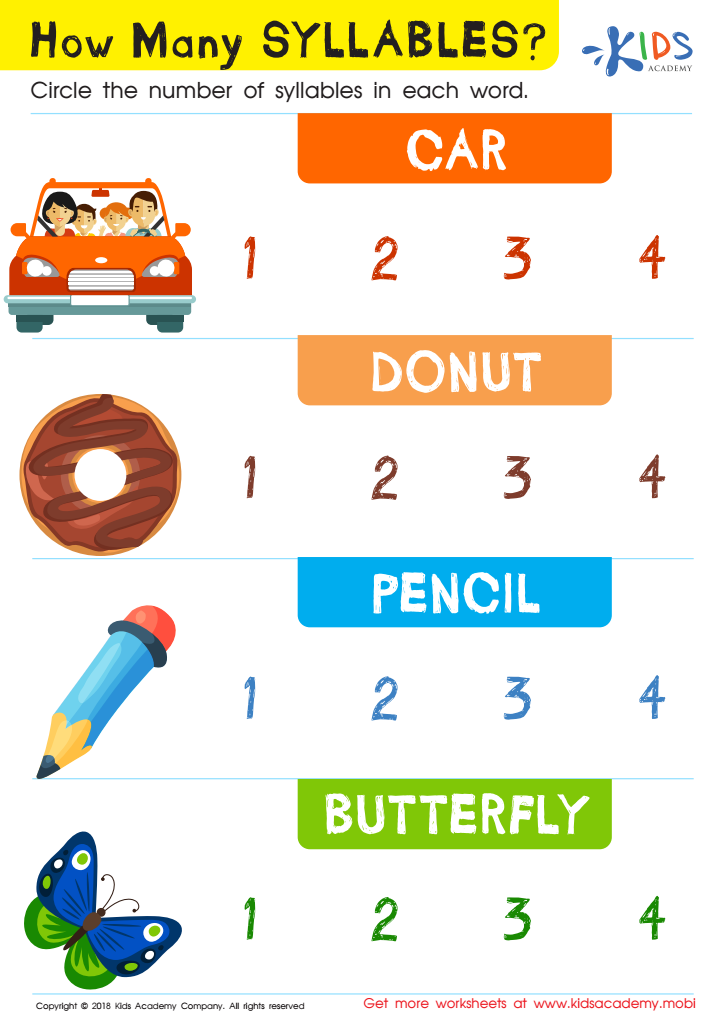
How Many Syllables? Worksheet
 Assign to My Students
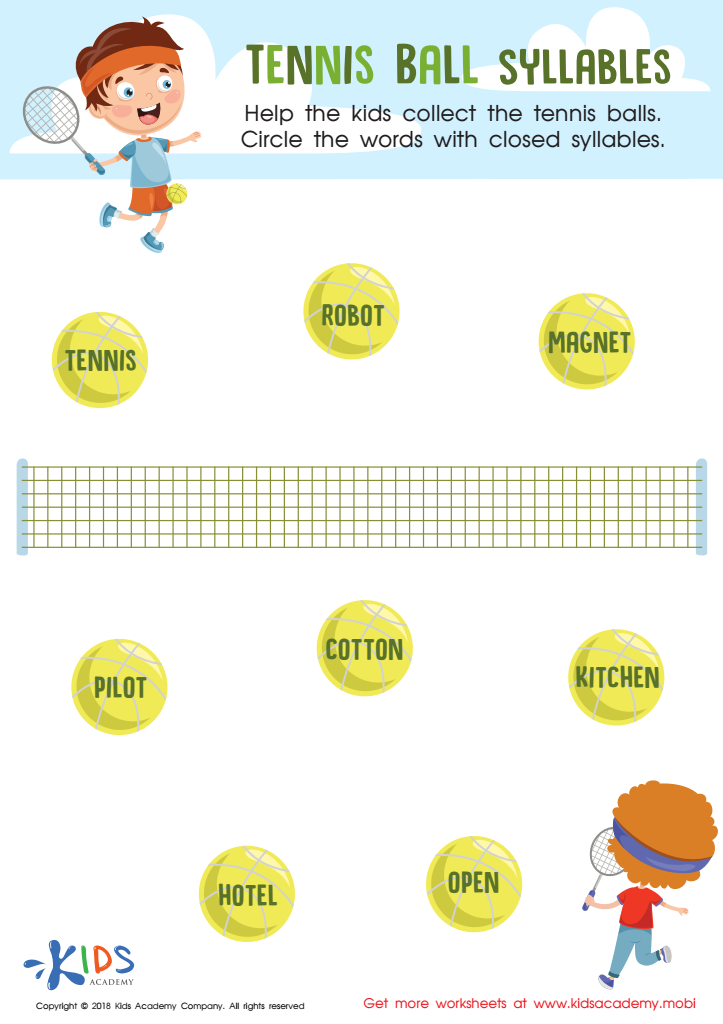
Tennis Ball Syllables Worksheet
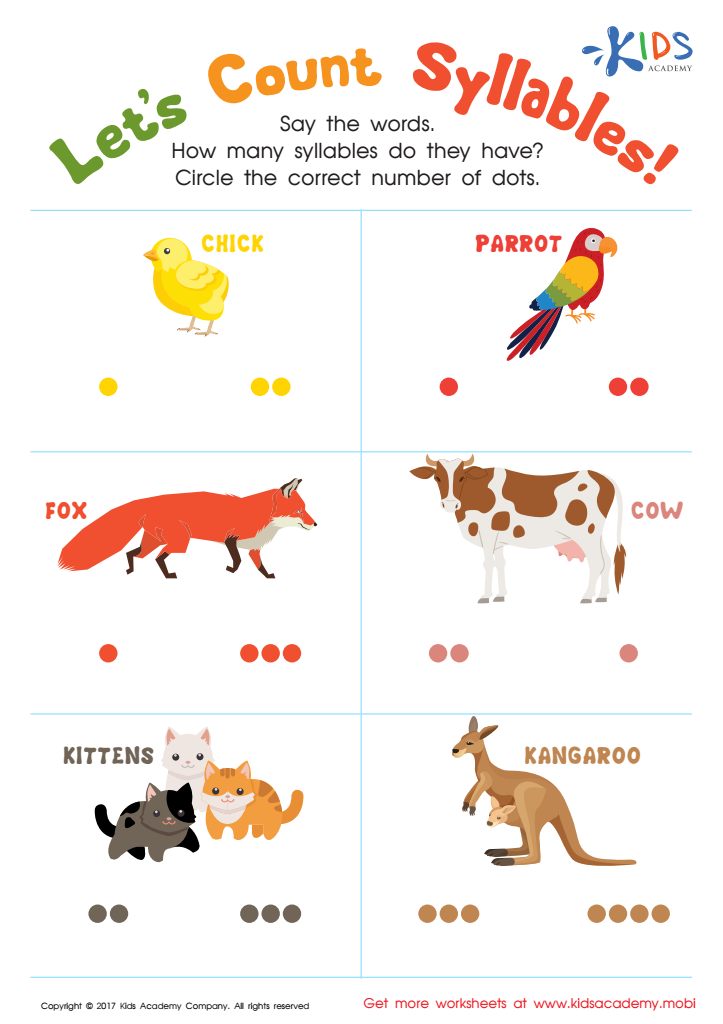
Lets Count Syllables Worksheet







Phonological awareness is a critical skill in early literacy development, encompassing the ability to recognize and manipulate sounds in spoken language. It lays the foundation for mastering reading and writing, making it essential for both parents and teachers to prioritize.
Understanding phonological awareness can significantly enhance a child's reading skills, as it enables them to break down words into individual sounds or syllables, which is crucial for decoding new words. Students with strong phonological awareness are better equipped to blend sounds, recognize rhymes, and differentiate between similar-sounding words.
By nurturing this skill early on, parents and teachers can help prevent future reading difficulties, fostering a more positive learning experience. Activities such as rhyming games, clapping out syllables, and sound-matching exercises can be easily integrated into daily routines, making learning enjoyable and engaging.
Moreover, phonological awareness is linked to broader academic achievement and self-confidence in literacy tasks. When parents and teachers model and encourage these skills, they contribute to a child's overall language development, paving the way for successful reading, comprehension, and writing throughout their educational journey. Ultimately, investing time in developing phonological awareness is a gift that supports a child's lifelong learning and literacy success.







