Sound-letter association Normal Alphabet Worksheets
3 filtered results
-
From - To
Sound-letter Association Normal Alphabet Worksheets are an essential educational tool designed to help young learners connect letters with their corresponding sounds. Each worksheet offers engaging activities that reinforce phonemic awareness, supporting early reading and writing skills. By completing tasks such as matching letters to images, tracing, and coloring, children will gain confidence in their alphabet knowledge. These worksheets are perfect for both classroom use and at-home practice, making early literacy a fun and interactive experience. Ideal for preschool and kindergarten children, they lay a strong foundation for successful reading, ensuring a smooth transition from recognizing letters to actual word formation.
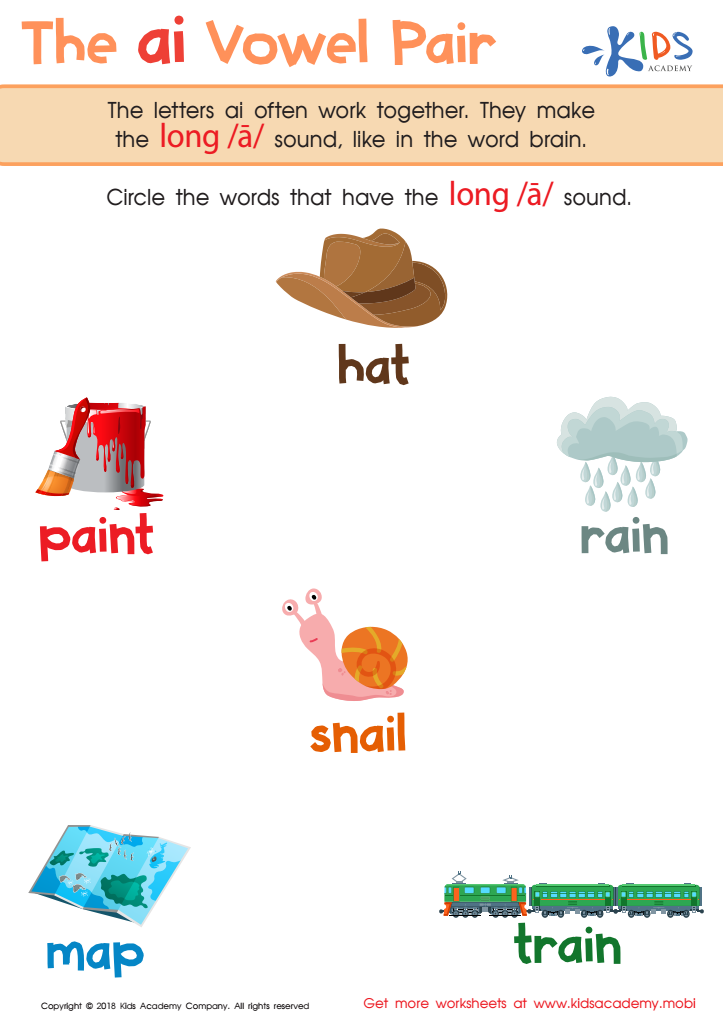
The AI Vowel Pair Worksheet
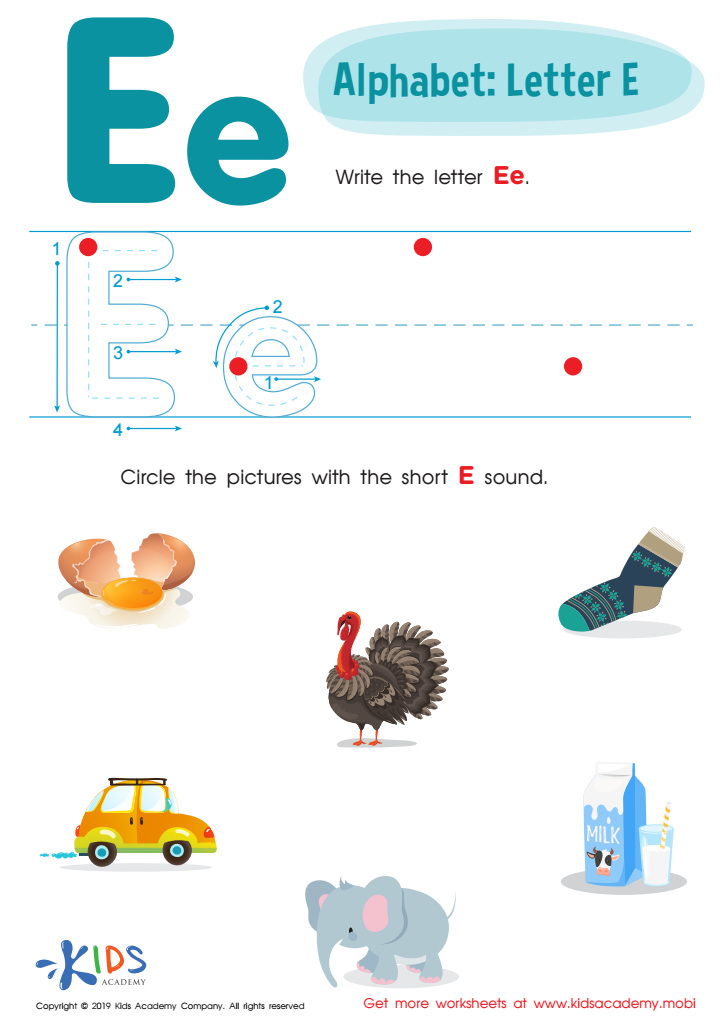
Letter E Tracing Worksheet
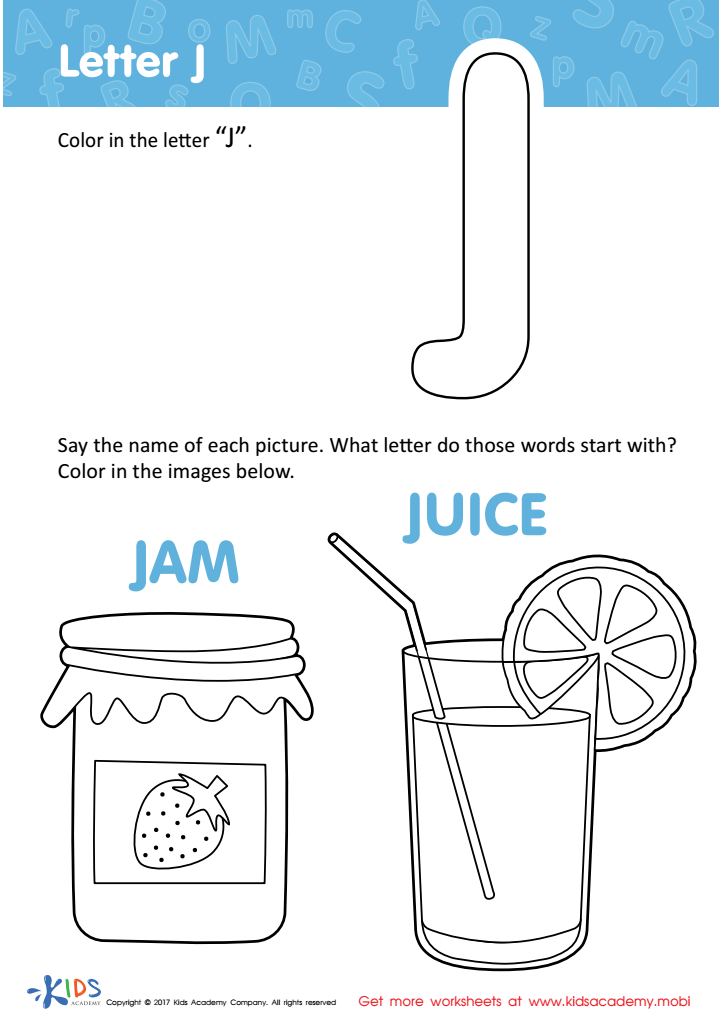
Letter J Coloring Sheet
 Assign to My Students








Sound-letter association, where children connect specific sounds (phonemes) to their corresponding letters (graphemes), is crucial in early literacy development. Parents and teachers should deeply care about this facet for multiple reasons.
Firstly, strong sound-letter associations form the foundation of phonemic awareness, a critical skill necessary for proficient reading and spelling. By understanding that sounds map to particular letters, children gain the ability to decode new words, improving their reading fluency and comprehension. This foundational knowledge facilitates a smoother transition from recognizing individual words to understanding complex texts.
Secondly, mastering sound-letter associations enhances children’s writing skills. When children can accurately match sounds to letters, they are more able to translate their spoken words into written form, fostering clearer and more confident communication.
Strong sound-letter foundations also support better academic outcomes across subjects. Reading proficiency is intertwined with overall educational success, affecting a child's ability to excel in areas like math, science, and history where reading instructions and understanding questions are necessary.
Lastly, early success in reading and writing boosts confidence and encourages a lifelong love of learning. Cultivating these associations requires proactive efforts from both parents and teachers, but the long-term benefits of establishing strong literacy skills cannot be overstated.







