Lowercase identification Normal Letter Recognition Worksheets
4 filtered results
-
From - To
Our Lowercase Identification Normal Letter Recognition Worksheets are designed to help young learners master the alphabet efficiently. Through engaging exercises, children in early grades enhance their literacy skills by identifying and differentiating lowercase letters. These comprehensive, printable worksheets offer vibrant illustrations and interactive activities that hold children's attention while facilitating essential reading foundations. Perfect for home or classroom use, these resources foster a fun and nurturing environment, promoting confidence in young readers. Dive into our collection to empower your child's journey toward proficient letter recognition and fluency. Explore now to give your little one the educational boost they deserve!
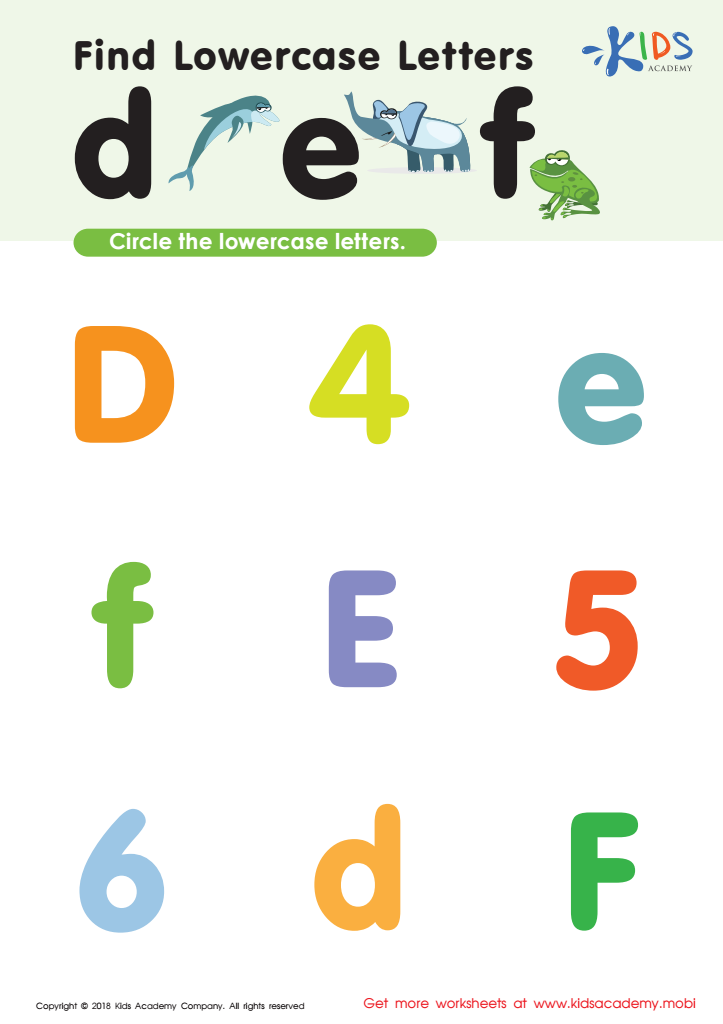
Find Lowercase Letters d e f Worksheet
 Assign to My Students
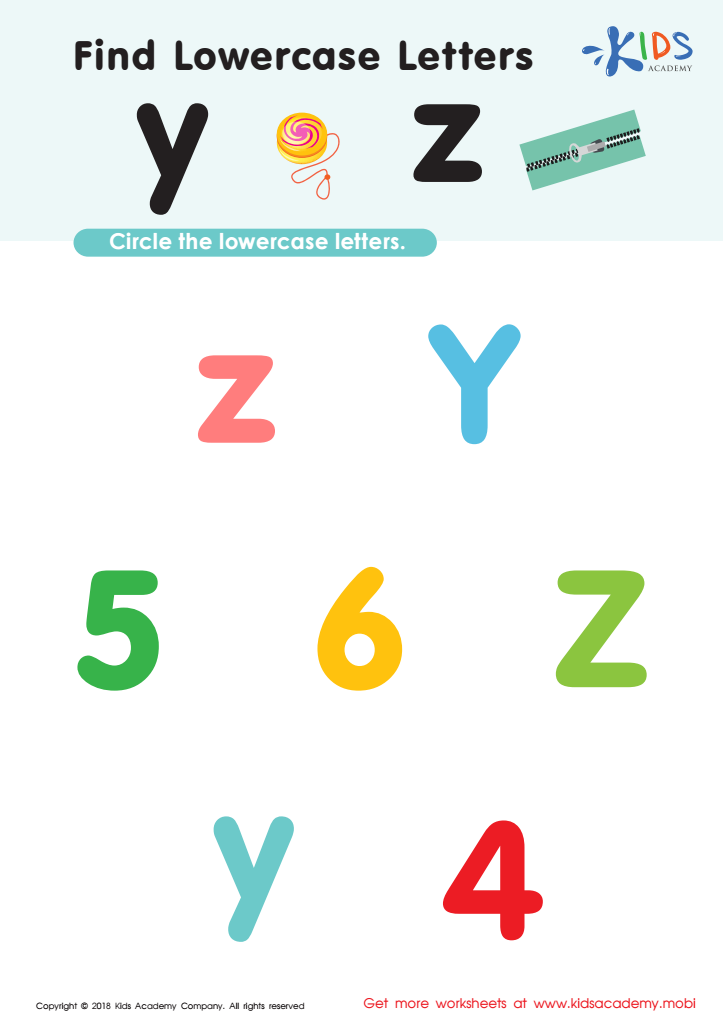
Find Lowercase Letters y z Worksheet
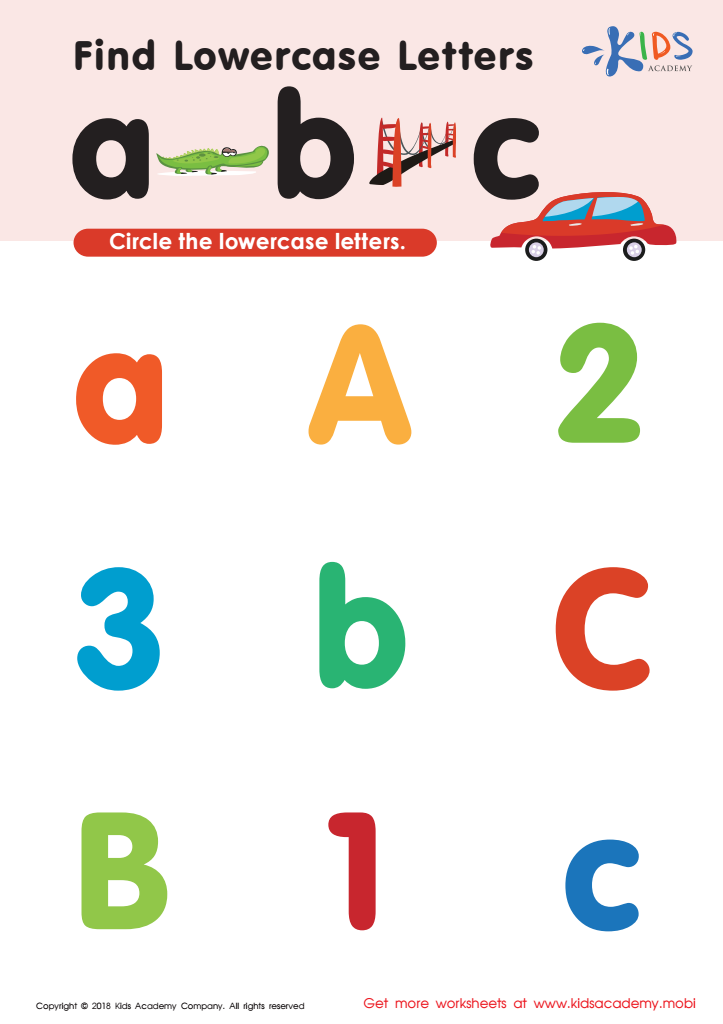
Find lowercase letters a b c Worksheet
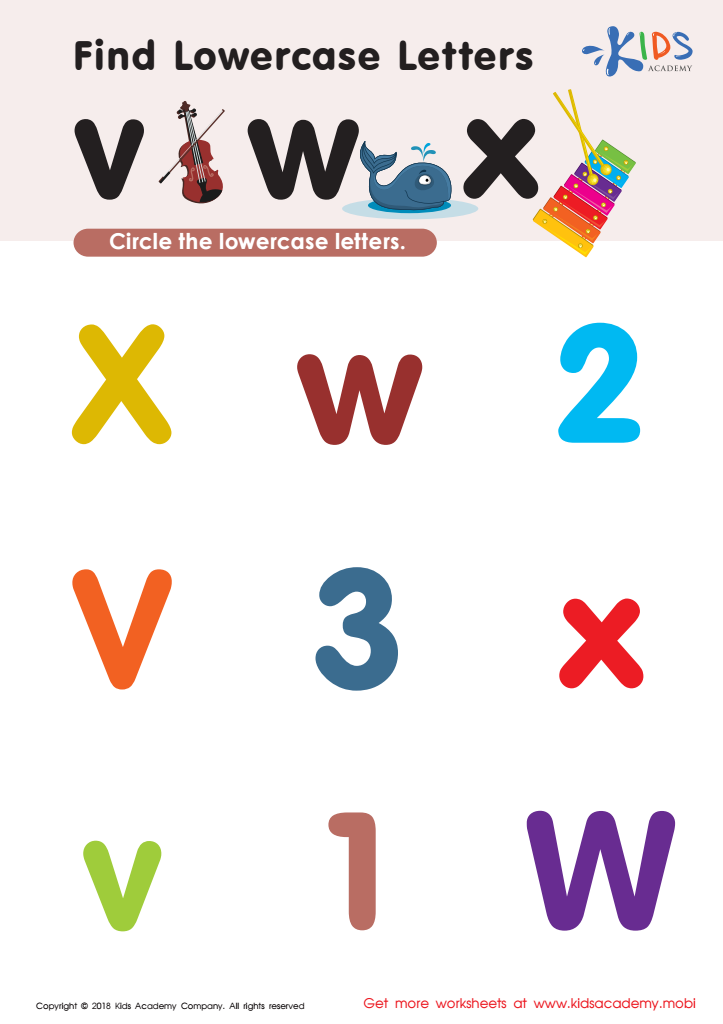
Find Lowercase Letters v w x Worksheet








Lowercase identification and normal letter recognition are foundational skills in early literacy development, essential for both reading and writing. When children recognize lowercase letters fluidly, they gain the building blocks needed to decode words, since most printed text features lowercase letters. Therefore, a child's ability to identify these letters directly influences their proficiency in reading. Difficulty in this area can lead to frustration and a lack of confidence, impacting their academic journey.
Moreover, normal letter recognition is critical for effective communication. Properly understanding letters empowers children to express their thoughts clearly and understand others', fostering both cognitive and social skills. It supports not only their ability to read books and write stories but also their capacity to follow written directions and participate in class activities.
Teachers and parents play a crucial role in facilitating an encouraging environment where children can practice and master these skills. Early intervention and support in lowercase identification and letter recognition can help prevent reading difficulties, ensuring children have a strong foundation from which to advance their education. This focus also instills a love for reading and learning, contributing to lifelong success. For these reasons, prioritizing lowercase identification and normal letter recognition is fundamental to a child's overall development.








