
Phonics Skills Normal Letter Sounds Worksheets
7 filtered results
Difficulty Level
Grade
Age
-
From - To
Subject
Activity
Standards
Boost your child's reading readiness with our engaging Phonics Skills Normal Letter Sounds Worksheets! Designed for early learners, these worksheets help children master the sounds of each letter in the alphabet, building a strong foundation for reading and writing. Fun and interactive, the activities promote sound recognition, blending, and pronunciation. Our printable resources cater to diverse learning styles, making phonics enjoyable and accessible. Ideal for classroom and home use, these worksheets are perfect for reinforcing phonics skills in a playful and effective way. Help your child unlock the world of words today – start their phonics journey with us!
Favorites
With answer key
Interactive
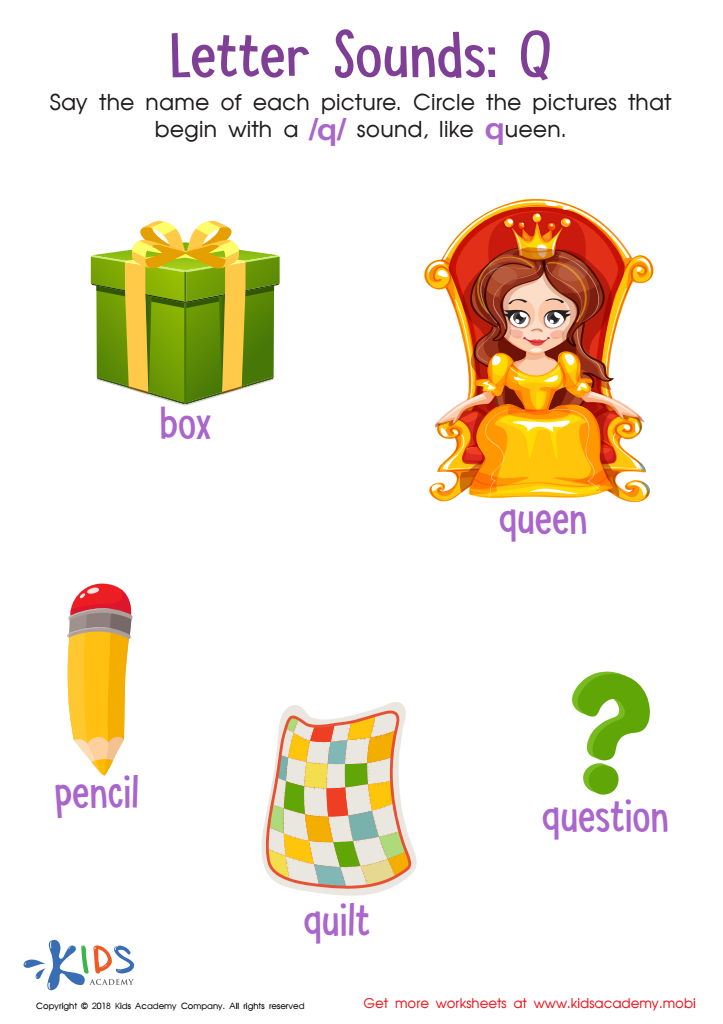
Letter Q Sounds Worksheet
Kids can get confused between "K" and "Q" sounds. Help them learn with this phonics worksheet. They'll name each image and read the word underneath. Point out that words with "Q" also have a "U" which affects how it sounds. Have them circle the matching pictures and watch as they learn this unique letter sound.
 Assign to My Students
Letter Q Sounds Worksheet
Worksheet
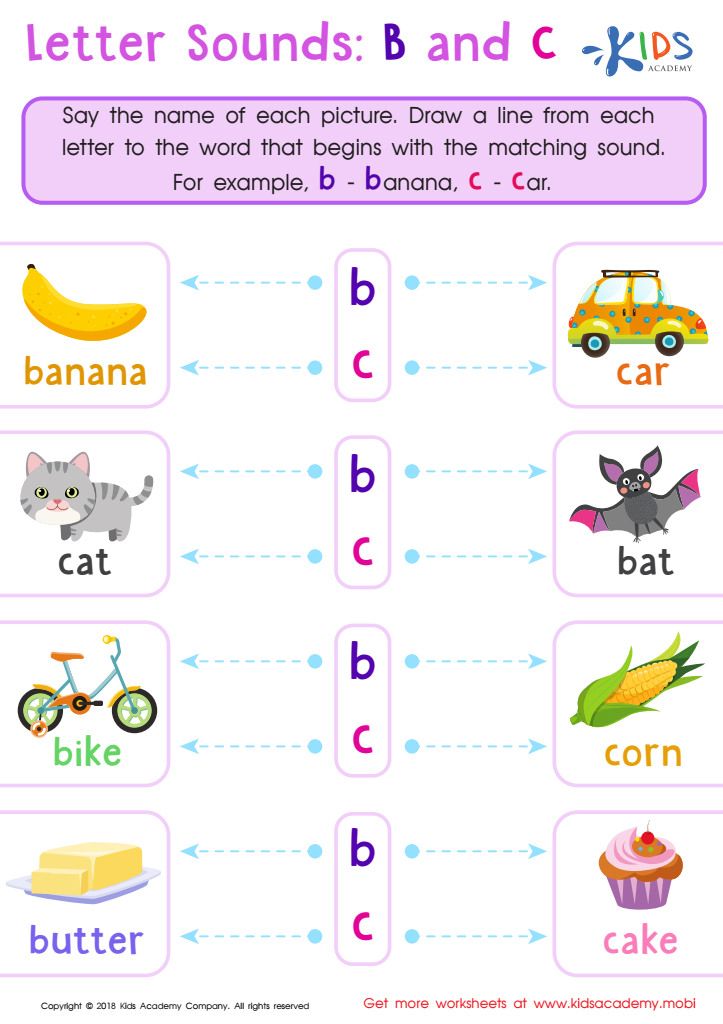
Letter B and C Sounds Worksheet
This fun worksheet offers bright, engaging pictures and helps kids learn to distinguish between the sounds of "B" and "C". With the use of pictures and familiar items, kids will trace lines to the correct initial consonant sound, while also developing fine-motor skills. It's a great way to build decoding ability!
Letter B and C Sounds Worksheet
Worksheet
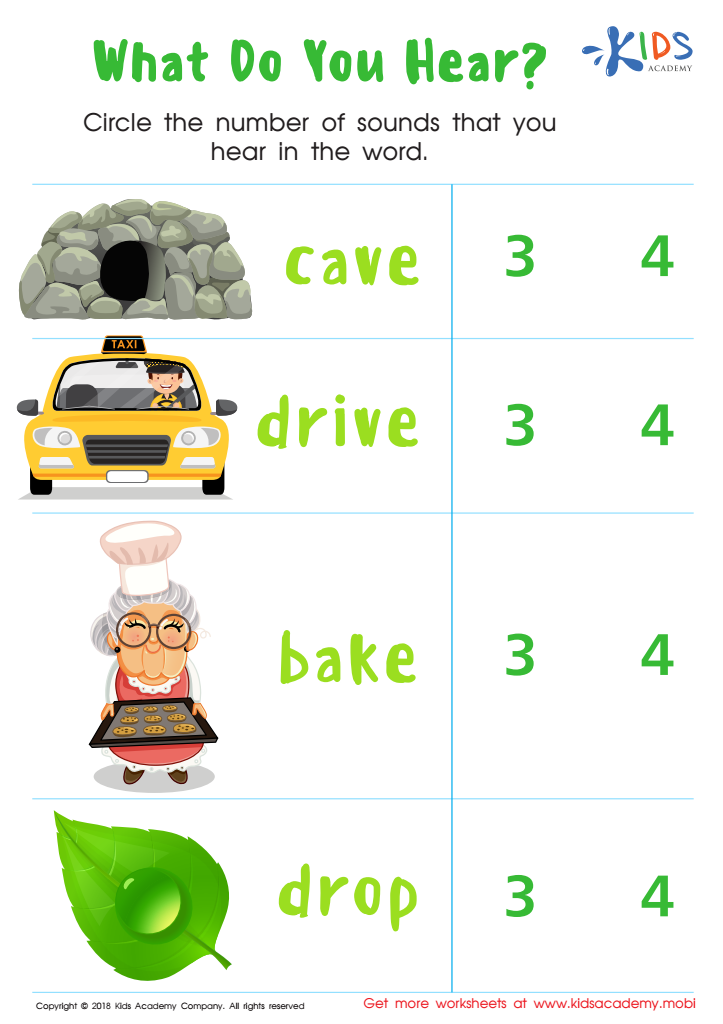
What Do You Hear? Worksheet
New readers can develop phonological awareness with this fun worksheet. They'll isolate sounds in words and count them, then circle the number of sounds heard. It'll help build their auditory discrimination and decoding skills, leading to more fluent reading. Without even knowing it, their reading skills are improving!
What Do You Hear? Worksheet
Worksheet
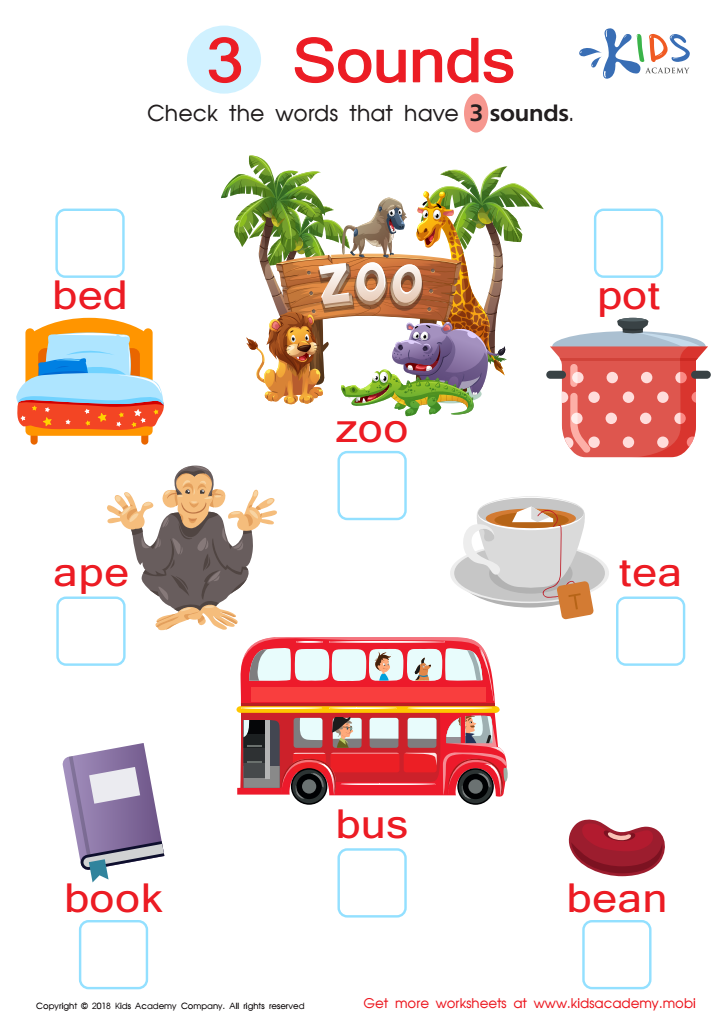
3 Sounds Worksheet
Kids will love learning with this free, colorful worksheet. It's full of familiar words they can name and sound out with three distinct sounds. This helps build decoding skills, plus they get to check off words they read. It's a fun way to teach children to identify and use sounds.
3 Sounds Worksheet
Worksheet
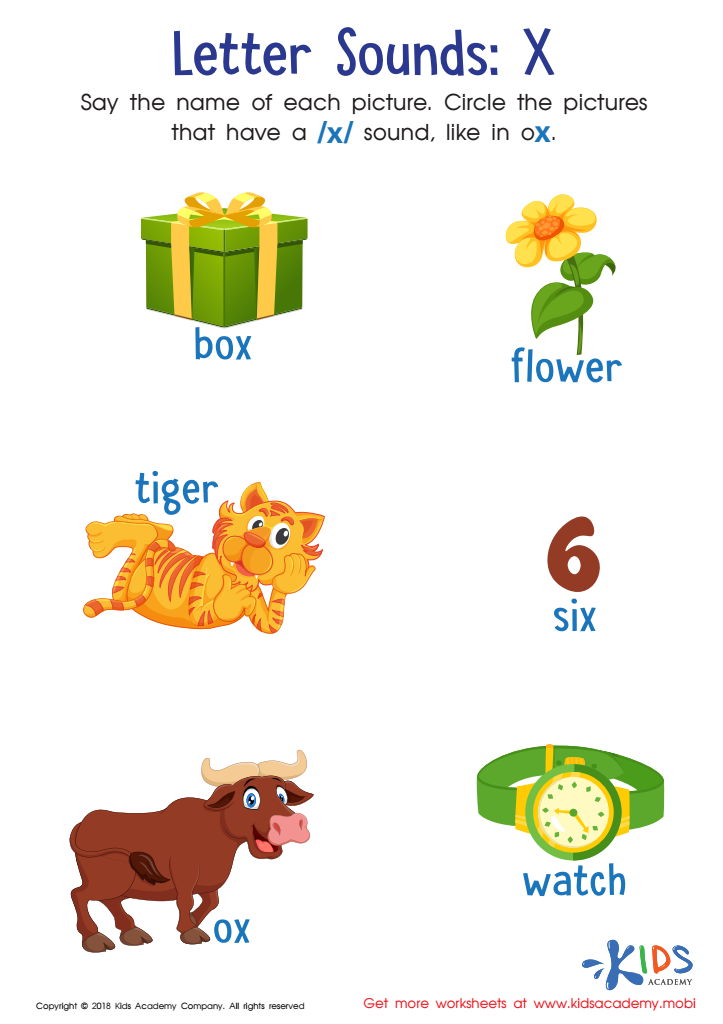
Letter X Sounds Worksheet
Help your early learner master the letter X sound with this fun, illustrated phonics worksheet. Have kids name the pictures, listening for the pronunciation of each. Have them circle only the pictures with the X sound, then double check by looking for the letter in the word below.
Letter X Sounds Worksheet
Worksheet
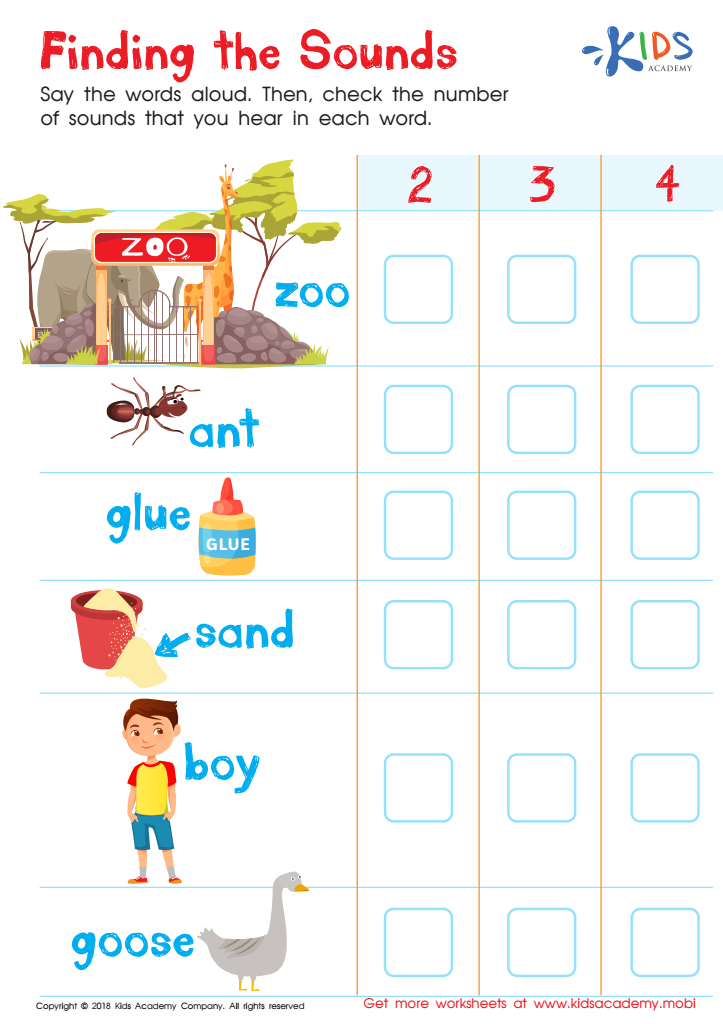
Finding the Sounds Worksheet
This free colorful worksheet assists children in learning words and breaking them down into sounds. It boosts auditory discrimination, phonological awareness and fine motor skills. Picture clues help them read confidently, and they can check the appropriate boxes to practice their reading skills.
Finding the Sounds Worksheet
Worksheet
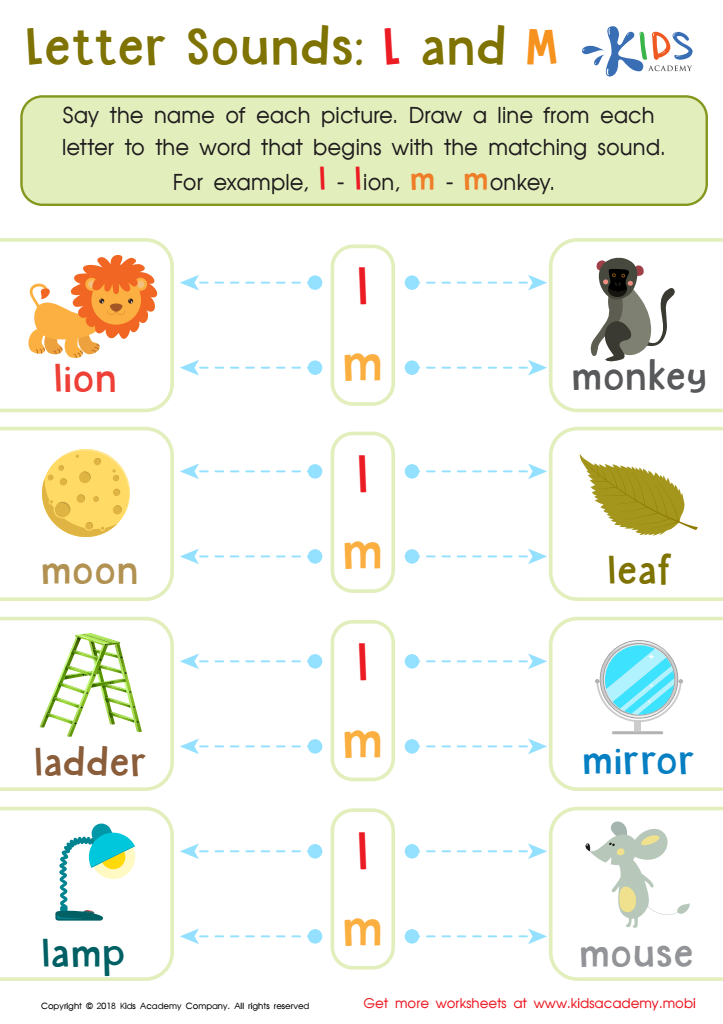
Letter l and M Sounds Worksheet
Our Kids Academy phonics practice pages give clear instructions and captivating pictures to pique children's interest. This fun worksheet helps kids identify a picture, then match its beginning sound. Listen and say each word - does it start with "L" or "M"? Trace the dotted line from the letter to the correct match and listen closely to the sound it makes.
Letter l and M Sounds Worksheet
Worksheet
Join Kids Academy for Free
Who is primarily going to use this learning content?








Phonics skills, particularly understanding normal letter sounds, are fundamental to children's reading and writing development. Parents and teachers should care about these skills because they form the building blocks for literacy. When children grasp the connection between sounds and letters, they become equipped to decode words, significantly improving their reading fluency and comprehension.
Moreover, strong phonics skills promote confidence in young learners. When children can sound out words accurately, they can approach reading independently, fostering a love for books and learning. This is especially crucial in early education when positive attitudes towards literacy are formed.
Additionally, phonics instruction supports a child's overall academic success. Many subjects require reading comprehension, and a solid foundation in letter sounds can enhance learning across the curriculum. Furthermore, early exposure to these skills can help prevent reading difficulties later in life, ensuring that all children have the opportunity to succeed.
Lastly, by caring about phonics skills, parents and teachers can actively participate in nurturing a literate society. Supporting early literacy efforts helps to close achievement gaps, giving every child an equal chance to thrive in school and beyond. Thus, investing in phonics is investing in a brighter future for our children.






