Lowercase identification Normal Lowercase/Small Letters Worksheets
4 filtered results
-
From - To
Discover our engaging Lowercase Identification worksheets designed to enhance young learners' recognition of lowercase letters. These printable resources provide a fun and interactive way for children to practice identifying and writing small letters. Each worksheet features various activities that promote engagement and foster essential literacy skills. From tracing to matching exercises, your students will enjoy mastering lowercase letters while developing their fine motor skills. Ideal for preschool and early elementary settings, these worksheets align with foundational reading and writing objectives, making learning an enjoyable experience. Help your child gain confidence in their literacy journey with our expertly crafted lowercase letter identification activities!
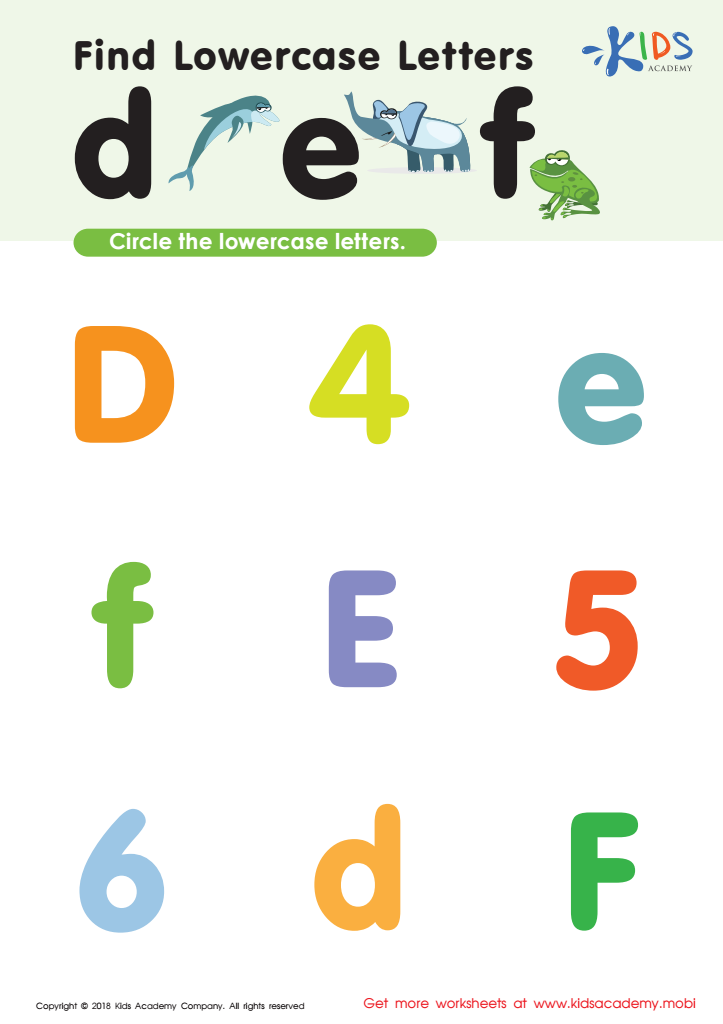
Find Lowercase Letters d e f Worksheet
 Assign to My Students
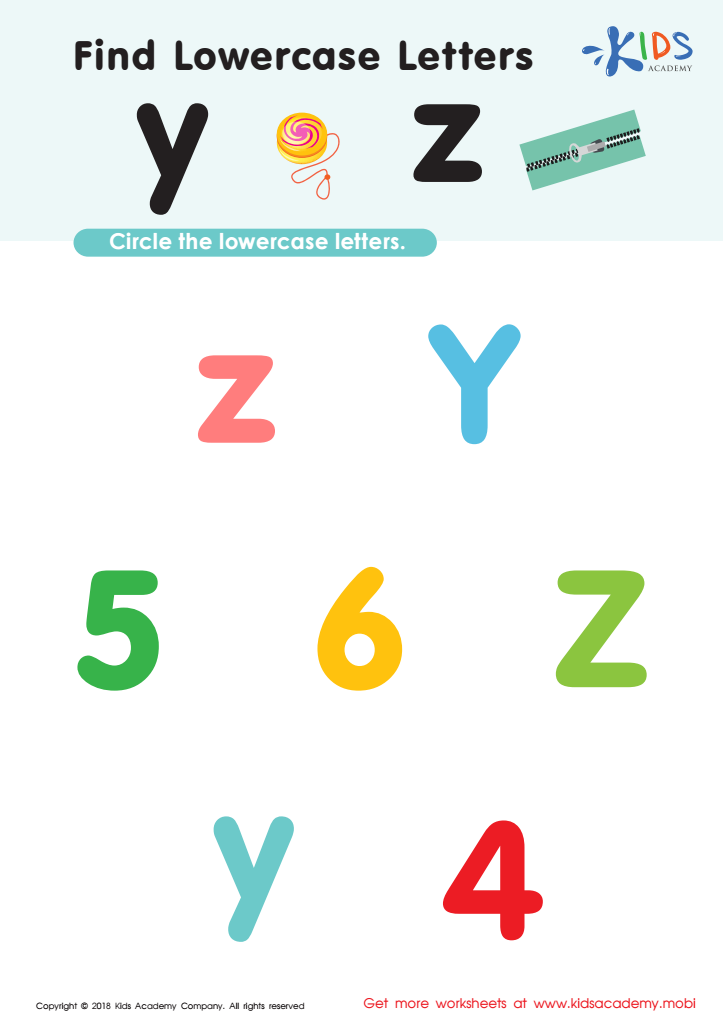
Find Lowercase Letters y z Worksheet

Find lowercase letters a b c Worksheet

Find Lowercase Letters v w x Worksheet


Identifying lowercase letters is a crucial skill in early childhood education, as it forms the foundation for reading and writing. Parents and teachers should prioritize lowercase identification because it plays a key role in helping children recognize the most common form of written communication. Most texts, whether they are children's books or everyday signs, primarily feature lowercase letters.
Understanding lowercase letters boosts a child's ability to decode words, leading to improved reading fluency and comprehension. When children are familiar with the shape and sound associated with lowercase letters, they can more easily connect letters to the spoken language, facilitating a smoother transition into reading full sentences and paragraphs.
Furthermore, learning lowercase letters enhances fine motor skills as children practice writing these smaller forms. This prepares them for writing tasks in school, where they will predominantly use lowercase letters in print. Additionally, this skill fosters confidence; when children can recognize and use lowercase letters fluently, they feel more engaged in reading and writing activities.
In conclusion, focusing on lowercase identification not only supports literacy development but also lays the groundwork for effective communication and a lifelong love of learning, making it an essential area of focus for both parents and educators.