Phonological awareness Normal Phonics Worksheets
3 filtered results
-
From - To
Phonological awareness is a critical foundation for reading success, and our "Phonological Awareness Normal Phonics Worksheets" offer engaging activities designed specifically for early learners. Through fun exercises, children will develop their ability to recognize and manipulate sounds in words, including rhyming, blending, and segmenting. These curated worksheets cater to various skill levels, ensuring a progressive learning experience that nurtures confidence and competency. Ideal for parents and educators, our resources provide a structured approach to fostering essential phoneme awareness, setting the stage for proficient reading and spelling skills. Explore our expertly crafted worksheets to support your child's literacy journey today!
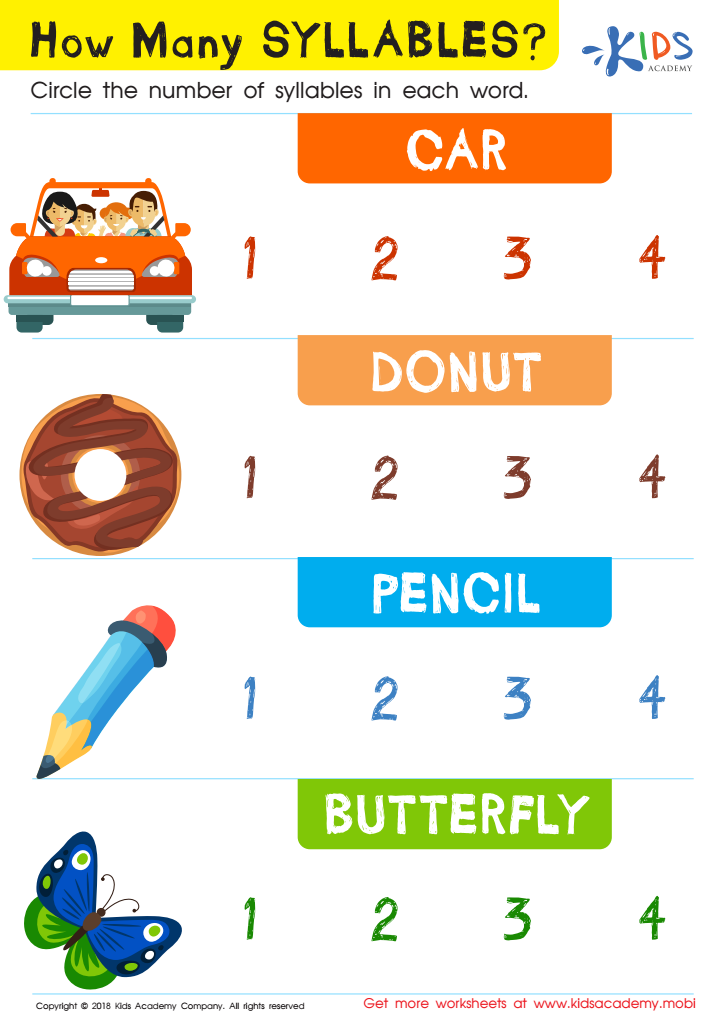
How Many Syllables? Worksheet
 Assign to My Students
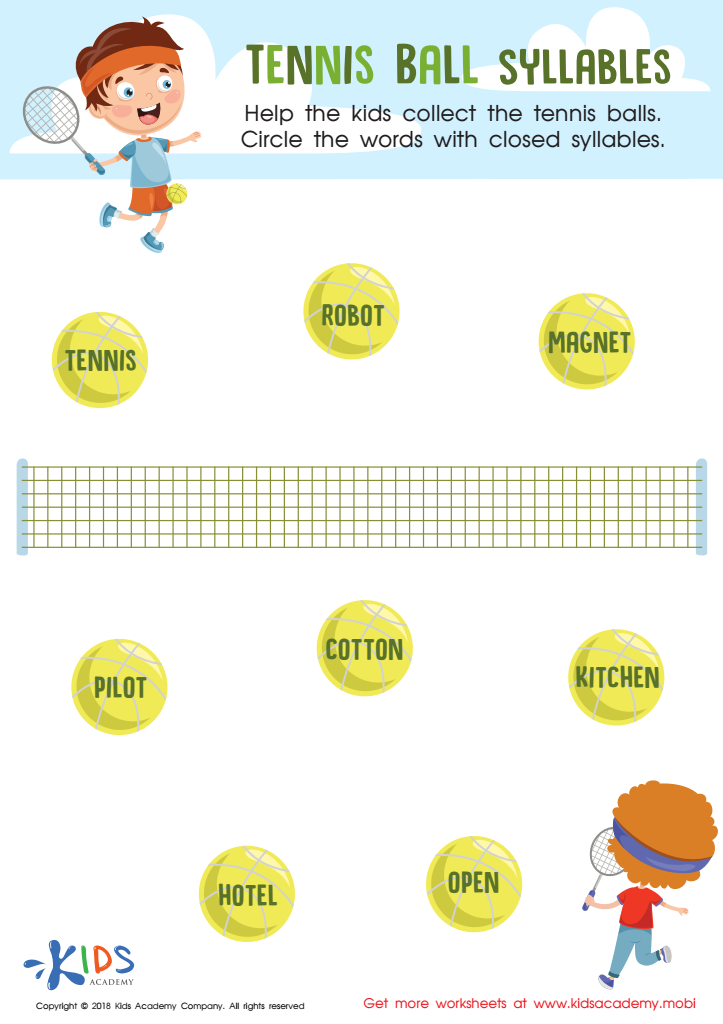
Tennis Ball Syllables Worksheet
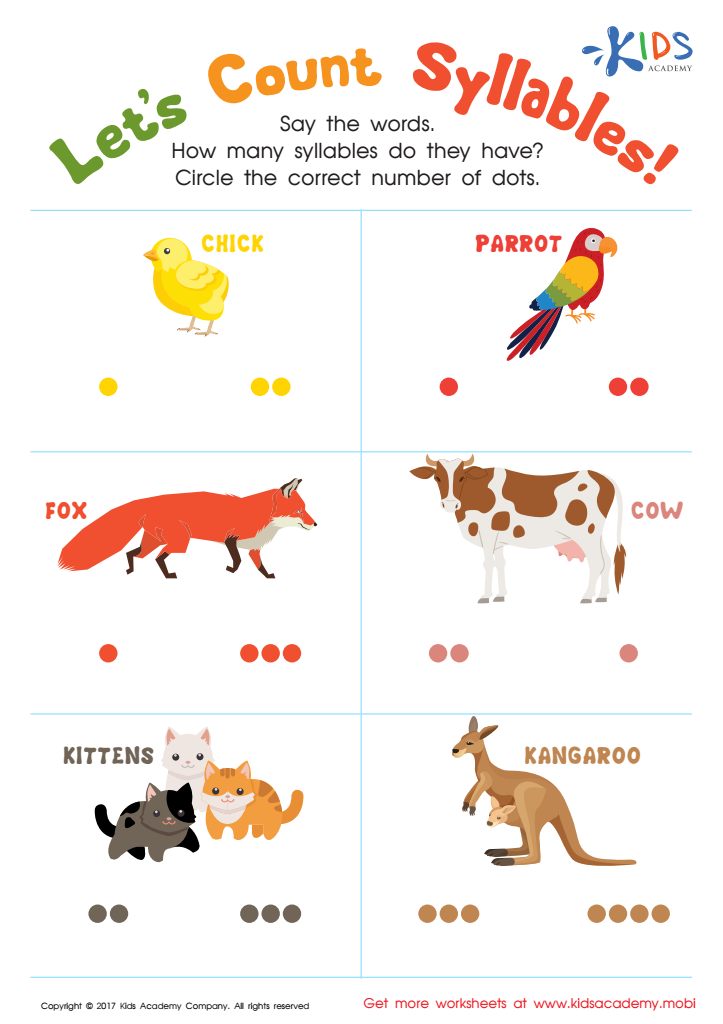
Lets Count Syllables Worksheet








Phonological awareness is critically important for young learners as it forms the foundation for reading and writing skills. This awareness involves the ability to recognize and manipulate sounds within language, such as rhyming, segmenting words into individual sounds (phonemes), and blending sounds together to form words. Research consistently shows that children with strong phonological awareness are more successful at learning to read and write. Hence, parents and teachers should prioritize this skill to set students up for academic achievement.
Regular phonics instruction builds on this foundation by teaching children the relationship between these sounds and the corresponding letters or letter patterns. This knowledge enables students to decode (read) and encode (spell) words, fostering fluent reading and comprehensive writing abilities. Without these skills, children may struggle significantly with literacy, hampering their overall educational experience and limiting future opportunities.
Investing time and resources into phonological awareness and phonics isn't just about academic success; it also boosts children's confidence and love for learning. Engaging activities that focus on sounds and letters can make learning enjoyable, laying a positive groundwork for lifelong engagement with language. Therefore, both parents and teachers play a crucial role in nurturing these fundamental skills to foster well-rounded, proficient readers and learners.







