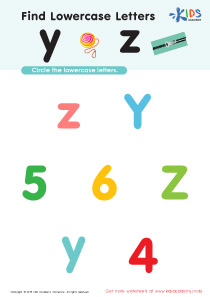
Handwriting practice Normal Uppercase Letters Worksheets
6 filtered results
-
From - To
Enhance your child's handwriting skills with our Handwriting Practice Worksheets for Normal Uppercase Letters! Designed specifically for young learners, these worksheets provide a fun and effective way to master letter formation and improve fine motor skills. Each worksheet features ample space for tracing and writing each uppercase letter, helping children develop confidence in their writing ability. Perfect for classroom use or at-home practice, our resources cater to varied learning styles, ensuring that every child can follow along at their own pace. Nurture your child's love for writing while reinforcing essential handwriting techniques with our engaging and interactive worksheets!
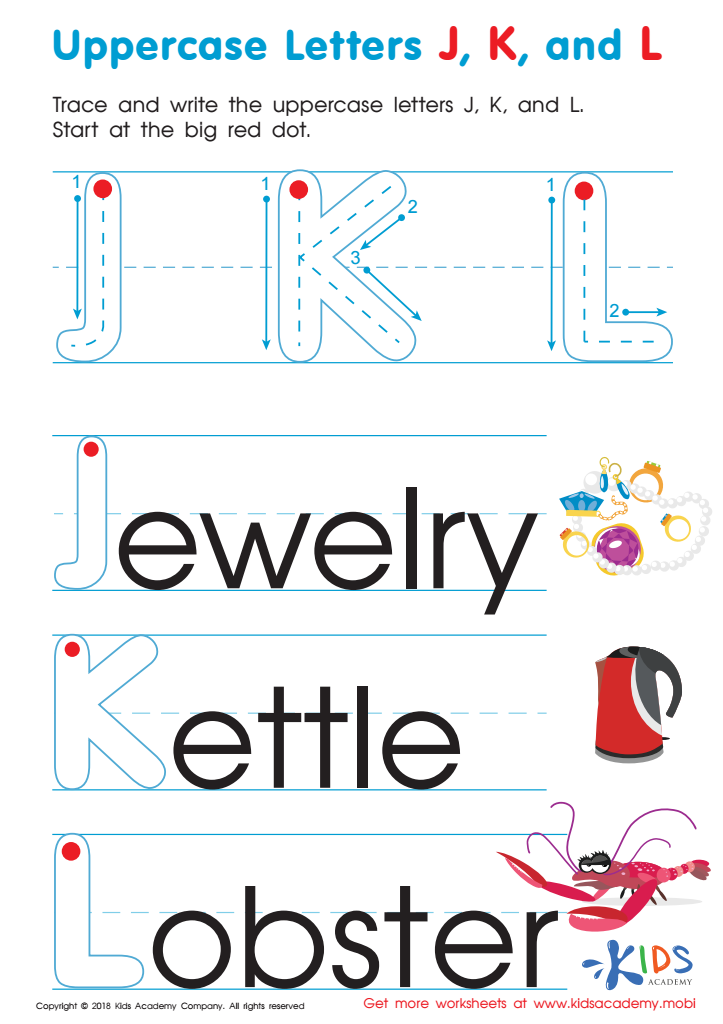
Uppercase Letters J, K, and L Worksheet
 Assign to My Students
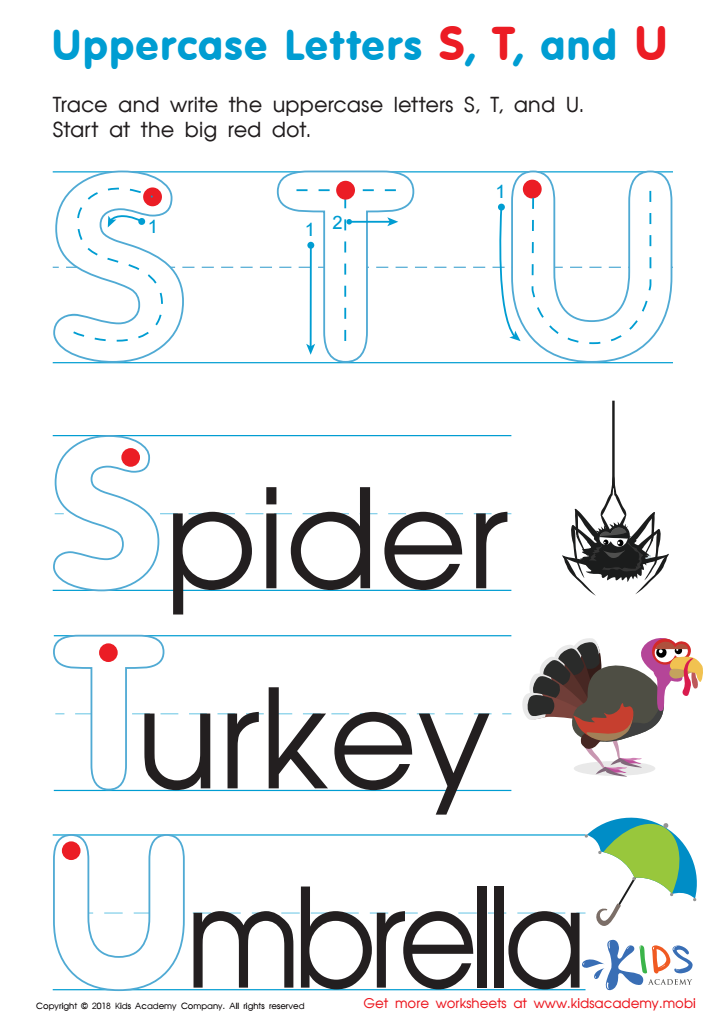
Uppercase Letters S, T, and U Worksheet
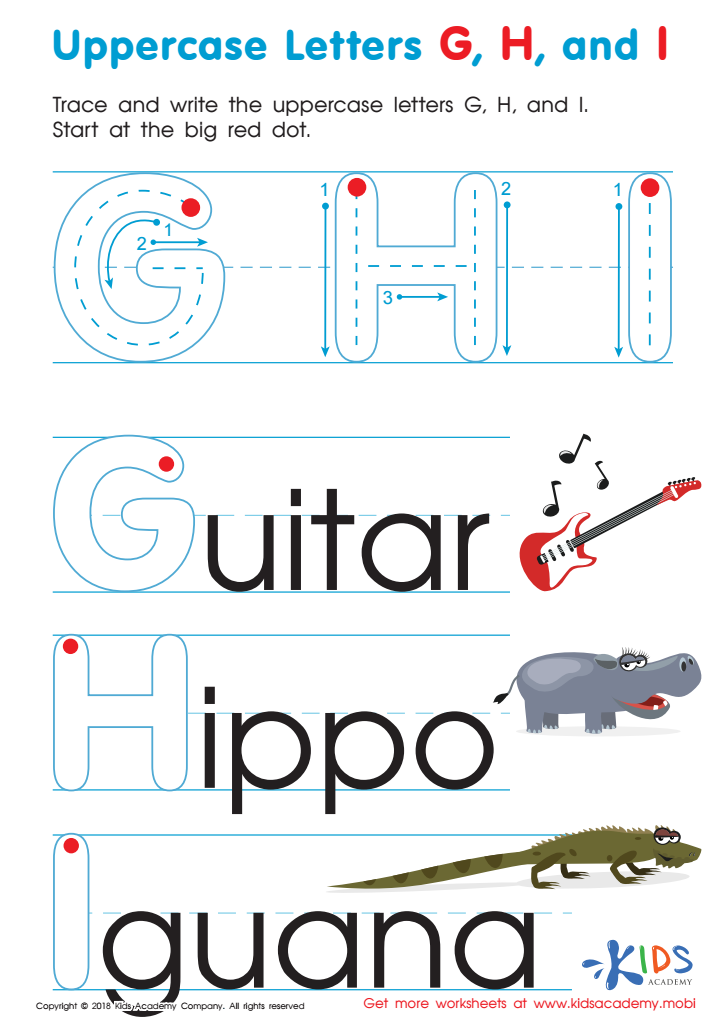
Uppercase Letters G, H, and I Worksheet
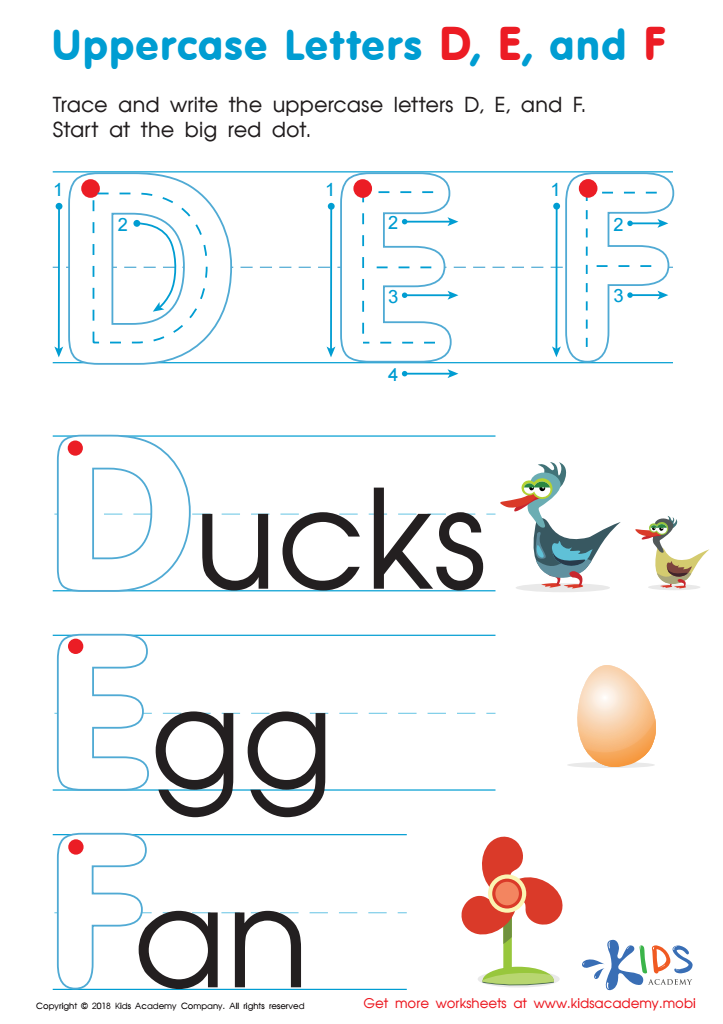
Uppercase Letters D, E, and F Worksheet
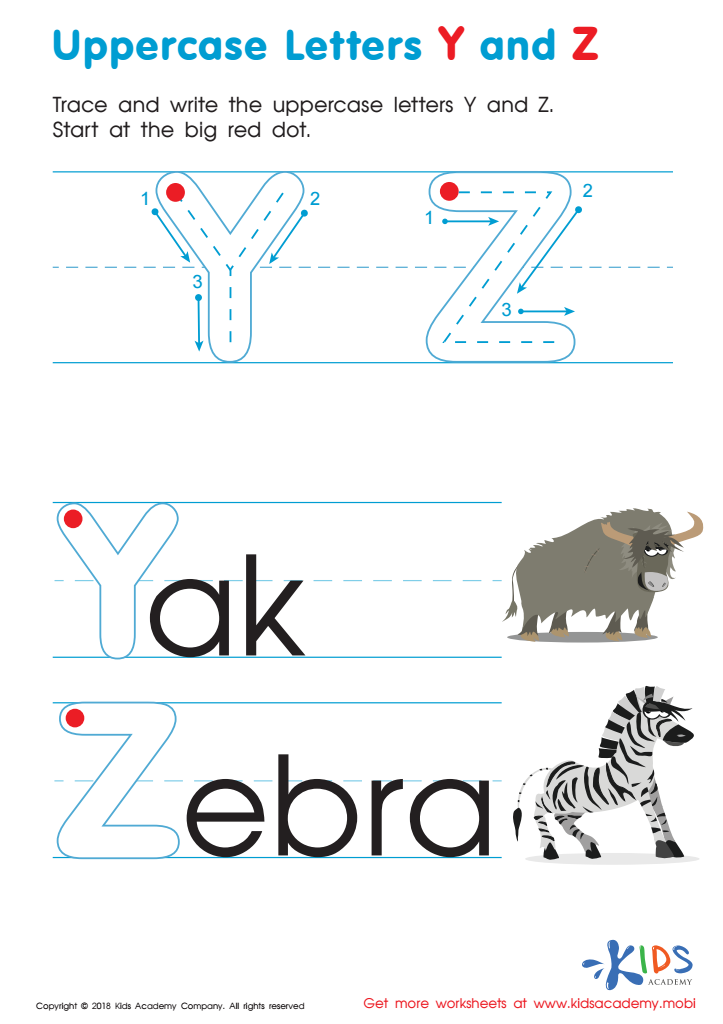
Uppercase Letters Y Z Worksheet
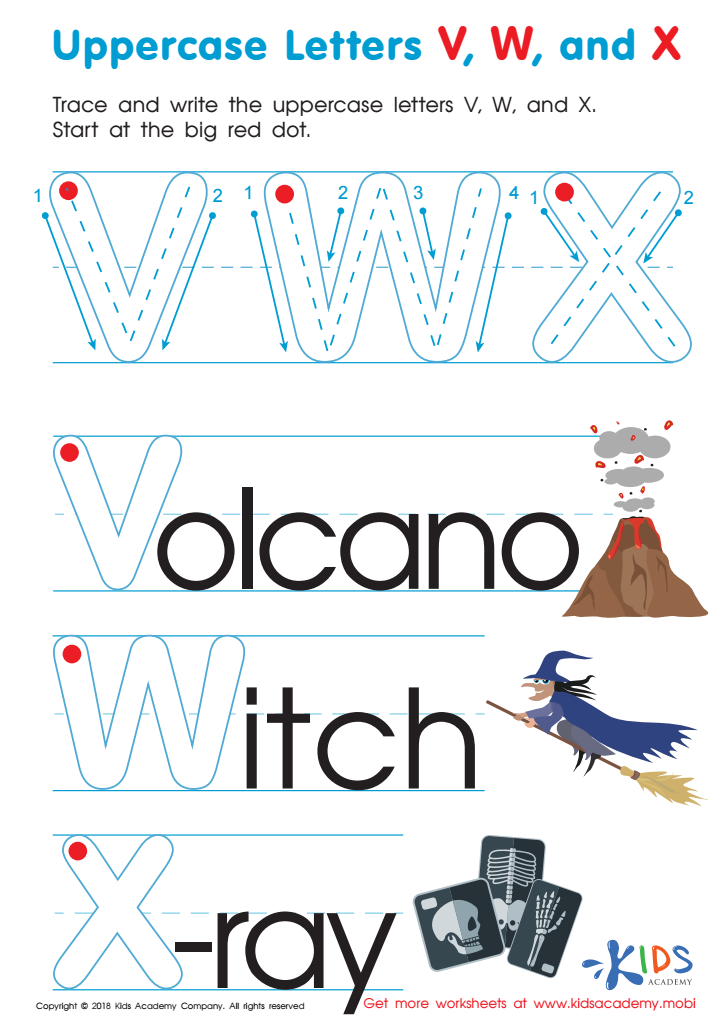
Uppercase Letters V, W, and X Worksheet








Handwriting practice, especially for normal uppercase letters, is crucial for young learners as it lays the foundation for effective communication skills. First and foremost, developing handwriting proficiency helps children express their thoughts clearly, which is essential for academic success. Mastery of uppercase letters not only enhances writers' legibility but also promotes a sense of achievement as they see their written work come to life.
Furthermore, fine motor development is closely linked to handwriting practice. The act of writing engages various hand muscles, which improves dexterity and coordination. This development is beneficial for other activities, such as drawing and crafting, supporting a child’s overall cognitive and physical growth.
Additionally, handwriting fosters discipline and concentration. Regular practice encourages kids to focus on the formation of each letter, enhancing attention skills that are transferable to other subject areas. For cultural and social reasons, knowing how to write in uppercase letters is important for everyday tasks, such as filling out forms or addressing envelopes.
Ultimately, consistent practice cultivates a love for writing and creates a positive association with literacy. Thus, both parents and teachers play a vital role in reinforcing these skills, ensuring children are well-prepared for future academic endeavors.