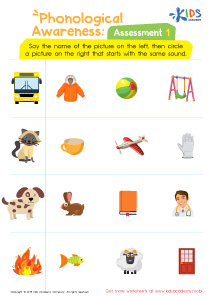
Word Recognition Normal Vowels Worksheets
6 filtered results
-
From - To
Boost your child's literacy skills with our engaging "Word Recognition Normal Vowels Worksheets"! Designed for early learners, these worksheets focus on recognizing and decoding words with normal vowels—essential for building a strong foundation in reading. Featuring fun activities, colorful illustrations, and guided exercises, children will practice identifying vowel sounds, enhancing their phonemic awareness in a playful way. Ideal for parents and teachers, these resources encourage independent learning while reinforcing essential reading skills. Download and print our worksheets to help your child master word recognition and become a confident reader. Explore the joy of reading with our interactive and educational materials today!
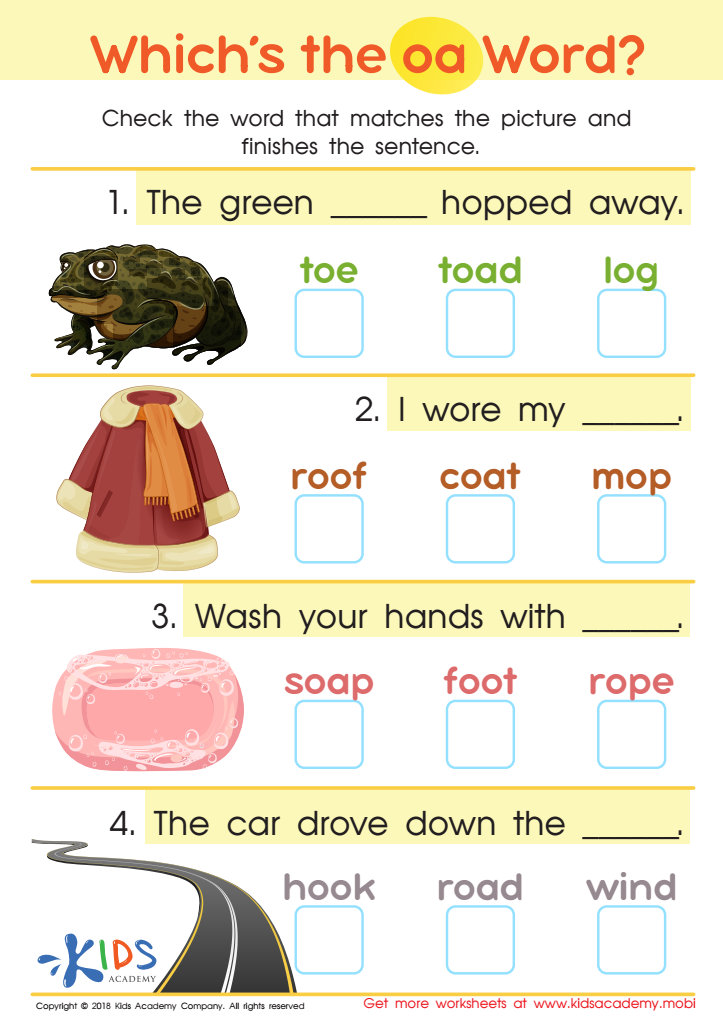
Which's the OA Word? Worksheet
 Assign to My Students
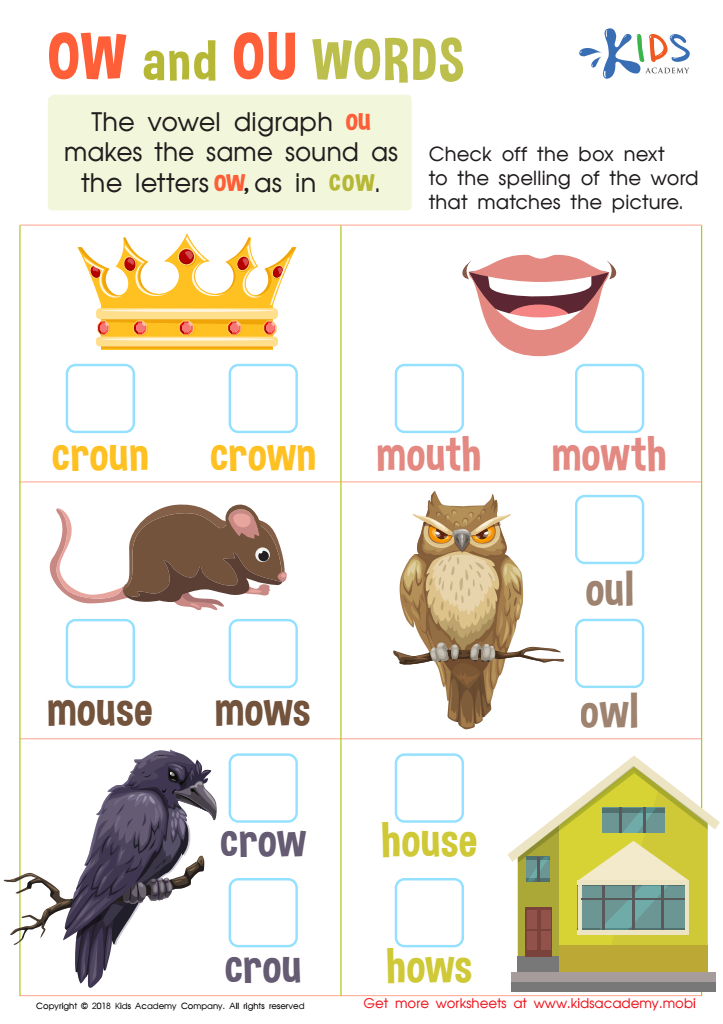
Reading: OW and OU Words Worksheet
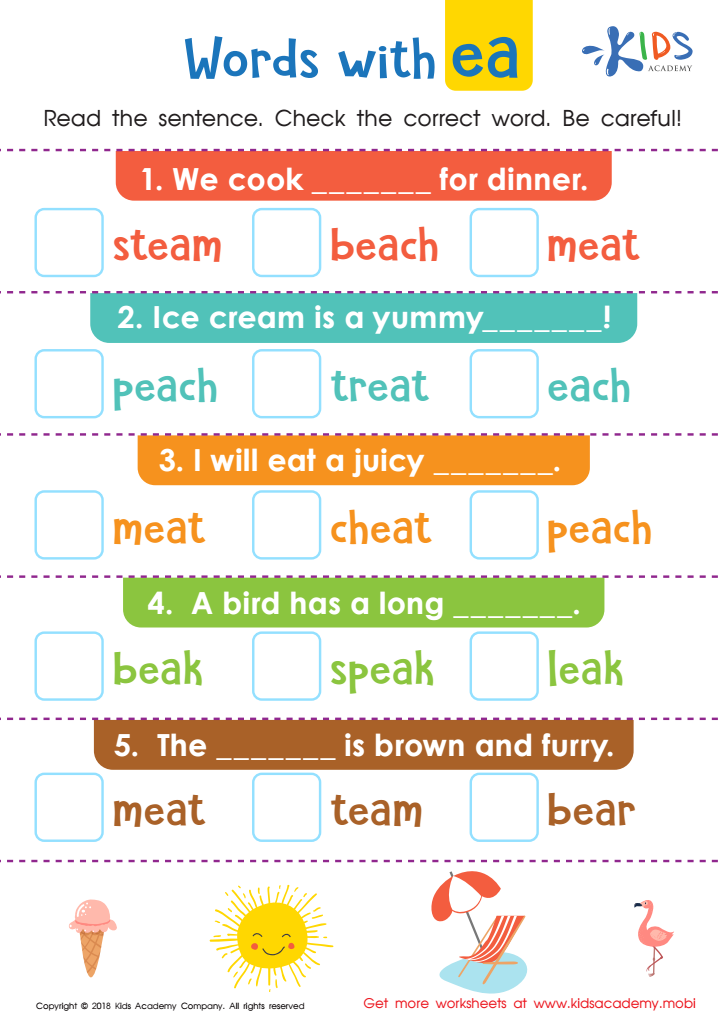
Words with ea Worksheet
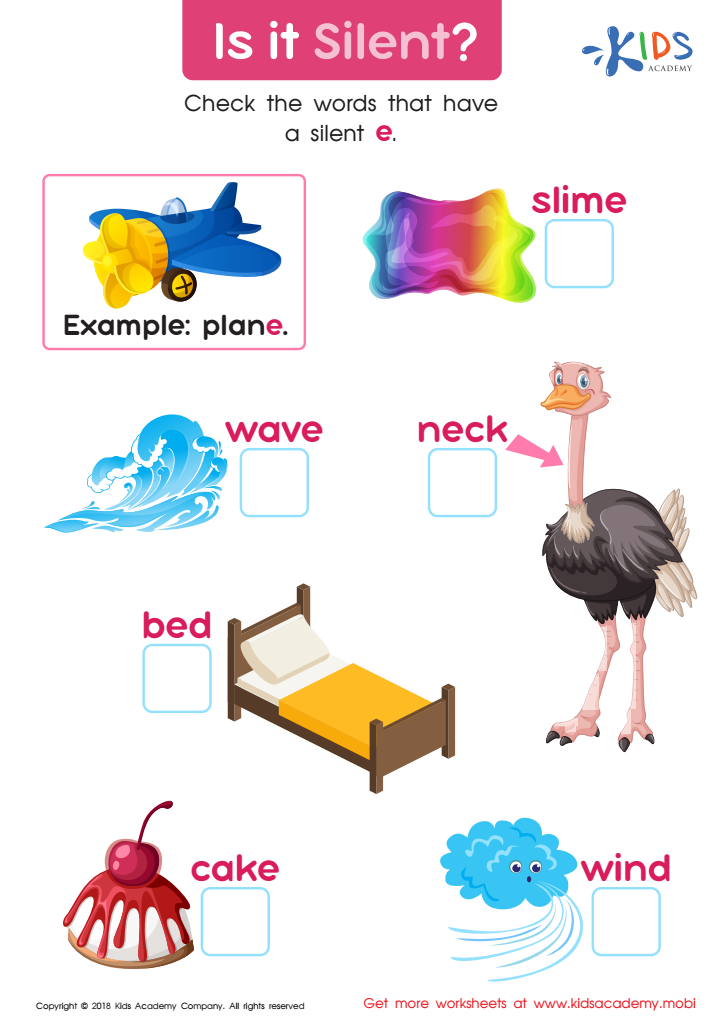
Is It Silent? Worksheet
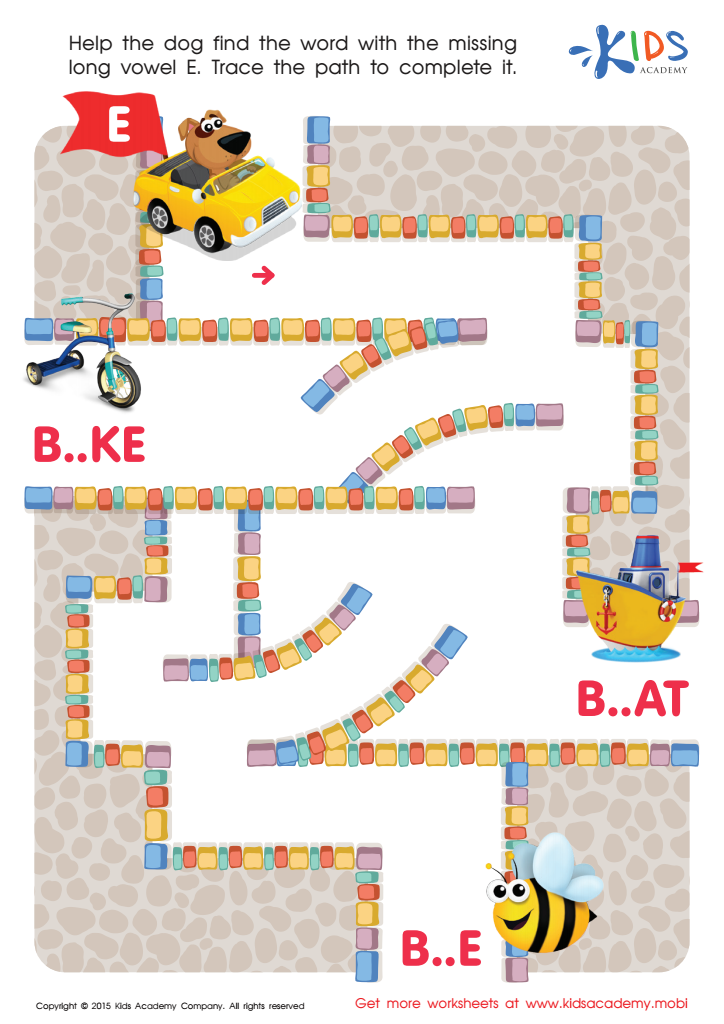
Long Vowel Sound E Worksheet
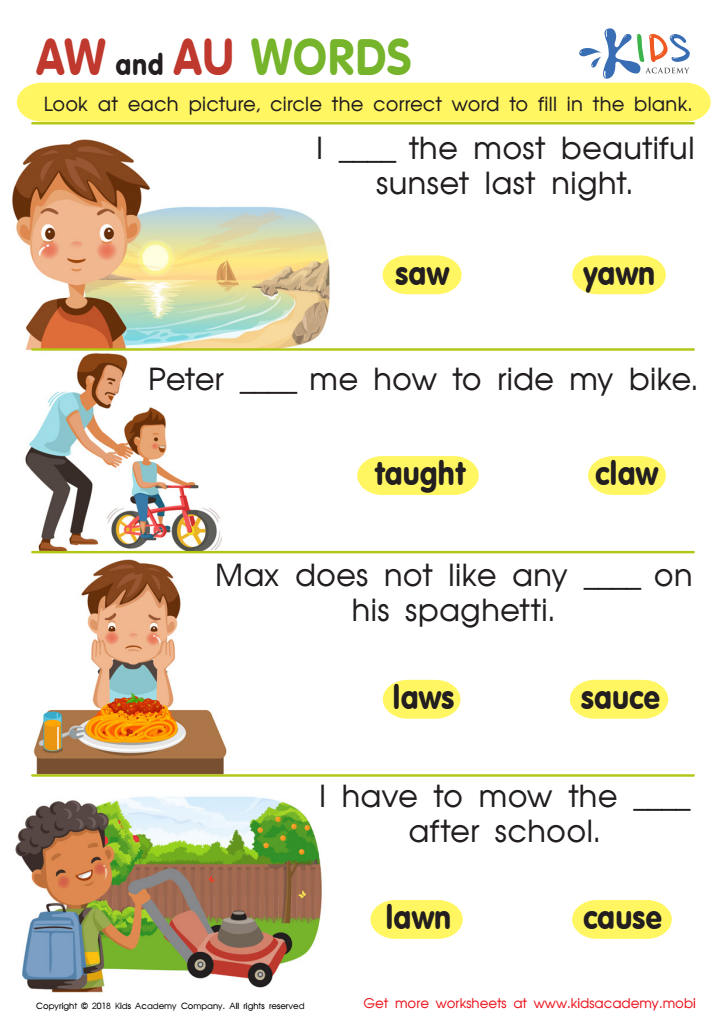
Reading: AW and AU Words Worksheet





Word recognition involves the ability to identify written words quickly and accurately, which is foundational for literacy development. Normal vowels—essentially the five main vowels (A, E, I, O, U)—play a crucial role in fluent reading and writing. Understanding and recognizing these vowels helps children decode words, improving their reading skills.
Parents and teachers should prioritize normal vowel recognition because it directly impacts a child's reading comprehension and overall academic success. When students can efficiently recognize vowels, they can tackle more complex words, enhancing their vocabulary and comprehension. Additionally, a solid grasp of vowels aids in spelling, as many language patterns and rules center around vowel sounds.
Fostering word recognition with normal vowels can also boost a child's confidence. As students become proficient readers, they are more likely to participate in discussions, share ideas, and engage with texts. For parents and teachers, nurturing this skill means providing children with essential tools for lifelong learning and communication. Ultimately, effective word recognition sets the stage for broader literacy skills, shaping the students' future academic achievements and opportunities. Investing time and resources in teaching normal vowel recognition is a vital step in supporting children's educational journeys.