Cognitive Development Normal Grade 1 Chess Worksheets
4 filtered results
-
From - To
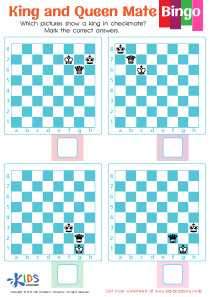
Our "Cognitive Development Normal Grade 1 Chess Worksheets" are designed to enhance critical thinking and problem-solving skills in first graders. Through engaging chess activities, students will develop logical reasoning, attention to detail, and strategic planning. These worksheets lay the foundation for advanced cognitive abilities, fostering not only a love for the game but also important academic skills. Integrating chess into early education aids in improving memory, concentration, and cognitive flexibility, ensuring well-rounded mental development. Perfect for classroom or home use, our worksheets support educators and parents in cultivating their children's intellectual growth in a fun and interactive way.
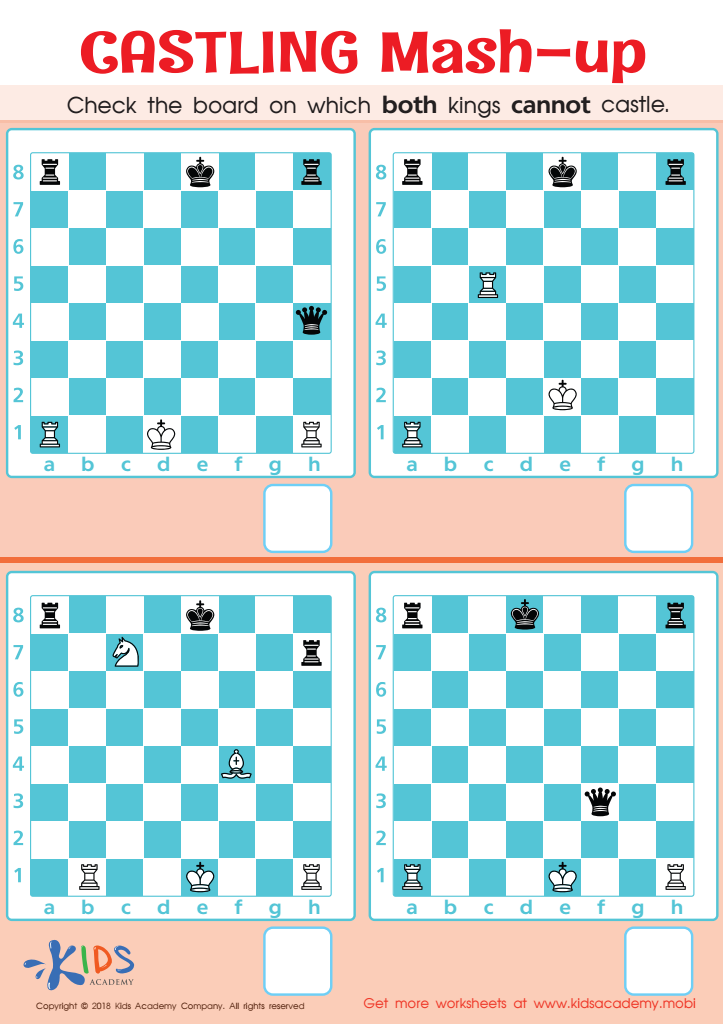
Castling Mash–up Worksheet
 Assign to My Students
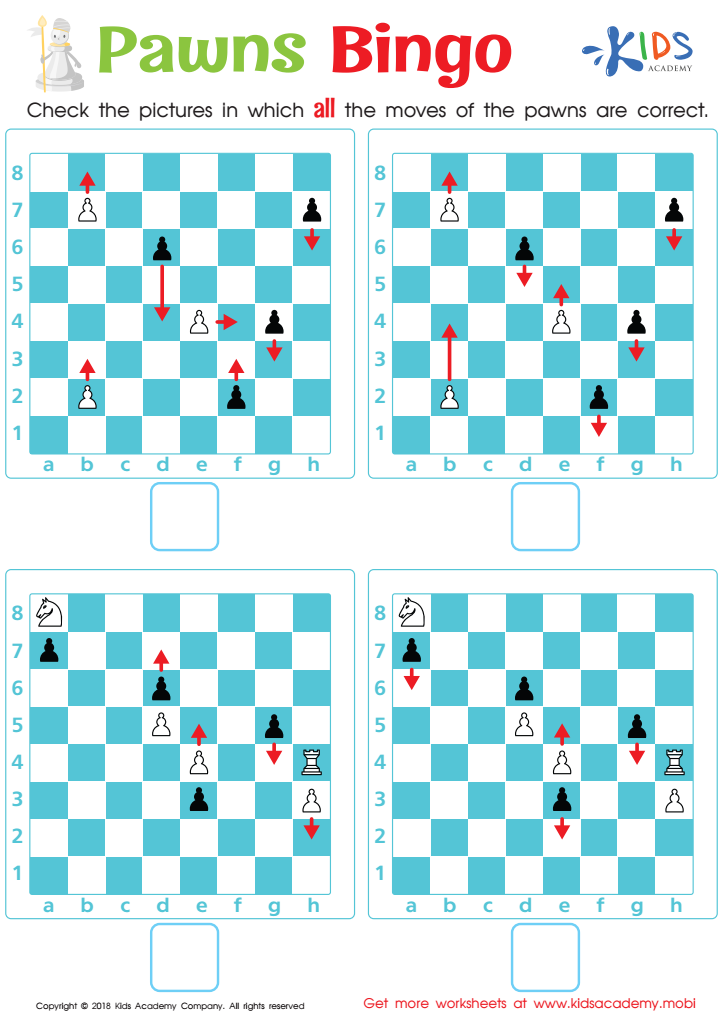
Pawns Bingo Worksheet
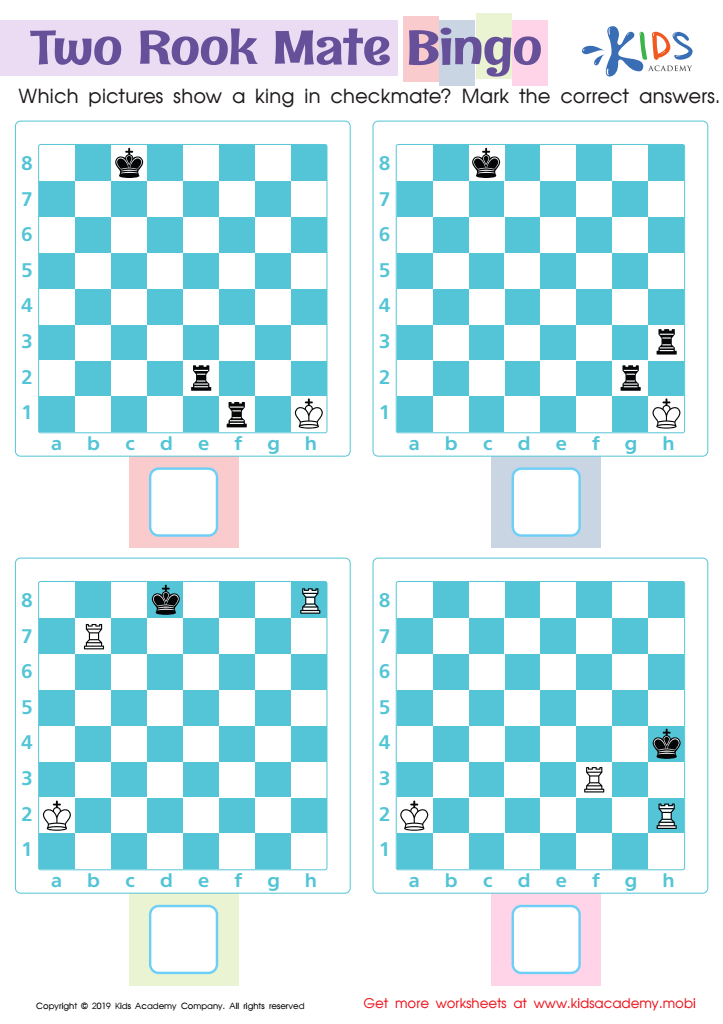
Two Rook Bingo Worksheet
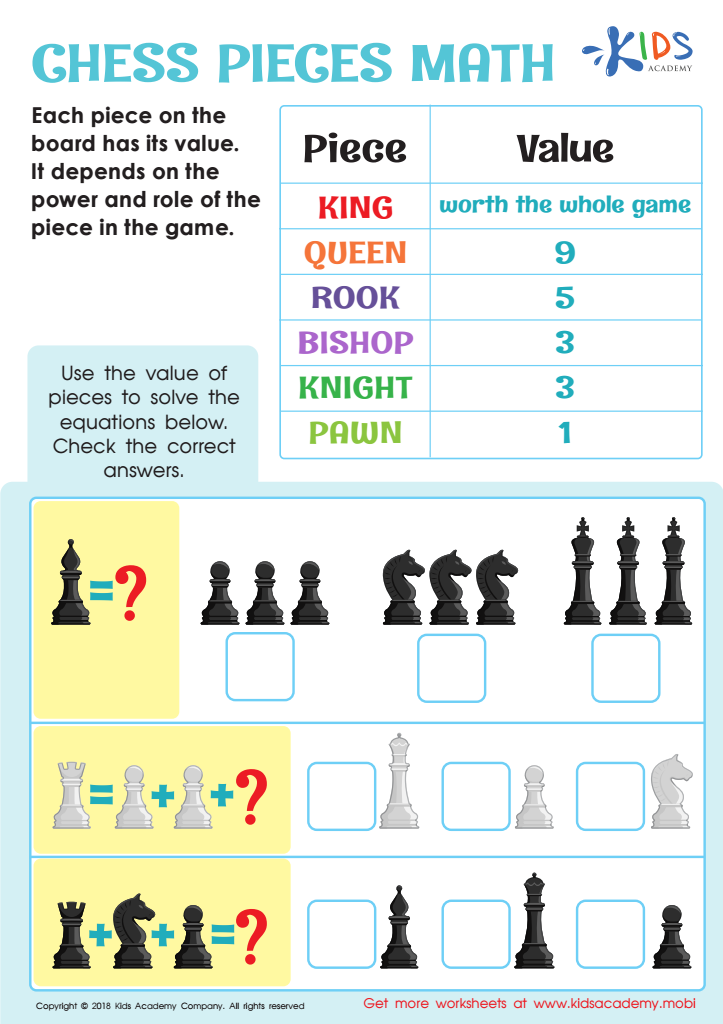
Chess Pieces Math Worksheet




Understanding and supporting cognitive development in Grade 1 students through chess can be vital for parents and teachers. Chess involves complex thinking skills such as problem-solving, reasoning, and strategic planning, all critical aspects of cognitive growth. At this early stage, children’s brains are highly plastic and receptive to learning new skills that can shape their cognitive frameworks.
When children engage in playing chess, they learn to concentrate deeply and think ahead, considering the consequences of their actions. This helps improve their attention spans, memory, and logical thinking abilities, which are transferable to other academic areas, including math and reading comprehension. Chess also teaches important life skills like patience, discipline, and resilience, as students learn to cope with both wins and losses.
Moreover, chess can be an inclusive activity that drives social interactions and teaches respect, as students often interact with players of varying skill levels and learn to appreciate different perspectives. For teachers, incorporating chess into the curriculum not only enhances cognitive development but also promotes a growth mindset and an enthusiasm for learning. Parents observing how chess benefits their children are likely to further support their learning, fostering a collaborative effort between home and school to nurture well-rounded, critical thinkers.