Science knowledge Normal Grade 1 Worksheets
3 filtered results
Difficulty Level
Grade
Age
-
From - To
Subject
Activity
Standards
Discover engaging and educational Science Knowledge worksheets designed for first graders! Our carefully crafted materials foster curiosity about the world around them, helping young learners explore introductory concepts in science. Each worksheet features fun activities that cover essential topics such as plants, animals, weather, and simple materials. Aligned with grade-level standards, these resources promote critical thinking and hands-on learning while ensuring students grasp foundational scientific concepts. Perfect for classroom use or at-home learning, our printable worksheets enhance your child's confidence in exploring science. Dive into the wonders of the natural world and strengthen their knowledge with our delightful and interactive worksheets!
Favorites
With answer key
Interactive
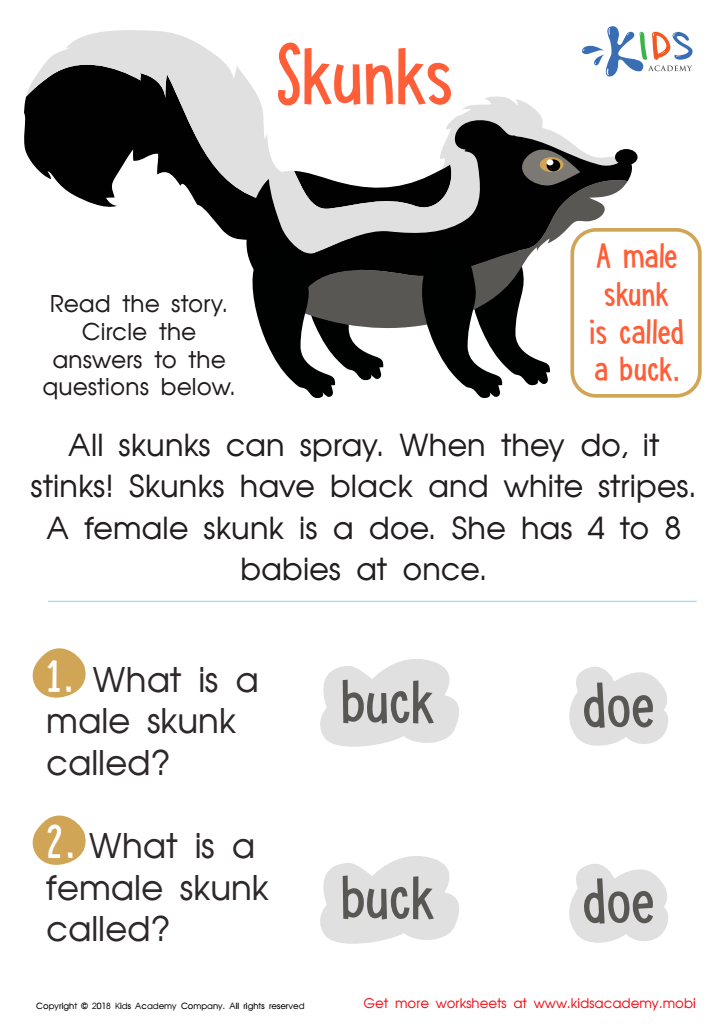
Skunks Worksheet
Kids can learn fascinating information about a beloved and smelly animal with this fun worksheet. They'll read articles, texts, and look at an accompanying picture while reading. Captions and sidebars can give extra details. Finally, answer the given questions by selecting the correct response. Reading is a fun and informative way to gain knowledge!
 Assign to My Students
Skunks Worksheet
Worksheet
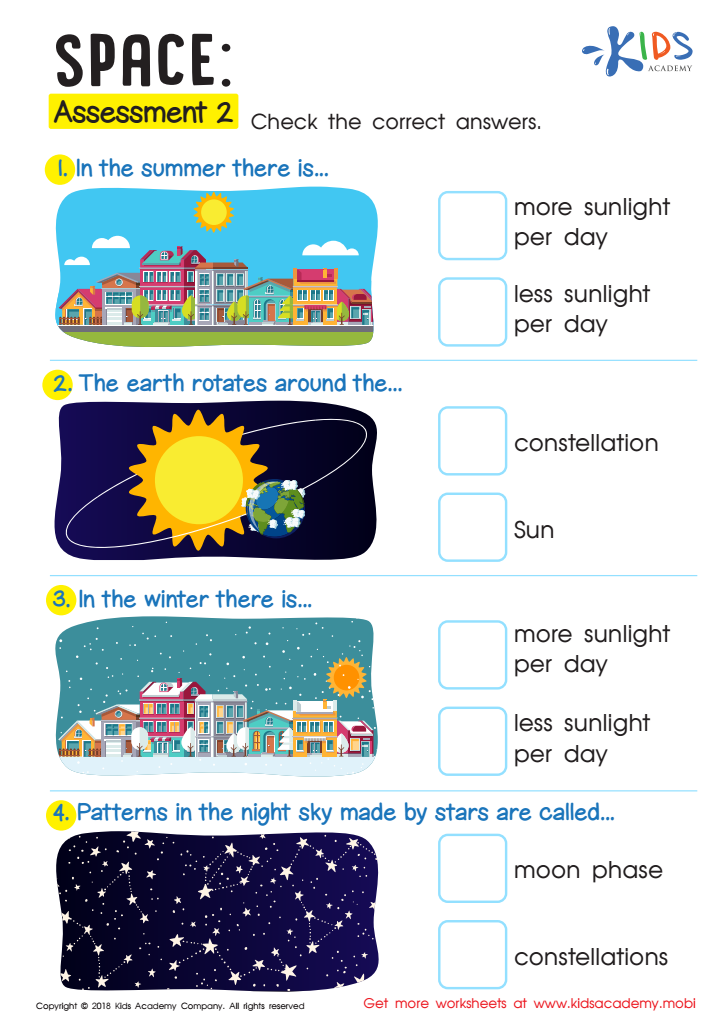
Space: Assessment 2 Worksheet
Test your kids' knowledge of the weather, constellations and Earth with this worksheet. Show them the 4 images and ask what's happening; then read the questions and options and help them pick the right answers. This printout is a helpful and fun way to learn!
Space: Assessment 2 Worksheet
Worksheet
Join Kids Academy for Free
Who is primarily going to use this learning content?







Understanding science is crucial for first graders because it lays the foundation for inquiry-based learning and critical thinking skills. At this age, children are naturally curious about the world around them, and science offers a structured way to explore their environment. When parents and teachers prioritize science knowledge, they help children develop observation skills, ask questions, and seek answers through experimentation and exploration.
Moreover, science topics, such as basic concepts of plants, animals, and the weather, can be integrated into everyday life. This relevance makes learning more engaging and encourages children to think critically about their experiences. A strong foundation in science also promotes a growth mindset, empowering children to tackle challenges and solve problems creatively.
As they learn to hypothesize and analyze results, students build essential skills that will benefit them across all subjects, including reading and math. Moreover, familiarity with scientific concepts fosters a sense of wonder and appreciation for the world, nurturing lifelong learners. In a rapidly changing world, equipping young learners with fundamental scientific knowledge ensures we prepare them for future success, inspiring future innovators and informed citizens. Thus, both parents and teachers play a pivotal role in fostering this essential aspect of education.