Rhyming skills development Normal Grade 1 Reading Worksheets
3 filtered results
-
From - To
Boost your first grader's rhyming skills with our engaging rhyming worksheets! These thoughtfully designed activities help young learners recognize, identify, and enjoy rhyming words, fostering early reading abilities and phonemic awareness. With a focus on fun and education, Kids Academy's Normal Grade 1 Reading Worksheets use interactive exercises such as matching rhyming pictures and completing rhyming pairs to create a solid foundation in literacy. Ideal for classroom use or extra practice at home, these worksheets are the perfect tool to enhance your child's reading journey, making learning exciting and effective. Start developing essential rhyming skills today!
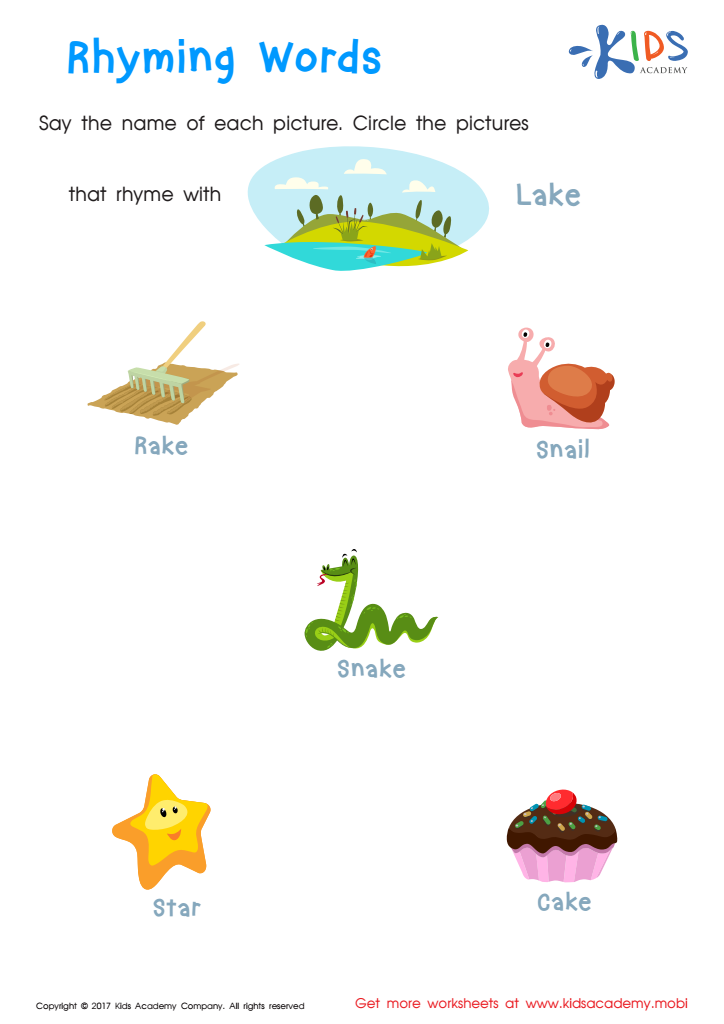
Rhyming Words Rhyming Worksheet
 Assign to My Students
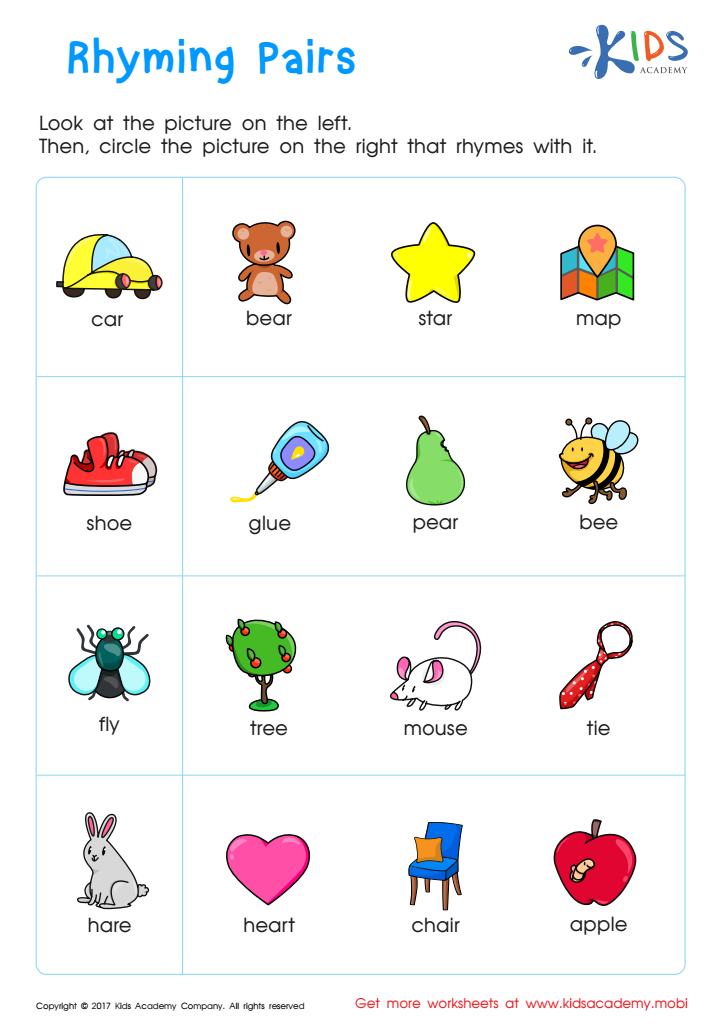
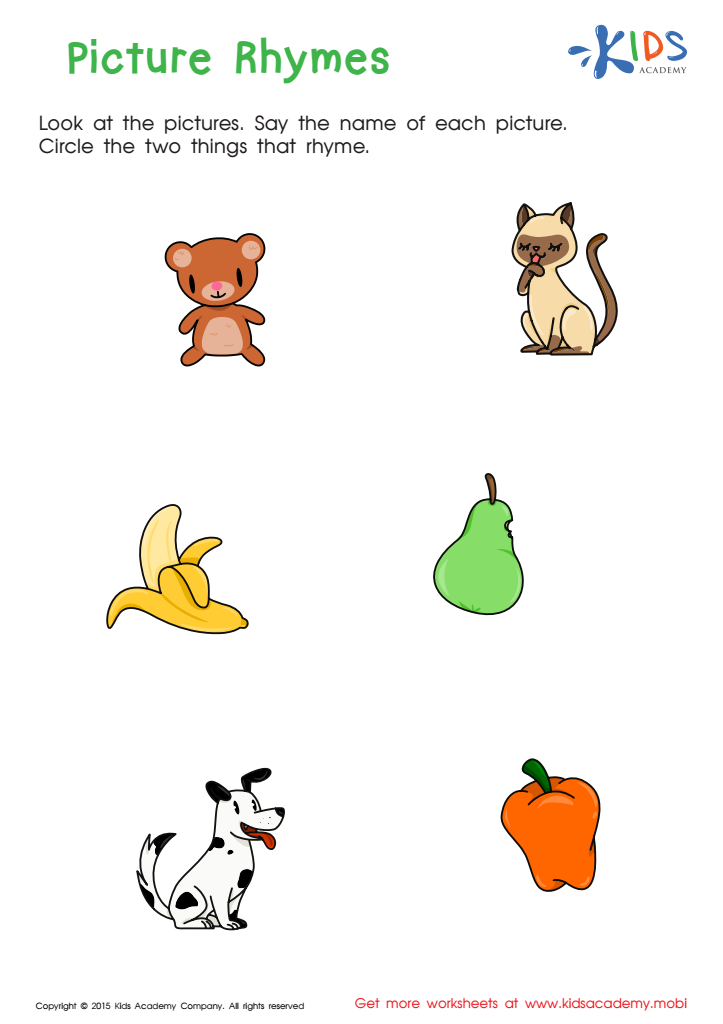
First Words: Picture Rhymes Worksheet








Rhyming skills are a foundational element in early literacy development, making it essential for parents and teachers to focus on these skills in Grade 1. Rhyming not only enhances children's phonemic awareness—the ability to hear, identify, and manipulate phonemes—but also acts as a key predictor of future reading success. By recognizing and producing rhymes, children learn to pay attention to the sounds within words, a critical step toward decoding words during reading.
Engaging with rhymes helps children improve their listening skills, which are crucial for understanding sentence structure and story contexts. It also supports vocabulary development, as children are exposed to a variety of new words and their meanings through rhyming games and books. Importantly, rhyming activities are fun and participatory; they capture children's interest and make learning enjoyable, thereby fostering a positive attitude towards reading.
Furthermore, rhyming aids in the development of memory and cognitive skills. When children are encouraged to recall rhyming patterns and sounds, they exercise their brain in ways that support overall cognitive development, including memorization and problem-solving skills.
By nurturing rhyming abilities in first graders, parents, and teachers lay a strong foundation for reading fluency and comprehension, instilling a lifelong love for reading and learning.