Division practice Normal Kindergarten Worksheets
4 filtered results
-
From - To
Enhance your child's early math skills with our Division Practice Normal Kindergarten Worksheets! Designed specifically for young learners, these engaging worksheets introduce basic division concepts in a fun and interactive manner. Your little ones will enjoy colorful illustrations and creative exercises that simplify division, helping them understand how to share and group objects effectively. Perfect for home or classroom use, these worksheets encourage independent practice and reinforce critical thinking skills. Foster a strong mathematical foundation early on with our easy-to-use resources. Download and print these worksheets today to inspire a love for learning and boost your child's confidence in math!
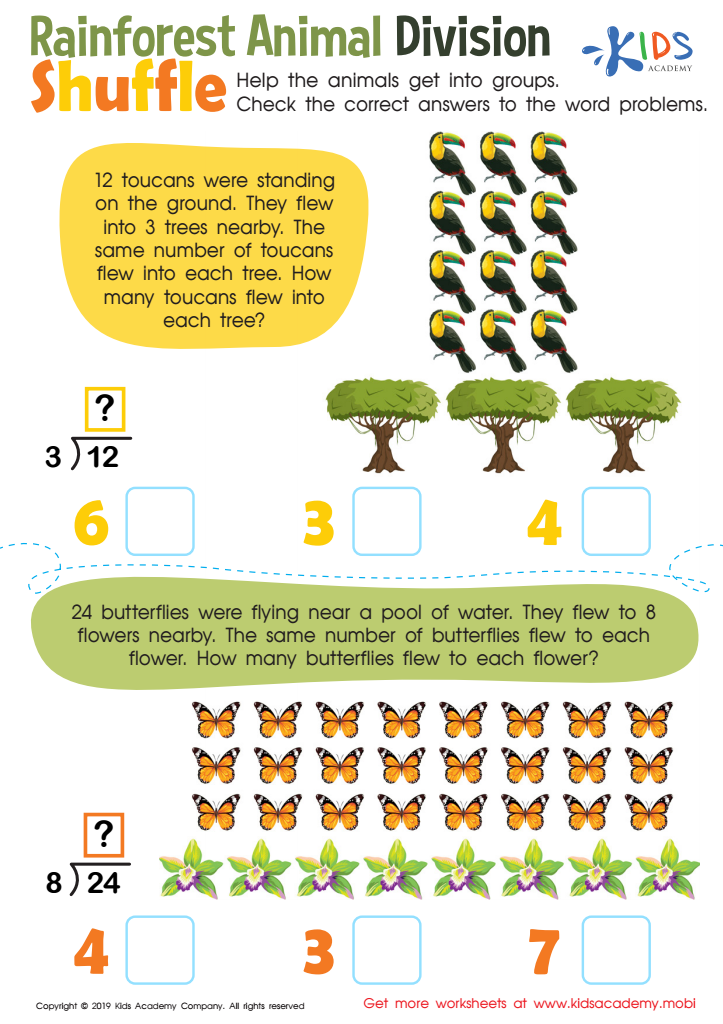
Rainforest Animal Division Worksheet
 Assign to My Students
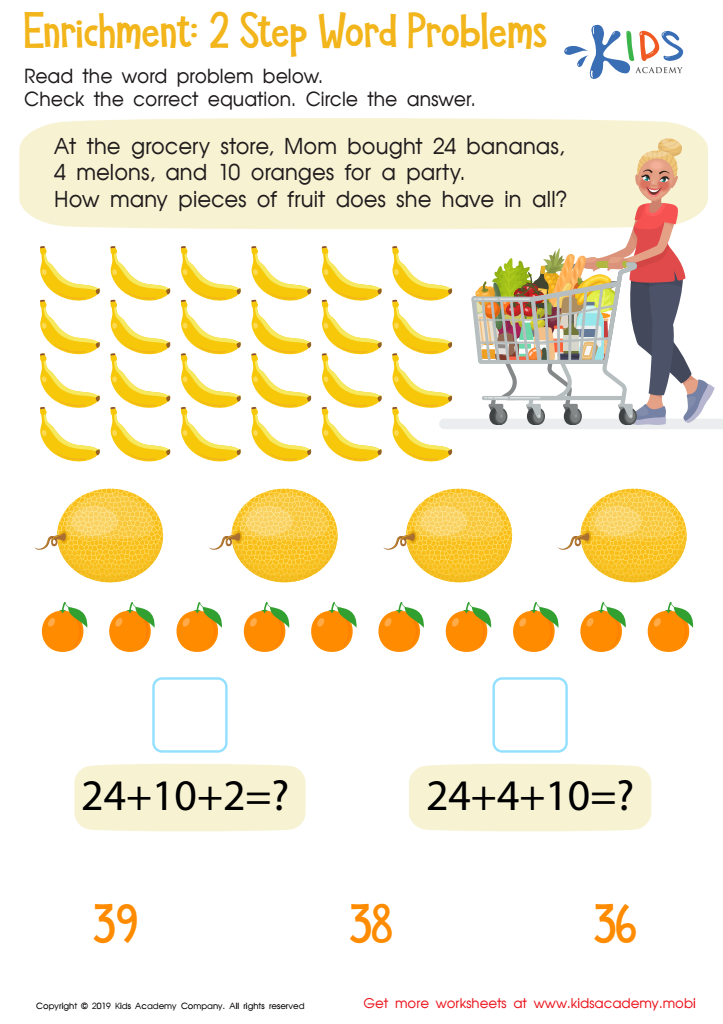
Enrichment -2 Step Word Problems Worksheet
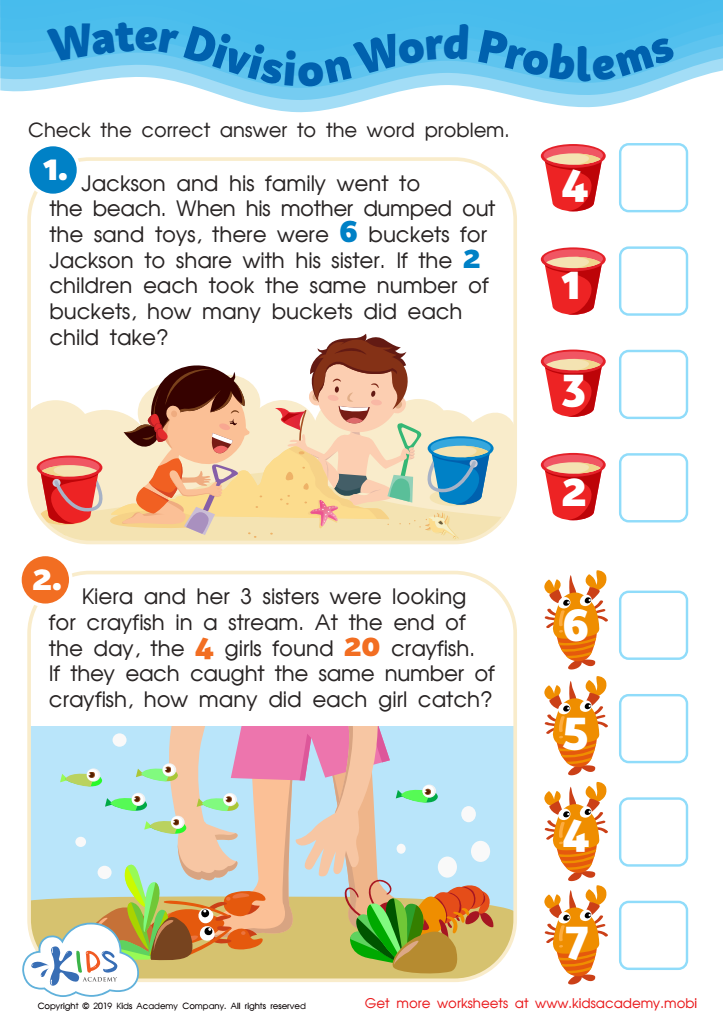
Water Division Word Problems Worksheet
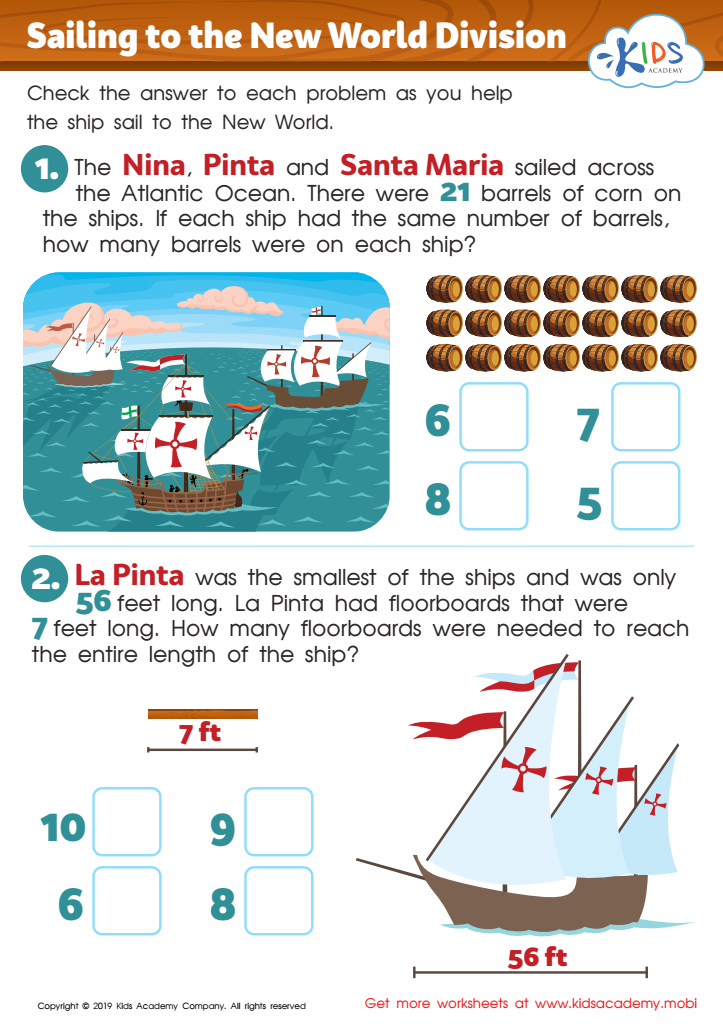
Sailing to the New World Division Worksheet




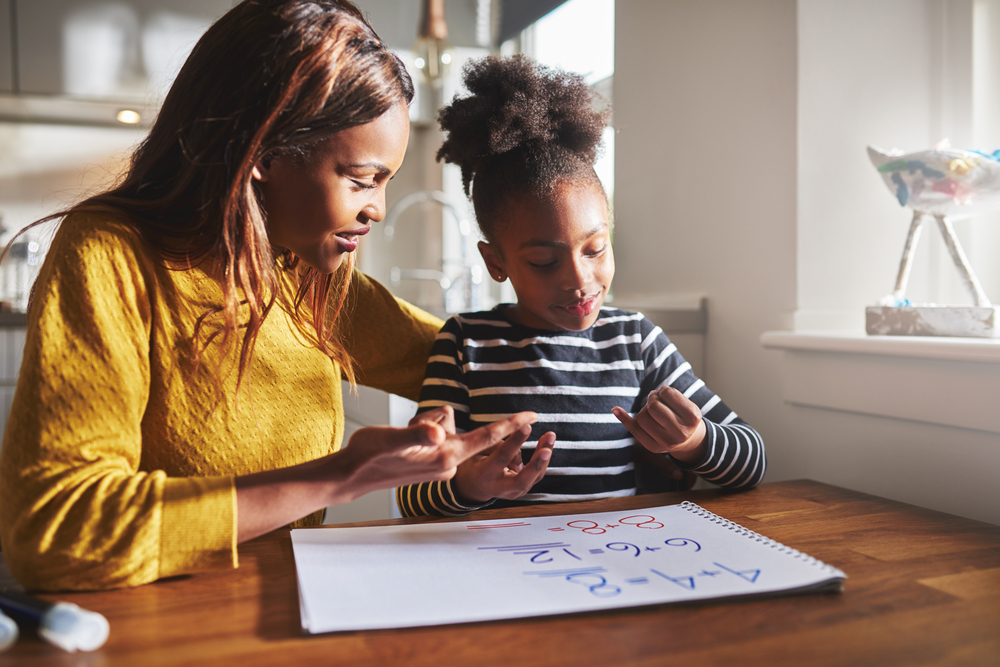

Division practice in kindergarten might seem premature, but it plays a crucial role in laying a strong mathematical foundation. Early exposure to division concepts aids in developing students' critical thinking and problem-solving skills. At this age, children begin to understand how numbers work together, and introducing basic division helps them grasp the concept of sharing and grouping, which are fundamental ideas in mathematics.
Moreover, division practice fosters a positive attitude toward math. Engaging activities such as sharing toys or distributing snacks can turn abstract concepts into tangible experiences. These interactions help reinforce teamwork and social skills as children work in groups to divide items equally.
Additionally, teachers and parents can use games and manipulatives to make division learning fun and engaging. By using visual aids, children can better understand partitioning and the idea of equal distribution. As a result, this method honors every child's unique learning style, catering to diverse needs and strengthening foundational skills.
Ultimately, caring about early division practice ensures that children are not only better equipped for future math challenges but also develop lifelong skills such as collaboration and critical thinking. Emphasizing division contributes to well-rounded, numerically literate individuals prepared for more complex mathematical concepts.