Lowercase identification Normal Kindergarten Worksheets
4 filtered results
Difficulty Level
Grade
Age
-
From - To
Subject
Activity
Standards
Discover our engaging collection of Lowercase Identification Normal Kindergarten Worksheets designed to help young learners master the alphabet. Each worksheet focuses on letter recognition, ensuring your child confidently identifies and writes lowercase letters. Playful exercises and colorful illustrations captivate their interest, making learning fun and effective. These worksheets progress in difficulty, catering to different learning paces. With our expertly crafted materials, children will develop essential literacy skills, such as reading and writing fluency. Perfect for classroom environments or at-home learning, our worksheets offer the foundational support children need to succeed in their educational journey. Explore now and watch them excel!
Favorites
With answer key
Interactive
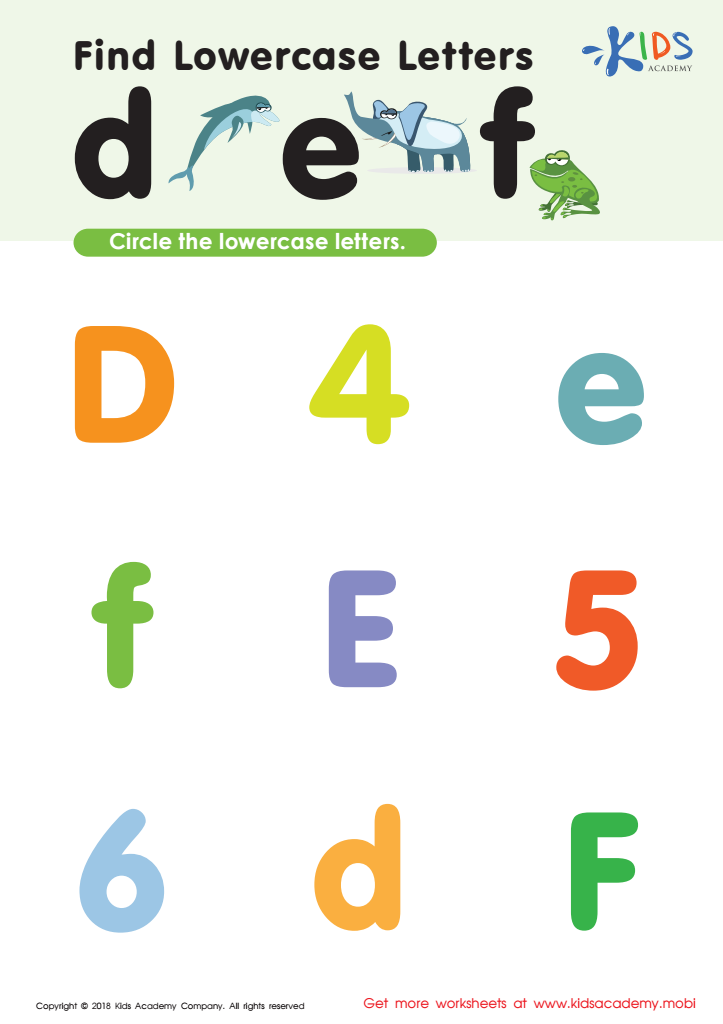
Find Lowercase Letters d e f Worksheet
Engage your child's brain with this fun, colorful worksheet. They'll identify and circle lowercase letters among other numbers and uppercase letters in bright colors. This will keep their attention as they learn, and can be downloaded in PDF form!
 Assign to My Students
Find Lowercase Letters d e f Worksheet
Worksheet
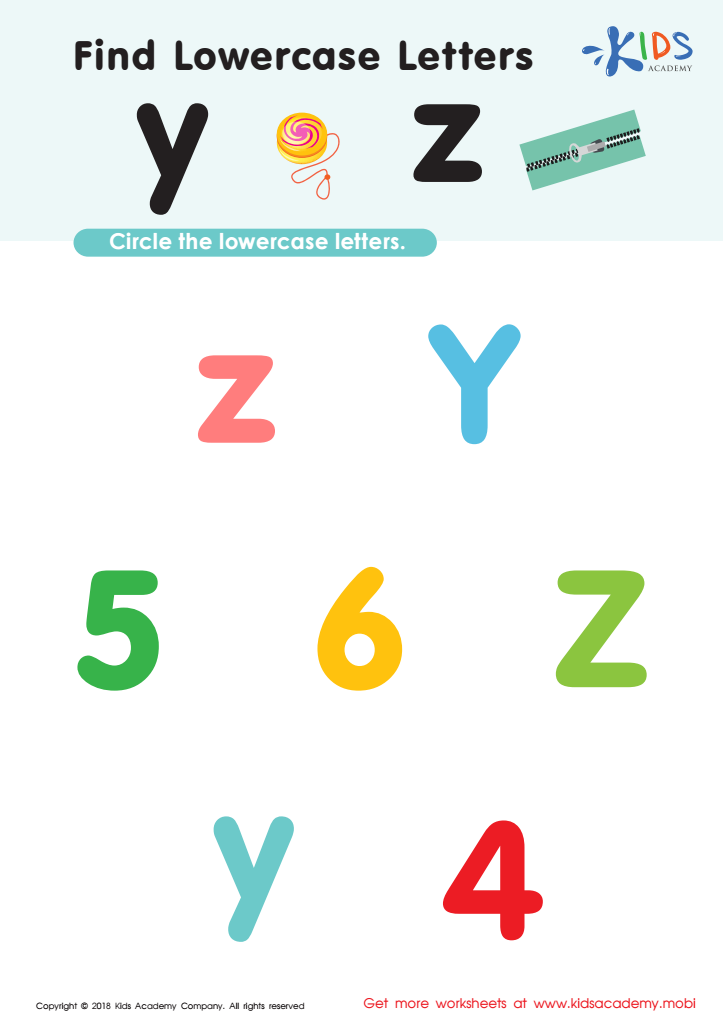
Find Lowercase Letters y z Worksheet
Help your kid learn the alphabet. Before they can move on to words and reading, they must first know the lower and uppercase letters. Show them how to find the letters y and z in this worksheet, which is filled with uppercase letters and numbers. Together, find and circle them.
Find Lowercase Letters y z Worksheet
Worksheet
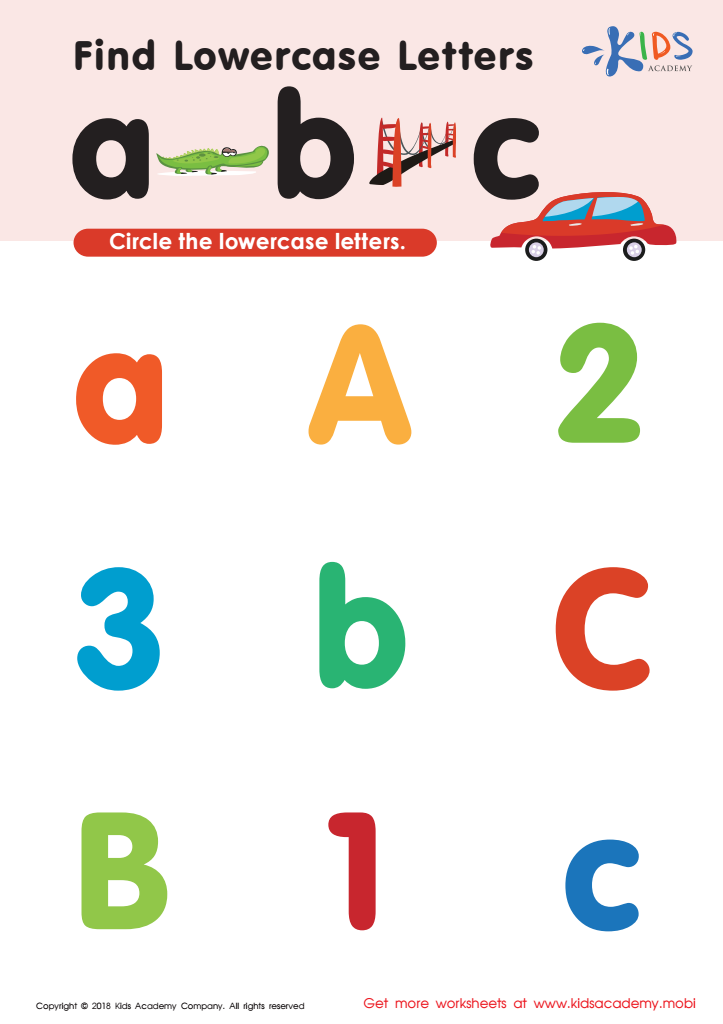
Find lowercase letters a b c Worksheet
Help your child identify lowercase letters with this worksheet. Carefully look at each letter and have your child circle the lowercase ones. This exercise is vital in helping them understand the alphabet and the difference between lower and uppercase letters.
Find lowercase letters a b c Worksheet
Worksheet

Find Lowercase Letters v w x Worksheet
If your child doesn't know the alphabet, get them this helpful worksheet. It's an easy exercise to build their understanding of the alphabet and lowercase letters. Find the letters v, w, and x among other uppercase letters and numbers in the downloadable PDF.
Find Lowercase Letters v w x Worksheet
Worksheet
Join Kids Academy for Free
Who is primarily going to use this learning content?




.jpg)



Parents and teachers should pay close attention to lowercase identification in kindergarten because it's a foundational skill that significantly impacts early literacy development. Kindergarten is often the first formal educational setting where children are systematically introduced to reading and writing. Mastering lowercase letters is essential, as most text in books, signs, and daily communications is written in lowercase. When children can easily recognize and differentiate lowercase letters, they are better equipped to learn phonics, decode words, and build a strong vocabulary.
Lowercase letter recognition also plays a crucial role in developing fine motor skills. Writing is a complex task that involves coordination and muscle control. By practicing lowercase letters, children learn to hold a pencil correctly, improve hand-eye coordination, and develop the fine motor skills necessary for writing fluently.
Furthermore, early success in letter recognition can boost a child’s confidence and interest in learning. When children feel competent in their abilities, they are more likely to enjoy reading and writing, setting the stage for academic success in later years.
In summary, focusing on lowercase identification in kindergarten lays the groundwork for lifelong literacy skills, enhances fine motor development, and fosters a positive attitude toward learning, all critical factors in a child's educational journey.