Story sequencing Normal Kindergarten Worksheets
7 filtered results
Difficulty Level
Grade
Age
-
From - To
Subject
Activity
Standards
Boost your child's comprehension and storytelling skills with our "Story Sequencing Normal Kindergarten Worksheets." Designed specifically for young learners, these worksheets help kids develop a crucial understanding of the beginning, middle, and end of a story. Engage preschoolers with vibrant illustrations and simple activities that make learning fun and effective. Each worksheet encourages critical thinking and the ability to organize events logically, essential for early reading and writing success. Make learning interactive and enjoyable with our well-structured, easy-to-follow sequencing exercises, providing a strong foundation for your child's educational journey. Explore our collection now on Kids Academy!
Favorites
With answer key
Interactive
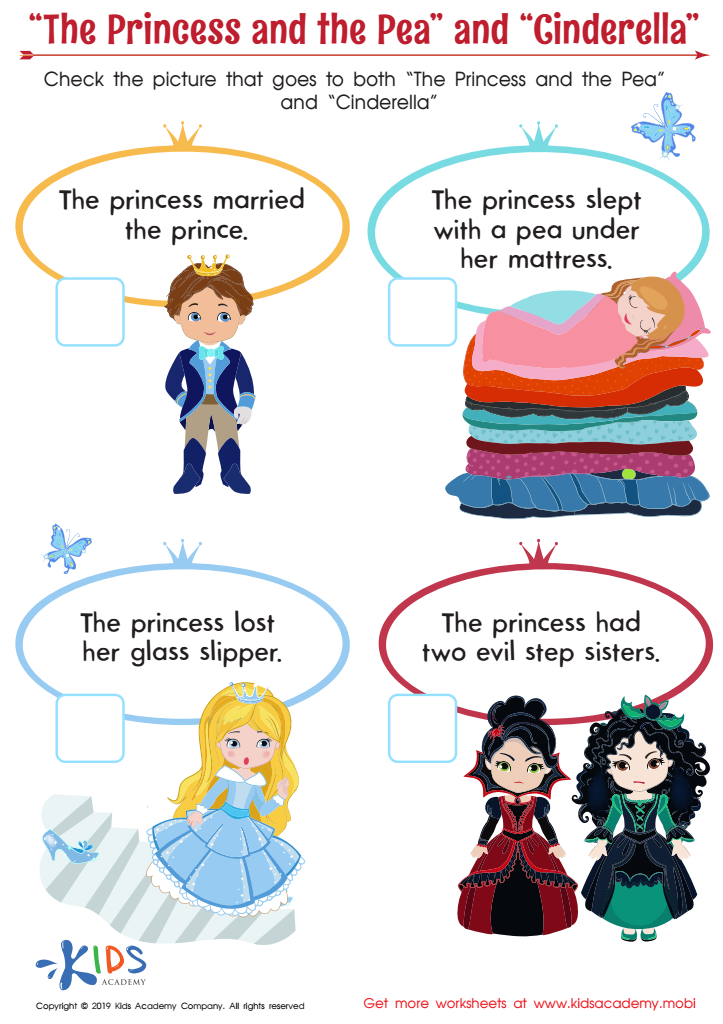
“The Princess and the Pea” and “Cinderella” Worksheet
Read "Cinderella" and "The Princess and the Pea" to your little ones. Ask them what their favorite parts were and what similarities they found in the princesses. This worksheet has four pictures of scenes from the stories. Ask your kids which picture goes with both tales.
 Assign to My Students
“The Princess and the Pea” and “Cinderella” Worksheet
Worksheet
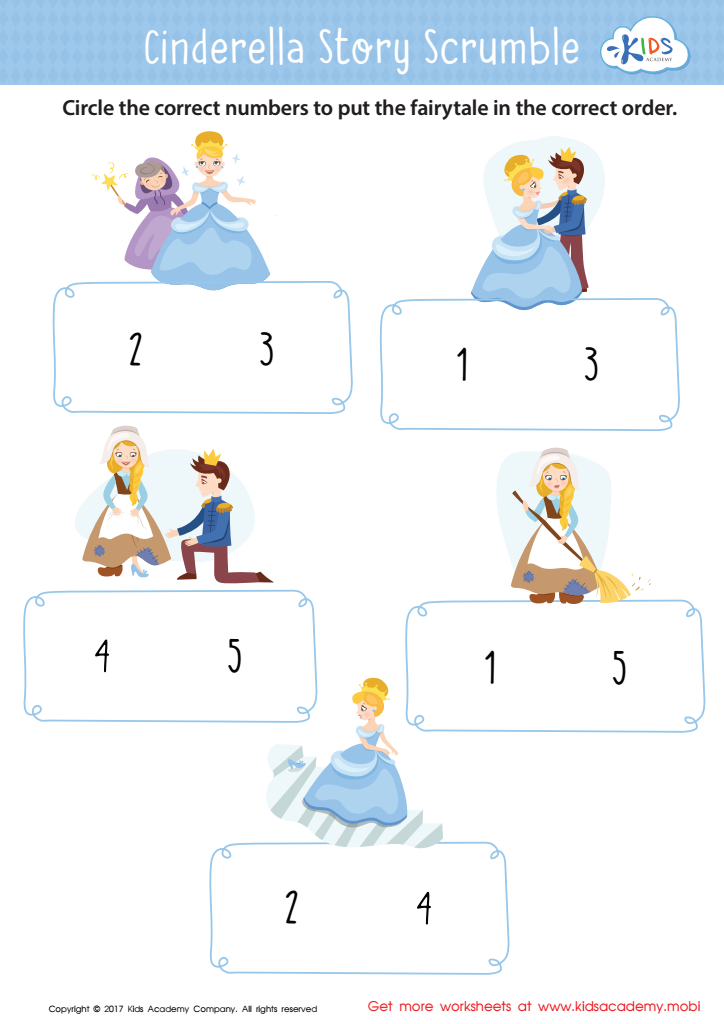
Cinderella Story Sequencing Worksheet
This worksheet helps strengthen reading comprehension skills by getting your child to remember key moments from the Cinderella story. They'll be asked to place pictures in the right order to tell the story.
Cinderella Story Sequencing Worksheet
Worksheet
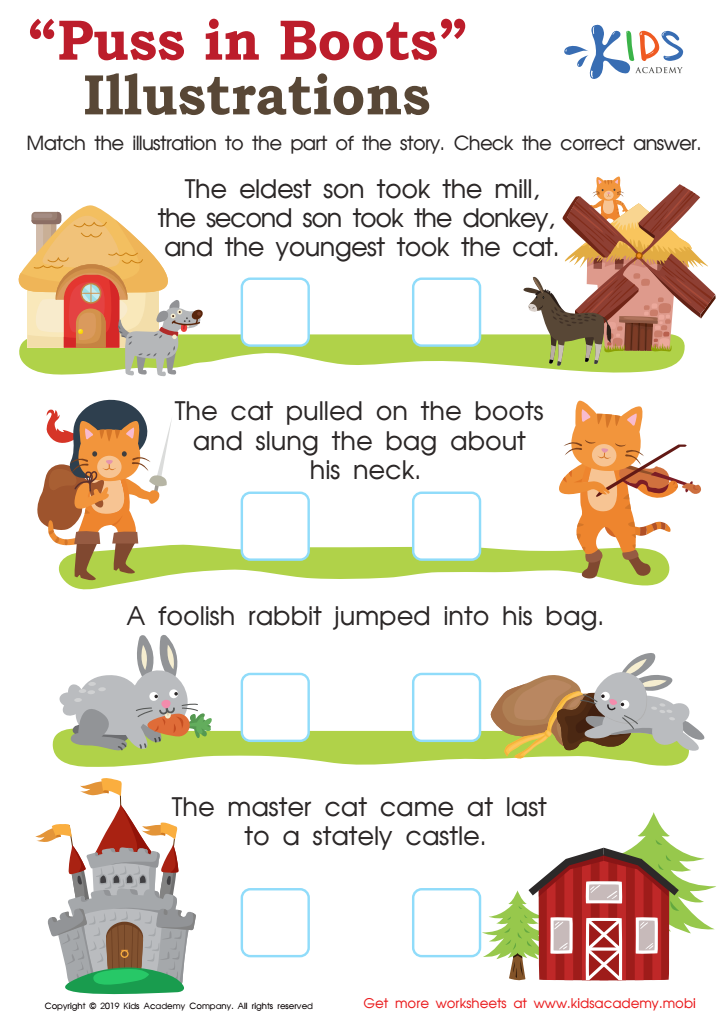
Puss in Boots Illustrations Worksheet
This Puss In Boots Illustrations worksheet is a great way to help kids learn about retelling stories. They'll match images to different parts of the story and check off the correct answer. As they recall events and put them in sequence they'll enjoy this fun and creative activity.
Puss in Boots Illustrations Worksheet
Worksheet
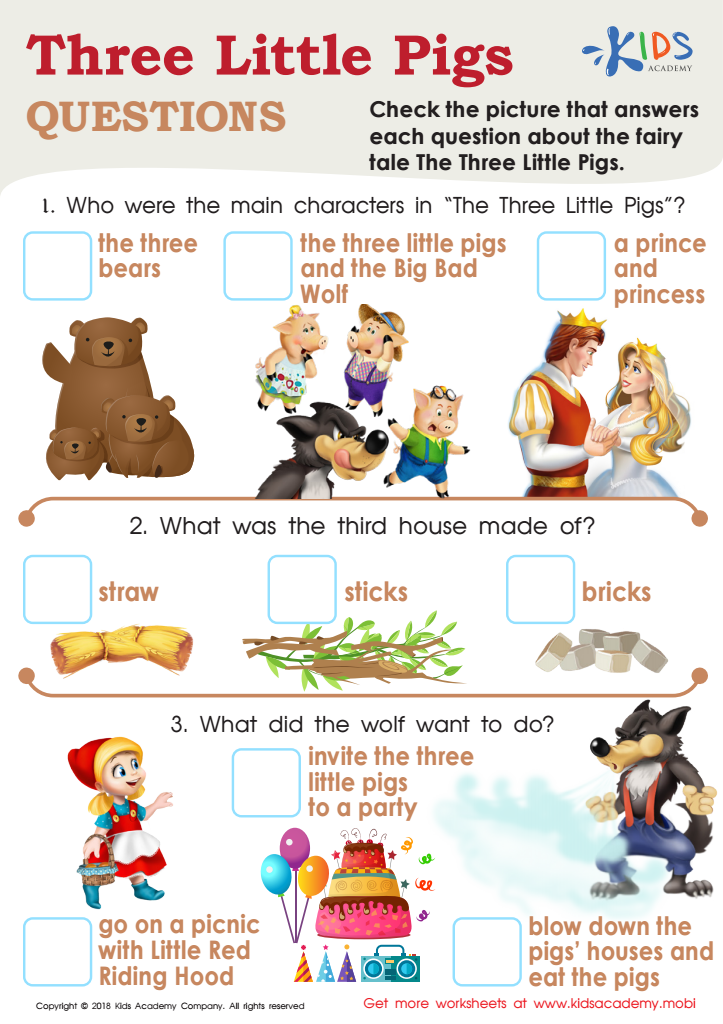
Three Little Pigs Questions Worksheet
Does your kid love bedtime stories? Test their classic fairytale knowledge with this worksheet! If they mention The Three Little Pigs, they're in luck - this pdf has them answering questions based off the classic fairytale. They'll check the picture that answers each question about the story. Is their fairytale knowledge up to scratch?
Three Little Pigs Questions Worksheet
Worksheet
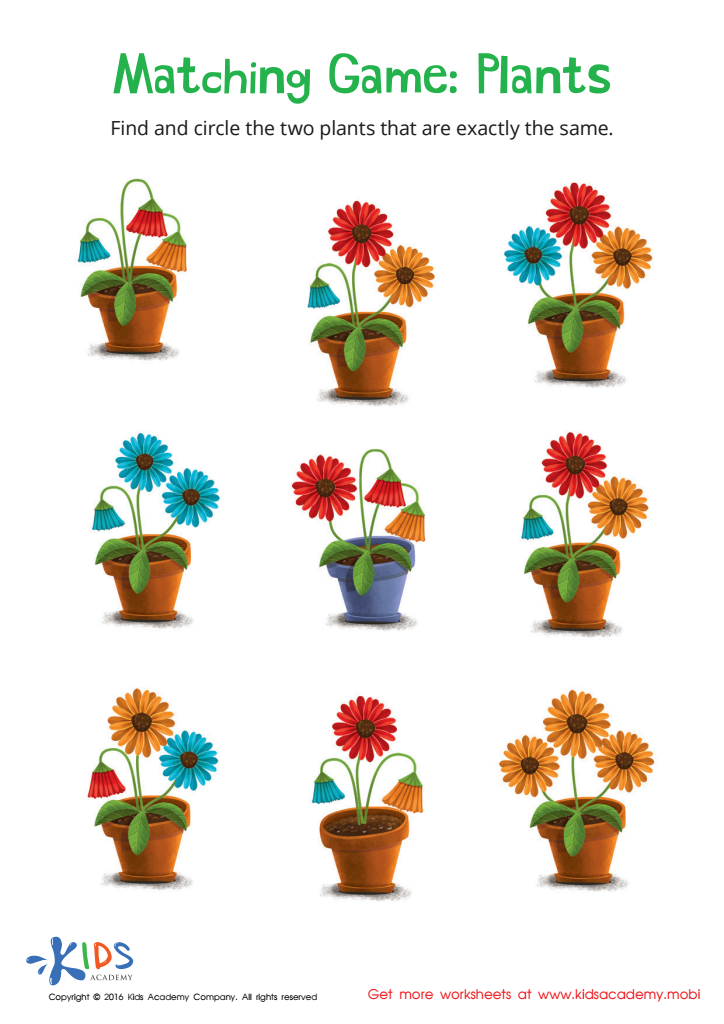
Matching: Plants Worksheet
This worksheet helps your child focus on details to build pattern recognition, problem solving and sorting/matching skills. Your child will enjoy the challenge of searching for similar images that match. Point out how small differences can exist in similar things and excite them with bright pictures and a fun challenge.
Matching: Plants Worksheet
Worksheet
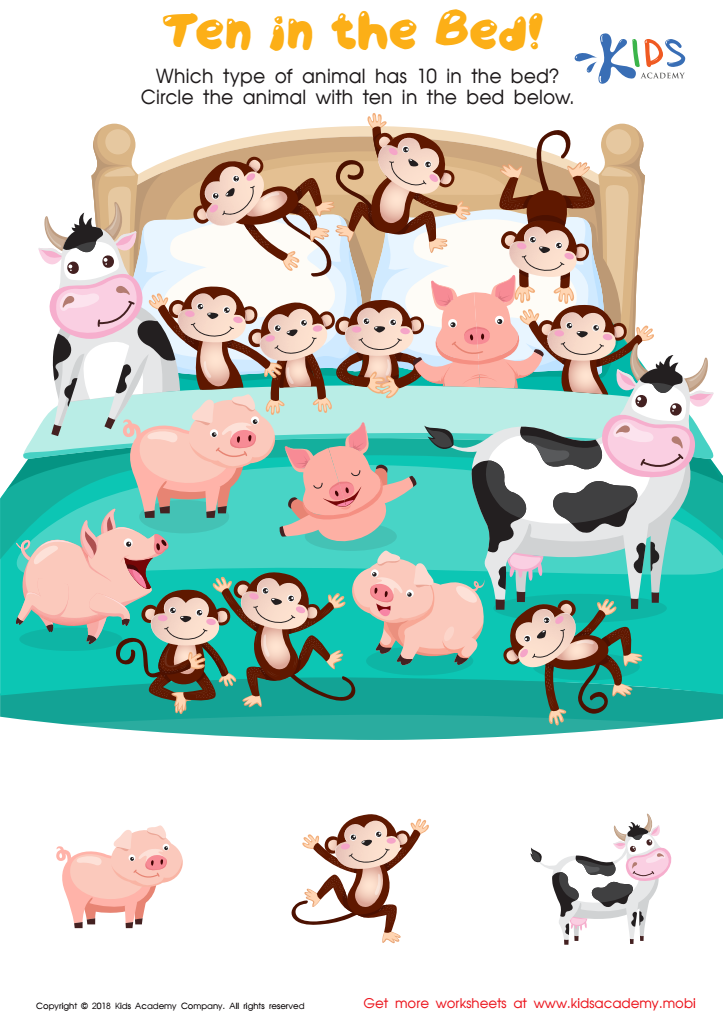
Ten in the Bed Worksheet
This fun worksheet has your kids counting and sorting friendly animal faces in a bed of ten! It's a great way for them to practice their mental math skills, like adding and multiplying more efficiently. Plus, it brings a new meaning to the classic song "Monkeys Jumping on the Bed"!
Ten in the Bed Worksheet
Worksheet
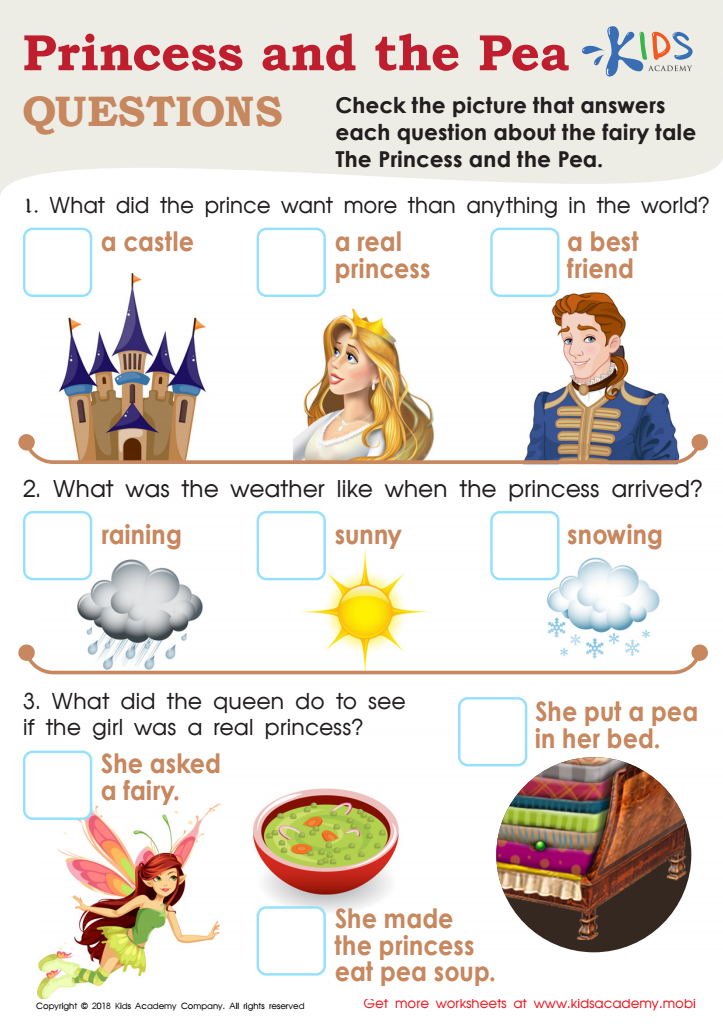
Princess and the Pea Questions Worksheet
Your kid knows The Princess and the Pea inside-out? Test their knowledge with this worksheet. Ask your little one to read the questions and match each one to the picture. It's a fun way to see just how much attention they've paid to their bedtime story.
Princess and the Pea Questions Worksheet
Worksheet
Join Kids Academy for Free
Who is primarily going to use this learning content?


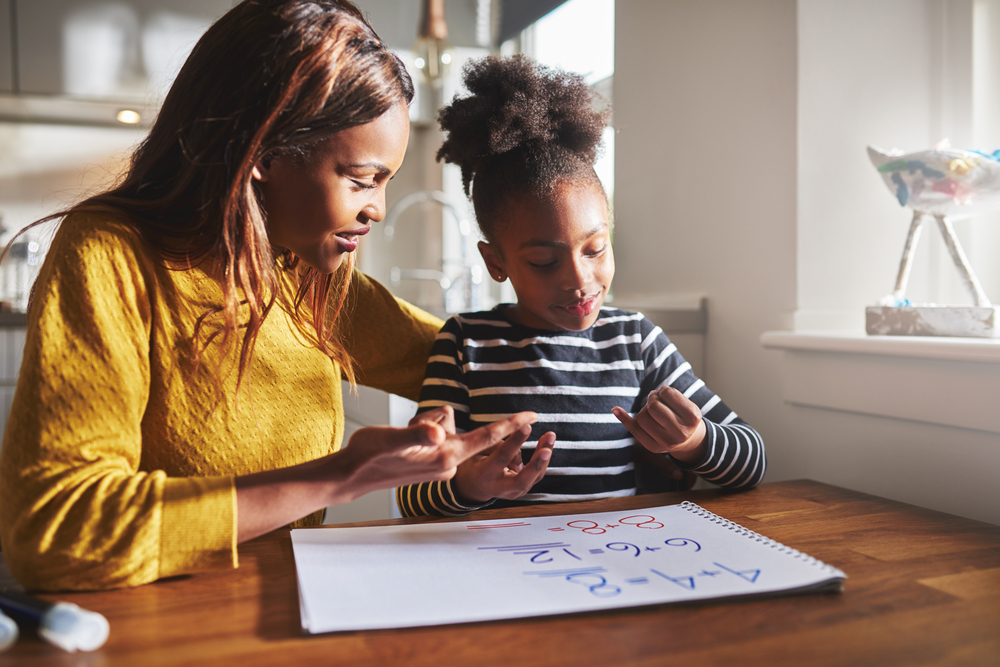


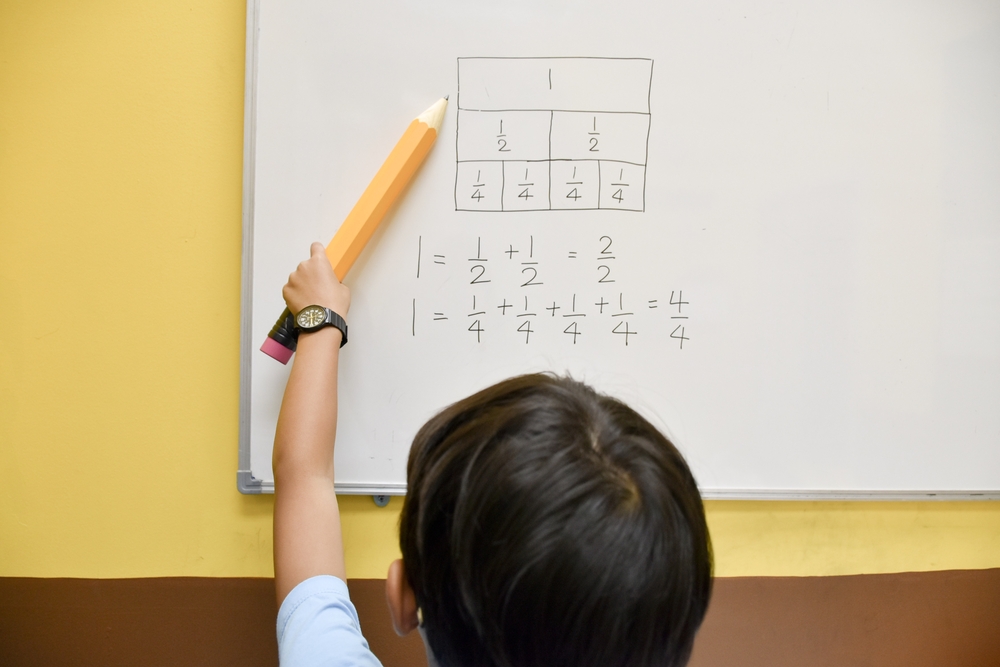


Story sequencing is a foundational skill in early literacy that parents and teachers should care deeply about, especially in normal kindergarten settings. At this age, children are beginning to comprehend the flow of events, recognize patterns, and build critical narrative skills that are essential for reading development. Story sequencing helps children understand that stories have a beginning, middle, and end. This aids in improving their comprehension and enables them to predict outcomes, an important aspect of critical thinking.
Moreover, engaging in sequencing activities enhances memory retention and strengthens organizational skills. As children learn to place events in the correct order, they develop a sense of structure that can be applied to various aspects of learning and everyday life.
Story sequencing also fosters language development. It encourages children to use descriptive language, follow a logical progression of ideas, and practice verbal expression. This can be particularly beneficial for enhancing vocabulary and grammar.
Additionally, through sequencing exercises, children boost their fine motor skills when they manipulate physical sequence cards or charts and support social skills by working collaboratively with peers. Promoting story sequencing in kindergarten lays a robust foundation for more complex cognitive abilities and lifelong learning enthusiasm. By prioritizing this skill, parents and teachers enhance children's academic success and overall development.