
Critical Thinking Normal Kindergarten Geometry Worksheets
3 filtered results
Difficulty Level
Grade
Age
-
From - To
Subject
Activity
Standards
Enhance your child’s early education with our Critical Thinking Normal Kindergarten Geometry Worksheets. Designed to blend fun and learning, these worksheets foster essential critical thinking skills in young learners by introducing fundamental geometry concepts. Engage your child with activities that challenge them to recognize shapes, patterns, and spatial relationships while honing their problem-solving abilities. Ideal for classroom use or at-home practice, our worksheets are both effective and engaging. Nurture your child's analytical abilities and boost their confidence in geometry with exercises created to inspire curiosity and a love for learning! Explore more at Kids Academy to support your child’s educational journey!
Favorites
With answer key
Interactive
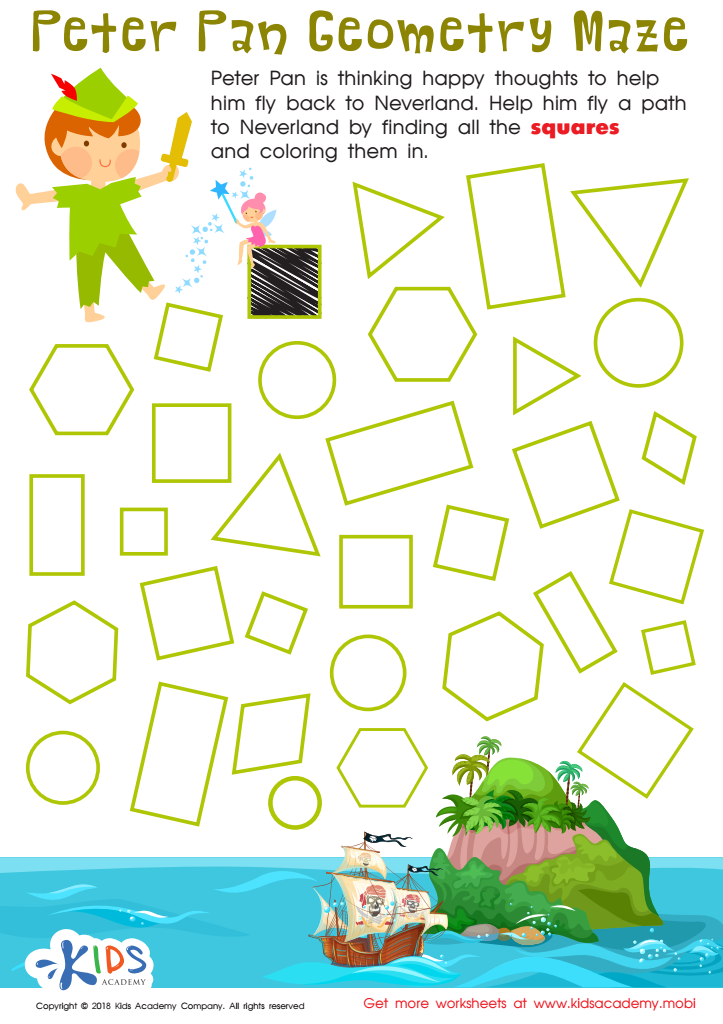
Peter Pan Worksheet
Kindergarteners can join Peter Pan on an adventure to Neverland! They can help him by coloring squares to create a path, strengthening their shape identification skills in a fun maze. Let the journey begin!
 Assign to My Students
Peter Pan Worksheet
Worksheet







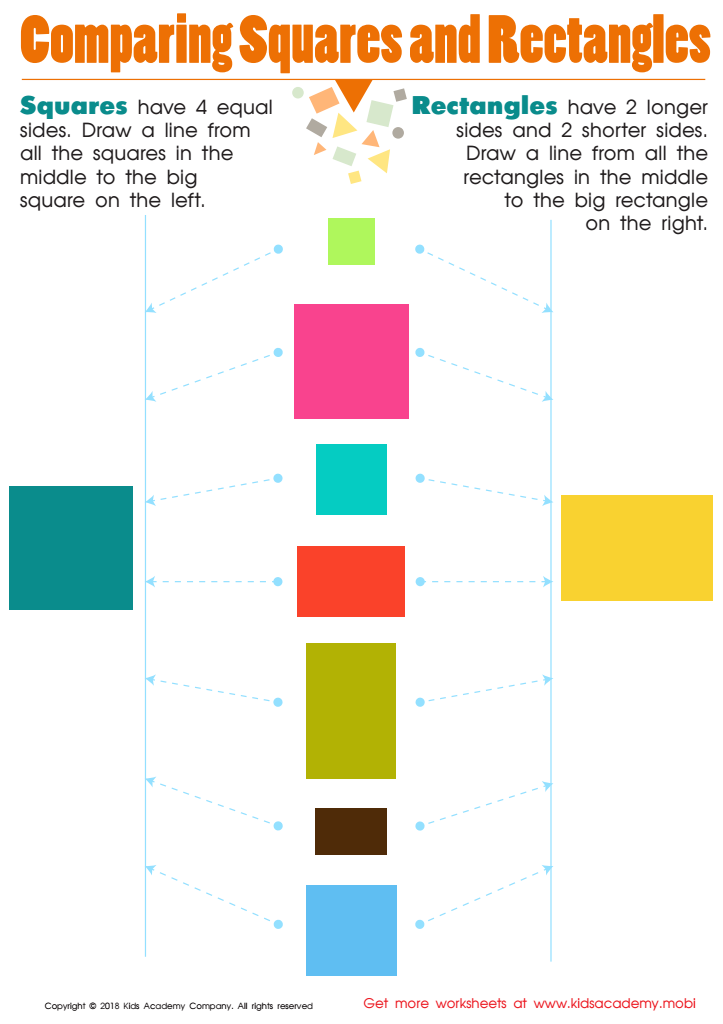
Comparing Squares Rectangles Worksheet
Help your little learner distinguish rectangles from squares with this fun geometry worksheet from Kids Academy! Read the definitions at the top, use the shapes on either side as a guide, then trace over the dotted line to match the rectangles and squares!
Comparing Squares Rectangles Worksheet
Worksheet
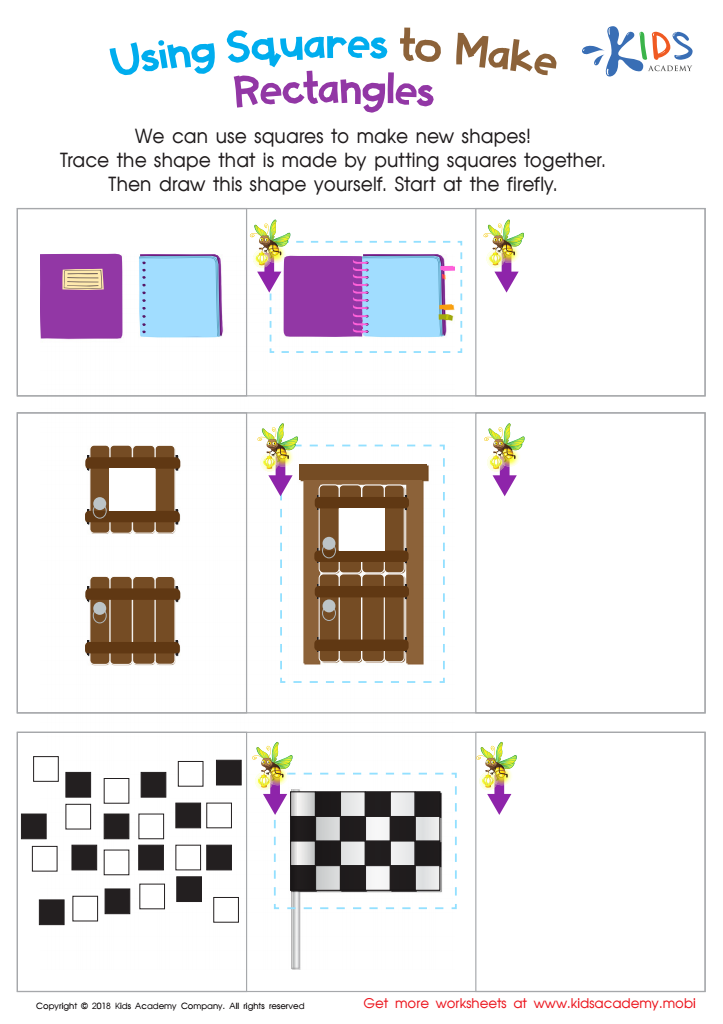
Using Squares to Make Rectangles Worksheet
Creating shapes from other shapes (composing shapes) develops spatial skills, an essential geometry standard for young students. This worksheet introduces familiar square objects, then demonstrates how they create rectangles. Students practice tracing and then drawing the shape independently. Download this free math resource for the classroom today! (80 words)
Using Squares to Make Rectangles Worksheet
Worksheet
Join Kids Academy for Free
Who is primarily going to use this learning content?








Parents and teachers should care about incorporating critical thinking in kindergarten geometry because it lays the foundation for a child's overall development in learning and problem-solving skills. At an early age, engaging children with basic geometric concepts like shapes, sizes, and spatial relationships helps develop their ability to analyze and understand the world around them. Encouraging critical thinking in this context means guiding children to not just recognize shapes but to explore their properties, ask questions, and come up with creative solutions for simple spatial problems.
This critical thinking skillset has far-reaching benefits beyond geometry. It enhances cognitive development by fostering curiosity and encouraging children to evaluate and reason rather than memorizing facts. Children learn to approach problems methodically, which is a valuable life skill. Moreover, early exposure to geometry supports the development of mathematical reasoning and prepares children for more advanced mathematical concepts they will encounter later.
For teachers, incorporating critical thinking into geometry lessons creates a more dynamic classroom environment, making learning interactive and engaging. For parents, fostering critical thinking at home can aid in bridging the gap between theoretical concepts learned at school and real-world applications. Overall, critical thinking in kindergarten geometry is essential for cultivating independent, thoughtful, and innovative learners.








