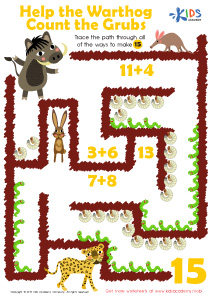
Basic Addition Normal Kindergarten Numbers Worksheets
7 filtered results
Difficulty Level
Grade
Age
-
From - To
Subject
Activity
Standards
Our "Basic Addition Normal Kindergarten Numbers Worksheets" are designed to help young learners master the foundation of mathematics. Easy to use and engaging, these worksheets introduce basic addition concepts using colorful illustrations and fun activities that capture children's imagination. Perfect for home or classroom use, each worksheet offers a variety of problems that reinforce number recognition, counting skills, and simple addition practice. Aligned with educational standards, our worksheets pave a strong path towards math fluency, making learning exciting and accessible for kindergartners. Let your child explore the joys of math with these expertly crafted educational tools!
Favorites
With answer key
Interactive
 Assign to My Students
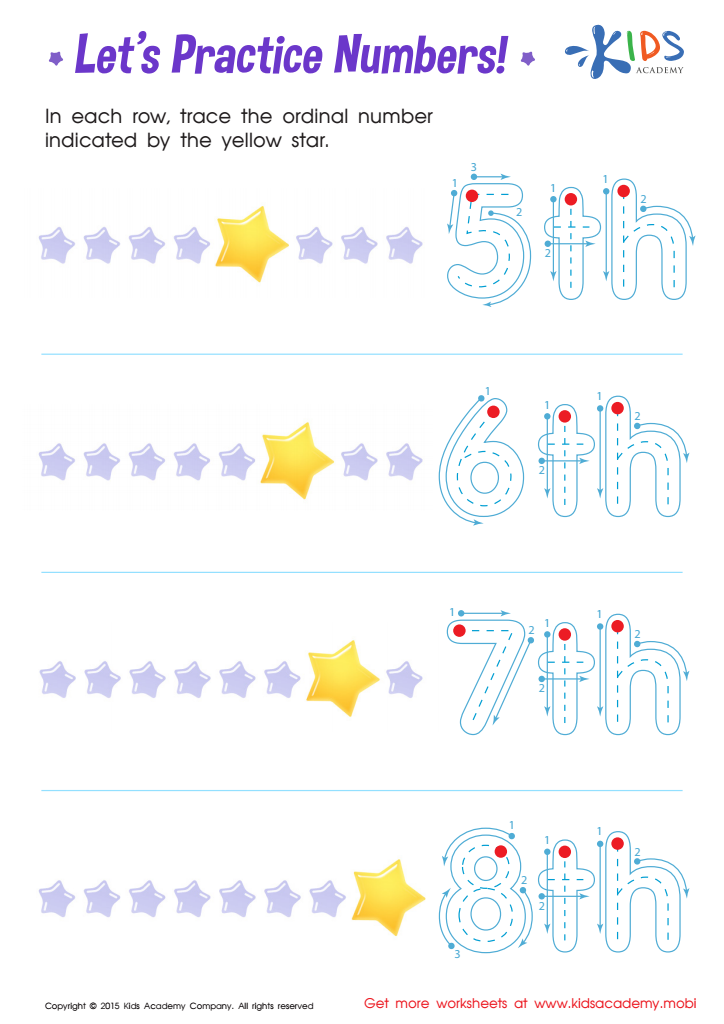
Ordinal Numbers: Let's Practice Numbers Printable
Worksheet
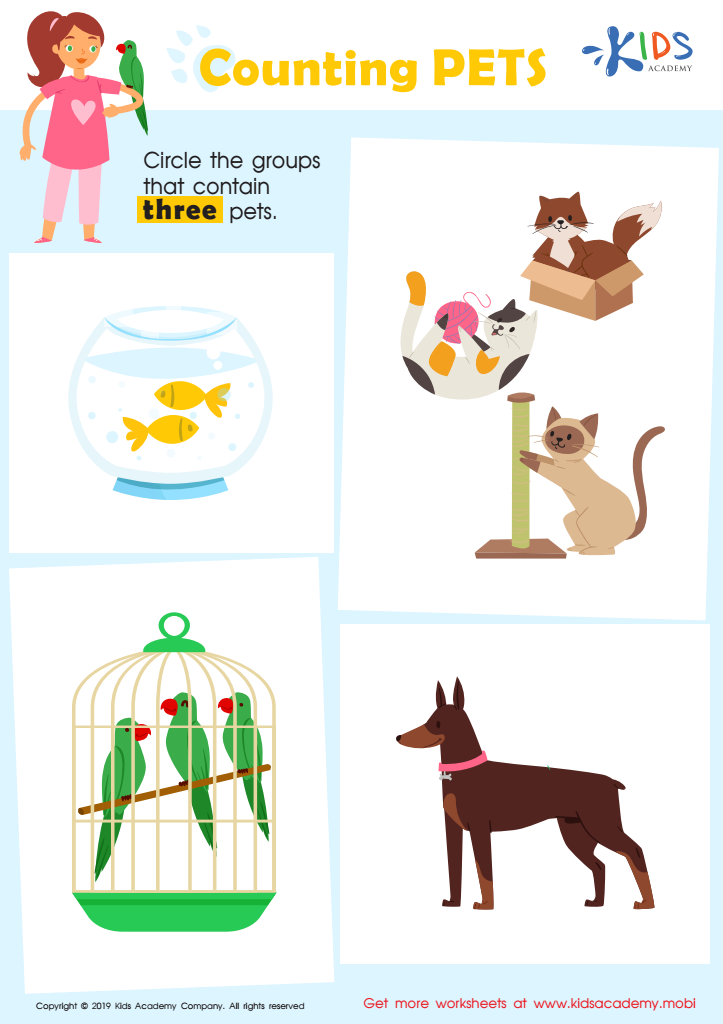
Counting Pets Worksheet
Kids adore their pets, making this free pet counting worksheet the perfect way to combine something they love with math skills. They'll count the number of pets, circle the pictures with three pets, and use one-to-one picture representation to help. This exercise will cultivate their learning and reinforce their love of animals!
Counting Pets Worksheet
Worksheet
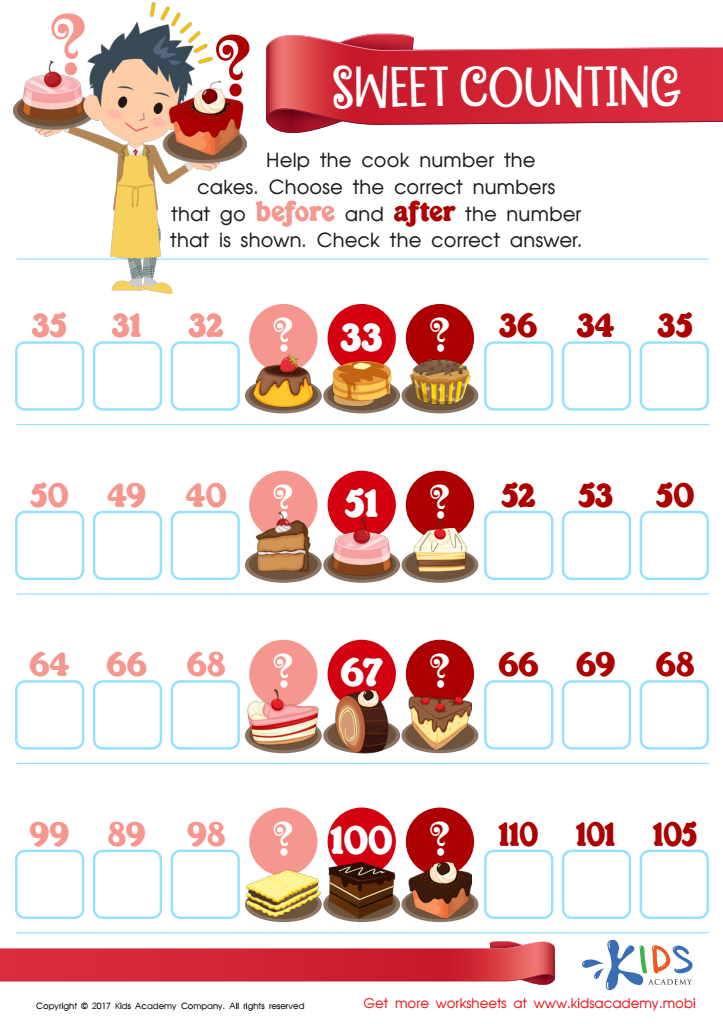
Sweet Counting - Part 1 Worksheet
Help your child learn numbers by counting cakes! Download this fun worksheet and have them fill in the numbers missing in the line of cakes. They'll have fun helping the cook and be learning at the same time!
Sweet Counting - Part 1 Worksheet
Worksheet
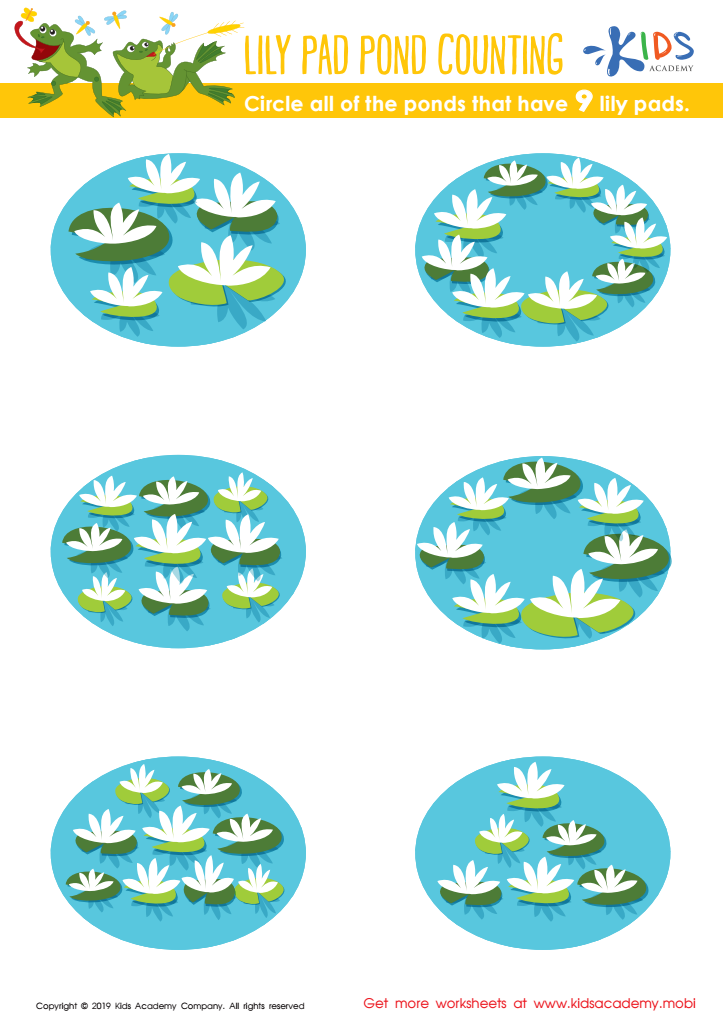
Lily Pad Pond Counting Worksheet
Counting can be fun with this colorful worksheet. Guide and be patient with your kids as they write numbers and count the six groups of lily pads. Help them circle the ponds with 9 lily pads, and watch them learn better and faster.
Lily Pad Pond Counting Worksheet
Worksheet
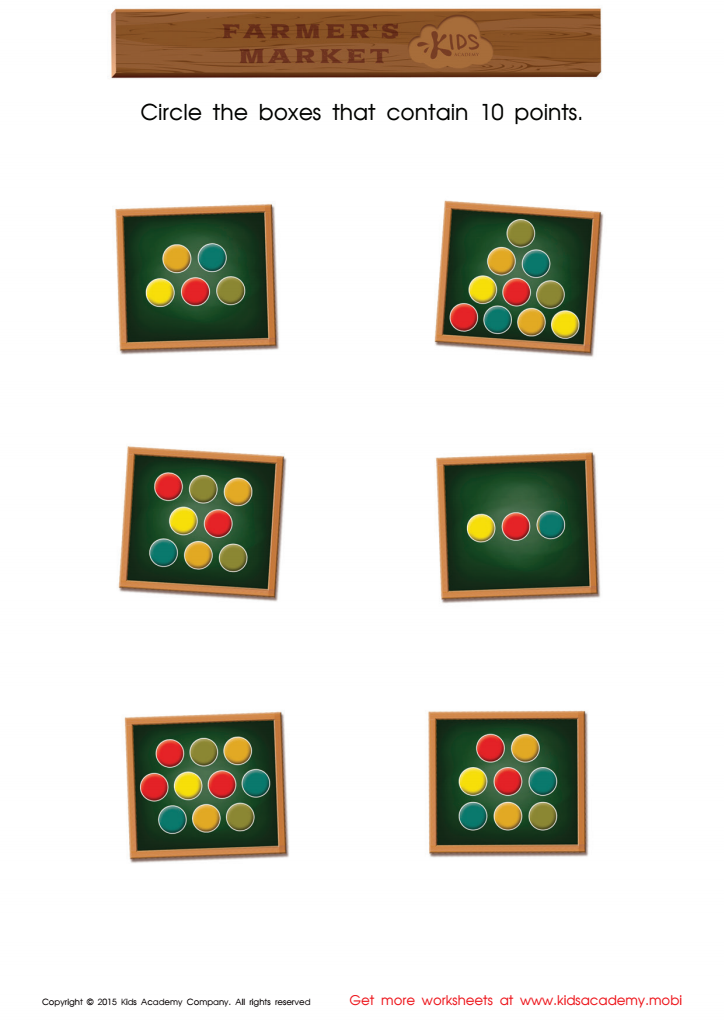
Count and Match Points 10 Math Worksheet
Help your youngster practice counting with this worksheet. Count the points in each box and circle any with up to 10 points. It will improve their counting and matching ability. Forget about addition and subtraction; it's time for a fun exercise for you both!
Count and Match Points 10 Math Worksheet
Worksheet
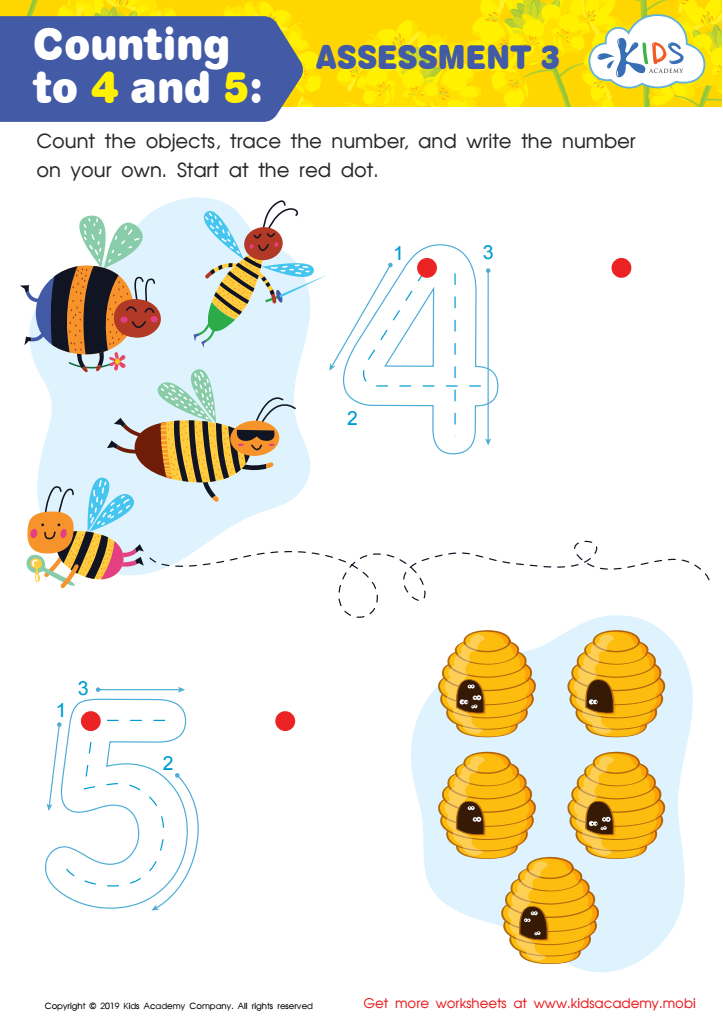
Counting to 4 and 5: Assessment 3 Worksheet
Help your kids learn to count with fun objects and items they like - like the bees in this worksheet. Ask them to count, trace the number, and write it down. Give guidance, starting at the red dot. This is an important first step in math and your kids will love it!
Counting to 4 and 5: Assessment 3 Worksheet
Worksheet
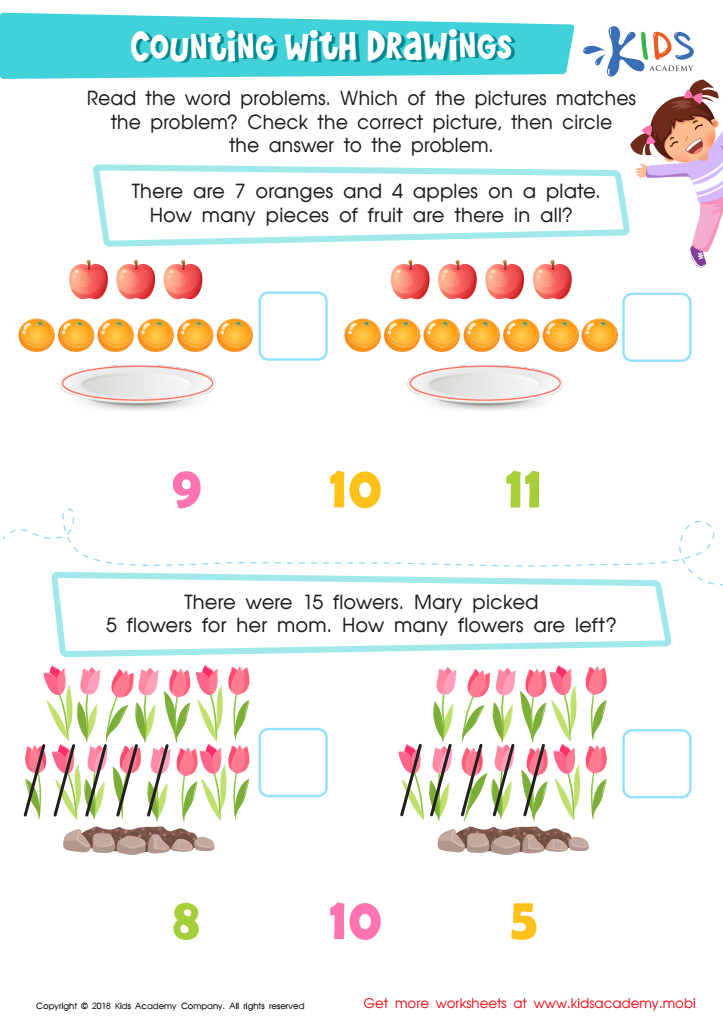
Counting with Drawings:Fruits & Flowers Worksheet
At Kids Academy, we know pictures make math come alive and make sense. This worksheet is perfect for early learners to practice word problems. Kids read each problem and count the images that represent the numbers, then solve the problem with addition or subtraction to get the right answer.
Counting with Drawings:Fruits & Flowers Worksheet
Worksheet
Join Kids Academy for Free
Who is primarily going to use this learning content?






Basic addition forms the cornerstone of a child’s mathematical learning and understanding. Introducing these concepts in kindergarten sets the foundation for all future math endeavors by building critical skills such as number sense, problem-solving, and logical thinking.
First, grasping basic addition enhances number sense, allowing young learners to understand, relate, and manipulate numbers effectively. This skill is pivotal, as it helps children recognize patterns, comprehend higher-level math, and appreciate the value and relationships between numbers.
Second, learning basic addition fosters problem-solving abilities. By engaging in adding small numbers, children develop strategies for tackling more complex problems—skills that transcend math, influencing other academic areas and everyday life situations.
Third, early exposure to addition boosts confidence. Mastery of these foundational skills empowers children, fostering a positive attitude towards mathematics. Persisting through challenging problems and celebrating small victories can significantly boost a child’s self-esteem.
Lastly, foundational math skills support future academic success. Proficiency in basic addition equips children with the tools needed for understanding more advanced concepts such as subtraction, multiplication, and division, creating a seamless educational progression with reduced struggles.
Therefore, both parents and teachers should prioritize basic addition in kindergarten, laying a robust groundwork that primes young minds for lifelong learning and achievement in mathematics.