Color Identification Normal Worksheets - Page 2
26 filtered results
-
From - To
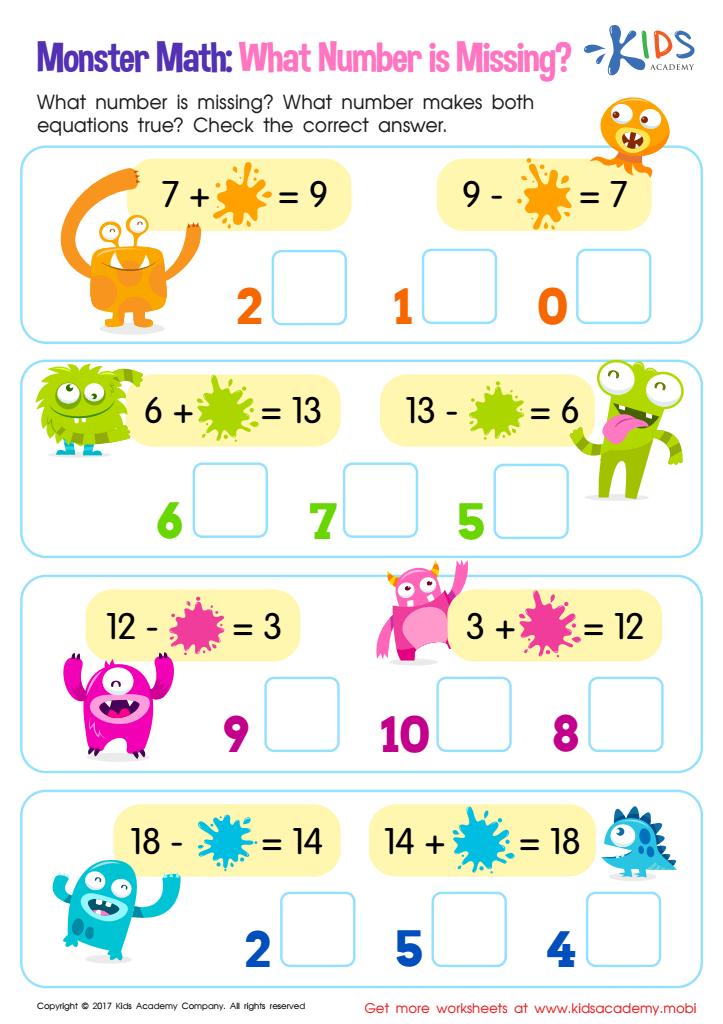
Missing Number: Monster Math Worksheet
 Assign to My Students
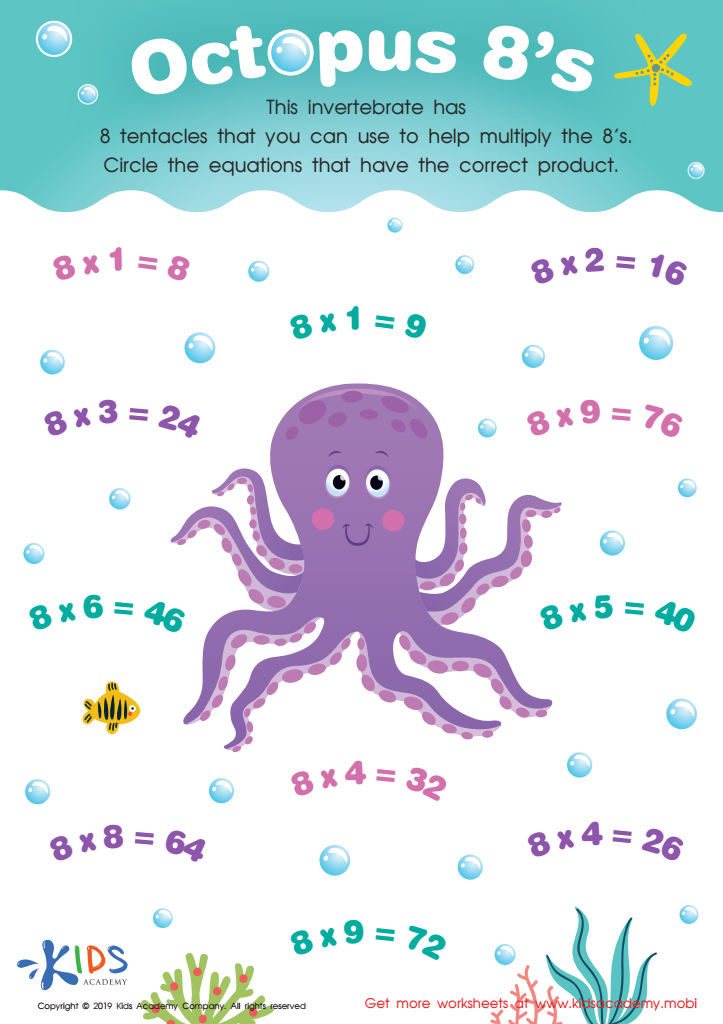
Octopus 8’s Worksheet








Color identification is a fundamental cognitive skill that significantly impacts a child's overall development, making it crucial for both parents and teachers to focus on it during early childhood education. Recognizing and naming colors enhances a child's visual and cognitive abilities, aiding in their capacity to distinguish between different objects. This skill is not only essential for academic success but also for everyday activities, such as following color-coded instructions and participating in group activities.
Understanding colors also promotes linguistic development as children learn to associate words with their visual experiences. This relationship between language and perception can improve their descriptive abilities, enabling them to communicate more effectively. Additionally, proper color identification can have social and emotional benefits. Successfully naming and identifying colors can boost a child's self-esteem and confidence, fostering a sense of achievement.
From a practical perspective, color identification is intertwined with safety and daily functionality. For instance, recognizing red as a signal to stop is fundamental for a child's safety in real-world environments like road crossings. By paying close attention to color recognition skills, parents and teachers can ensure that children develop a well-rounded skill set that supports both their immediate learning needs and their long-term personal development. This foundational tool paves the way for more complex learning and better overall cognitive functioning.








