Fine motor skills (writing numbers) Normal Worksheets
3 filtered results
-
From - To
Enhance your child's fine motor skills with our engaging writing numbers worksheets! Designed for early learners, these normal worksheets provide a fun and interactive way for kids to practice number formation. Each worksheet includes clear prompts and illustrative visuals that guide children as they trace and write numbers. By refining their fine motor skills, students gain confidence in their writing abilities, laying a strong foundation for future math success. Ideal for classrooms or at-home learning, our resources promote both fine motor development and number recognition. Discover the joy of numbers and watch your child’s skills flourish today!
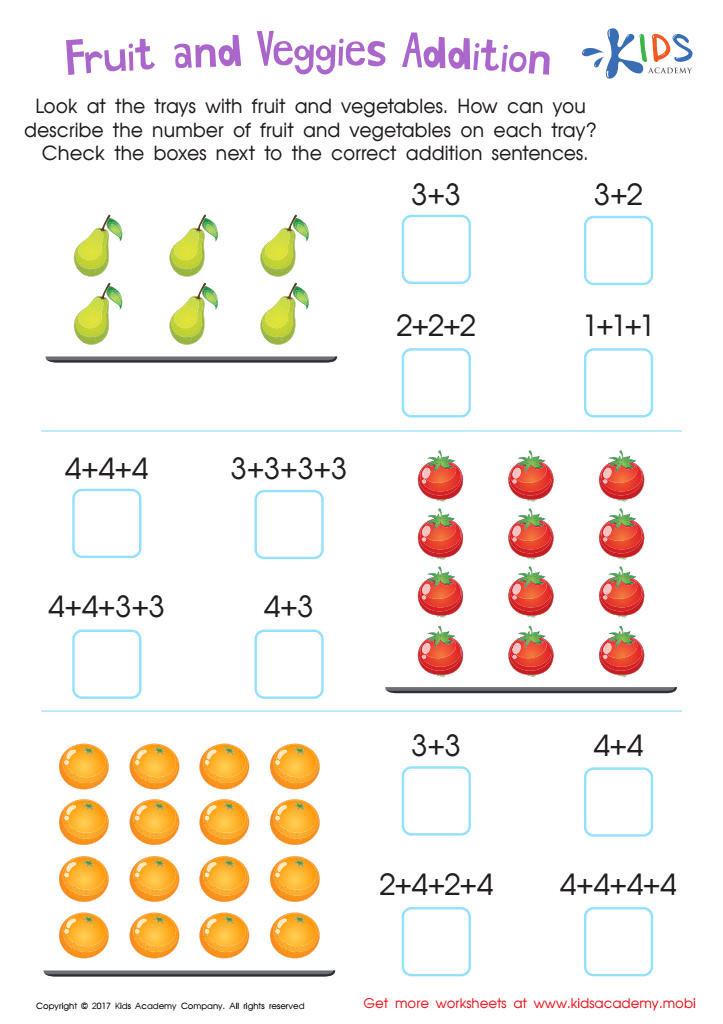
Fruit and Veggies Worksheet
 Assign to My Students
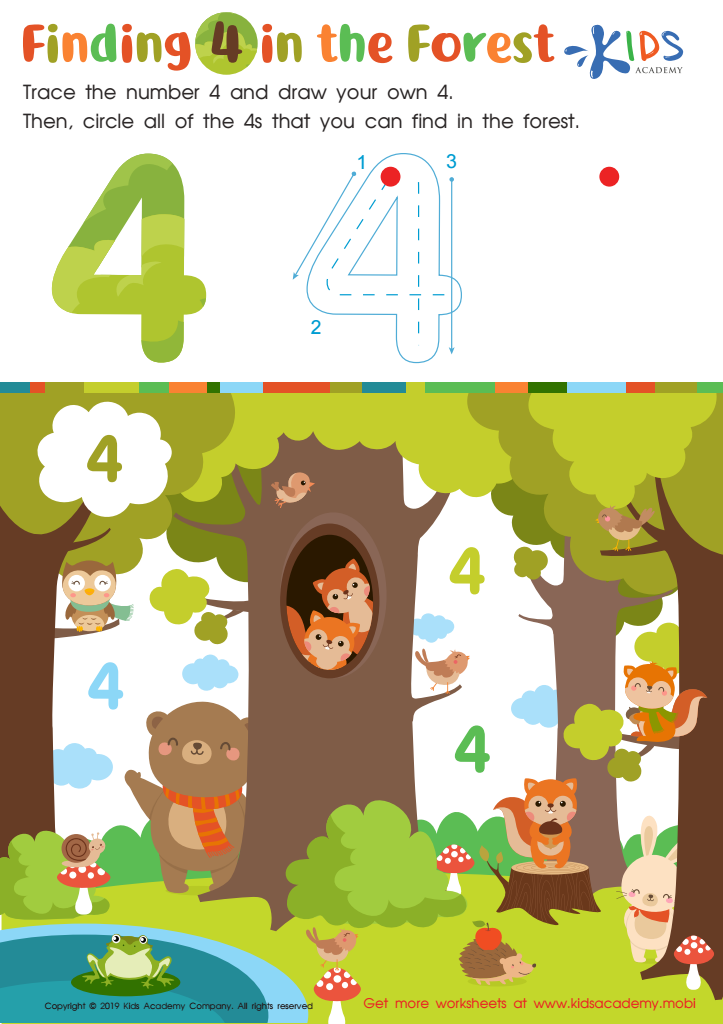
Finding 4 in the Forest Worksheet
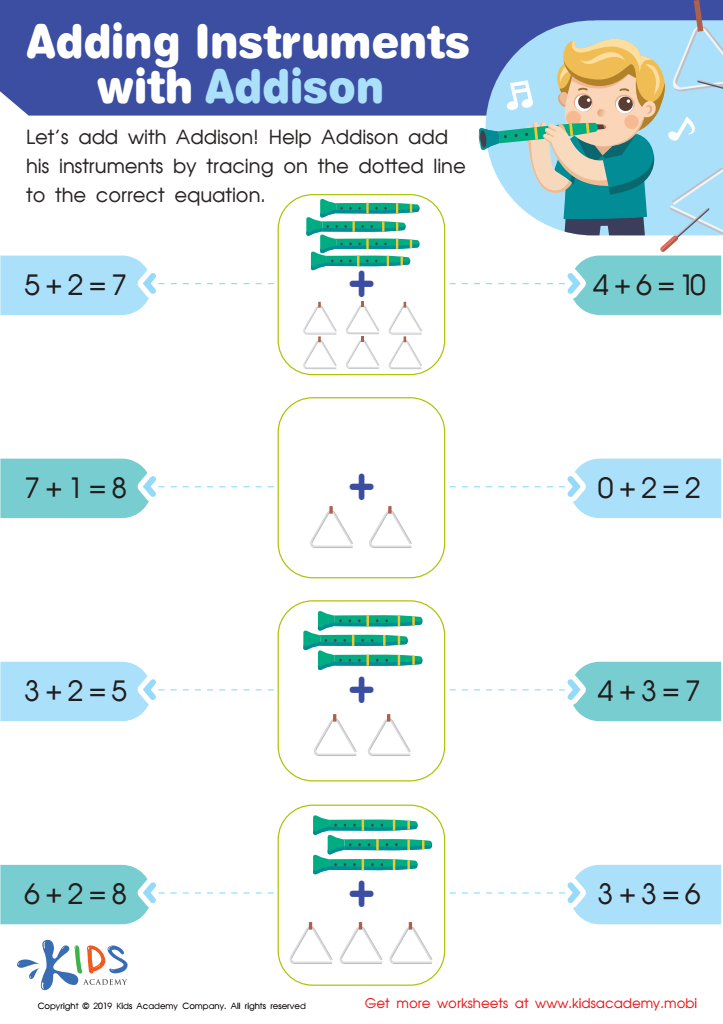
Adding Instruments with Addison Worksheet







Fine motor skills, especially in writing numbers, are crucial for children's overall development and learning. Parents and teachers should prioritize these skills, as they serve as foundational building blocks for a child's educational journey. Mastery of fine motor skills aids in the development of hand-eye coordination, dexterity, and concentration, facilitating later learning not only in mathematics but across all subjects.
Writing numbers requires precise control and coordination, which strengthens muscles in the hand and fingers. As children practice, they improve their ability to grasp writing instruments, manipulate small objects, and ultimately produce legible work. This translates into better performance in tasks such as addition, subtraction, and other mathematical concepts that rely on numerical understanding.
Moreover, fine motor skills can boost a child’s self-esteem and independence. Successfully writing numbers can enhance a child’s confidence and willingness to participate in class, fostering a more proactive and engaged learner. Parents and teachers can encourage these skills through playful activities like drawing, crafting, and kinesthetic tasks that make learning enjoyable. Investing time in developing fine motor skills can yield long-term benefits, preparing children for more complex academic and real-world challenges.








