
Identifying differences Normal Worksheets
3 filtered results
Difficulty Level
Grade
Age
-
From - To
Subject
Activity
Standards
Discover the perfect tool to enhance your child's learning journey with our "Identifying Differences" worksheets. These engaging and educational printables are designed to develop critical thinking and attention to detail in early learners. Each worksheet challenges kids to spot differences between images, fostering keen observation skills while providing hours of fun. Ideal for preschool through early elementary, our worksheets adapt to various skill levels, ensuring a tailored learning experience for every child. Boost your child's learning skills today with our captivating and effective "Identifying Differences" activities, exclusively available at Kids Academy!
Favorites
With answer key
Interactive
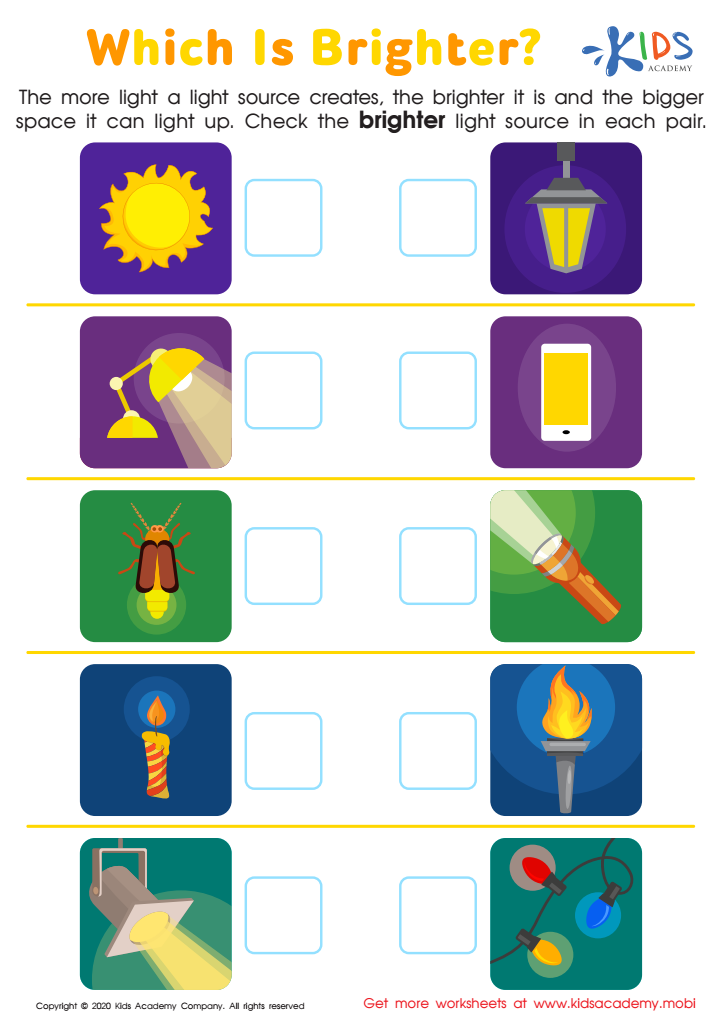
Which Is Brighter? Worksheet
Before the exercise, ask students to recall sources of light. Use this worksheet to explain that the brighter the light source, the more space it can light up. Identify the different light sources in the pictures, then check the brighter light source in each pair. The biggest natural source of light is the sun.
 Assign to My Students
Which Is Brighter? Worksheet
Worksheet
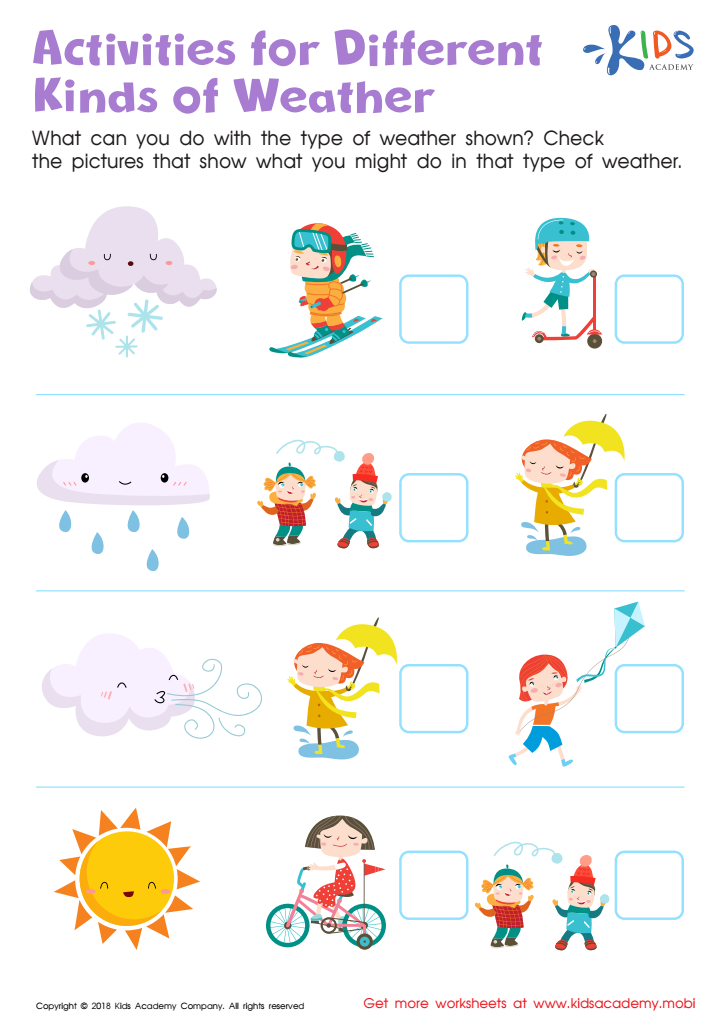
Activities for Different Kinds of Weather Worksheet
Help your child explore the changing seasons with this interactive worksheet. Ask them to name the different seasons and activities associated with each type of weather. Show the pictures and explain what they can do in that kind of weather. Have them check off the activities to help them learn and enjoy the changing seasons.
Activities for Different Kinds of Weather Worksheet
Worksheet
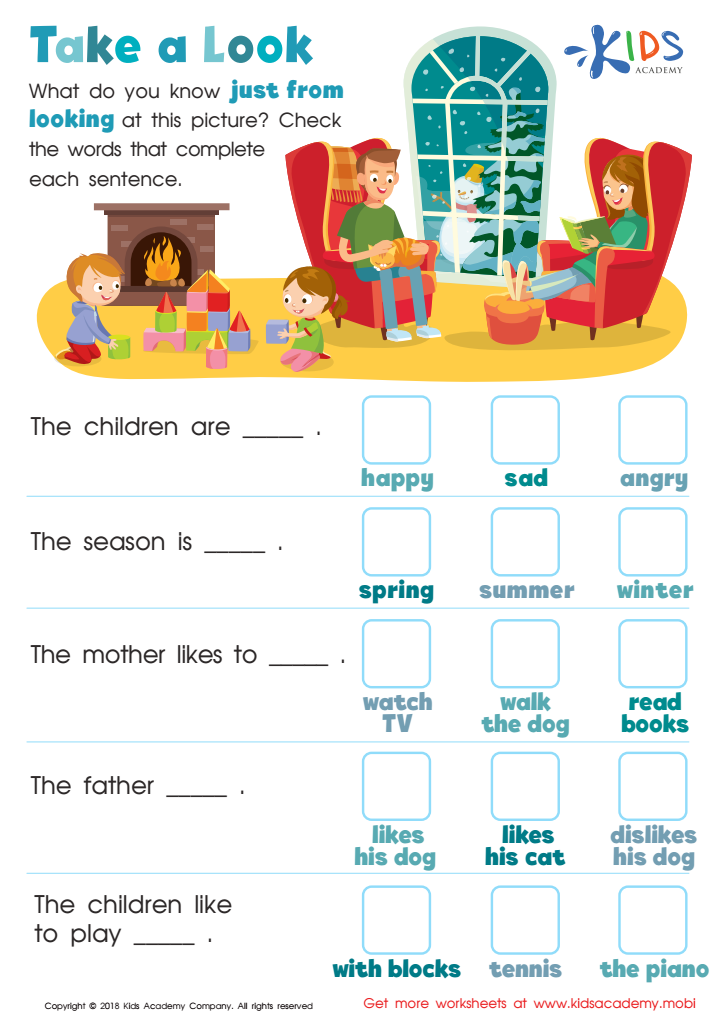
Take a Look - Part 1 Worksheet
Young learners gain understanding when using picture clues when reading. Looking at illustrations can help students learn the meaning of key vocabulary when reading fiction or informational text. Ask your students to look at the worksheet and observe what they can learn from the picture. It's a great comprehension strategy for early readers.
Take a Look - Part 1 Worksheet
Worksheet
Join Kids Academy for Free
Who is primarily going to use this learning content?


.jpg)




Identifying differences among children in an educational or home setting is crucial for several reasons. Firstly, recognizing variations in learning styles, abilities, and developmental stages allows educators and parents to tailor their teaching methods and support strategies accordingly. This individualized approach ensures that each child can maximize their potential, building confidence and academic skill simultaneously.
Secondly, early identification of learning disabilities or developmental delays is essential. By spotting these differences early on, interventions can be implemented to address the specific needs of the child, ultimately leading to better long-term outcomes. This proactive approach can help mitigate future struggles, enabling children to stay on track with their peers.
Moreover, promoting an inclusive environment where differences are acknowledged and respected fosters social and emotional development. It teaches children the value of diversity and enhances their empathy and teamwork skills. Inclusivity also reduces feelings of alienation and promotes a sense of belonging, which is vital for overall well-being.
Lastly, being sensitive to differences helps in detecting potential behavioral or emotional issues early. Addressing these concerns promptly with appropriate guidance and counseling can significantly improve a child's quality of life and overall academic success. By valuing and identifying differences, both teachers and parents play a critical role in nurturing well-rounded, resilient, and compassionate individuals.








