
Moral understanding Normal Worksheets
5 filtered results
Difficulty Level
Grade
Age
-
From - To
Subject
Activity
Standards
Discover our engaging "Moral Understanding Normal Worksheets" designed for early learners! These worksheets provide children the opportunity to explore essential moral concepts through fun activities and relatable scenarios. With a focus on character building, empathy, and decision-making, these resources help instill valuable life lessons in young minds. Perfect for homeschooling or classroom settings, our worksheets encourage children to reflect on their values and the impact of their choices. Easy to download and suitable for various learning styles, these worksheets are a fantastic way to promote constructive conversations about morals and ethics. Start nurturing your child's moral understanding today!
Favorites
With answer key
Interactive
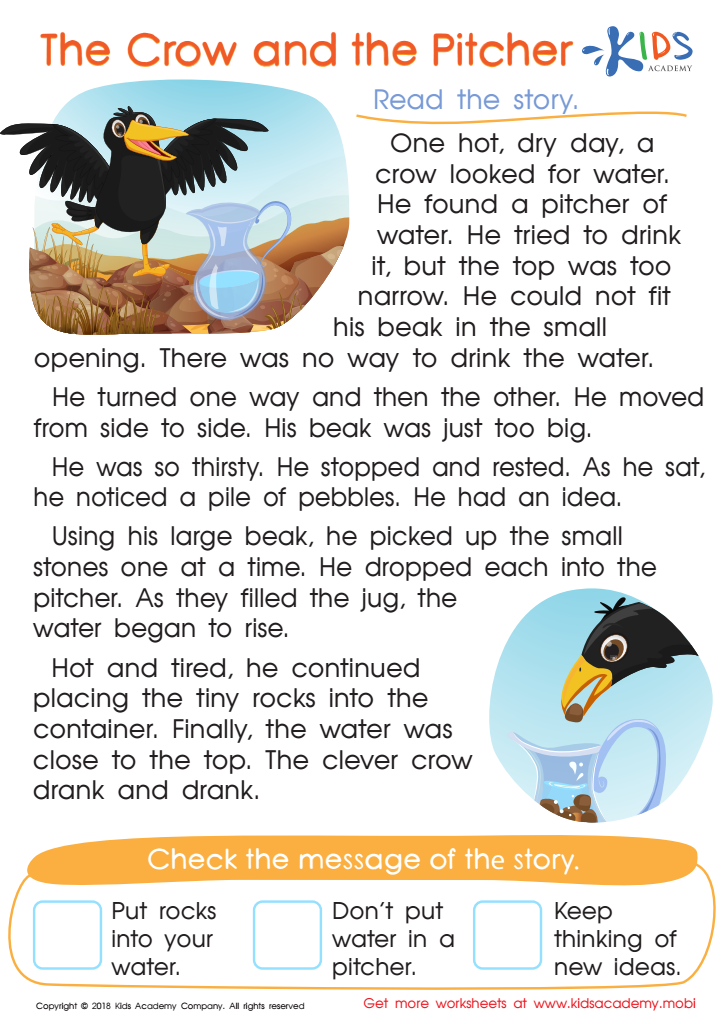
The Crow and the Pitcher Worksheet
Introduce your child to reading comprehension with this fascinating worksheet from Kids Academy! Featuring Aesop's fable of a thirsty crow, your child will enjoy reading and determining the central theme of the passage. This worksheet is a great way to give your child a purpose for reading while helping to build their comprehension skills.
 Assign to My Students
The Crow and the Pitcher Worksheet
Worksheet
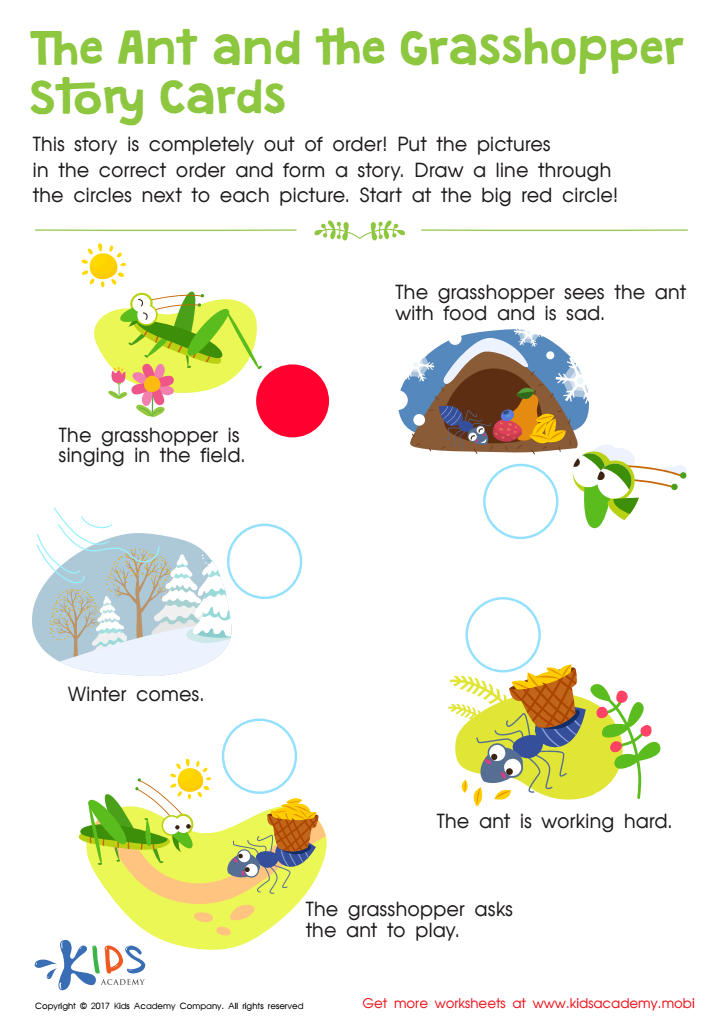
The Ant and The Grasshopper Worksheet
This worksheet uses the beloved childhood fable "The Ant and the Grasshopper" to teach your child about plot and order of events. Your child must read the events and put them in the right order. Once completed, review the story with your child to ensure its accuracy.
The Ant and The Grasshopper Worksheet
Worksheet
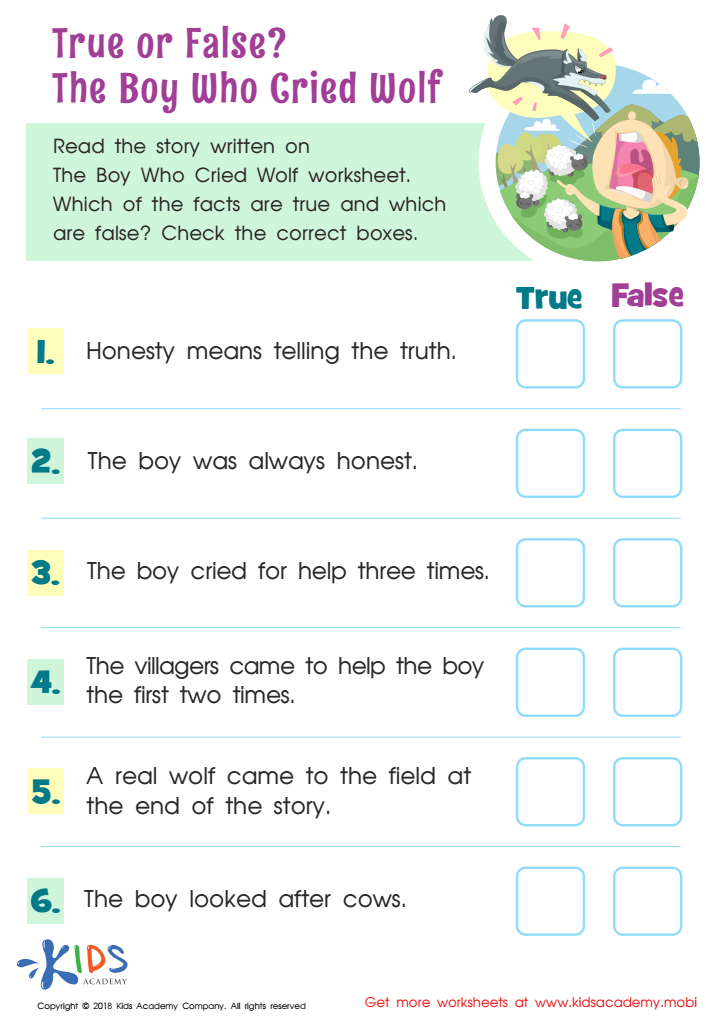
True or False? The Boy Who Cried Wolf Worksheet
Test students' understanding of The Boy Who Cried Wolf with this free downloadable worksheet. It contains true/false questions to assess comprehension of key events. Easy to complete, it checks students can recall facts from the story. Try it and see!
True or False? The Boy Who Cried Wolf Worksheet
Worksheet
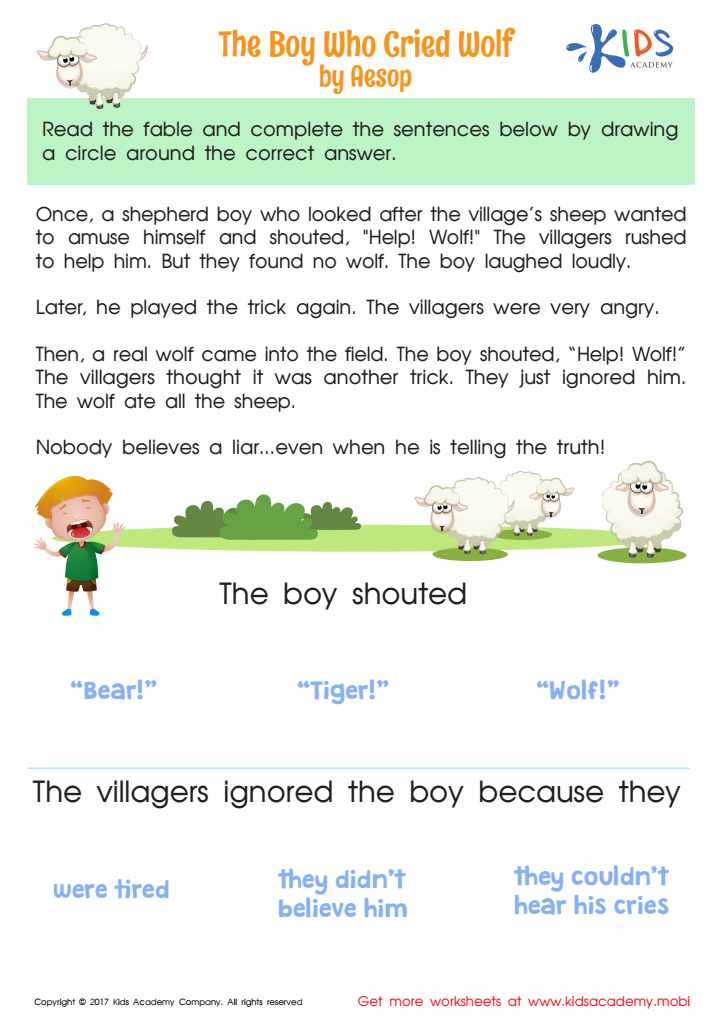
The Boy Who Cried Wolf Worksheet
Test your child's reading comprehension with The Boy Who Cried Wolf worksheet. Read the fable, then answer the questions. Use the text to help your child check their answers are correct. Boost reading skills in a fun, interactive way!
The Boy Who Cried Wolf Worksheet
Worksheet
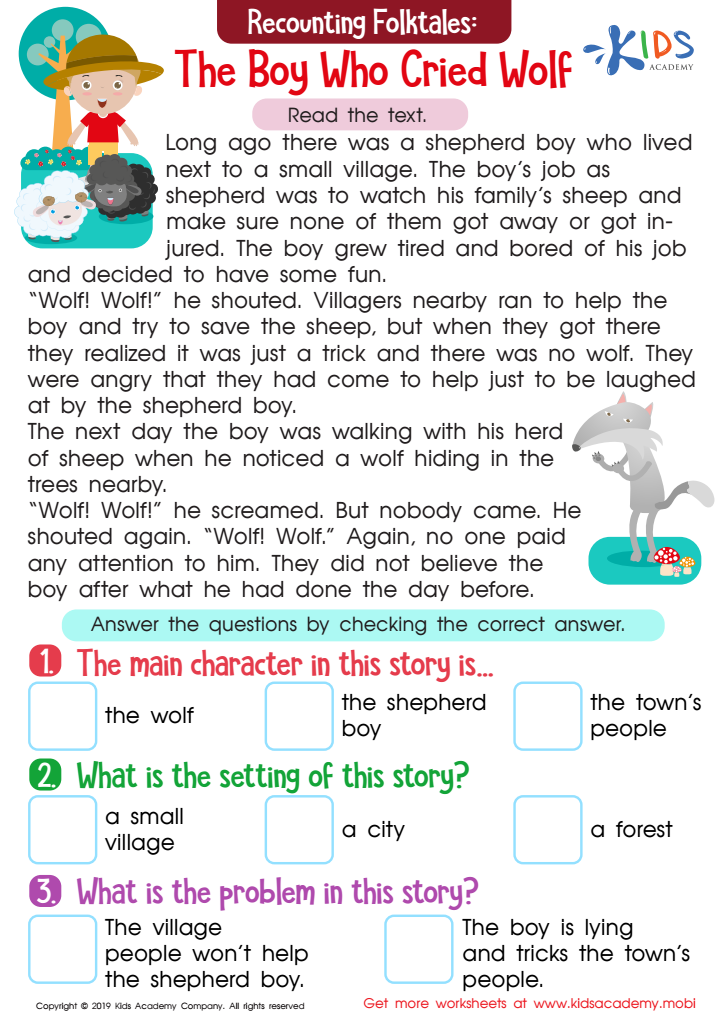
The Boy Who Cried Wolf Part 1 Worksheet
Storytime can be your kid's favorite part of the day. Ask them what their favorite stories are, then read the text in the printout. Read along with them, making sure they understand each word. At the end, go over the questions and have them check the correct answers.
The Boy Who Cried Wolf Part 1 Worksheet
Worksheet
Join Kids Academy for Free
Who is primarily going to use this learning content?




Moral understanding is essential for both parents and teachers as it forms the foundation of social behavior and decision-making in children. By fostering moral development, we equip children with the skills to navigate social complexities, understand the importance of empathy, and make ethical choices.
First, moral understanding aids in personal development. Children learn to differentiate between right and wrong, enabling them to act responsibly and become accountable for their behavior. This understanding promotes self-discipline and respect for others, essential values in both school and home environments.
Moreover, moral understanding plays a critical role in social harmony. Children with a solid moral compass are more likely to engage in cooperative interactions, resolve conflicts effectively, and contribute positively to their communities. This can lead to fewer behavioral issues and a more supportive learning atmosphere, benefiting everyone involved.
Additionally, parents and teachers serve as role models, significantly influencing a child's moral development. By demonstrating ethical behavior and discussing moral dilemmas, they encourage children to reflect on their values and beliefs.
In summary, nurturing moral understanding is vital for developing compassionate, responsible individuals who can contribute positively to society. Investing in this aspect of childhood development benefits not only the child but also the larger community.








