
Prefix understanding Normal Worksheets
3 filtered results
Difficulty Level
Grade
Age
-
From - To
Subject
Activity
Standards
Our "Prefix Understanding Normal Worksheets" are designed to build a strong foundation in early literacy skills with engaging and interactive exercises. These worksheets help young learners grasp the meaning and usage of various prefixes, enabling them to enhance their vocabulary and reading comprehension. Each activity is crafted to make learning fun and effective, with colorful examples and clear instructions. Ideal for both classroom use and home study, these resources support the development of critical thinking and language skills. Prepare your students for advanced literacy with our high-quality, educational prefix worksheets from Kids Academy.
Favorites
With answer key
Interactive
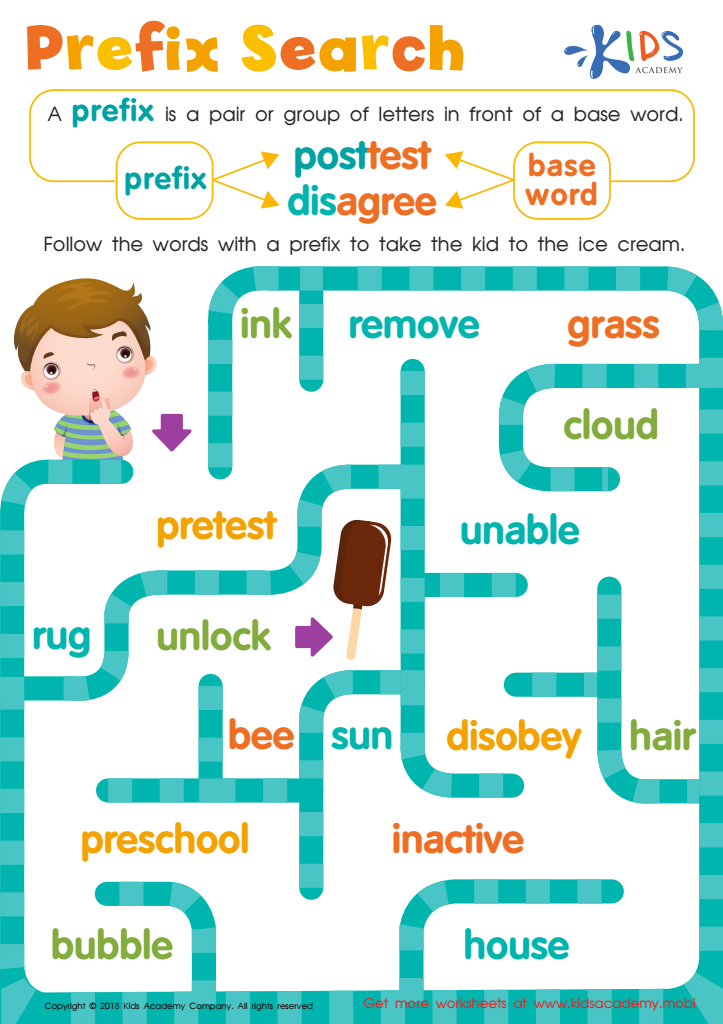
Reading: Prefix Search Worksheet
Maze your way through prefixes! This worksheet helps students practice reading new words with a prefix and figuring out the base word. An understanding of prefixes gives students the skills to comprehend new words. A fun and useful activity for the reading classroom!
 Assign to My Students
Reading: Prefix Search Worksheet
Worksheet
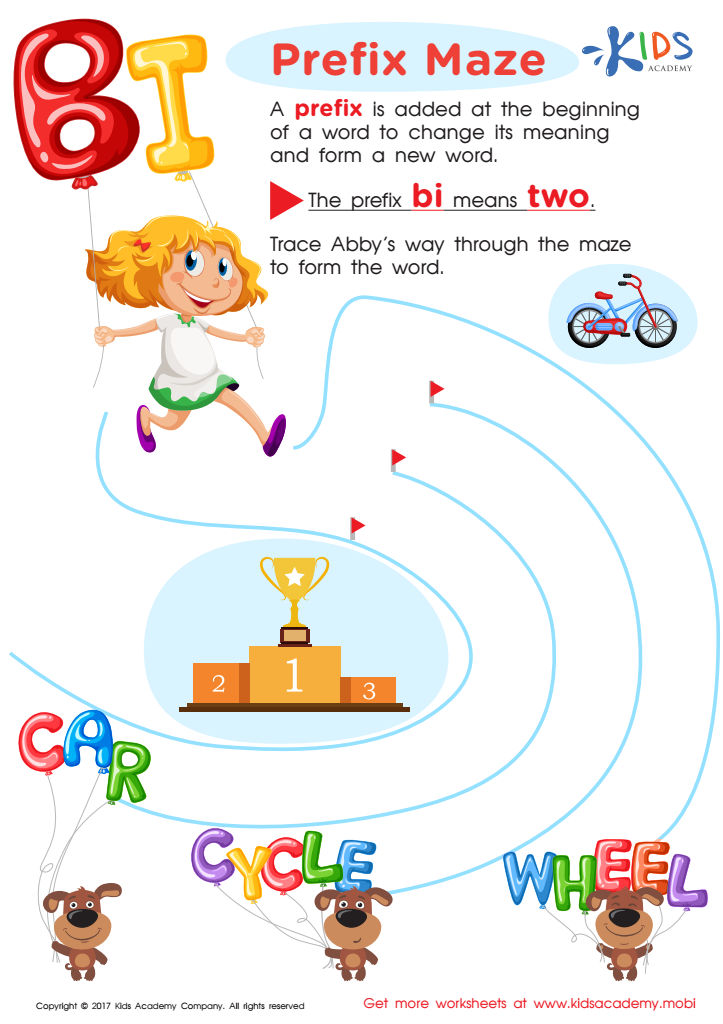
Prefix Bi Words Worksheet
Help "bi" find its root word in this fun and colorful prefix worksheet! Your child will learn how words are built while having a great time!
Prefix Bi Words Worksheet
Worksheet
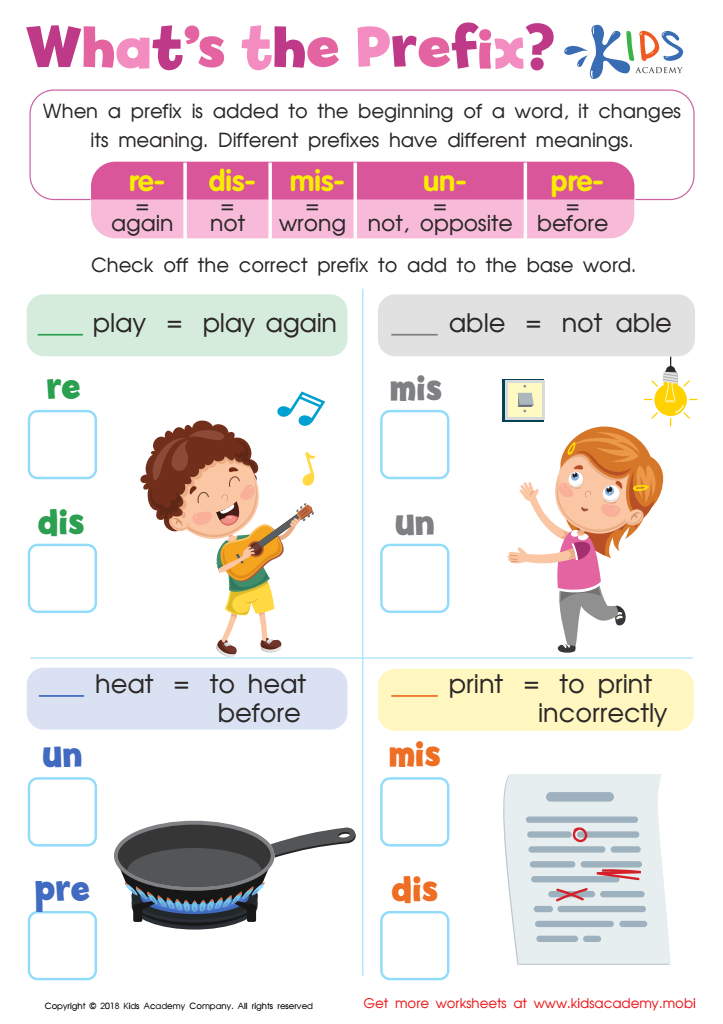
Reading: What Is the Prefix Worksheet
This worksheet helps children learn about prefixes by matching pictures and base words with the correct prefix. Learning these prefixes and their meanings is essential for reading and vocabulary comprehension. Use this free download to check your students' understanding.
Reading: What Is the Prefix Worksheet
Worksheet
Join Kids Academy for Free
Who is primarily going to use this learning content?







Parents and teachers should prioritize teaching prefixes to young students due to their foundational role in language development and literacy. Prefixes—the word parts added to the beginnings of base words—significantly enrich a child's vocabulary and comprehension skills. By understanding prefixes, children can discern the meanings of unfamiliar words more readily, fostering greater confidence in reading and writing.
Moreover, knowing common prefixes like "un-", "re-", "pre-", and "dis-" enables students to decode complex texts, facilitating better reading comprehension. For instance, recognizing that the prefix "un-" means "not" helps a child understand that "unhappy" means "not happy," making learning new words less daunting.
Grasping prefixes also strengthens spelling abilities since patterns in word formation become clearer. This knowledge aids in learning and remembering the spelling of new words, reducing errors. It's closely linked to phonics—understanding sounds and letters within words—essential for early literacy proficiency.
In addition, understanding prefixes boosts students' abilities to write more expressively and accurately by providing them with a broader range of words to use. For young learners, these skills are crucial stepping stones toward more advanced educational pursuits, ultimately fostering lifelong learning and effective communication.








