Understanding biodiversity Normal Worksheets
4 filtered results
-
From - To
Explore our "Understanding Biodiversity Normal Worksheets" designed to engage young learners in the fascinating world of biodiversity. These worksheets enhance students' knowledge about different species, ecosystems, and the importance of preserving our natural world. Featuring age-appropriate activities, students will enjoy colorful illustrations and interactive exercises that encourage critical thinking and ecological awareness. Perfect for early grade classrooms, these worksheets aim to make learning about biodiversity both fun and educational. Foster a love for nature and science and empower your students to appreciate the rich variety of life around them. Download now and inspire the next generation of environmental stewards!
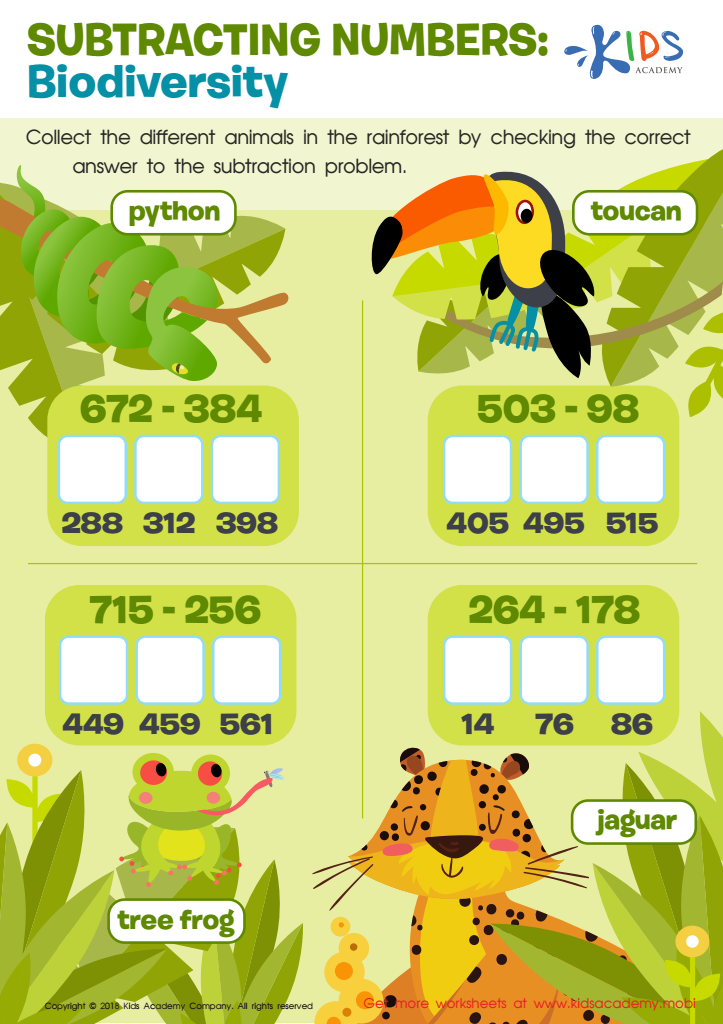
Subtracting Numbers: Biodiversity Worksheet
 Assign to My Students
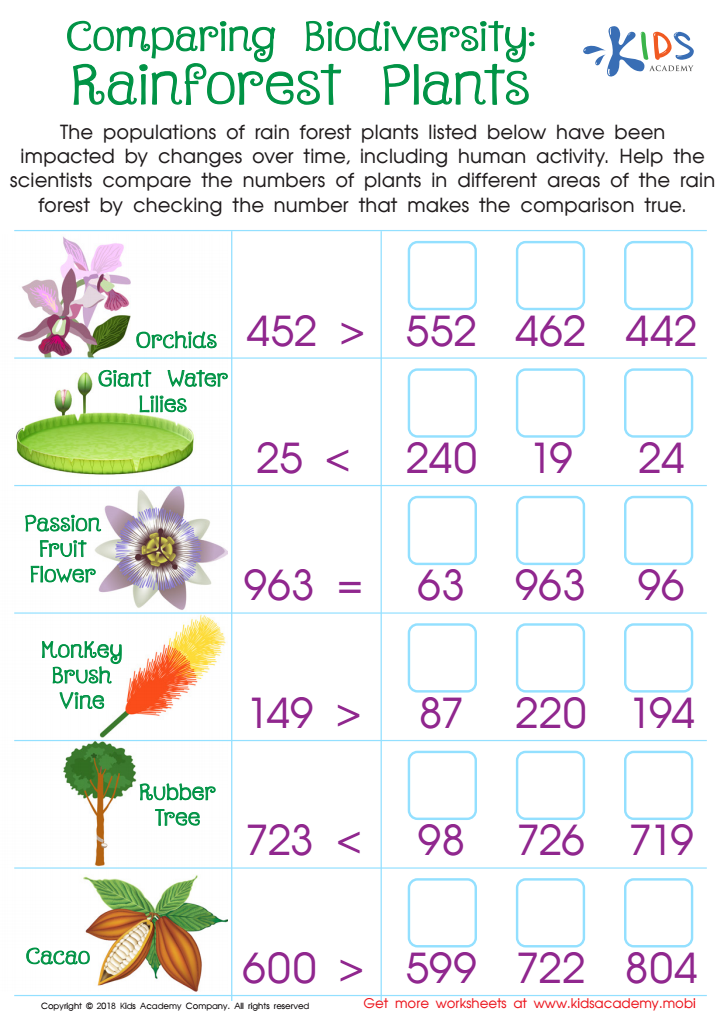
Comparing Biodiversity: Rainforest Plants Worksheet
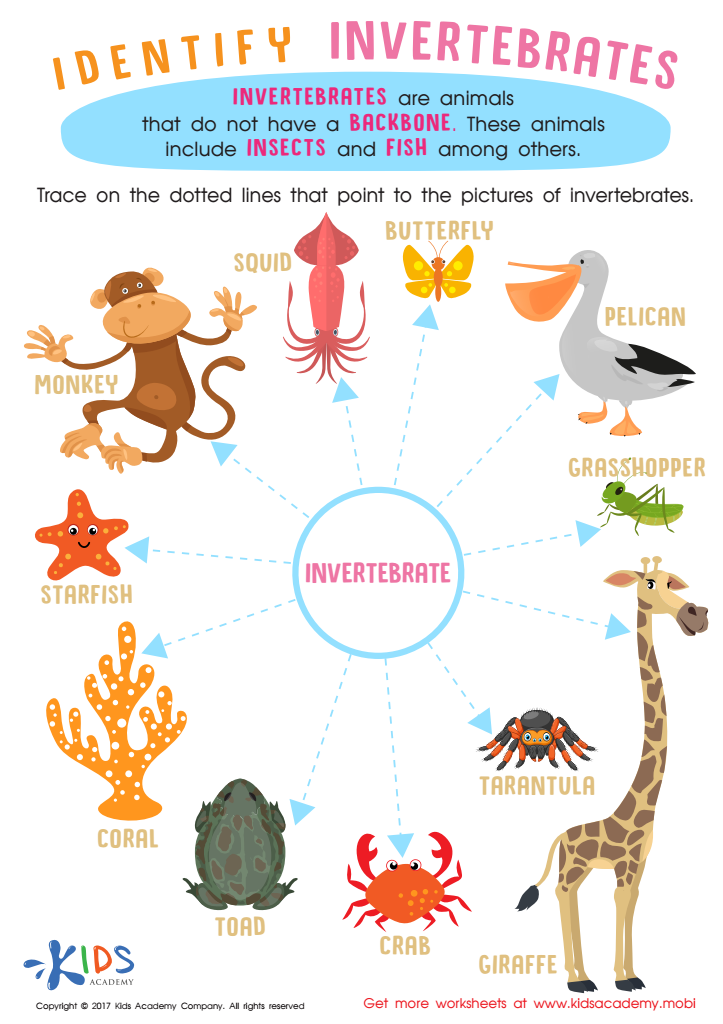
Invertebrates Worksheet for Grade 3
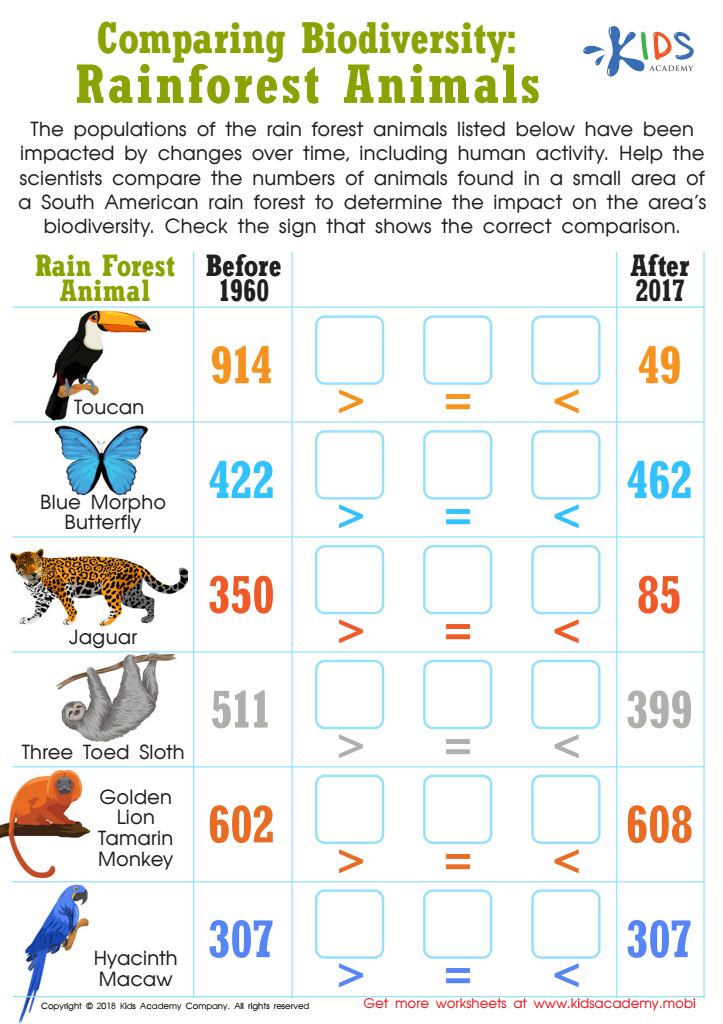
Comparing Biodiversity: Rainforest Animals Worksheet







Understanding biodiversity is essential for both parents and teachers because it shapes the foundation of our natural world and its ecosystems. Biodiversity refers to the variety of life forms on Earth, including plants, animals, fungi, and microorganisms, and plays a crucial role in maintaining ecological balance. By educating children about biodiversity, parents and teachers help them appreciate the intricacies of nature, fostering respect for the environment and promoting sustainable practices.
Children who learn about biodiversity are better equipped to understand the interconnectedness of life. They gain insights into how activities such as deforestation, pollution, and climate change disrupt ecosystems and affect habitats. This understanding encourages proactive behaviors, as children become aware of their role in protecting the environment.
Moreover, teaching biodiversity aligns with developing critical thinking and problem-solving skills. Engaging students through hands-on activities, such as cultivating gardens or observing local wildlife, can augment their learning experiences and encourage curiosity. Ultimately, fostering a deep understanding of biodiversity instills a sense of responsibility in future generations, empowering them to advocate for environmental stewardship and contribute positively toward preserving the rich tapestry of life on our planet.








