Understanding chess rules Normal Worksheets
5 filtered results
-
From - To
Dive into the world of chess with our engaging "Understanding Chess Rules" Worksheets! Perfect for beginners, these worksheets simplify the complexities of chess, making learning fun and accessible. Step-by-step instructions guide young learners through key concepts, including piece movements, game setup, and basic strategies. By completing these activities, children will enhance their critical thinking, problem-solving, and concentration skills in an enjoyable way. Ideal for classroom use or at-home learning, our worksheets provide a solid foundation in chess that can spark a lifelong interest in the game. Start your chess journey today with KidsAcademy worksheets!
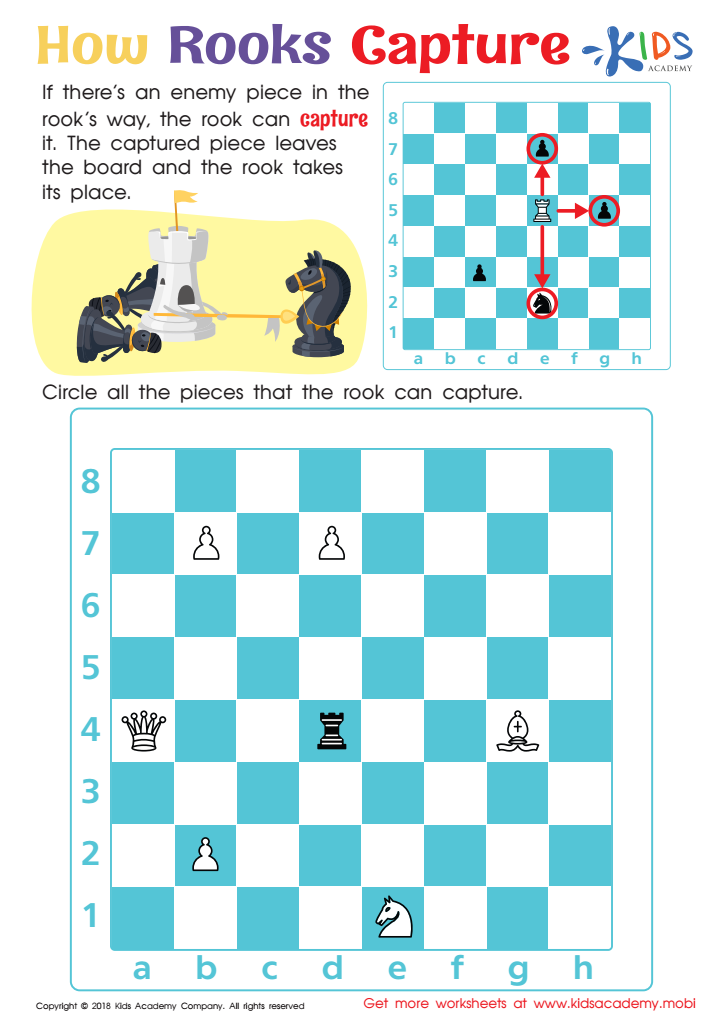
How Rooks Capture Worksheet
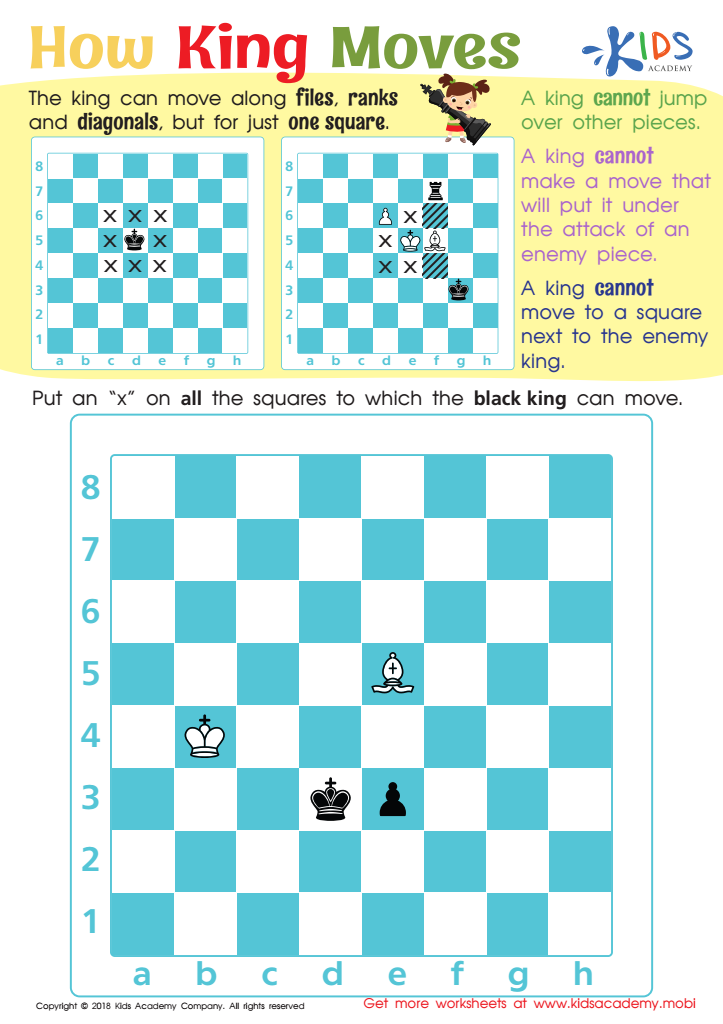
How King Moves Worksheet
 Assign to My Students
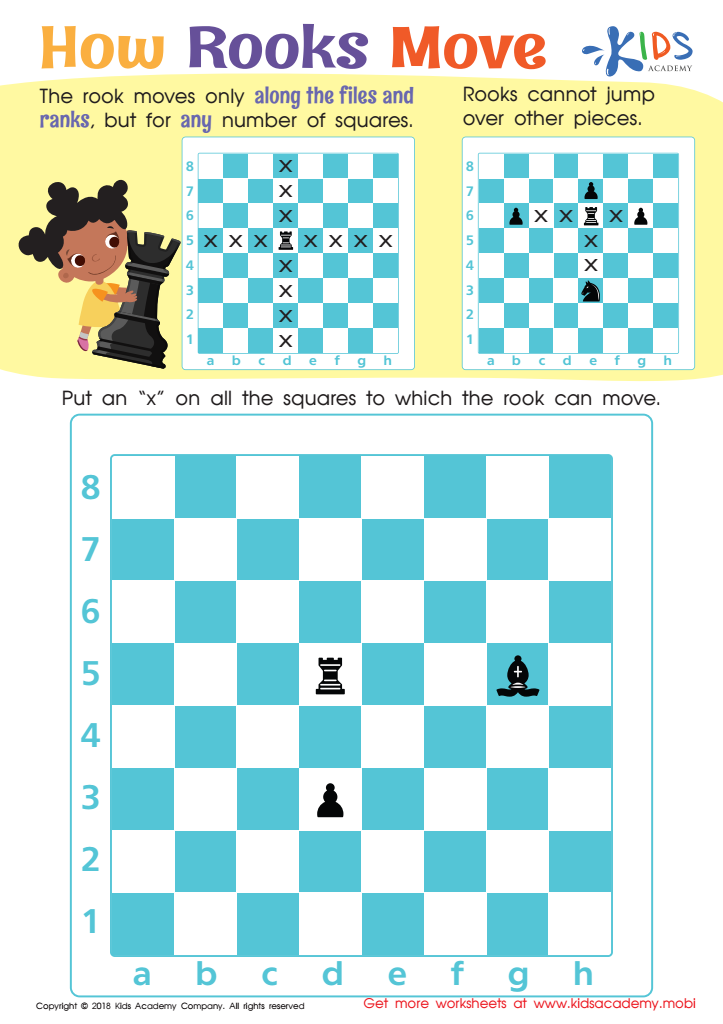
How Rooks Move Worksheet
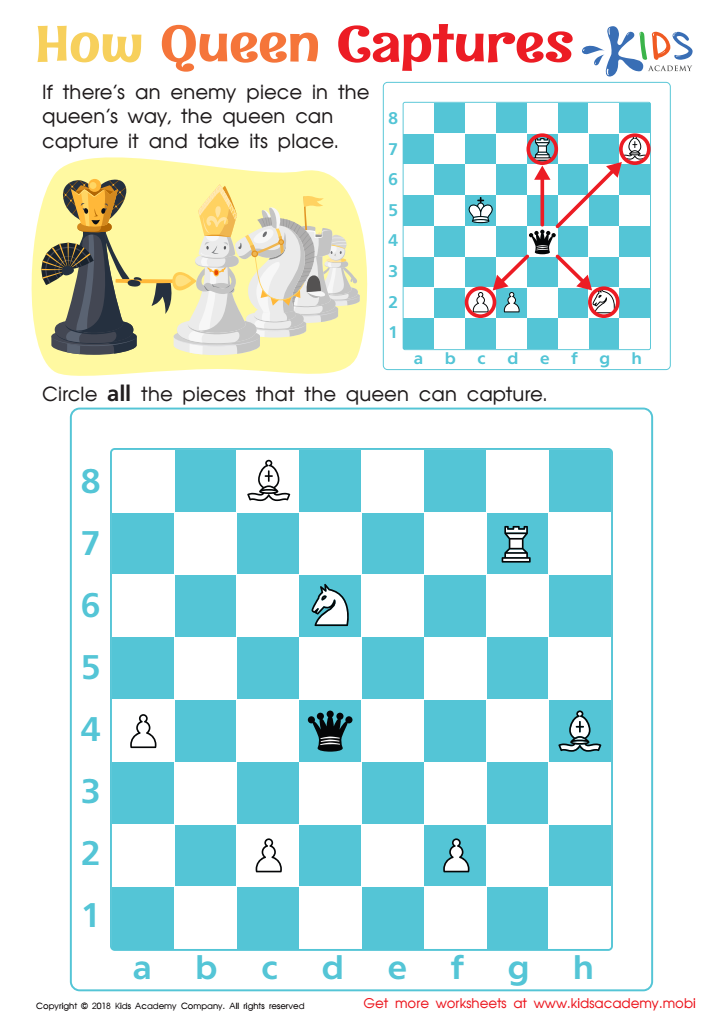
How Queen Captures Worksheet
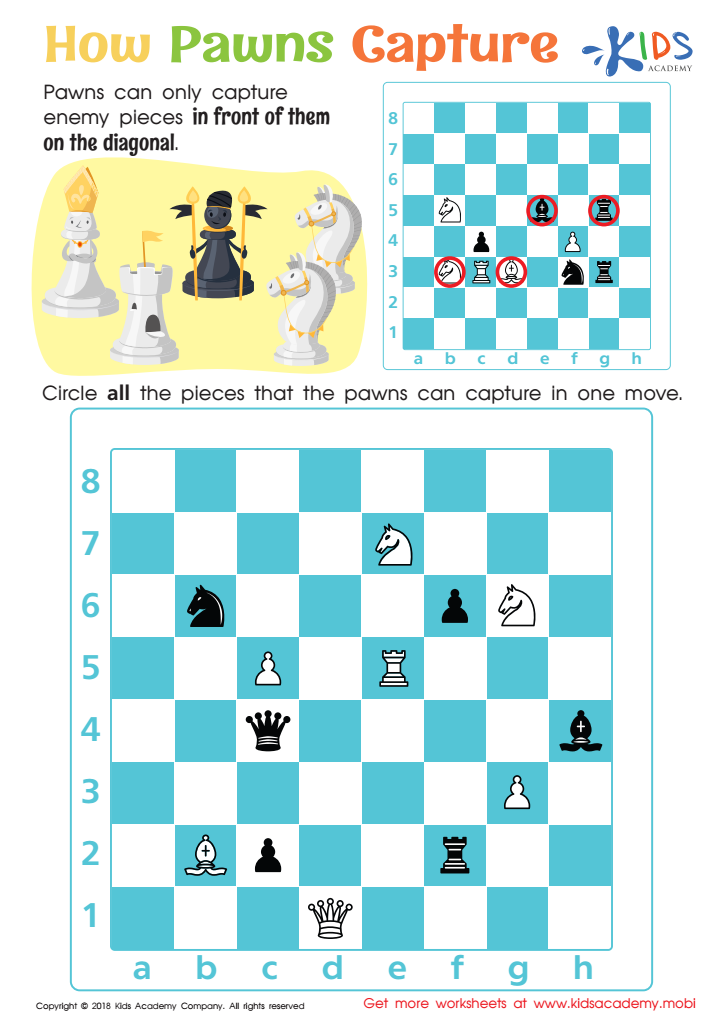
How Pawns Capture Worksheet




Understanding chess rules is valuable for both parents and teachers because of the substantial benefits it brings to children’s development. Chess is more than just a game; it is an educational tool that enhances critical thinking and problem-solving skills. Using strategic thinking to plan several moves ahead helps children develop foresight and analytical skills that are transferable to academic subjects and real-life situations.
Additionally, chess promotes patience and discipline. Children learn that hasty decisions often lead to mistakes and that sustained concentration and effort yield better results. These lessons can instill virtues necessary for academic success and personal growth.
Playing chess helps improve memory and cognitive abilities. As children remember various move combinations and strategies, they sharpen their memory and attention to detail, beneficial attributes for their schooling.
Finally, chess provides a platform for developing social skills. Participating in chess games or school clubs allows children to engage with peers, fostering a sense of community and learning to manage emotions healthily, winning and losing graciously.
Including understanding of chess within educational environments leverages its multifaceted benefits, nurturing more thoughtful, disciplined, and socially adept individuals.








