
Understanding economics Normal Worksheets
3 filtered results
Difficulty Level
Grade
Age
-
From - To
Subject
Activity
Standards
Explore "Understanding Economics Normal Worksheets" at Kids Academy, designed to enhance young learners' grasp of economic concepts. These engaging worksheets introduce fundamental ideas such as supply, demand, and the importance of budgeting in a fun, relatable manner. Tailored for early grade students, each activity encourages critical thinking through real-life scenarios, helping children make connections between economics and their everyday lives. With colorful illustrations and simple explanations, these worksheets foster an interest in financial literacy from a young age. Perfect for home or classroom use, our resources support educators and parents in laying a strong foundation for future economic understanding.
Favorites
With answer key
Interactive
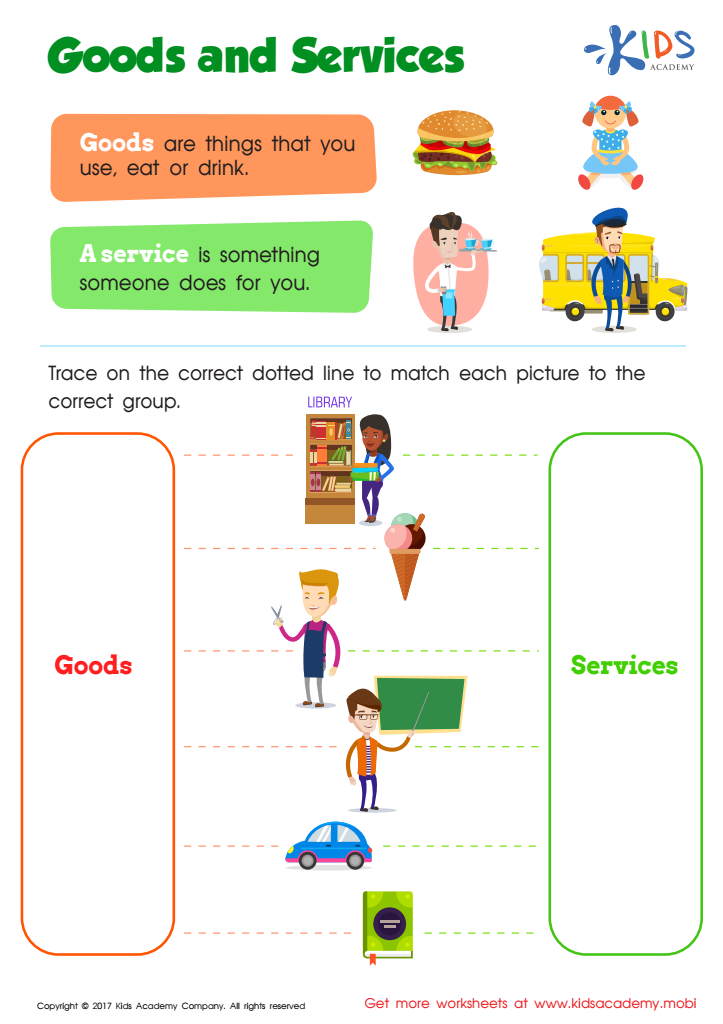
 Assign to My Students
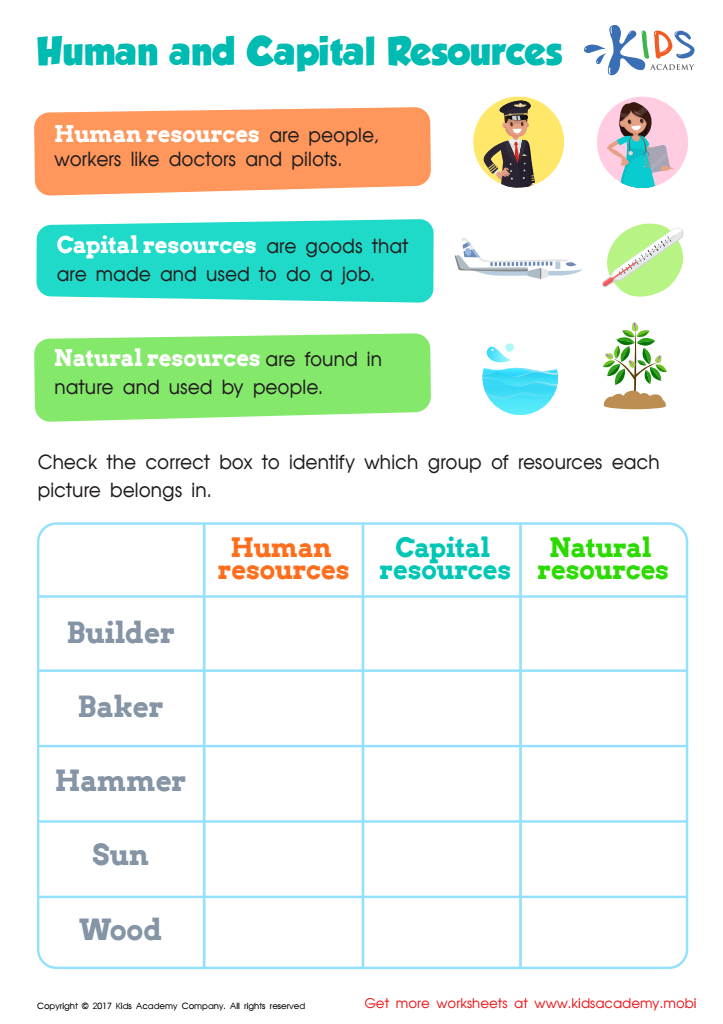
Human and Capital Resources Worksheet
It helps identify and differentiate human, natural and capital resources, so your kid can understand how each affects their world.
Human and Capital Resources Worksheet
Worksheet
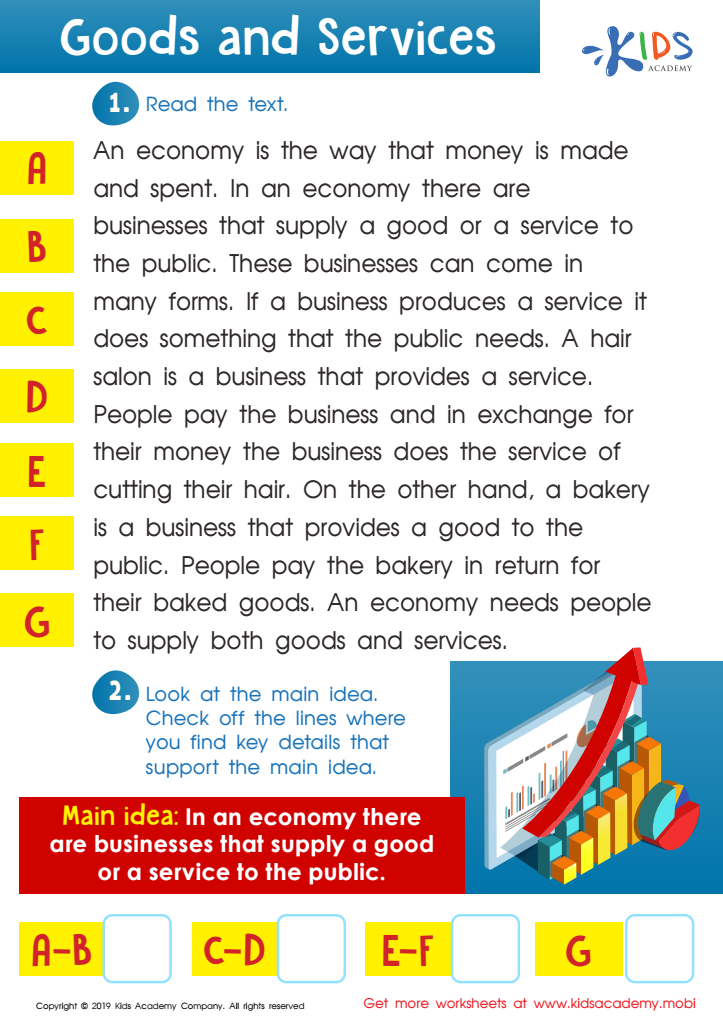
Goods and Services Worksheet
Teach your kids about the economy and businesses with this worksheet. Ask them if they know what goods and services are. After they complete the worksheet, they'll have a better understanding. Read the text to them and guide them step-by-step through the instructions. Help them learn!
Goods and Services Worksheet
Worksheet
Join Kids Academy for Free
Who is primarily going to use this learning content?








Understanding economics is crucial for parents and teachers as it equips them with the knowledge to navigate both economic trends and daily financial decisions that impact their families and classrooms. First, economic literacy empowers parents to make informed choices about budgeting, saving for education, and investing in their children’s future. When they understand concepts such as supply and demand, inflation, and opportunity cost, they can better manage household resources and teach their children the value of money.
For teachers, a solid grasp of economics enhances their ability to educate students about the broader world. Incorporating economic principles into lessons helps children understand not only how money works but also the interconnections within society, such as how businesses operate and how government policies affect everyday life. By fostering this understanding at an early age, teachers can help students develop critical thinking skills and an awareness of global issues.
Moreover, teaching economics can encourage civic engagement. As students learn to analyze economic policies, they become better positioned to advocate for themselves and their communities. Ultimately, an understanding of economics lays the groundwork for responsible citizenship, financial literacy, and lifelong learning, benefiting individuals and society as a whole.








