Understanding forces Normal Worksheets
6 filtered results
-
From - To
Explore the "Understanding Forces Normal Worksheets" page for an engaging educational experience that helps young learners grasp fundamental concepts of forces in a fun way. Our comprehensive worksheets are designed for children to develop their understanding of normal forces through interactive exercises, practical examples, and colorful illustrations. These resources aim to simplify complex science topics, making them accessible and enjoyable for early grade students. Ideal for classroom use or home learning, our worksheets encourage hands-on learning and critical thinking, fostering a solid foundation in physics. Dive into the exciting world of forces and empower your child’s scientific curiosity today!
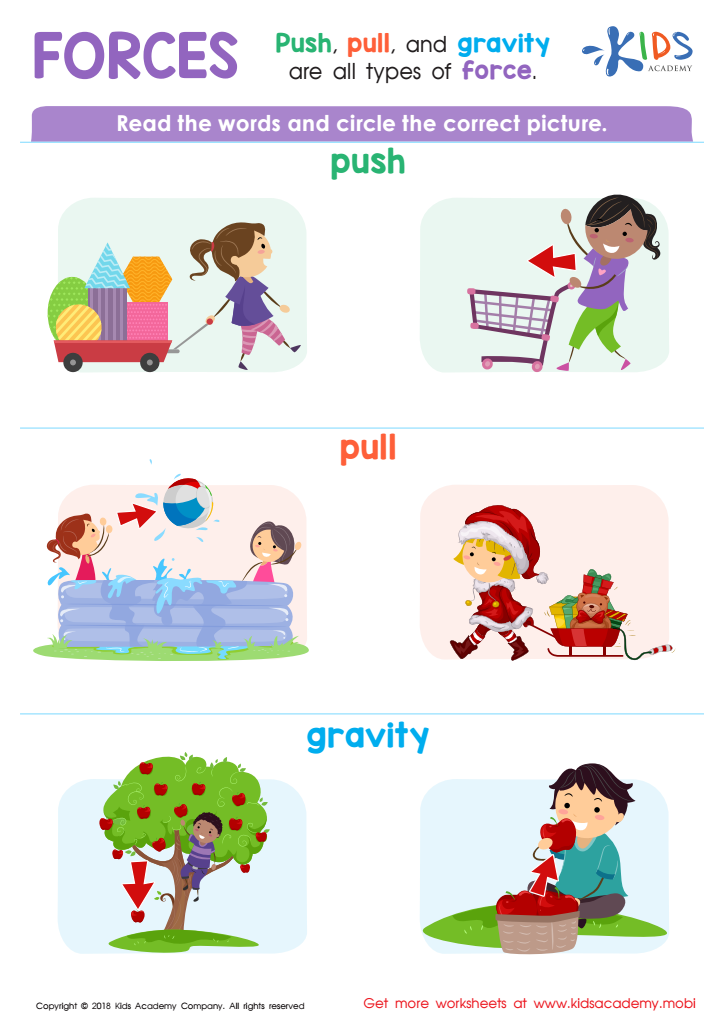
Forces Worksheet
 Assign to My Students
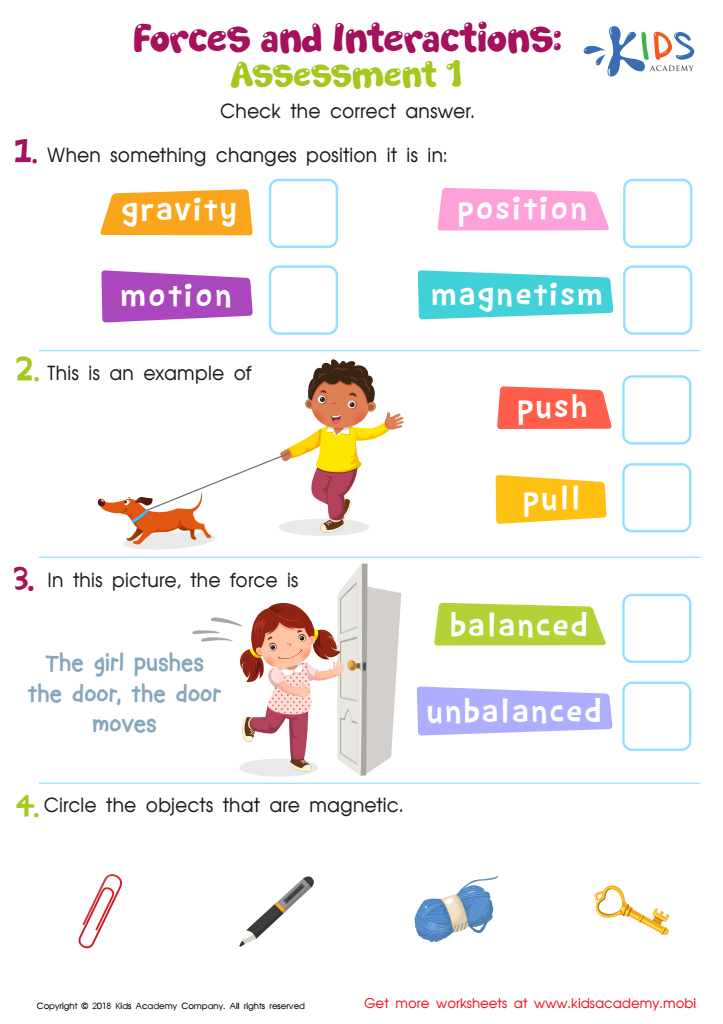
Forces and Interactions Printable
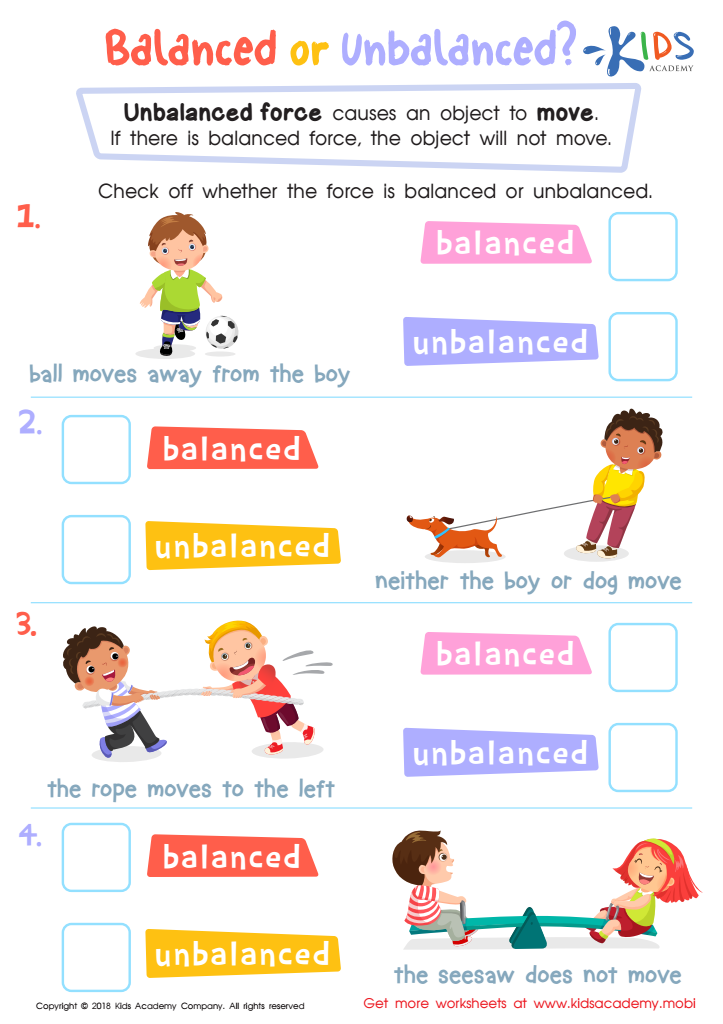
Balanced or Unbalanced Science Worksheet
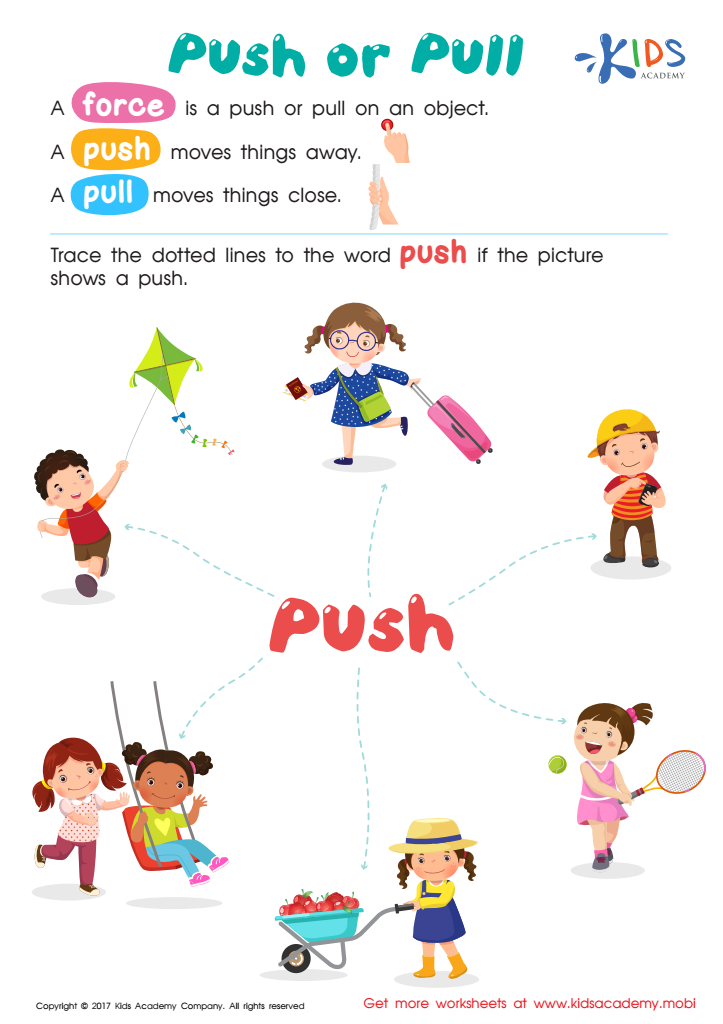
Push or Pull Worksheet
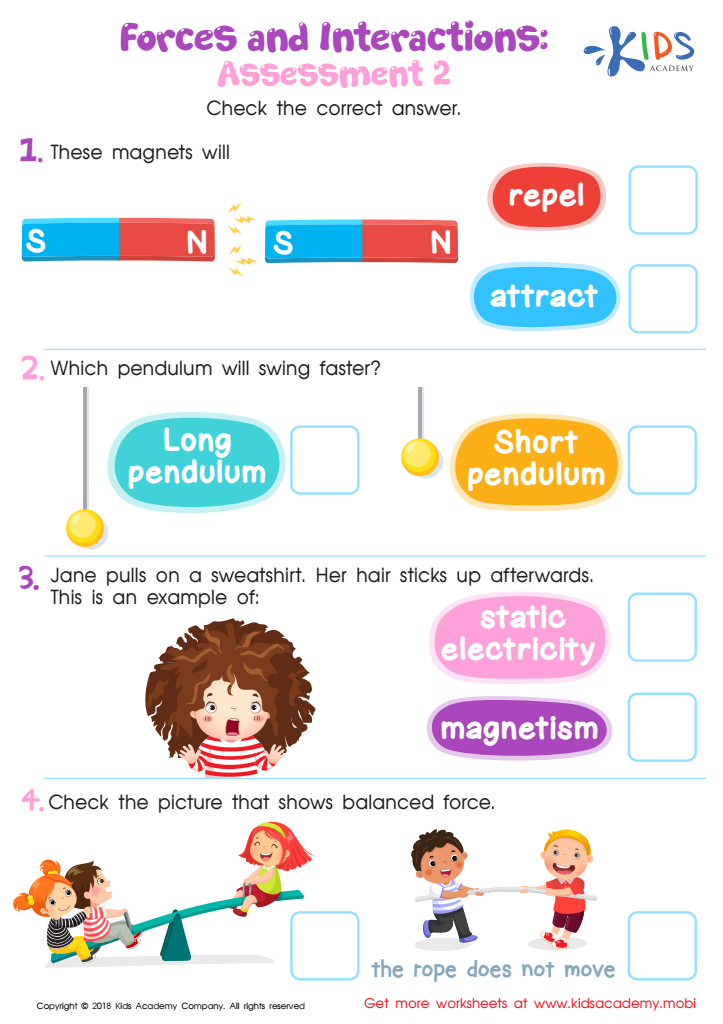
Forces and Interactions Worksheet For 3rd Grade
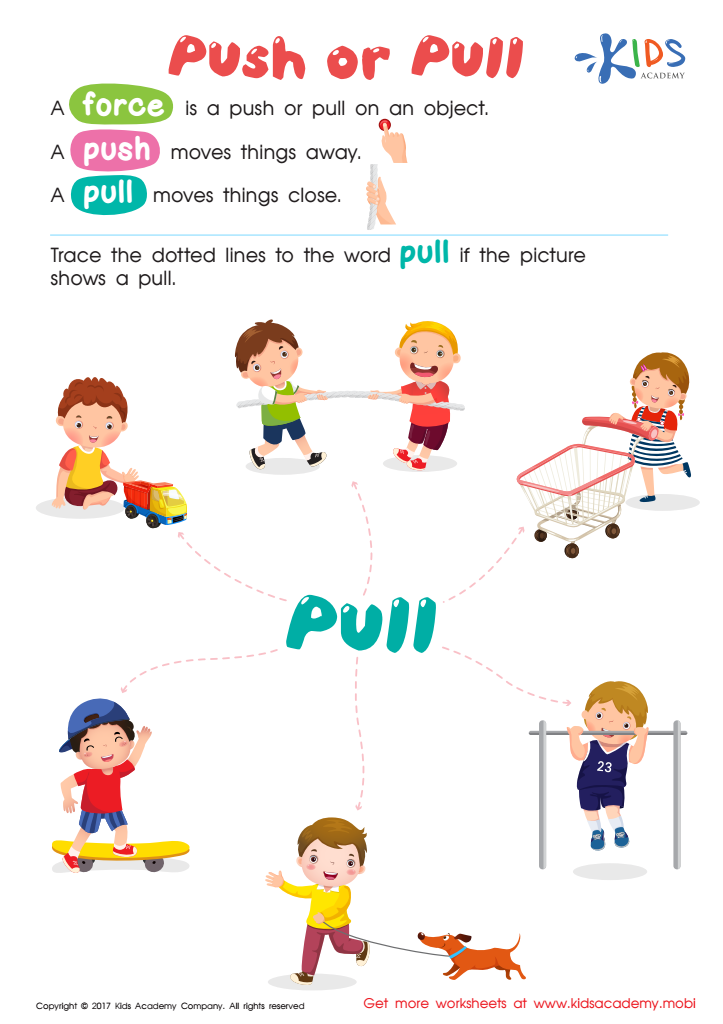
Pull or Push Worksheet







Understanding forces, particularly normal forces, is crucial for both parents and teachers as they play a significant role in the foundational knowledge of physics for young learners. This understanding not only aids in grasping complex scientific concepts later on but also enhances everyday decision-making and problem-solving skills.
Normal forces are vital in helping students comprehend interactions between objects. For instance, when an object rests on a surface, the normal force acting on it helps explain why it doesn’t fall through—a concept that’s highly applicable in real-world scenarios. Recognizing these forces can ignite curiosity and encourage imaginative thinking about how the world works.
Additionally, understanding forces can foster a love for science, paving the way for future academic pursuits in STEM fields. By engaging with these concepts early, parents and teachers nurture analytical skills and promote logical reasoning, which are essential for children's overall intellectual development.
Moreover, teaching children about forces can encourage hands-on learning through experiments and activities. This educational approach supports critical thinking while aligning with standards for science education. Ultimately, grasping the concept of normal forces is an integral part of nurturing informed, capable young learners who can thrive in their future endeavors.








