Understanding life cycles Normal Worksheets
4 filtered results
-
From - To
Explore our comprehensive "Understanding Life Cycles Normal Worksheets" designed to engage young learners in the fascinating journey of life cycles. These worksheets promote critical thinking and observation as students investigate the stages of various organisms, from plants to animals. Through interactive activities, children will enhance their knowledge of changes, growth, and the interconnectedness of life. Perfect for classrooms and at-home learning, these resources cater to diverse learning styles, making it easy to integrate into existing curricula. With our engaging and educational worksheets, students will not only grasp key concepts but also develop a lifelong curiosity about the natural world around them.
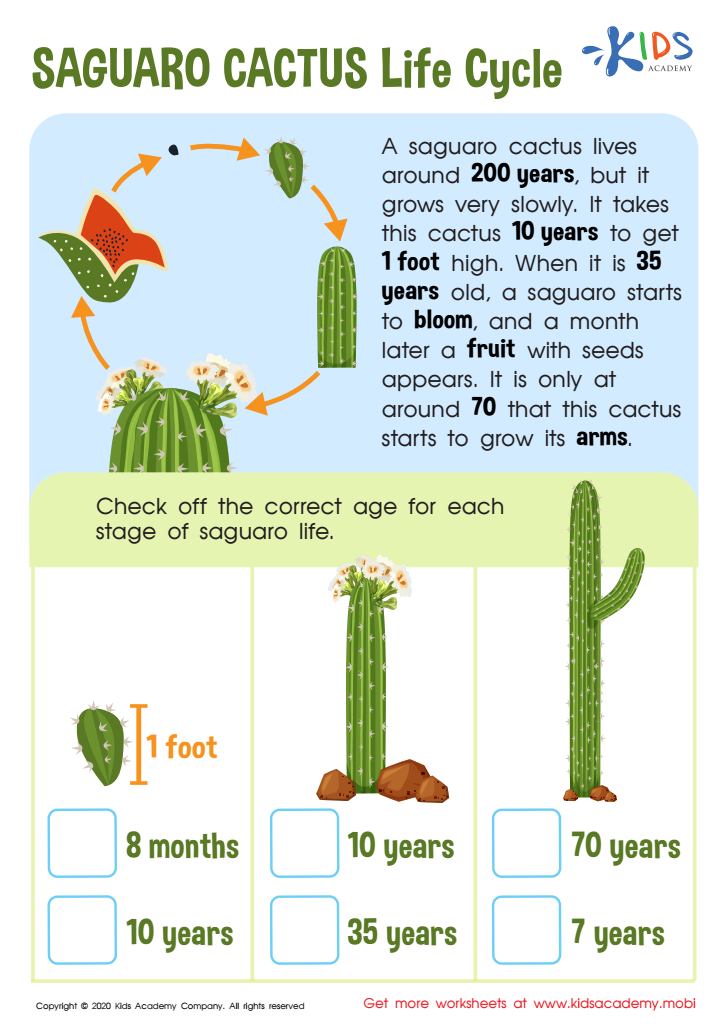
Saguaro Cactus Life Cycle Worksheet
 Assign to My Students
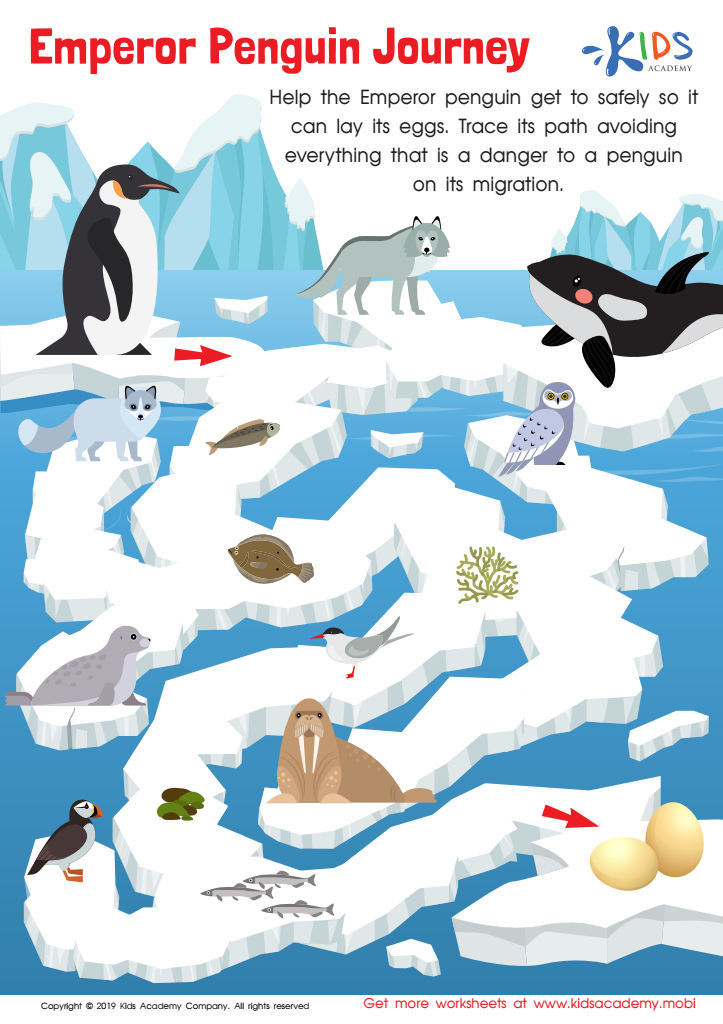
Emperor Penguin Journey Worksheet
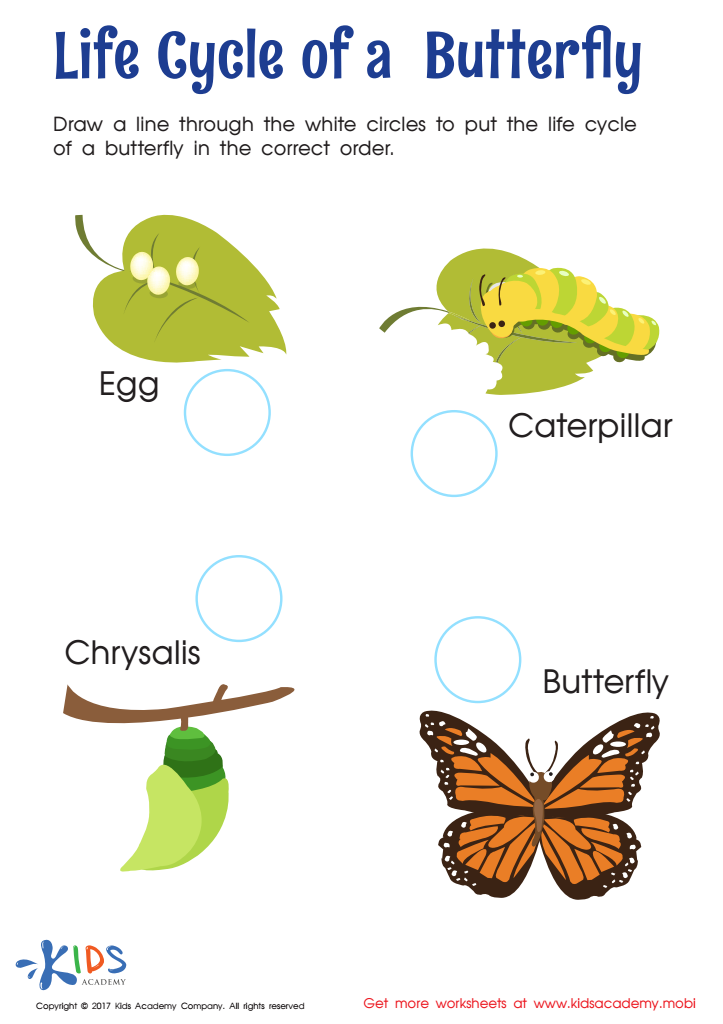
Life Cycle of Butterfly Worksheet
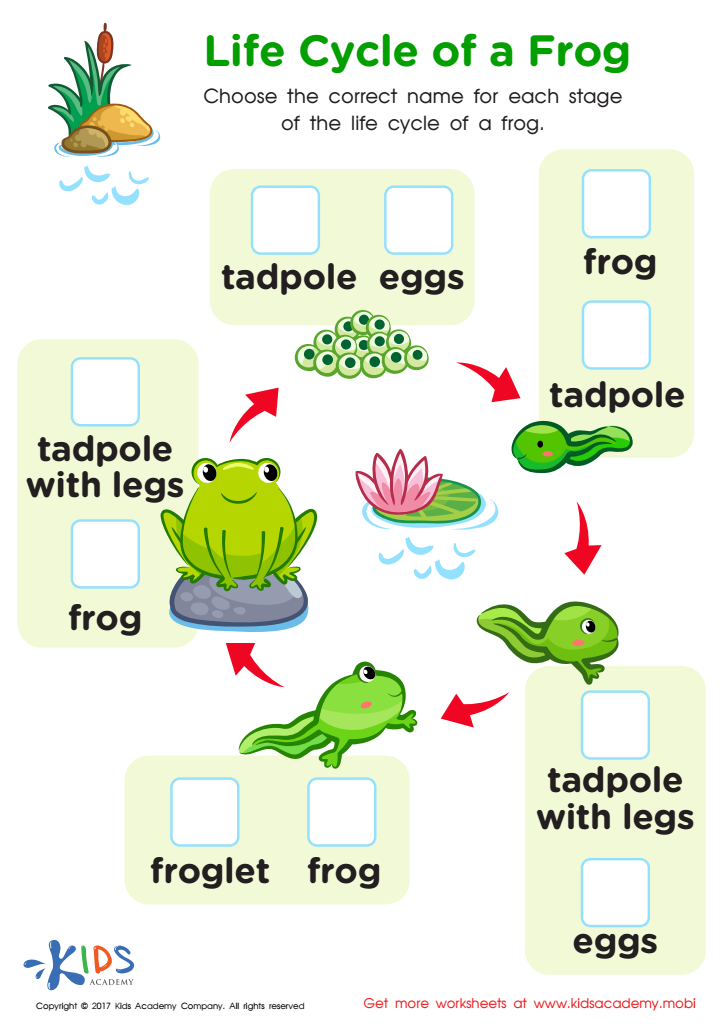
Life Cycle Frog Printable








Understanding life cycles is crucial for both parents and teachers as it lays the foundation for children’s knowledge of biology, ecology, and the interconnectedness of life. When children learn about life cycles, they gain a greater appreciation for various organisms, including plants, animals, and even humans. This knowledge fosters curiosity and critical thinking, encouraging them to ask questions about nature and their environment.
Moreover, studying life cycles helps children grasp the concepts of growth, reproduction, and change over time, which are essential for their overall scientific literacy. This understanding is vital as it can lead to meaningful discussions about sustainability, conservation, and the impact of human actions on ecosystems.
Beyond academics, exploring life cycles also teaches valuable life skills such as patience, observation, and nurturing. For instance, engaging in activities like planting a seed or raising caterpillars fosters responsibility and empathy for living things.
Ultimately, when parents and teachers prioritize understanding life cycles, they not only enhance science education but also play a crucial role in developing informed, responsible, and compassionate future citizens who value and respect the world around them. This knowledge enriches children’s lives and shapes their perspectives on current global challenges.








