Uppercase identification Normal Worksheets
5 filtered results
-
From - To
Discover our Uppercase Identification Normal Worksheets, designed to help young learners master the basics of letter recognition. These engaging and fun-filled worksheets provide children with ample opportunities to identify, trace, and color uppercase letters, enhancing their alphabet knowledge. Perfect for preschool and kindergarten students, these resources foster essential early literacy skills while keeping children entertained. With a variety of activities tailored to different learning styles, these worksheets can be integrated into classroom settings or used for home practice. Help your child build a strong foundation in reading and writing with our captivating Uppercase Identification Normal Worksheets today!
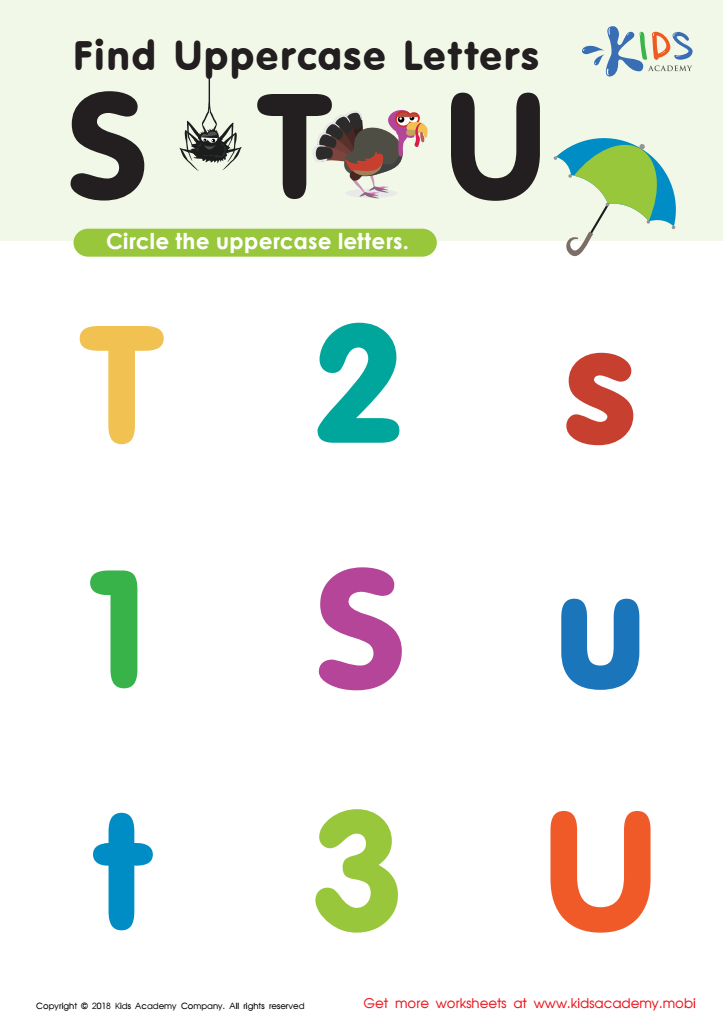
Find Uppercase Letters Worksheet
 Assign to My Students
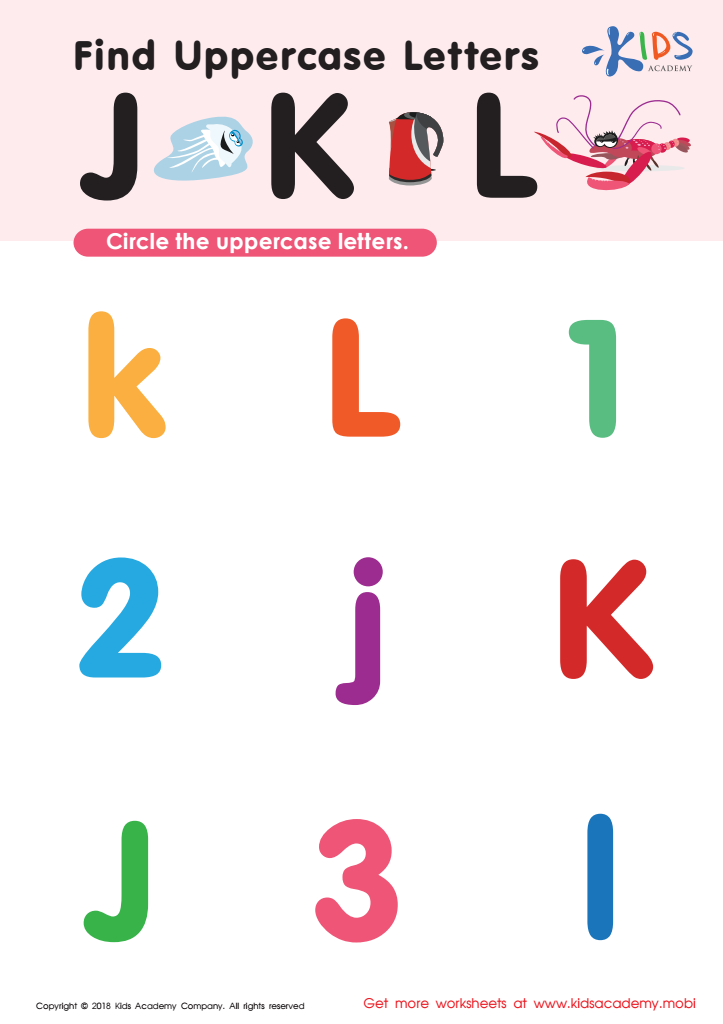
Find Uppercase Letters J, K, and L Worksheet
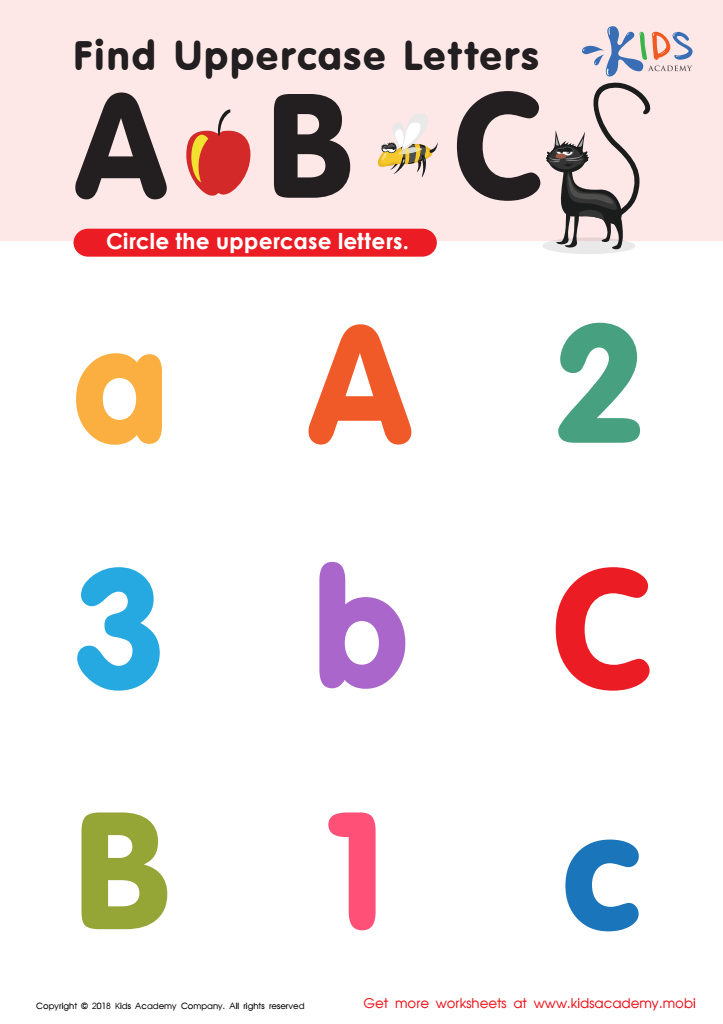
Find Uppercase Letters A, B, and C Worksheet
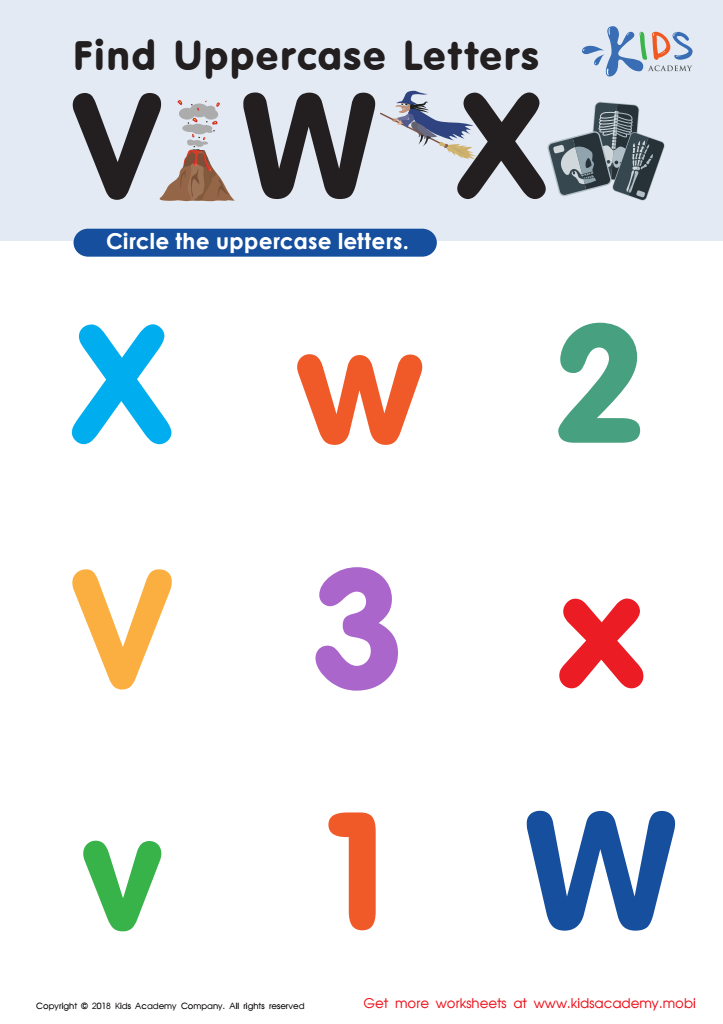
Find Uppercase Letters V, W, X Worksheet
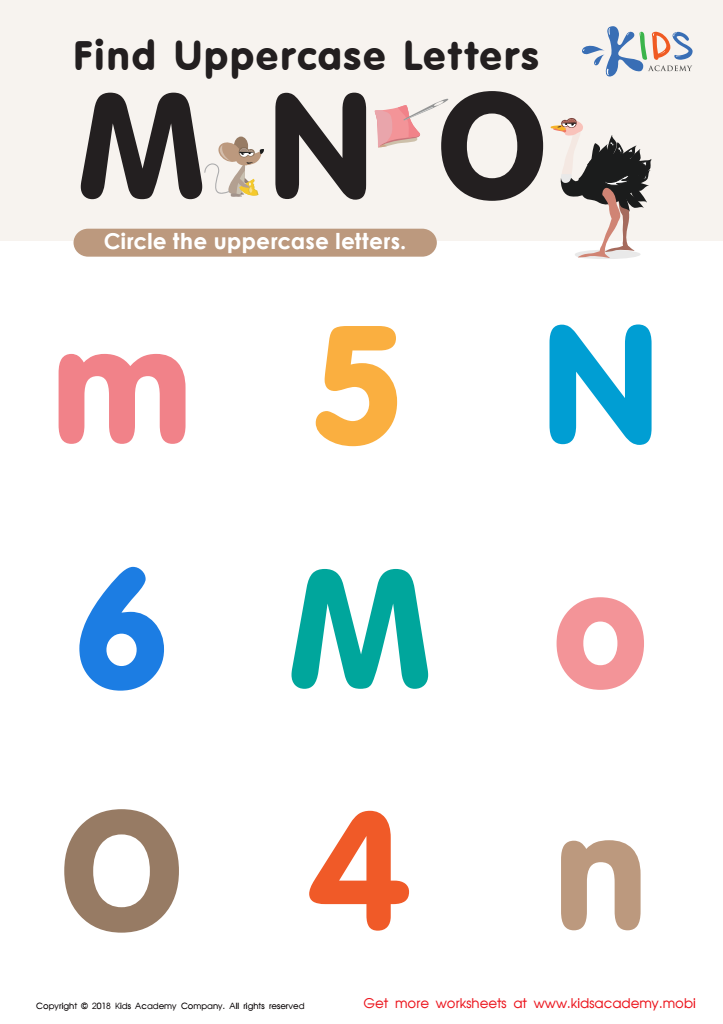
Find Uppercase Letters M, N, and O Worksheet








Uppercase letter identification is an essential skill in early literacy development, making it crucial for parents and teachers to prioritize. Recognizing uppercase letters serves as a foundation for reading and writing, as these letters appear prominently in texts, signage, and other printed materials. Mastery of uppercase letters can help children improve their phonemic awareness and grasp the relationship between letters and sounds, facilitating smoother transitions to reading words and sentences.
Moreover, understanding uppercase letters is vital for writing, particularly since proper nouns, initials, and the beginning of sentences always start with uppercase letters. As children learn to express themselves through writing, they must correctly use uppercase letters to convey meaning and adhere to grammar rules.
In social contexts, recognizing uppercase letters often helps children with their names, titles, and other elements that form part of their identity. This skill encourages confidence and a sense of ownership over their written communication.
For these reasons, nurturing uppercase letter identification fosters literacy, communication skills, and self-expression, all of which are essential for children's overall academic success. Engaging in activities that promote this understanding allows parents and teachers to support children’s literacy development effectively.








