Visual Perception Skills Normal Worksheets
9 filtered results
-
From - To
Discover our "Visual Perception Skills Normal Worksheets," designed to enhance young learners' abilities through engaging activities! These worksheets focus on essential visual skills, such as matching, sorting, and identifying shapes, colors, and patterns essential for children's overall cognitive development. With a variety of exercises that promote focus and attention to detail, these materials are perfect for early childhood education classrooms or at-home learning. Tailored to meet the needs of children in preschool and kindergarten, our worksheets make learning fun and interactive while reinforcing foundational skills necessary for success in literacy, math, and problem-solving. Explore our printable resources today!
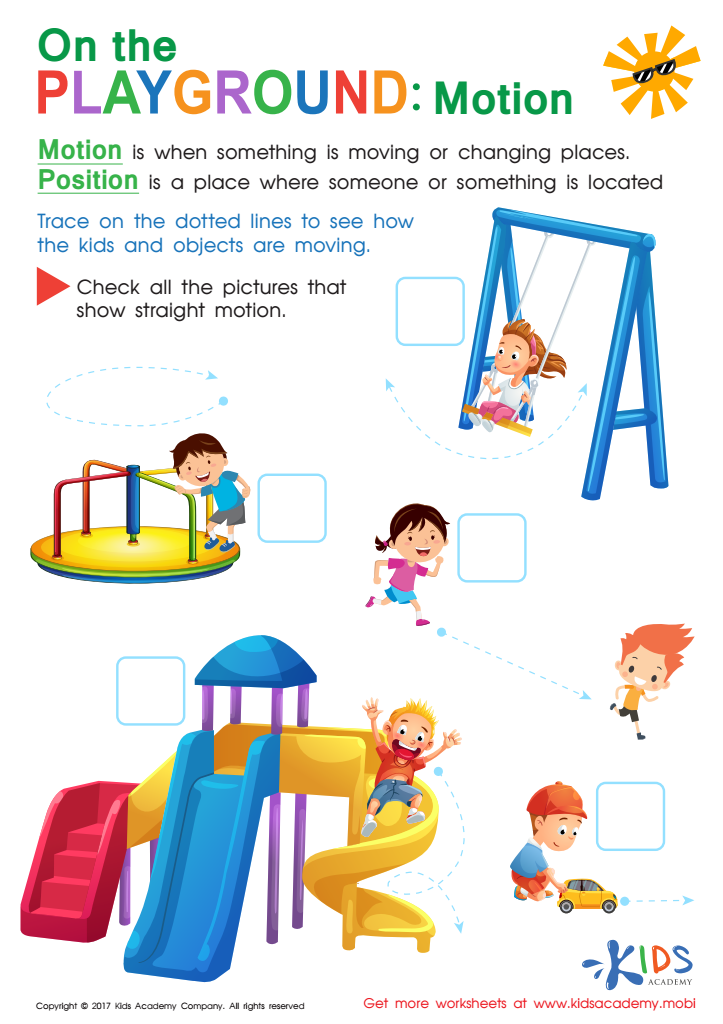
Position and Motion Worksheet
 Assign to My Students
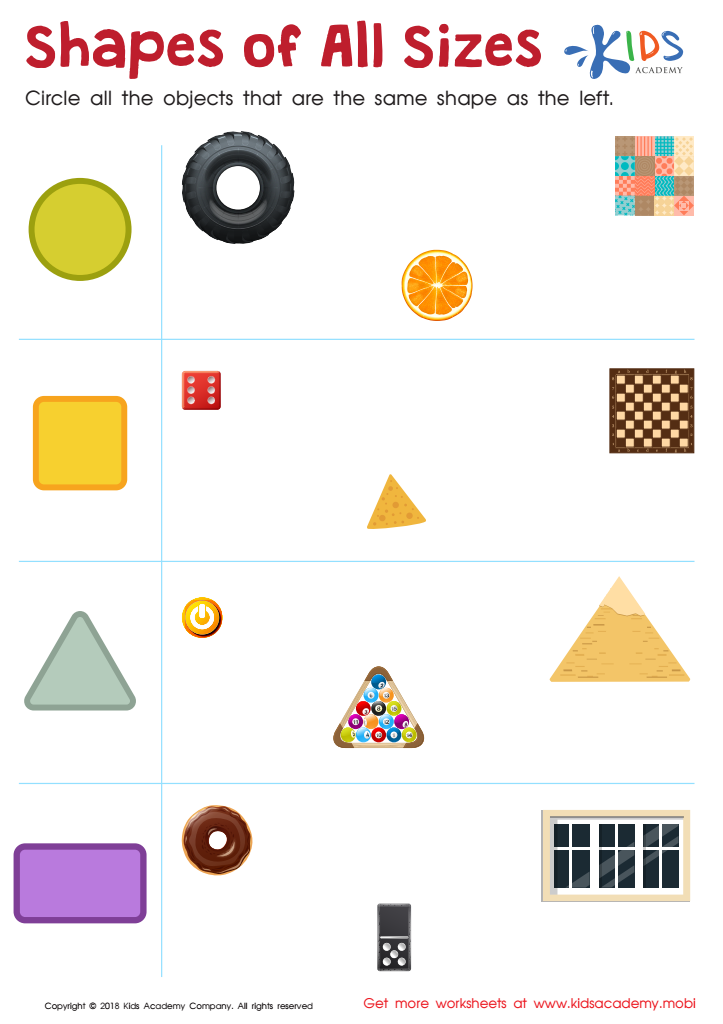
Shapes of All Sizes Worksheet
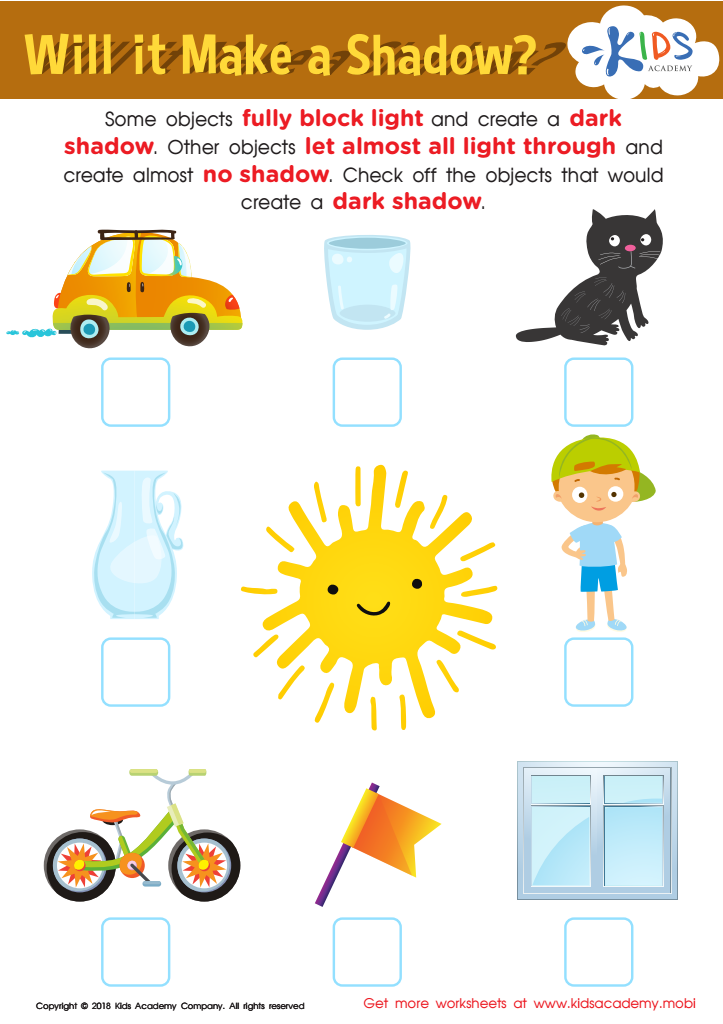
Will It Make a Shadow? Worksheet
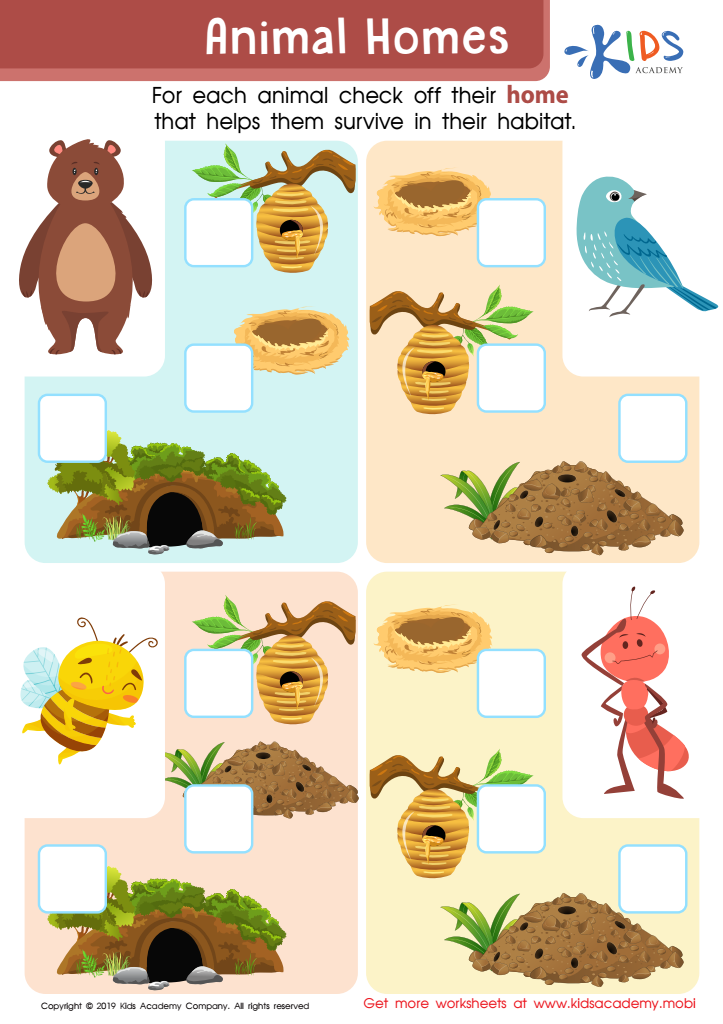
Animal Homes Worksheet
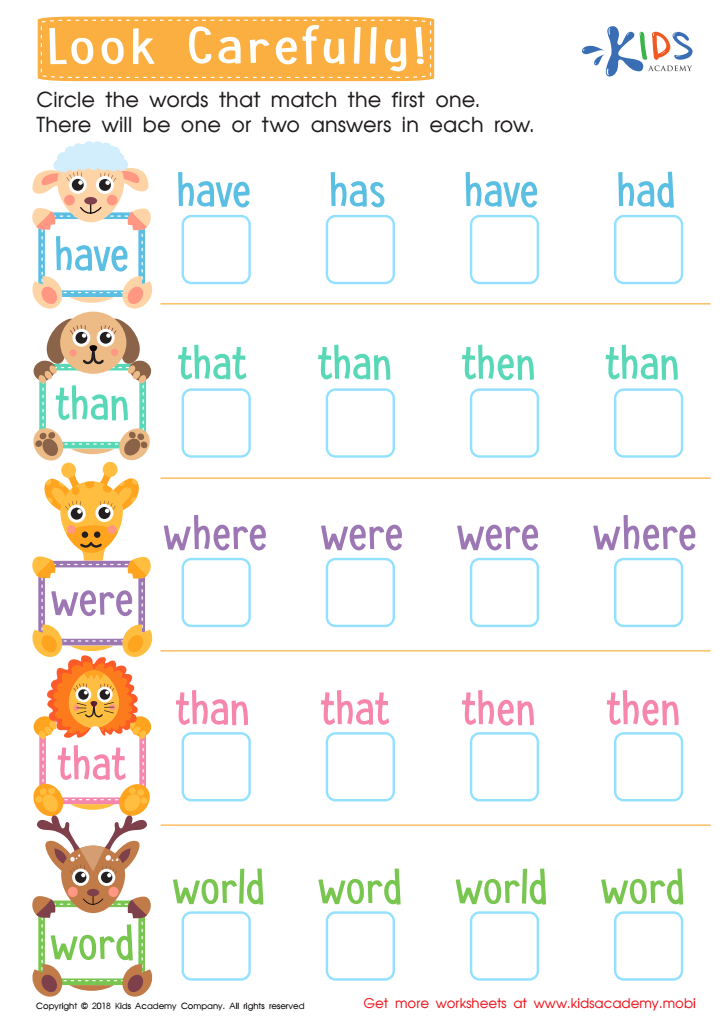
Look Carefully Worksheet
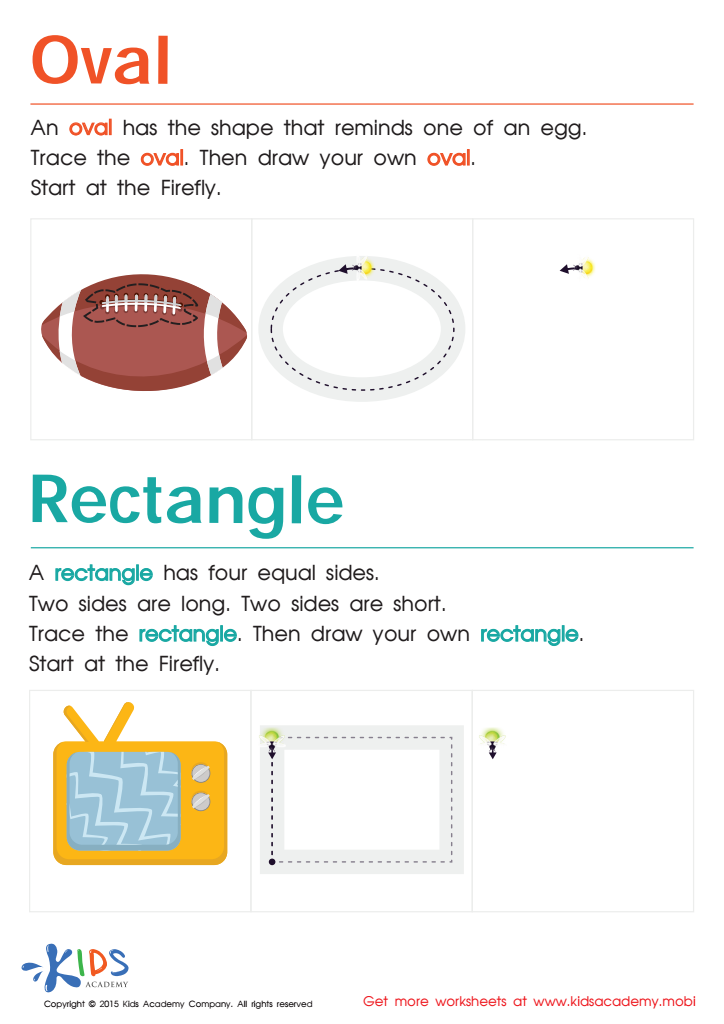
Easy Drawing of Ovals And Rectangles Worksheet
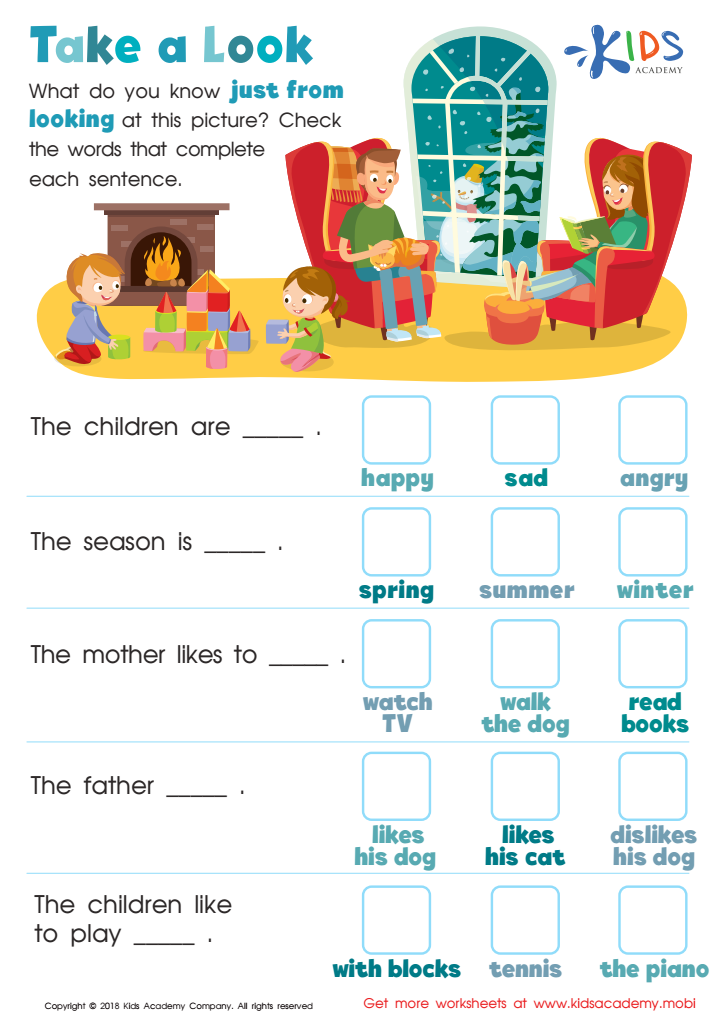
Take a Look - Part 1 Worksheet
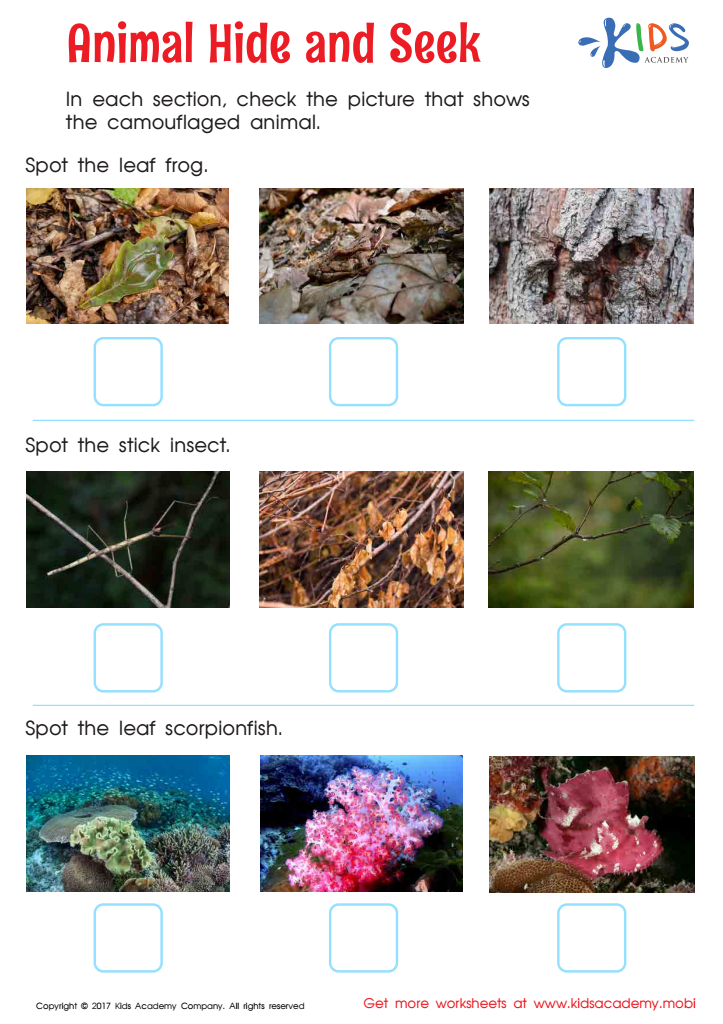
Animal Hide and Seek Worksheet
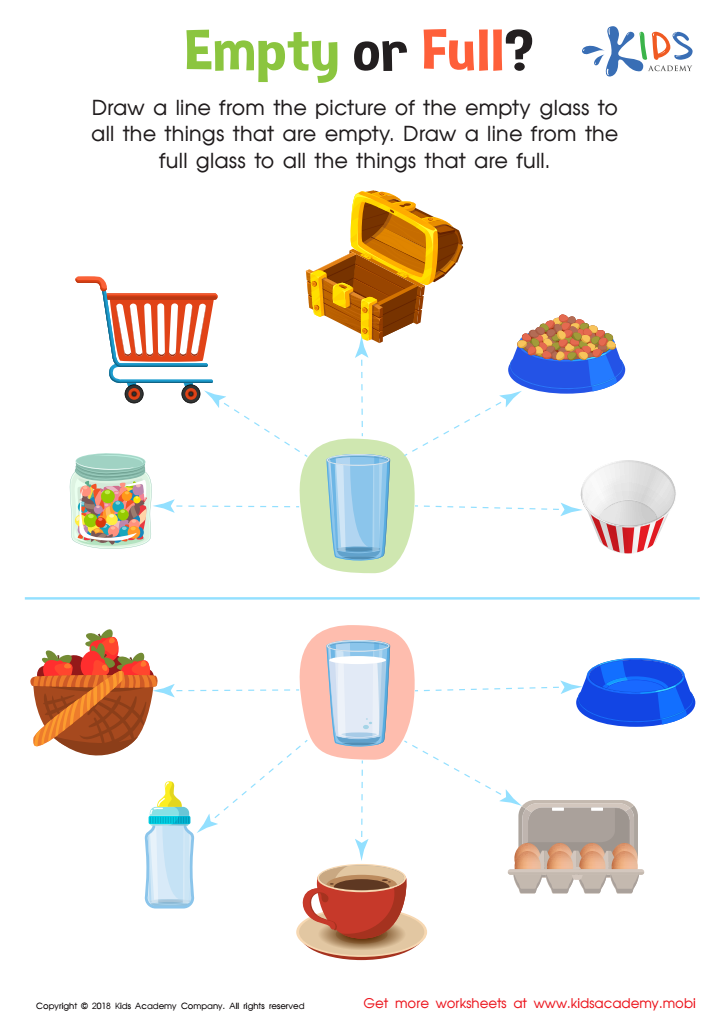
Empty or Full? Worksheet








Visual perception skills are crucial for a child's overall development and learning capabilities. These skills involve the ability to interpret and make sense of what is seen, which is foundational for academic success, particularly in reading and mathematics. For parents and teachers, understanding that these skills are normal and can be nurtured is essential in supporting a child's learning journey.
Children with strong visual perception skills can recognize letters, shapes, and patterns, which directly impacts their reading development, writing abilities, and problem-solving skills in math. Conversely, difficulties in these areas can lead to frustrations and lower self-esteem as children struggle to keep up with their peers.
Moreover, these skills are linked to broader cognitive and motor functions that enhance everyday activities, such as playing sports, drawing, and engaging in group activities. Therefore, parents and teachers should actively assess and encourage the development of visual perception skills through games, puzzles, and activities that promote observation and analysis.
By prioritizing visual perception development, caregivers can foster a positive learning environment, identifying gaps early and helping children build the necessary foundation for future academic success and lifelong skills. This proactive approach can significantly influence a child's confidence and enthusiasm for learning.








