Word association skills Normal Worksheets
3 filtered results
-
From - To
Enhance your child's language development with our Word Association Skills Normal Worksheets at Kids Academy. Designed to boost vocabulary, comprehension, and cognitive abilities, these worksheets engage children in fun, interactive activities that strengthen their understanding of word relationships. Ideal for young learners, each worksheet encourages critical thinking and creativity by challenging kids to match words with associated pictures, identify synonyms and antonyms, and categorize items. Convenient and printable, our worksheets provide an excellent resource for both classroom settings and at-home practice. Help your child build a strong foundation in language arts with Kids Academy's expertly crafted Word Association Skills Normal Worksheets.
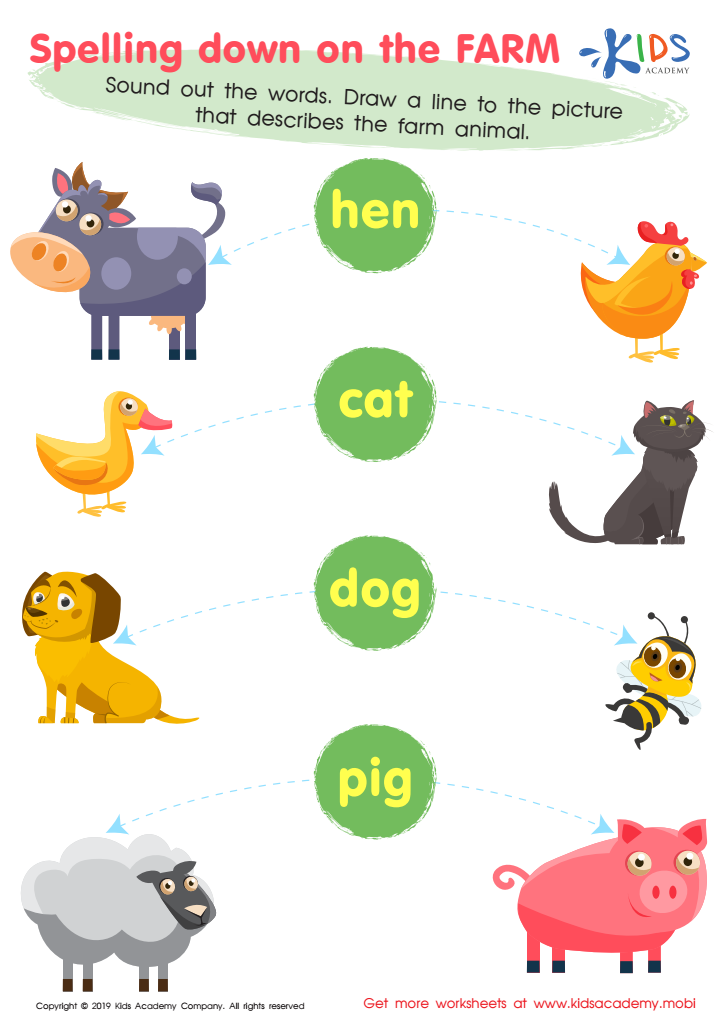
Spelling Down on the Farm Worksheet
 Assign to My Students
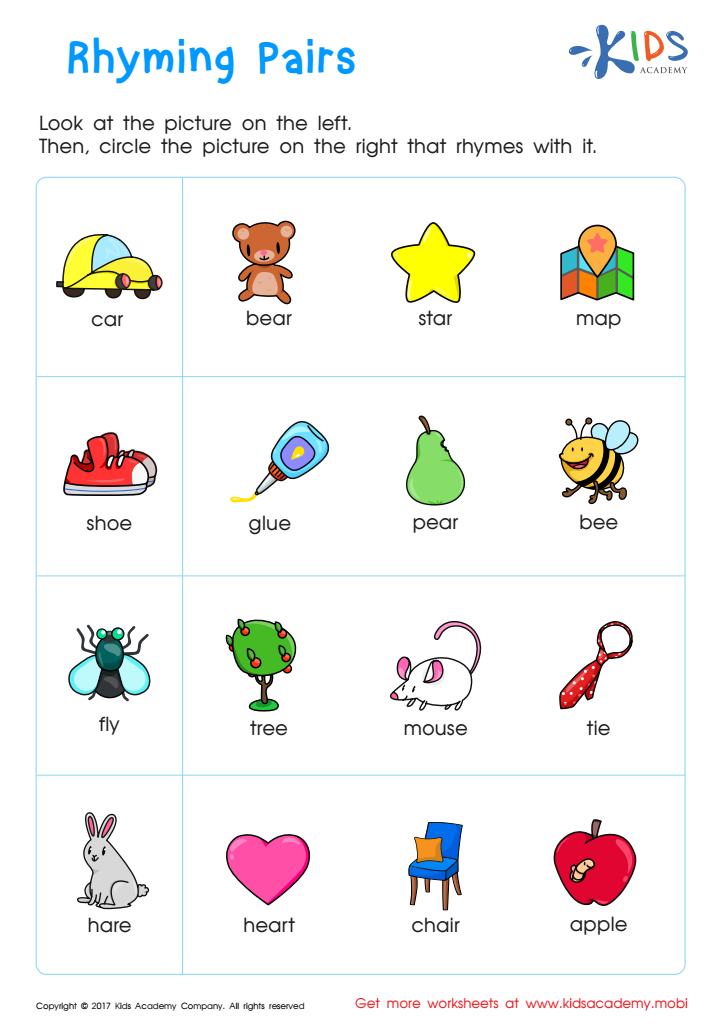
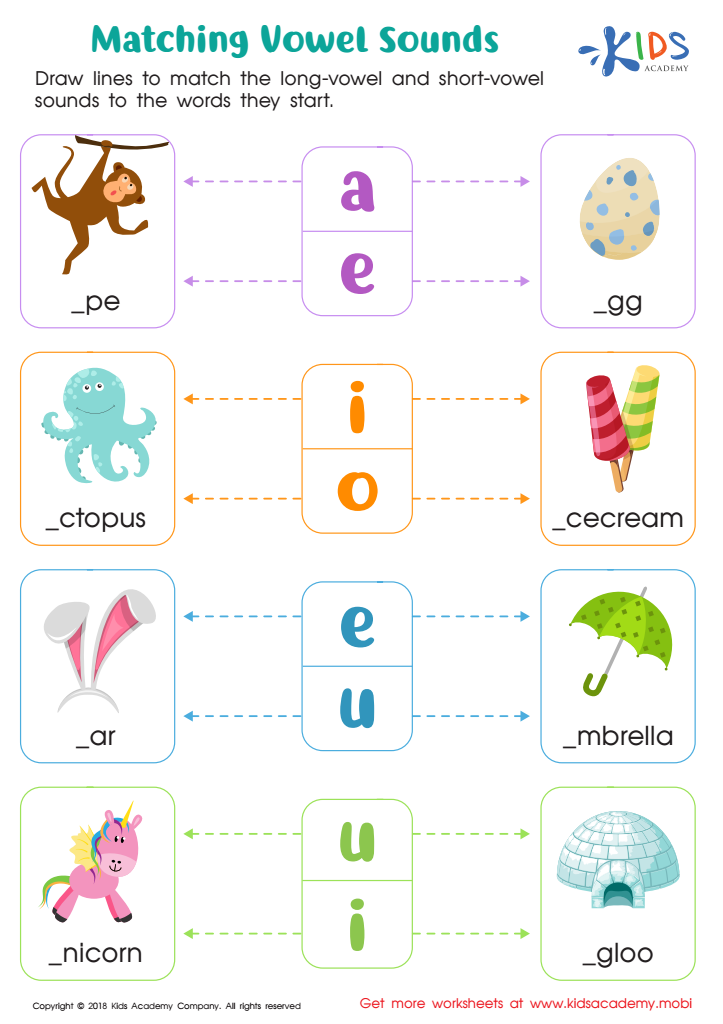
Matching Vowel Sounds Worksheet






Word association skills are crucial for early language development and cognitive growth, making them essential for both parents and teachers to nurture in young children. When children engage in word association activities, they learn to connect words with concepts, broadening their vocabulary and strengthening their understanding of language. This lays a solid foundation for reading and writing skills.
Moreover, word association helps children enhance their memory and recall abilities, as they learn to identify relationships between different words and ideas. This can aid in their academic pursuits, improving their ability to grasp and retain new information across various subjects.
For parents and teachers, encouraging word association through fun and interactive games can create a more engaging and stimulating learning environment. These activities can make learning enjoyable, reducing anxiety and building a child’s confidence in their linguistic abilities. Additionally, strong word association skills aid in developing critical thinking and problem-solving skills, as children learn to categorize and draw connections between different pieces of information.
In essence, investing time and effort into fostering word association skills helps ensure children’s overall communicative competence and prepares them for future educational challenges. It supports their intellectual development and promotes a lifelong love for learning.








