Critical Thinking Normal 2D Shapes Worksheets
5 filtered results
-
From - To
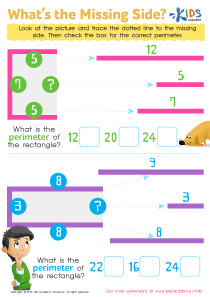
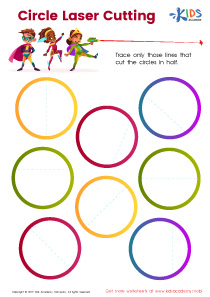
Enhance your students' critical thinking skills with our engaging 2D Shapes worksheets! These printable resources are designed to help young learners identify, compare, and analyze various shapes through fun activities. Each worksheet promotes cognitive development by challenging students to apply their knowledge of shape properties in creative ways. Whether it's recognizing shapes in different contexts, sorting them by attributes, or solving shape-related puzzles, these worksheets aim to foster a deeper understanding of geometry. Ideal for classroom use or at-home practice, our Critical Thinking Normal 2D Shapes Worksheets make learning enjoyable while preparing children for advanced mathematical concepts. Download today to start the fun!
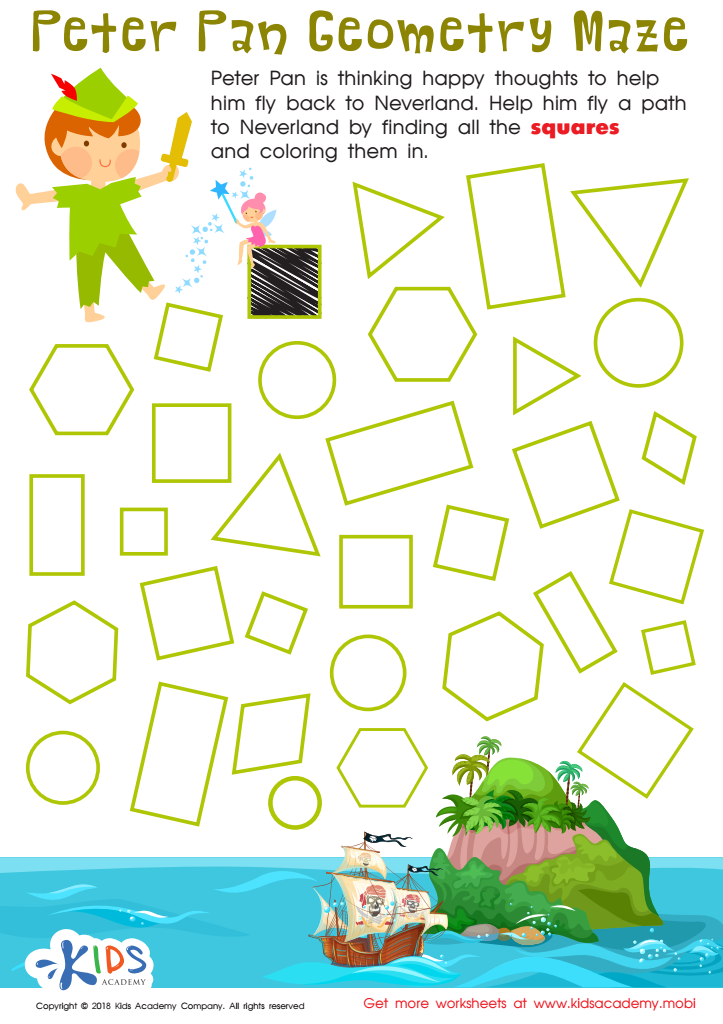
Peter Pan Worksheet
 Assign to My Students


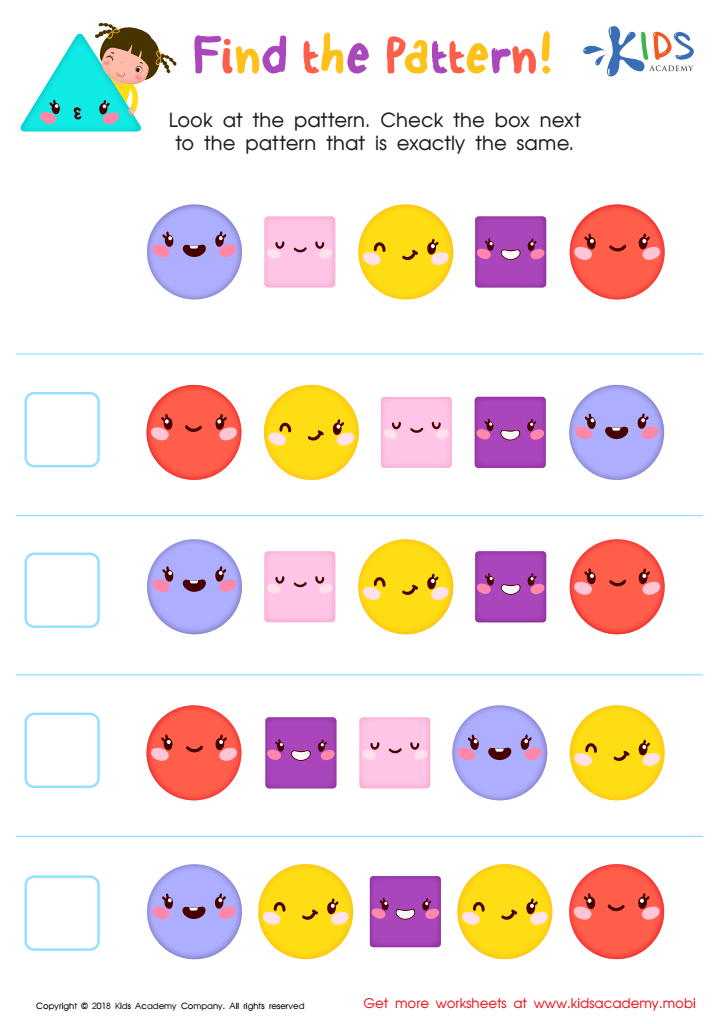
Find the Pattern Worksheet
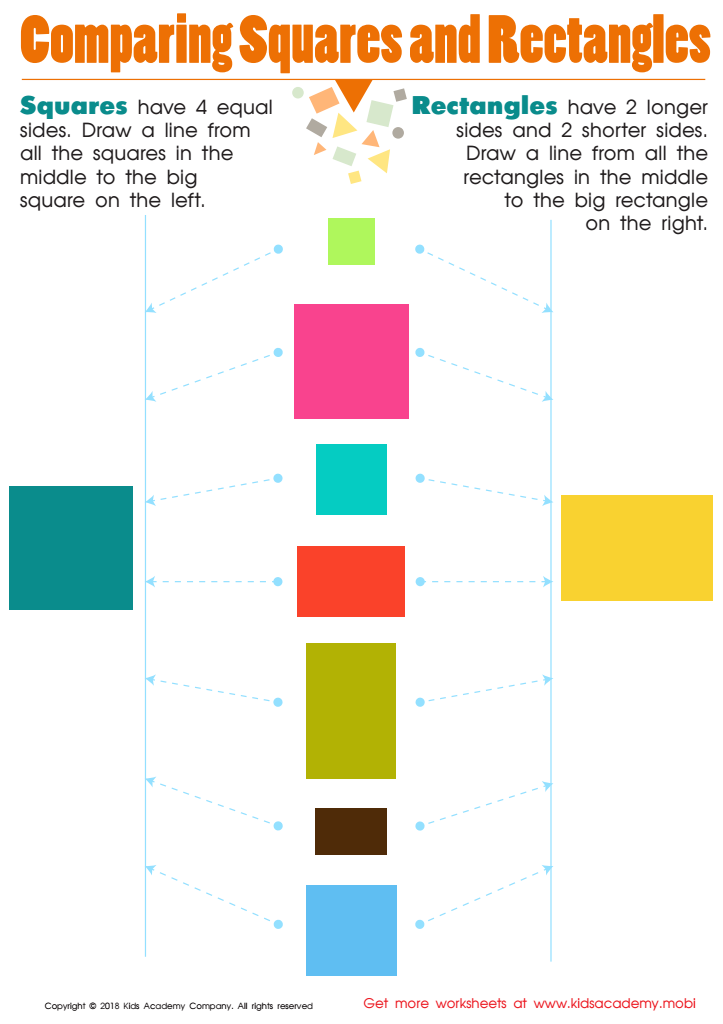
Comparing Squares Rectangles Worksheet
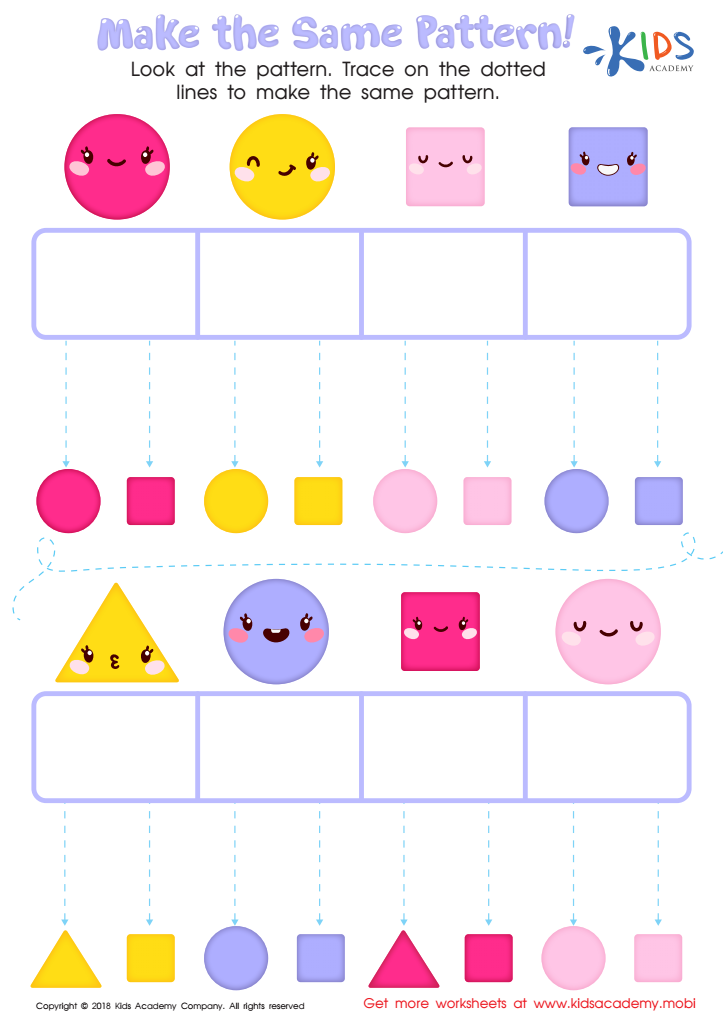
Make the Same Pattern Worksheet
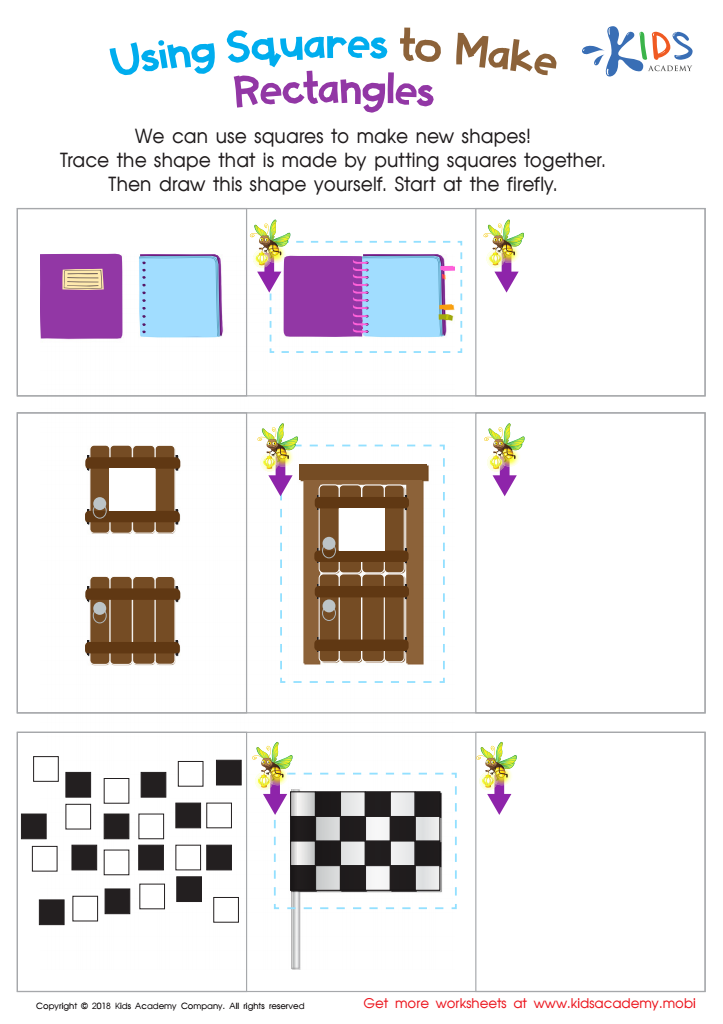
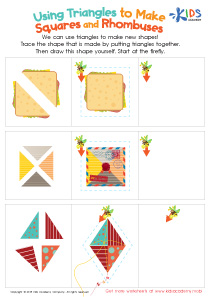
Using Squares to Make Rectangles Worksheet








Parents and teachers should prioritize critical thinking related to normal 2D shapes because it lays the groundwork for essential cognitive skills that enhance learning across subjects. Understanding shapes involves more than mere recognition; it requires analysis, problem-solving, and spatial reasoning. When children engage in critical thinking around 2D shapes, they not only learn to identify and categorize these shapes but also to understand their properties and relationships in the world around them.
This cognitive process aids students in developing early mathematics skills, as they begin to recognize patterns, perform measurements, and comprehend geometry. Moreover, critical thinking fosters creativity and innovation, encouraging children to envision and create new shapes or solve real-life problems using geometry. It also promotes perseverance and adaptability, as children learn to tackle challenges without immediate answers, driving deeper learning and understanding.
Furthermore, critical thinking with shapes can support interdisciplinary learning, weaving connections between mathematics, art, science, and practical life skills. By focusing on nurturing these skills, parents and teachers empower children to become thoughtful, independent thinkers equipped to navigate complex concepts and situations, ultimately laying a strong foundation for future academic and personal success.