Mental math practice Normal Addition & Subtraction Worksheets
5 filtered results
-
From - To
Enhance your child's ability to perform quick calculations with our Mental Math Practice Normal Addition & Subtraction Worksheets! Designed for young learners, these engaging worksheets focus on developing essential math skills by practicing addition and subtraction without using calculators. Perfect for improving mental agility, these resources help students gain confidence and speed in their computations, making math fun and approachable. Tailored for varied difficulty levels, our printable worksheets provide ample opportunities for repetitive practice, ensuring students master foundational math concepts. Give your child a head start in mathematics with our expertly crafted mental math worksheets, a cornerstone for academic success!
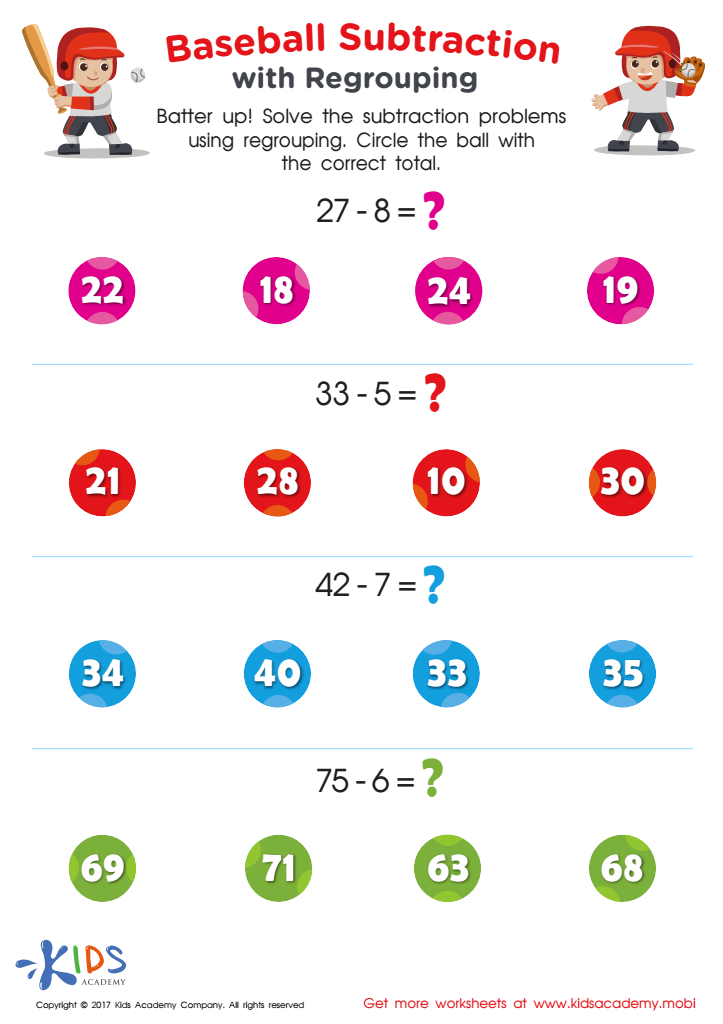
Subtraction With Regrouping for 2nd Grade Worksheet
 Assign to My Students
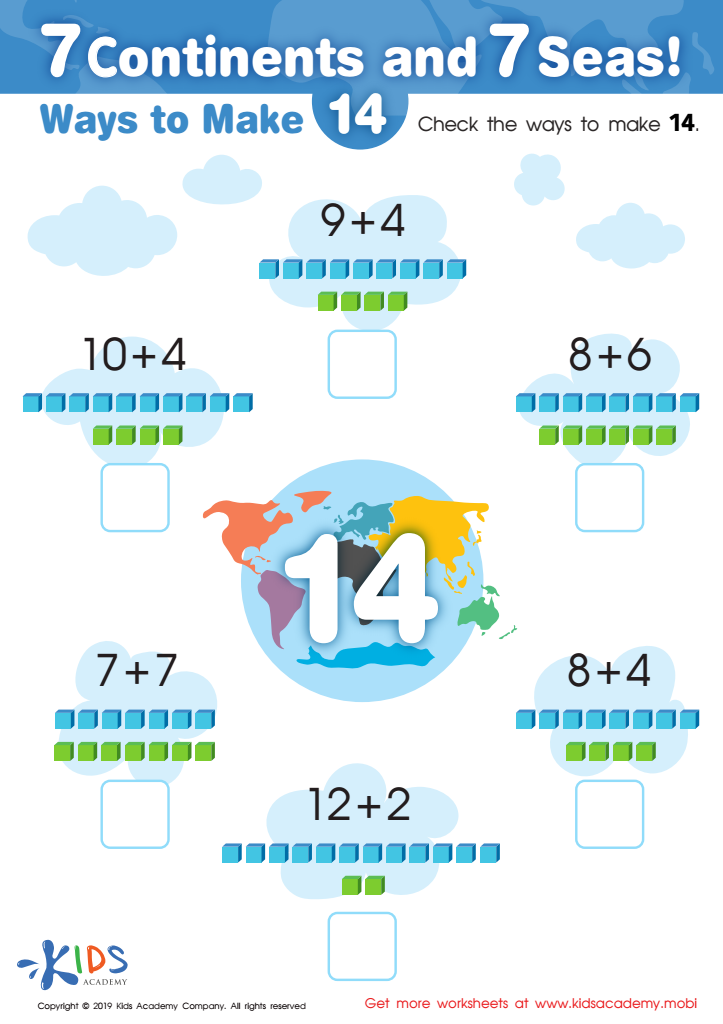
7 Continents and 7 Seas Worksheet
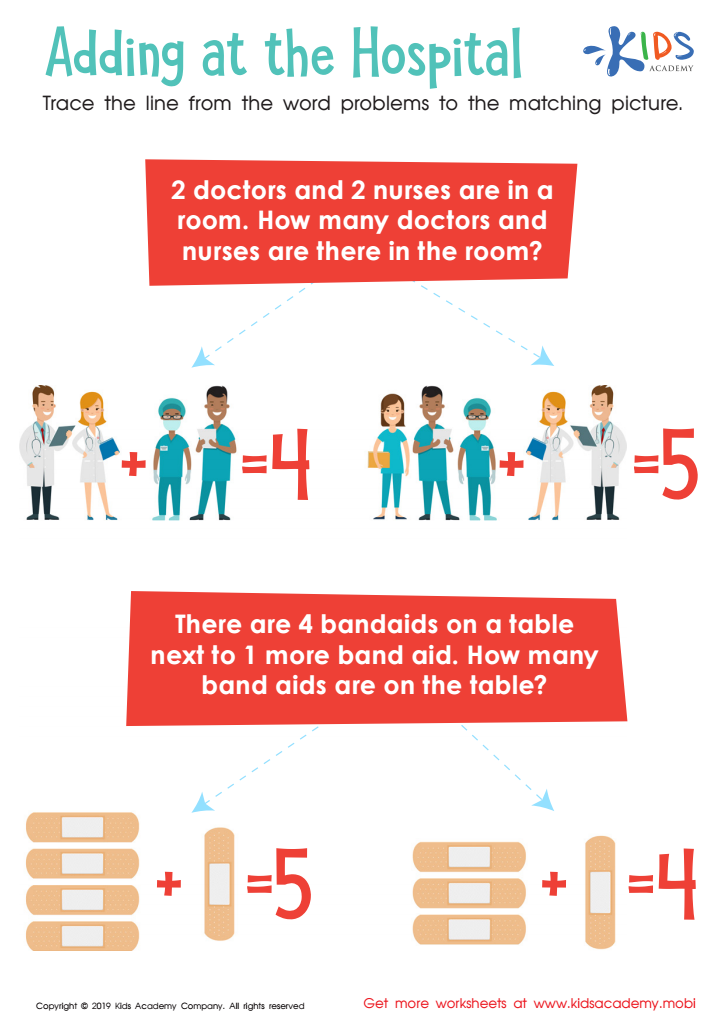
Adding at the Hospital Worksheet
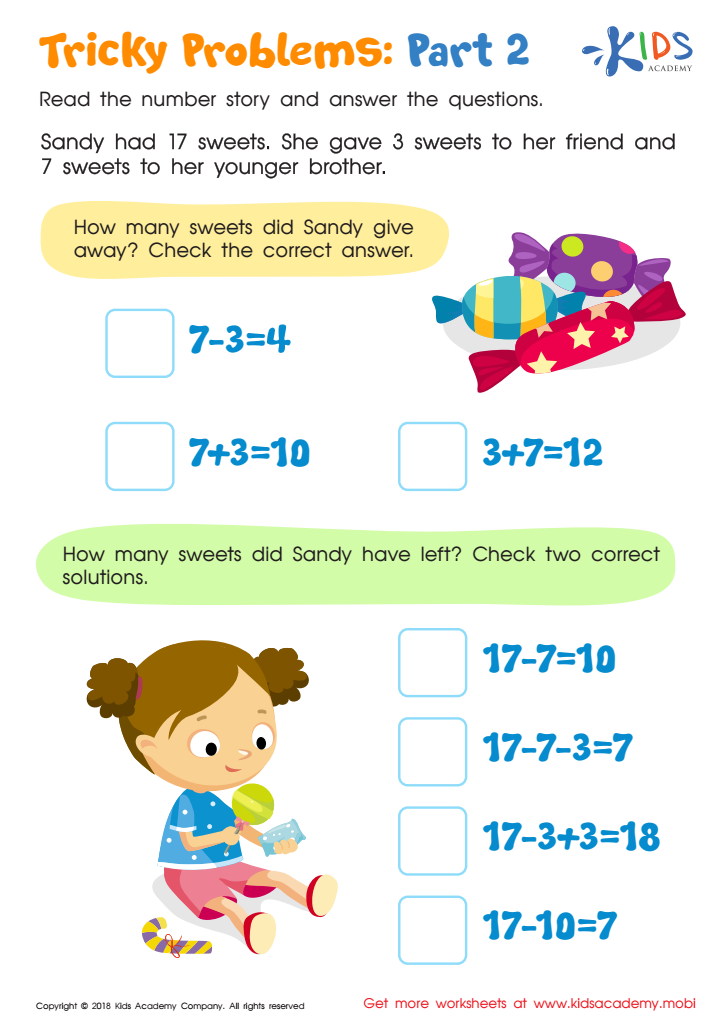
Tricky Problems Worksheet: Part 2
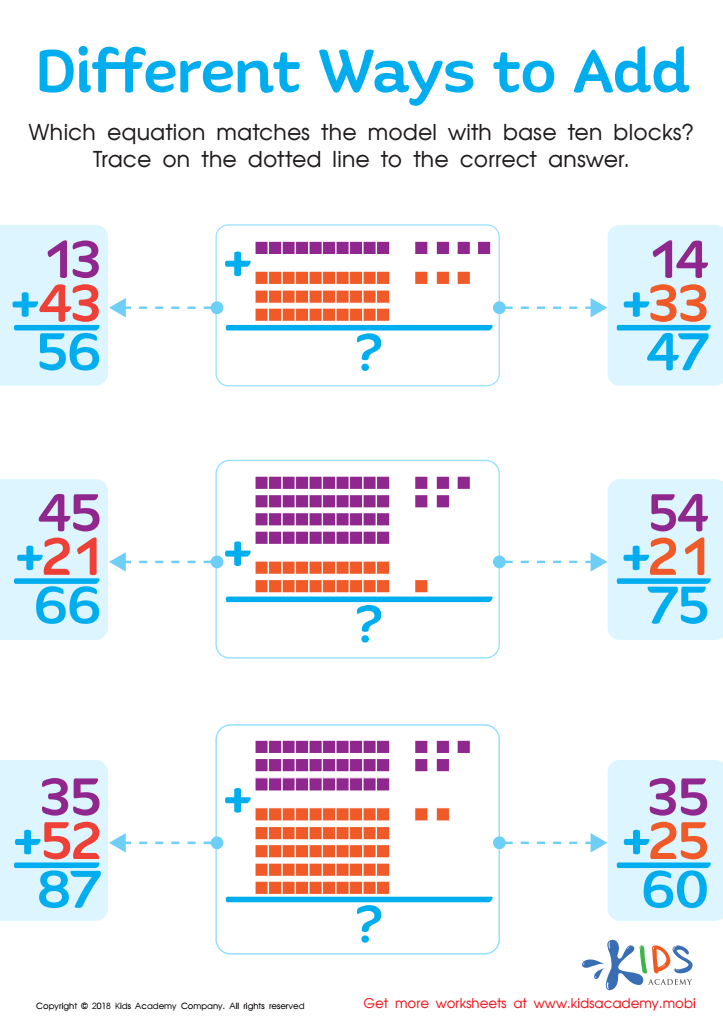
Different Ways to Add Worksheet








Parents and teachers should prioritize mental math practice, particularly in normal addition and subtraction, due to its foundational role in building strong math skills and overall cognitive development in children. Mental math enhances number sense — the intuitive understanding of numbers and their relationships — which is crucial for more complex mathematical concepts later on. By frequently engaging in mental addition and subtraction, children improve their memory, concentration, and speed in problem-solving, making them more efficient and confident in their math abilities.
Moreover, mental math practice for addition and subtraction helps to inculcate logical thinking and reasoning. It encourages kids to explore different strategies to reach the correct answer, fostering creativity and flexibility in their thought processes. This skill is not only important academically but also in day-to-day activities, such as managing time, money, and making quick decisions, both big and small.
Additionally, regular mental math practice helps identify and address gaps in understanding early on, allowing for timely interventions and support. When kids experience early success and become proficient in mental math, they nurture a positive attitude towards math, reducing anxiety and fostering a long-term love for the subject. Hence, mental math practice is essential for laying a strong mathematical foundation and supporting overall cognitive development.








