Differentiating shapes Normal Geometry Worksheets
3 filtered results
-
From - To
Explore our "Differentiating Shapes Normal Geometry Worksheets," designed to enhance your child's understanding of basic geometric shapes! Perfect for early learners, these engaging worksheets encourage kids to identify, compare, and classify various shapes, including circles, triangles, squares, and more. Featuring colorful illustrations and interactive activities, students will build essential skills in shape recognition and critical thinking. Ideal for home or classroom use, our worksheets promote hands-on learning while nurturing creativity and problem-solving abilities. Let your child embark on a fun-filled geometric adventure – download and print these worksheets today to make learning about shapes enjoyable and effective!
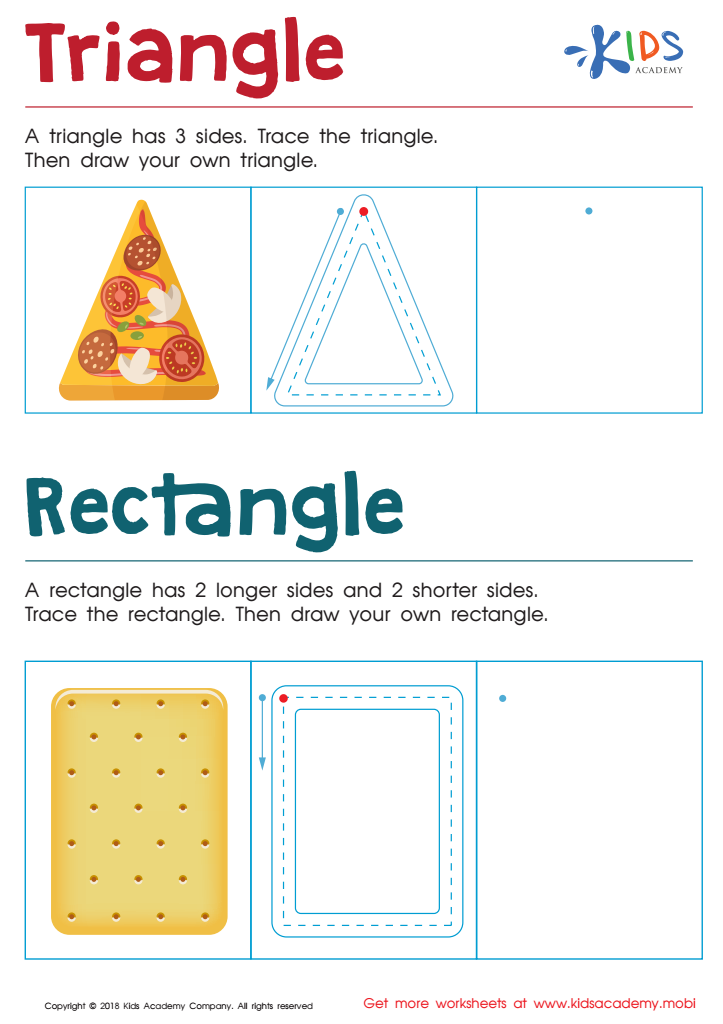
Triangle Rectangle Worksheet
 Assign to My Students











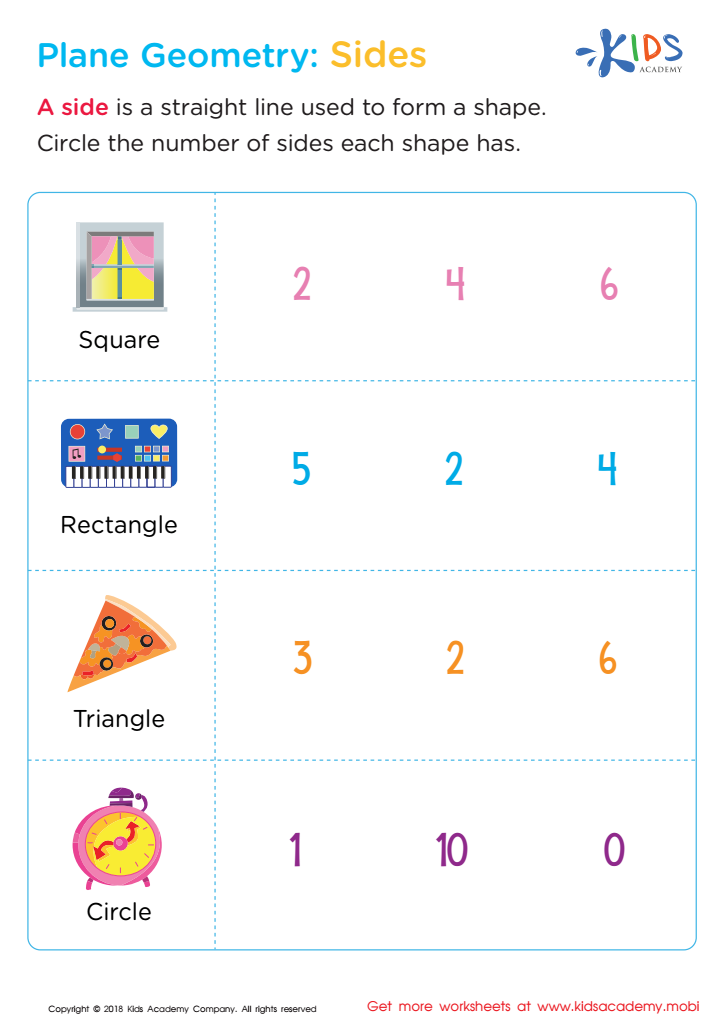
Plane Geometry: Sides Worksheet
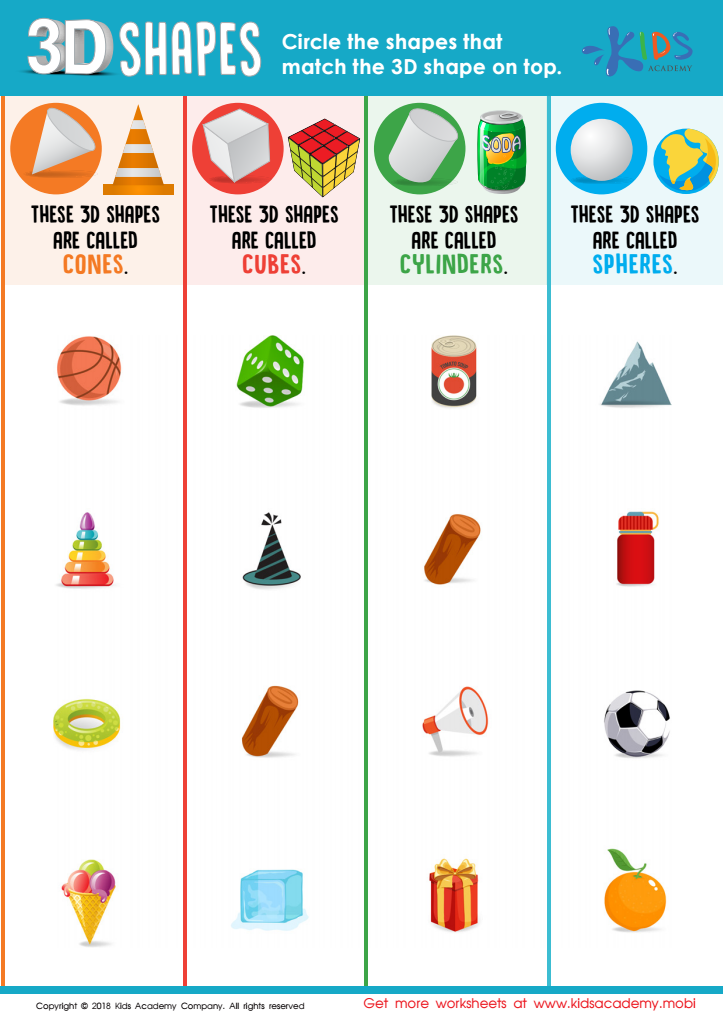
3D Shapes Worksheet








Differentiating shapes in normal geometry is crucial for both parents and teachers as it directly impacts children's cognitive development and understanding of mathematics. As children learn to recognize various shapes and their properties, they enhance their ability to make connections between concepts, which lays a foundation for more complex mathematical ideas later on.
Parents and teachers should care because shape differentiation helps in the development of critical thinking and problem-solving skills. When children engage with various shapes, they learn to identify, compare, and manipulate different geometrical figures, fostering their spatial awareness. This understanding not only supports their performance in math but also enhances skills required in everyday situations, such as understanding construction, design, and nature.
Additionally, recognizing shapes is a key component in early literacy development. It supports vocabulary growth, as children learn descriptive terms related to shapes. Ultimately, by emphasizing the importance of differentiating shapes, parents and teachers create a more enriching learning environment that encourages curiosity and a love for learning, setting the stage for success in both academic and real-world scenarios. Ignoring this foundational concept could hinder a child's overall mathematical proficiency and cognitive growth.








