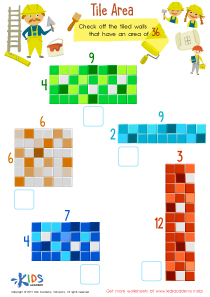
Color Identification Normal Numbers Worksheets
4 filtered results
Difficulty Level
Grade
Age
-
From - To
Subject
Activity
Standards
Discover our engaging "Color Identification Normal Numbers Worksheets," designed to enhance your child's learning experience in number recognition and color differentiation. These worksheets combine vibrant visuals with educational tasks to help young learners identify and understand numbers, all while exploring a spectrum of colors. Each activity promotes fine motor skills and a vibrant learning environment, making it perfect for preschool and early grade students. Parents and teachers will appreciate how these resources foster creativity and color recognition alongside numerical literacy. Download our printable worksheets today to provide your child with a fun and interactive way to master both colors and numbers!
Favorites
With answer key
Interactive
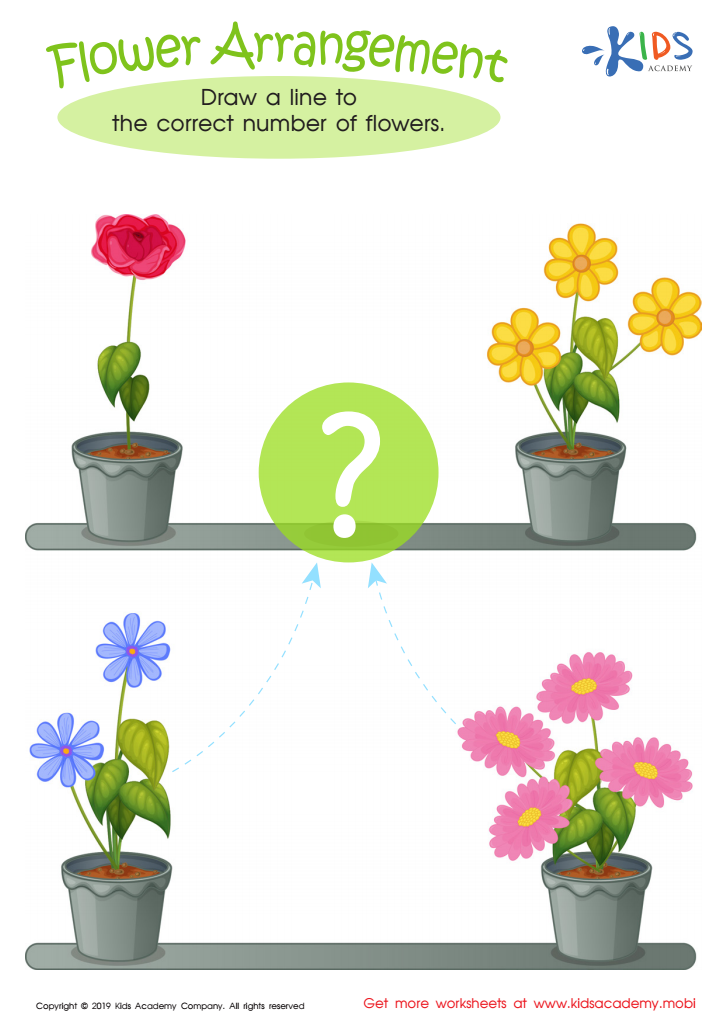
Flower Arrangement Worksheet
Your math whizzes can use flower power to showcase their counting skills with this bright PDF! One-to-one representation in pictures helps children build number sense, which leads to better math and computation efficiencies. This PDF features traceable lines for kids to draw to the correct number of flowers, all while practicing their counting with pretty pictures.
 Assign to My Students
Flower Arrangement Worksheet
Worksheet
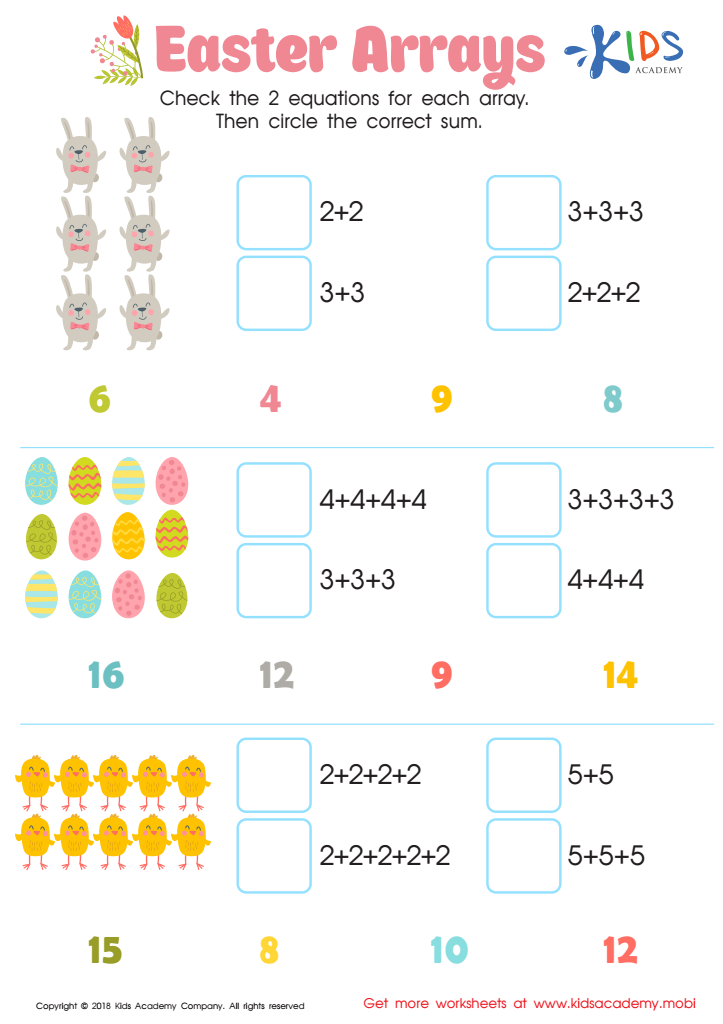
Easter Arrays Worksheet
Does your child love Easter? Do they adore the Easter bunny and egg hunts? Help them have fun with this worksheet! Go through it with them and check the equations for each array. Then, have them circle the correct sum. It's a great way to make the holiday extra exciting!
Easter Arrays Worksheet
Worksheet
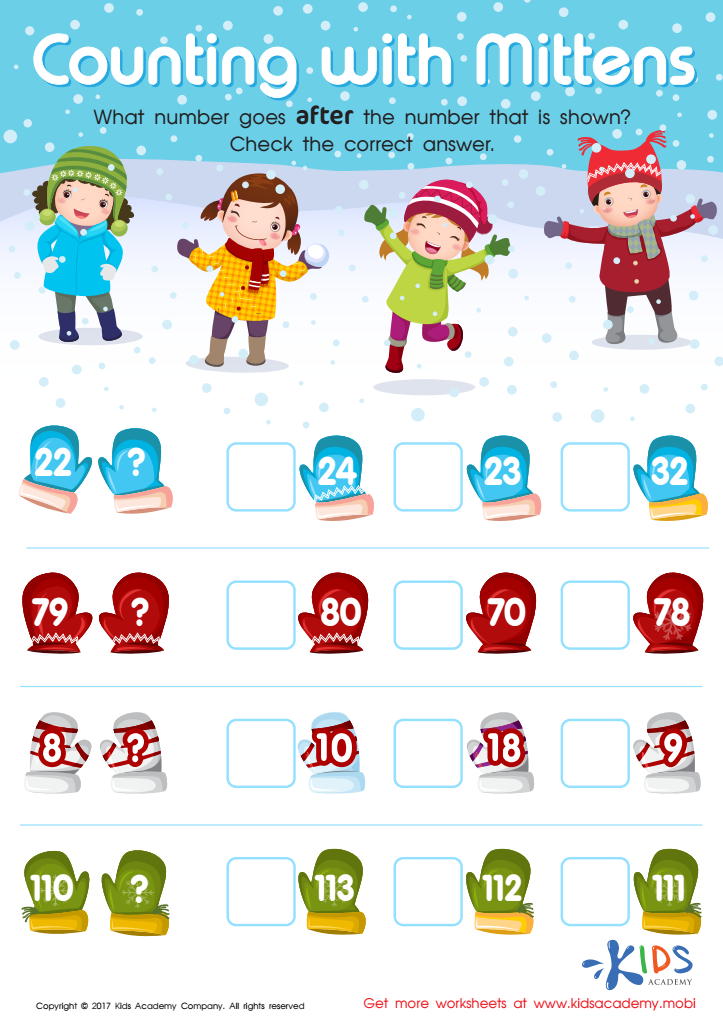
Counting with Mittens Worksheet
Let your kid have fun with this counting worksheet! It encourages them to count numbers and figure out which come next in the picture. Check the box with the correct answer - it's already provided. No more groaning and tears - this is a great way to learn!
Counting with Mittens Worksheet
Worksheet
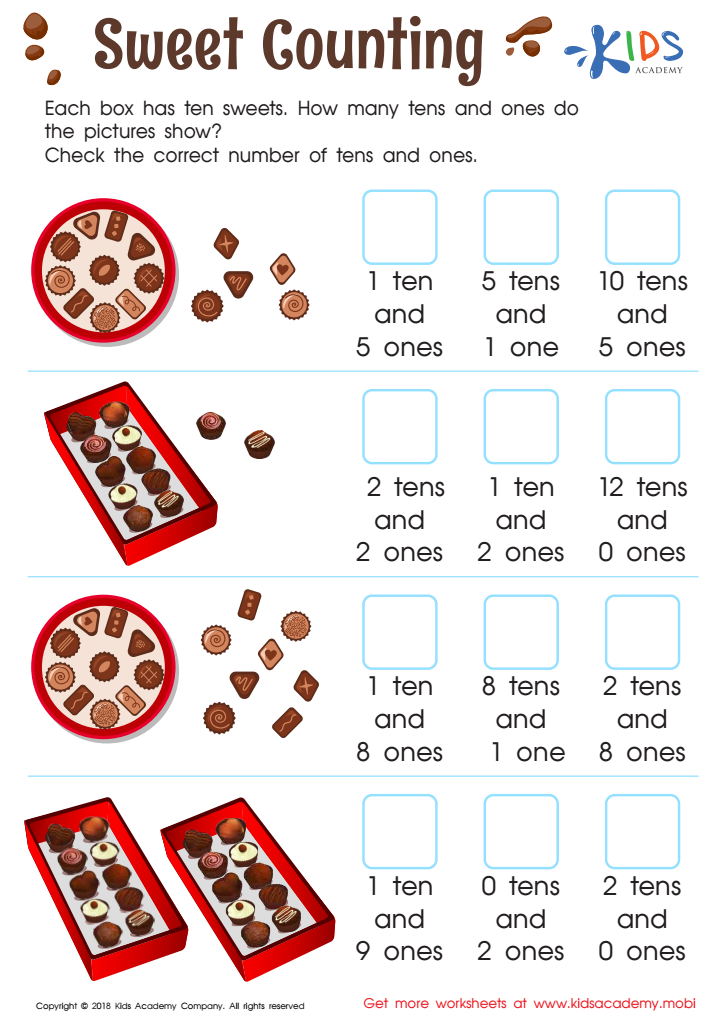
Sweet Counting - Part 2 Worksheet
Kids adore sweets! Make counting fun with this sweet-themed worksheet. Guide your child to count chocolates in boxes of 10, plus individual candies. Group them into tens and ones. Ask: "How many ones and tens are in each row?" Check the answer and complete the practice sheet.
Sweet Counting - Part 2 Worksheet
Worksheet
Join Kids Academy for Free
Who is primarily going to use this learning content?








Color identification is a crucial skill for young learners, acting as a foundational element in early childhood education. Understanding color helps children categorize objects, enhance their observational skills, and improve their ability to communicate effectively. Teaching color identification aids in cognitive development, as children begin to connect colors with emotions, objects, and feelings, enriching their imaginative play and storytelling abilities.
For teachers and parents, fostering color recognition encourages important learning experiences. Normal numbers—usually referring to a standardized set of colors—can create a more structured approach to teaching. This systematic way of associating colors gives children a reference point, enabling them to discriminate between similar hues and fostering their artistic and creative skills.
Additionally, recognizing colors is essential for learning more complex concepts, such as sorting and categorizing, which are foundational math skills. This practice instills patience and attention to detail, essential traits in any learning process. Lastly, engaging with colors in various activities—from crafts to games—makes learning enjoyable, creating positive associations with education and encouraging lifelong learning attitudes. Therefore, both parents and teachers should prioritize color identification as a meaningful stepping stone for preschoolers’ holistic development.