
Enhancing critical thinking Normal Numbers Worksheets
5 filtered results
Difficulty Level
Grade
Age
-
From - To
Subject
Activity
Standards
Enhance your child's critical thinking skills with our engaging Normal Numbers Worksheets! Designed to cultivate analytical reasoning, these worksheets provide a variety of fun activities that promote number recognition and relationship understanding. Through exercises that involve comparing, sorting, and problem-solving, students will develop a deeper grasp of mathematical concepts. Our user-friendly format encourages independent learning, making it easy for young learners to explore and think critically about numbers. Perfect for homeschooling or classroom use, these worksheets are an excellent resource to support foundational math skills while nurturing essential critical thinking abilities. Foster a love for learning with our enriching math materials today!
Favorites
With answer key
Interactive
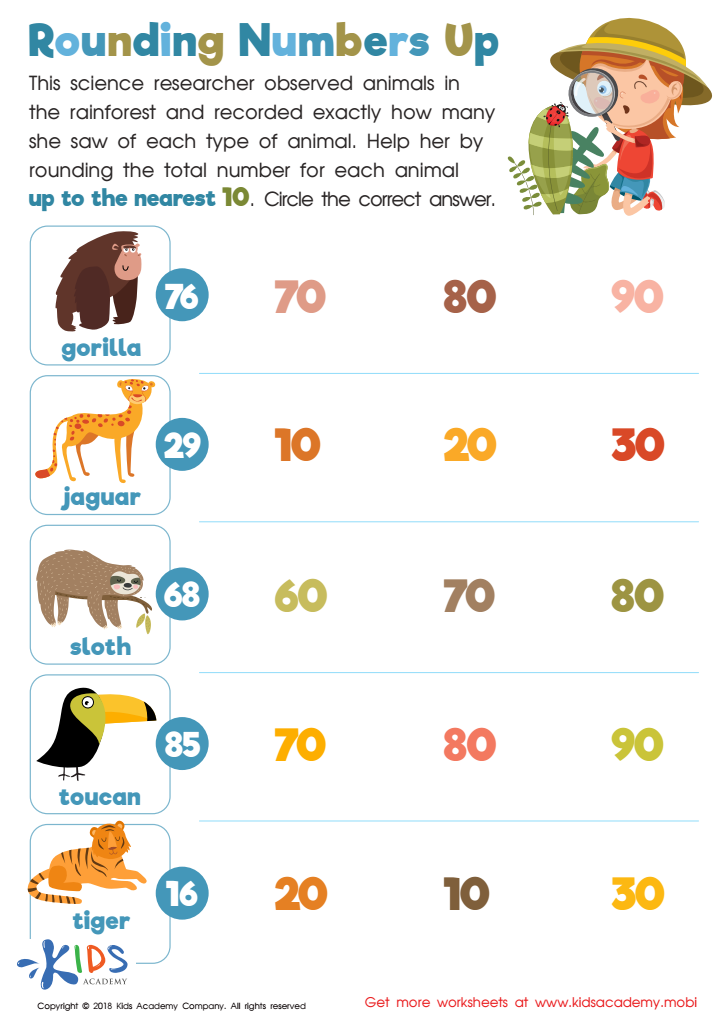
Rounding Numbers Up Worksheet
Does your child want to be a science researcher? If so, they share something in common with the person in this worksheet. She observed rainforest animals and counted them. Your child can help by rounding the totals to the nearest 10 and circling the correct answer for each type.
 Assign to My Students
Rounding Numbers Up Worksheet
Worksheet
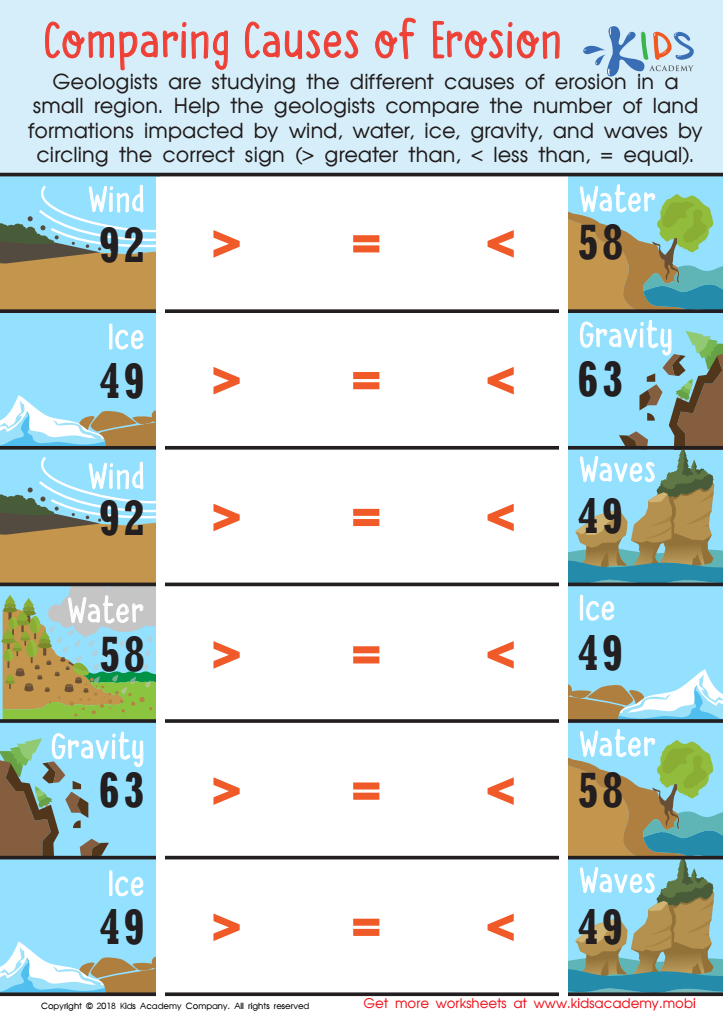
Comparing Causes of Erosion Worksheet
This free PDF worksheet combines science, number sense and comparing numbers to teach kids about the causes of erosion. They'll compare numbers related to ice, wind, water, gravity and waves and decide if each cause is greater, less than or equal to another. It's an interdisciplinary and meaningful way to learn that kids will enjoy.
Comparing Causes of Erosion Worksheet
Worksheet
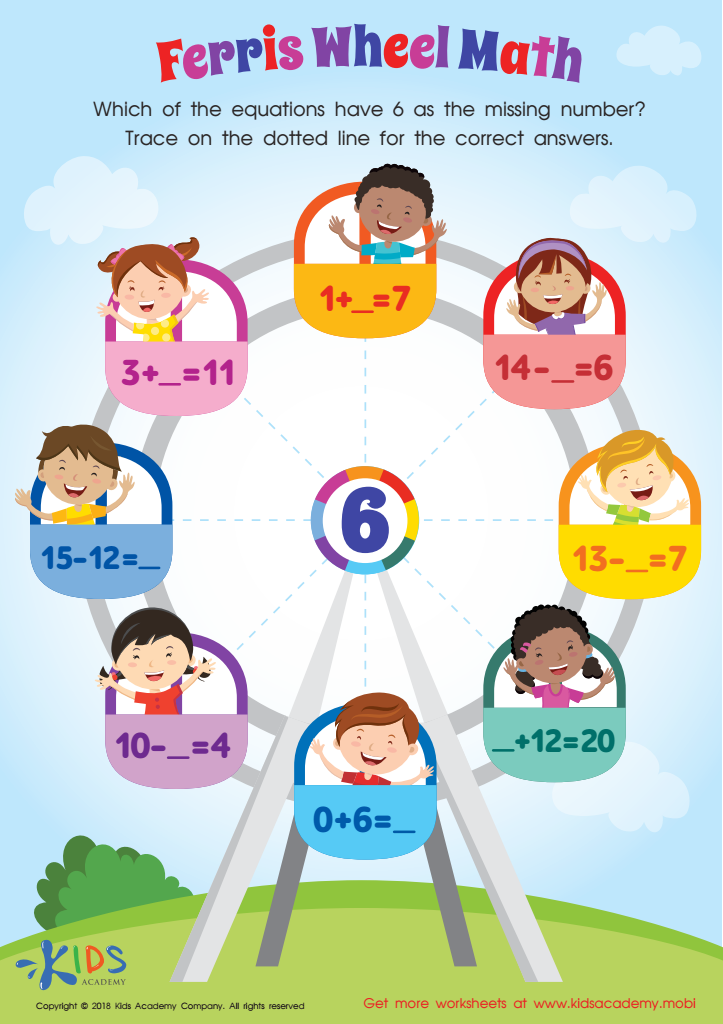
Missing Number: Ferris Wheel Math Worksheet
Hop on the Ferris wheel and solve the equations in the baskets! If the missing number is 6, draw a line from the basket to the middle of the wheel. Kids Academy's addition worksheet will not only help practice pre-algebra but also keep kids entertained with its vibrant illustrations. So, go round and round and have fun with math!
Missing Number: Ferris Wheel Math Worksheet
Worksheet
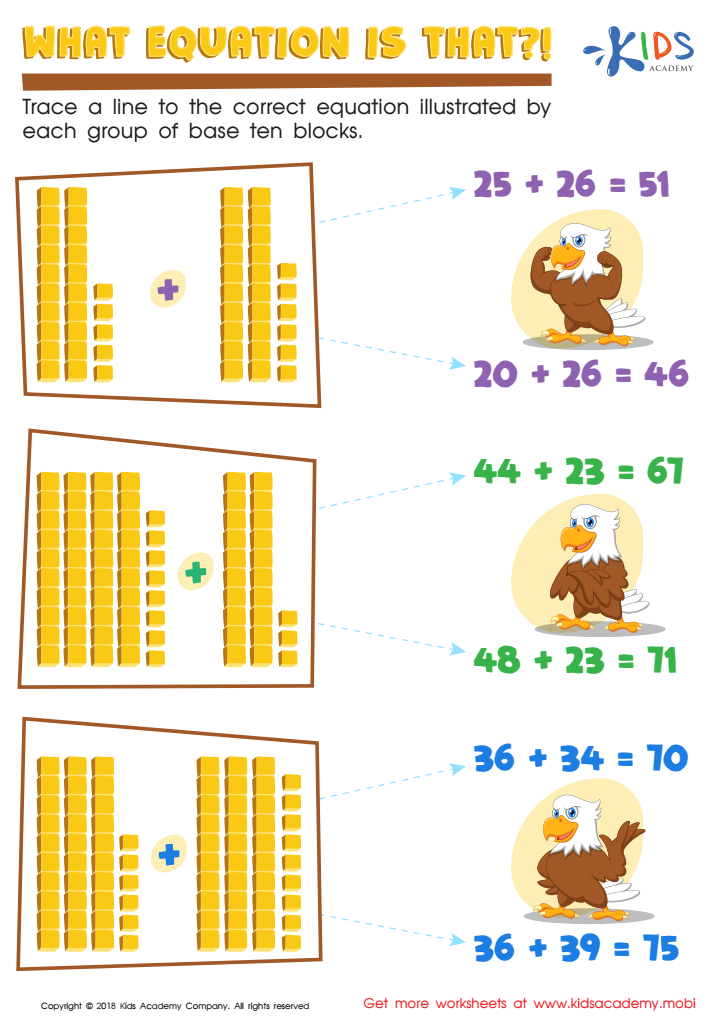
What Equation Is That? Worksheet
Have your students practice counting with base ten blocks. This will help them with math struggles. Homework and worksheets will help them improve; ask them to trace lines to the correct equation on a tracing sheet. Guide them as they count the blocks and trace the lines.
What Equation Is That? Worksheet
Worksheet
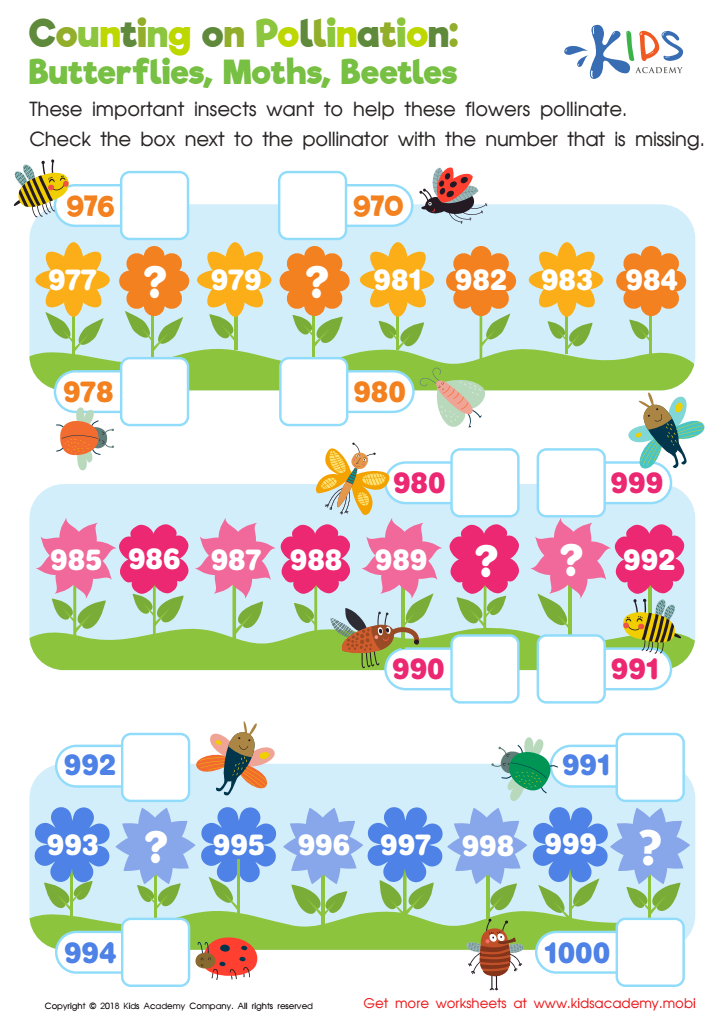
Counting on Pollination: Butterflies, Moths, Beetles Worksheet
A number line can help boost computation accuracy and efficiency. It can also be used with more advanced numbers. Help your child practice by having them identify missing numbers in sequences. This fun worksheet lets them help the pollinators in the process, as they strengthen their number sense.
Counting on Pollination: Butterflies, Moths, Beetles Worksheet
Worksheet
Learning Skills
Join Kids Academy for Free
Who is primarily going to use this learning content?








Enhancing critical thinking in early education, particularly regarding normal numbers, is essential for a variety of reasons. Firstly, critical thinking skills enable children to analyze and solve problems effectively. When educators and parents guide children in exploring concepts related to normal numbers—such as understanding sequences, patterns, and the significance of numbers in everyday life—they are fostering a skill set that extends beyond math.
Moreover, critical thinking encourages students to question, reason, and justify their answers rather than relying solely on rote memorization. This process cultivates creativity and innovation, empowering students to approach challenges with a confident and open mindset. Parents and teachers who emphasize critical thinking prepare children for future academic pursuits, where analytical skills are paramount.
Additionally, critical thinking promotes independence and decision-making capabilities. As children learn to evaluate information about normal numbers and numerical relationships critically, they develop a sense of agency and responsibility in their learning journey.
Ultimately, enhancing critical thinking in relation to normal numbers sets a strong foundation for students, enabling them to navigate an increasingly complex world, contributing to their holistic development as capable and informed individuals in society.








