Multiplication practice Normal Math Worksheets - Page 2
30 filtered results
-
From - To
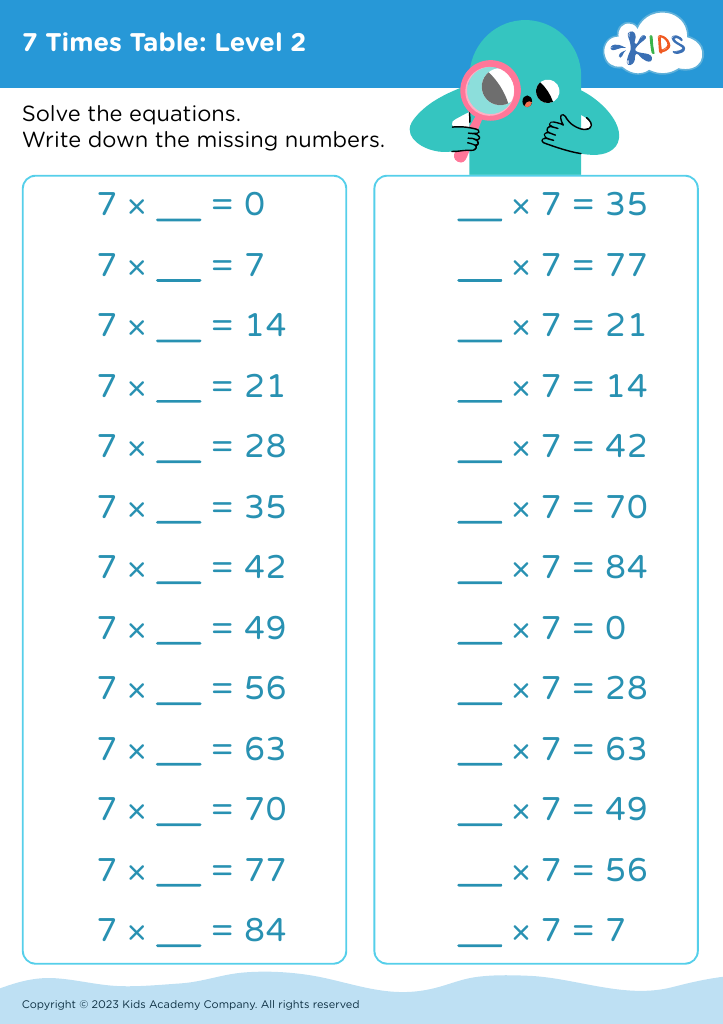
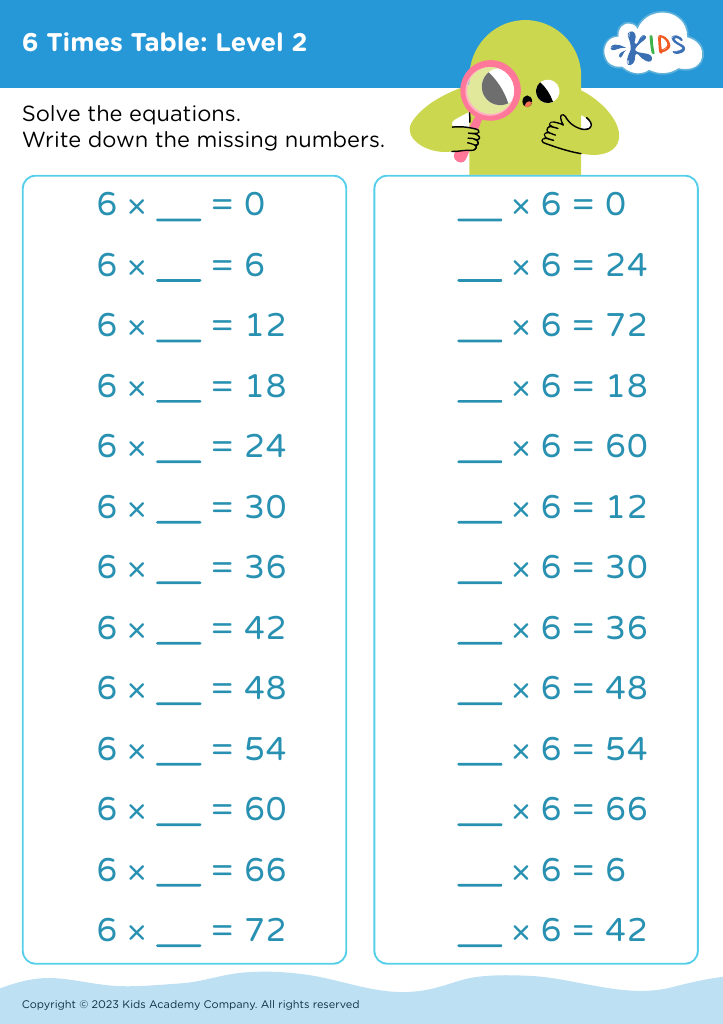
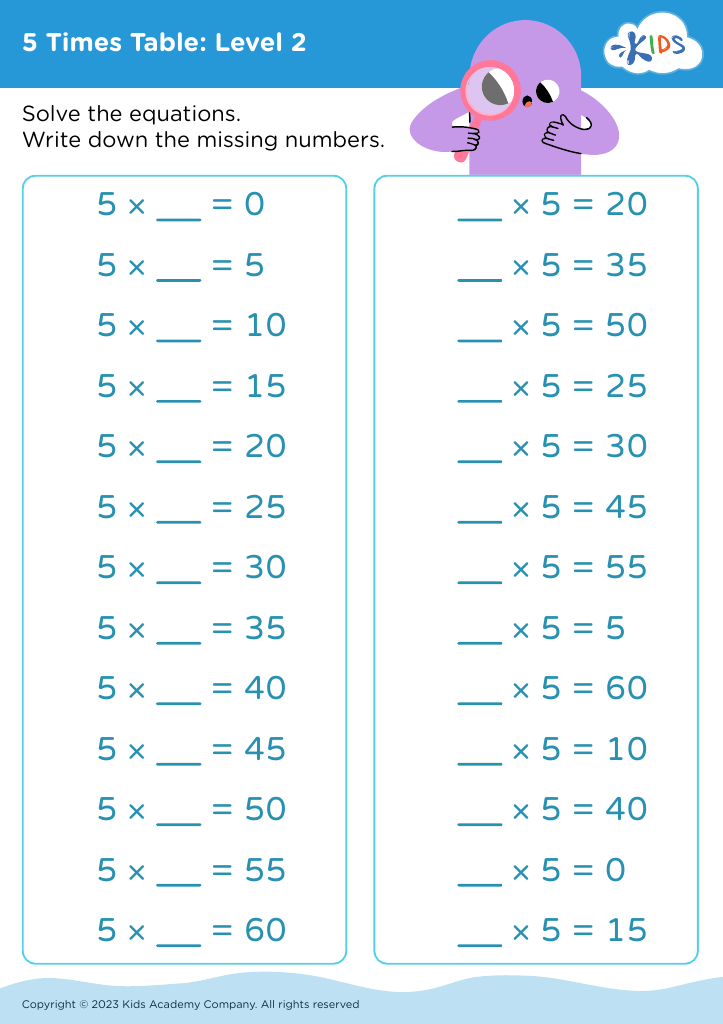
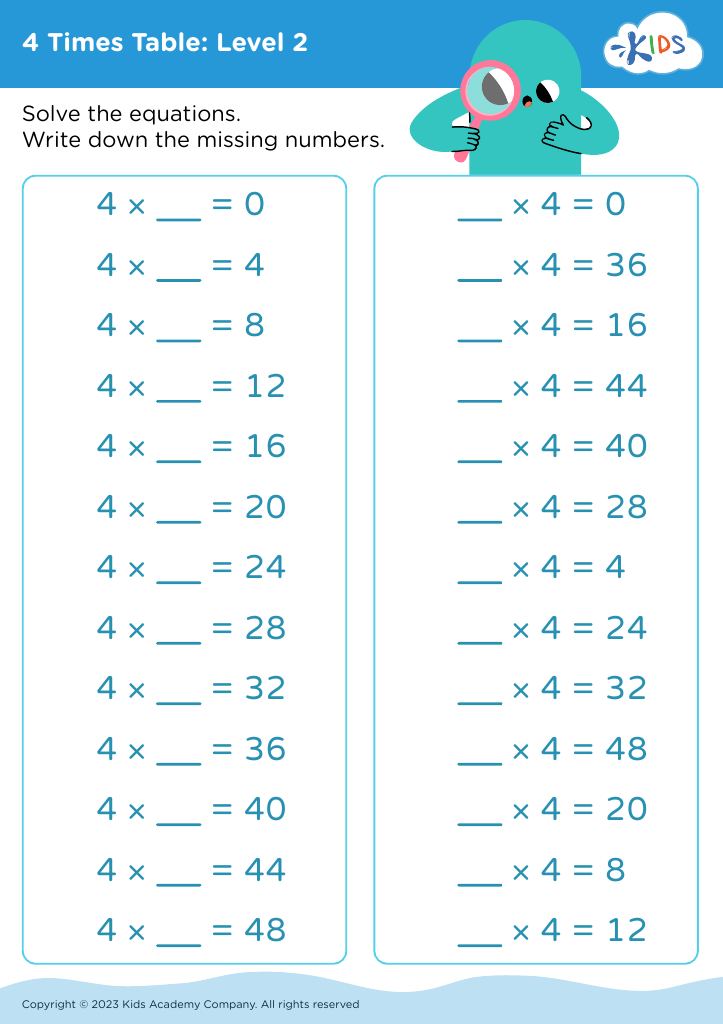
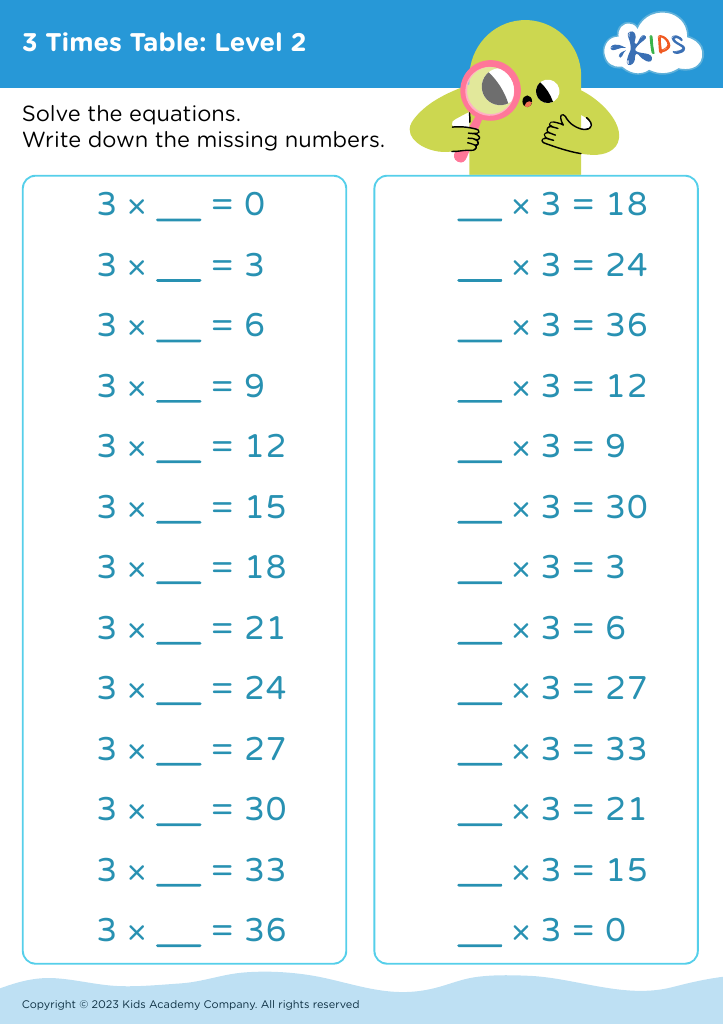
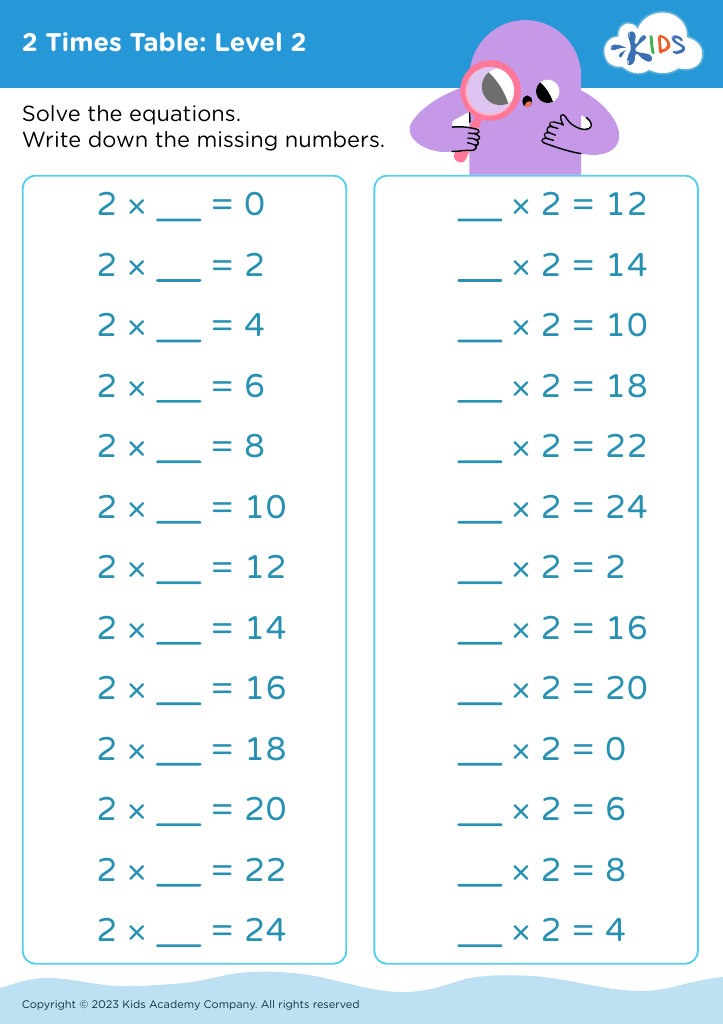








Multiplication practice is a crucial aspect of early math education, and both parents and teachers should prioritize it for several reasons. First, multiplication is foundational for advanced mathematical concepts. A strong grasp of multiplication helps students understand division, fractions, and even algebra. When children practice multiplication, they build fluency in their calculations, enabling them to tackle these higher-level concepts with confidence.
Additionally, mastery of multiplication supports overall academic success. Standardized tests and real-world applications often rely on multiplication skills. Students who struggle with multiplication may face challenges in math-related subjects, impacting their performance across the curriculum.
Furthermore, multiplication practice fosters critical thinking and problem-solving skills. Engaging with multiplication questions encourages students to think analytically and to approach problems systematically. This builds resilience and perseverance—traits essential for all areas of learning.
Finally, parents and teachers play a vital role in creating a positive and encouraging environment for math practice. By incorporating multiplication games and exercises into daily routines, they can make learning enjoyable, fostering a love for math. Ultimately, prioritizing multiplication practice equips children with essential life skills, enhances their academic confidence, and prepares them for future challenges.








