Understanding comparisons Normal Math Worksheets
4 filtered results
-
From - To
Welcome to our "Understanding Comparisons Normal Math Worksheets" page, where learning meets fun! Designed for early learners, these worksheets help children grasp the concepts of comparisons, such as greater than, less than, and equal to. By engaging with visually appealing exercises and examples, young students will enhance their critical thinking and analytical skills. Our comprehensive resources are perfect for home or classroom use, catering to various learning styles. Foster a strong mathematical foundation while boosting confidence in problem-solving abilities. Download our worksheets today and inspire your child to understand and enjoy the beauty of comparisons in mathematics!
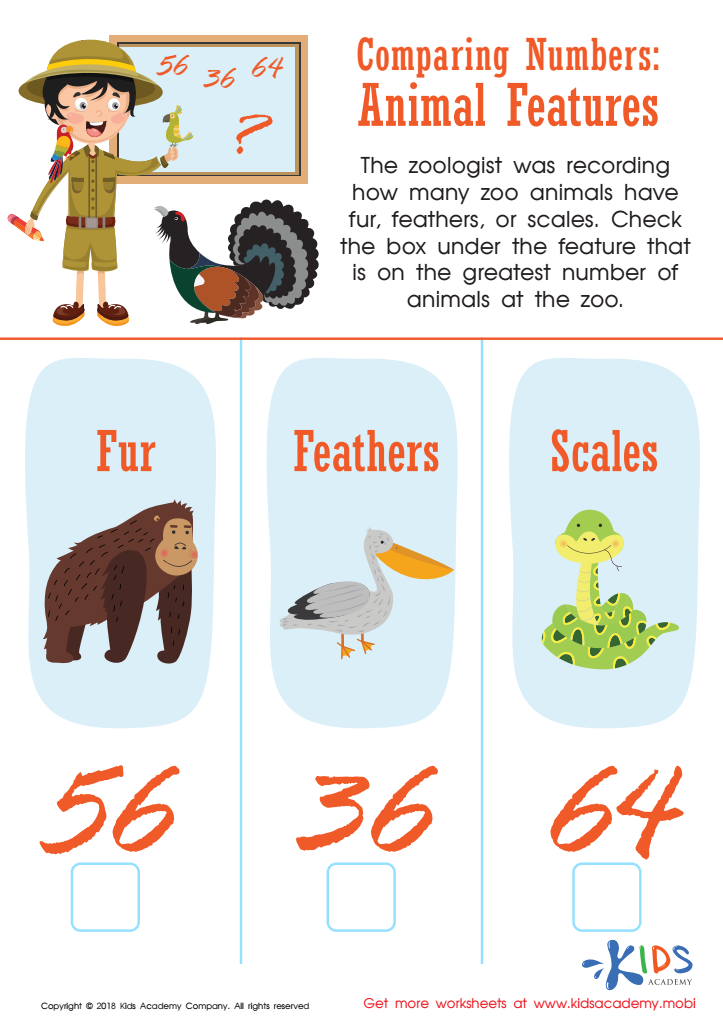
Animal Features Worksheet
 Assign to My Students
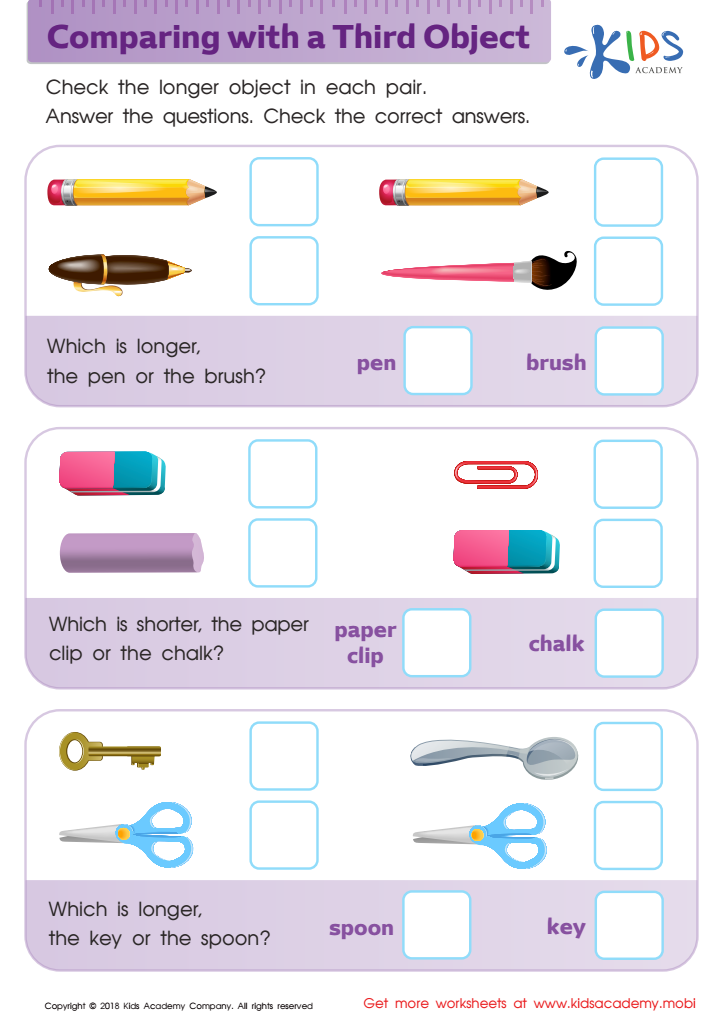
Comparing with a Third Object Worksheet
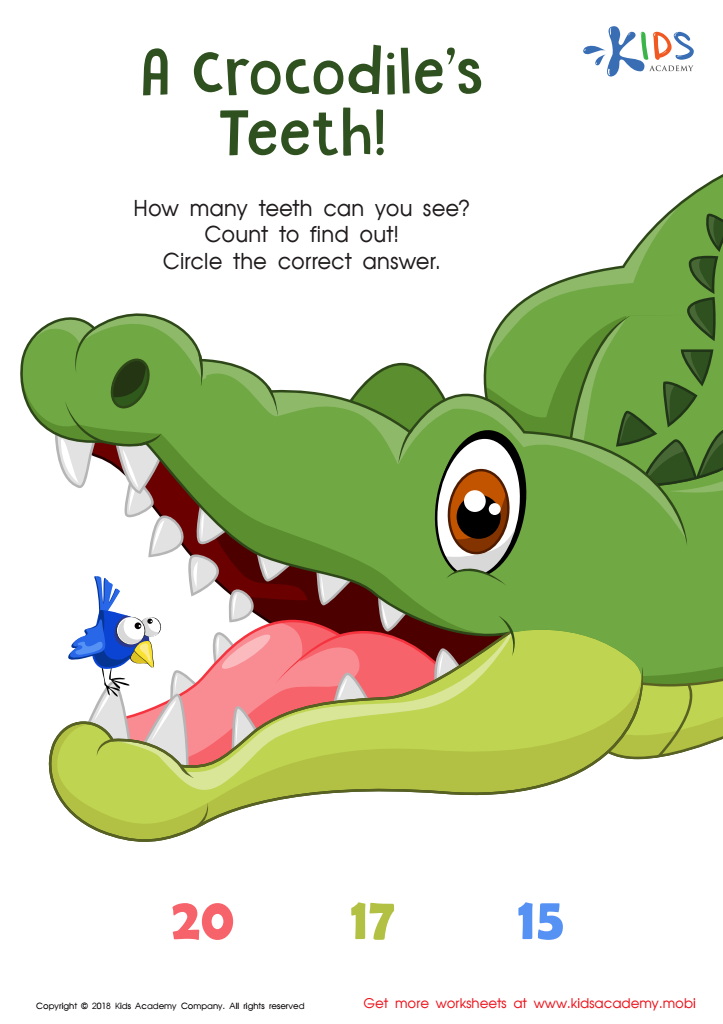
A Crocodile's Teeth Worksheet
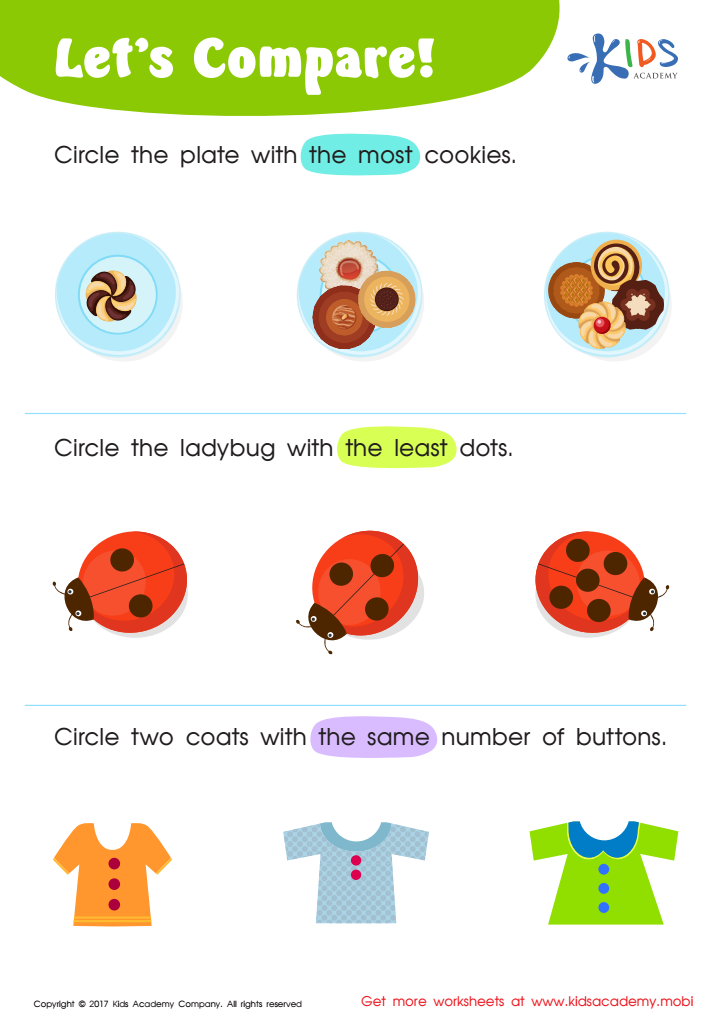
Matching: Classifying Toys by Size Worksheet







Understanding comparisons is a fundamental aspect of early math education that significantly shapes a child's cognitive and academic development. When parents and teachers foster skills related to comparisons—such as greater than, less than, and equal to—children begin to grasp essential mathematical concepts, forming the groundwork for future learning.
Mastering comparisons helps children develop problem-solving skills, as they learn to analyze and differentiate between objects based on various attributes, like size, quantity, or value. This critical thinking promotes logical reasoning and enhances mathematical fluency, which is vital in more advanced mathematical concepts.
Furthermore, understanding comparisons extends into everyday life and decision-making. When children can compare prices while shopping, or assess time it takes to complete tasks, they become more independent and financially literate.
Participating in discussions involving comparisons fosters communication skills as children articulate their thoughts and reasoning. It also encourages collaborative learning, as children often engage with peers in comparative tasks.
Ultimately, when parents and teachers emphasize the importance of understanding comparisons in math, they equip children not only with essential academic skills but also with tools for effective reasoning and problem-solving that are applicable beyond the classroom.








