Understanding shapes Normal Math Worksheets
3 filtered results
-
From - To
Explore our "Understanding Shapes Normal Math Worksheets," designed to help young learners grasp the essential concepts of shapes. These engaging worksheets provide a variety of activities, including identifying, sorting, and comparing different shapes. Perfect for kids in preschool and early elementary grades, the worksheets enhance shape recognition through fun visuals and interactive exercises. Educators can easily integrate these resources into their lesson plans, fostering foundational math skills while keeping students entertained. Printable and user-friendly, our worksheets are an excellent tool for both classroom and home learning. Help your child build a solid understanding of shapes today!
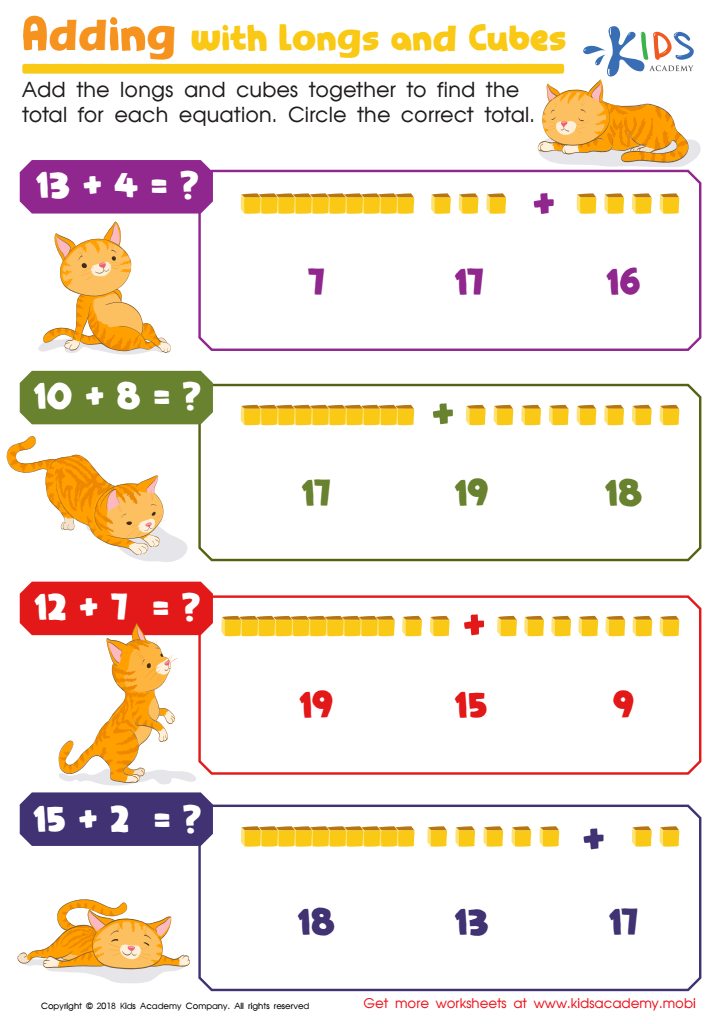
Adding With Longs and Cubes Worksheet
 Assign to My Students
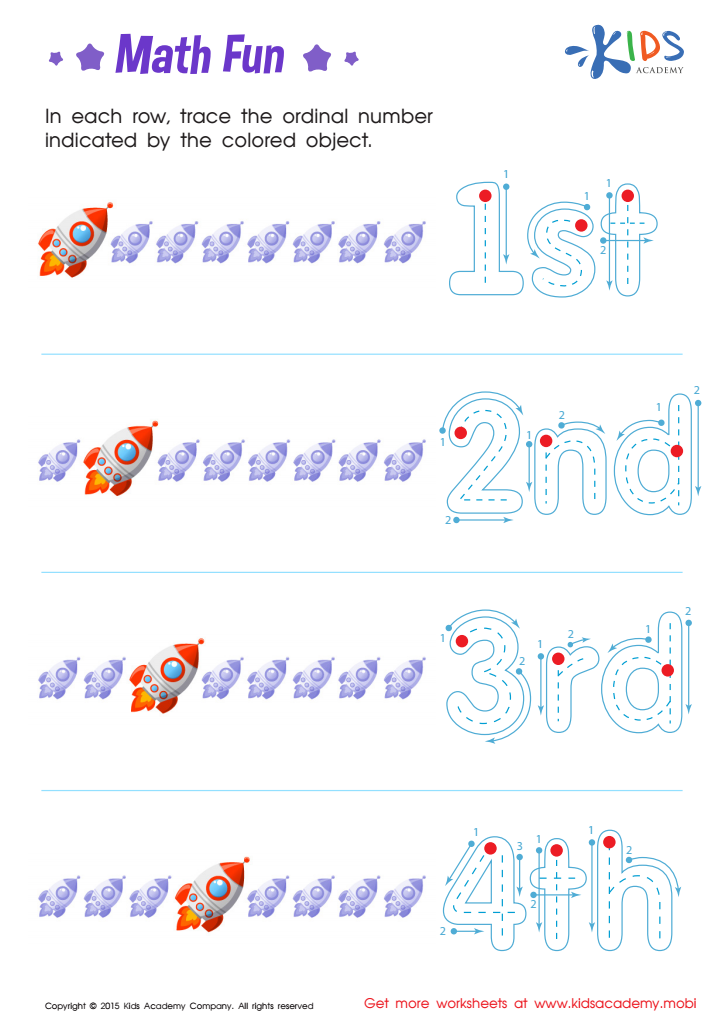
Ordinal Numbers: Math Fun Worksheet
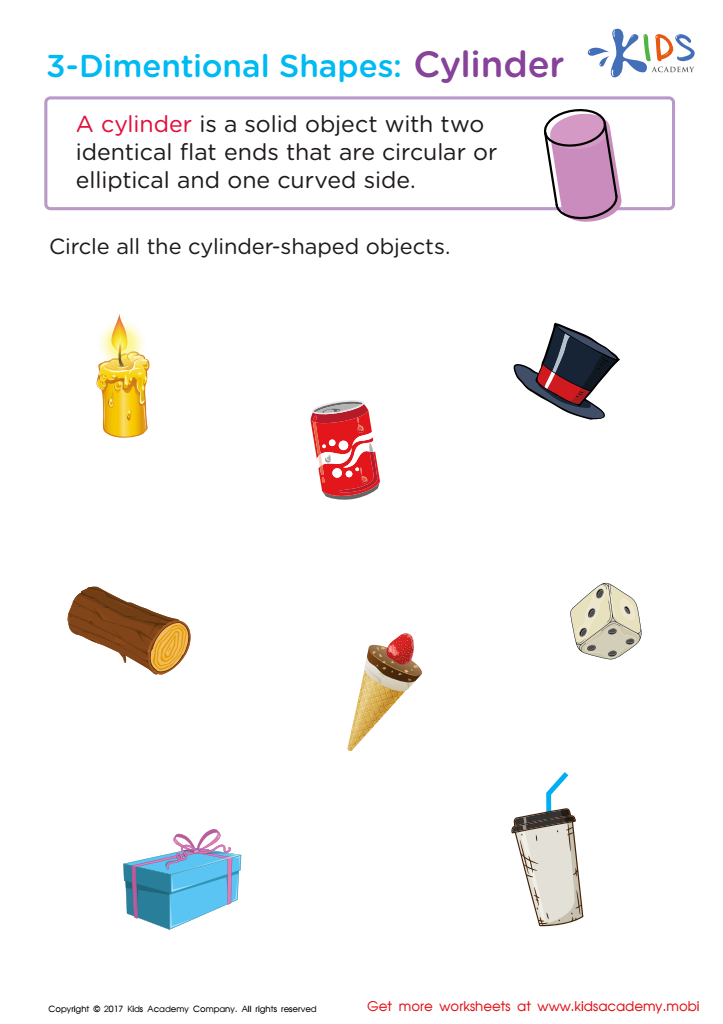
Three–Dimensional Shapes: Cylinder Worksheet








Understanding shapes is a fundamental aspect of early math education, making it essential for parents and teachers to prioritize this area of learning. Shapes form the building blocks of geometric reasoning and spatial awareness, crucial skills children will use throughout their lives. By recognizing and understanding shapes, children develop their ability to categorize and compare objects, which enhances critical thinking.
Moreover, shape recognition lays the groundwork for more complex mathematical concepts such as symmetry, area, and perimeter. When children can identify geometric shapes in the world around them, it fosters observational skills and a natural curiosity about their environment.
Engaging children in activities involving shapes—like drawing, building, or playing with shape-sorting toys—encourages hands-on learning and makes math fun. This interactive approach not only solidifies their understanding but also nurtures creativity and problem-solving skills.
Incorporating shape education into daily routines creates opportunities for meaningful conversations about math, helping demystify the subject. When parents and teachers actively support shape learning, they inspire confidence in young learners, laying a strong foundation for future math success and a lasting appreciation for the subject. Ultimately, understanding shapes contributes significantly to a child’s cognitive, social, and emotional development.








