Visual discrimination Normal Preschool Geometry Worksheets
3 filtered results
-
From - To
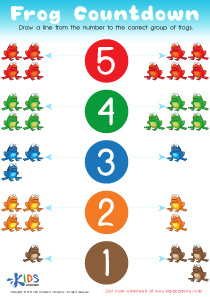
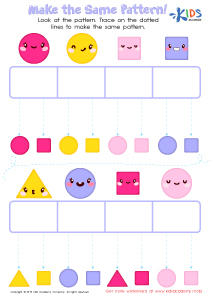
Enhance your child's learning experience with our Visual Discrimination Normal Preschool Geometry Worksheets! Designed for young learners, these engaging activities focus on identifying shapes, patterns, and differences, helping kids develop essential visual skills. As preschoolers explore various geometry concepts, such as recognizing triangles, circles, and squares, they’ll build a strong foundation for future math success. Our worksheets are colorful, interactive, and tailored to keep children motivated and interested. Ideal for teachers or parents aiming to supplement early education, these resources foster critical thinking and attention to detail while ensuring a fun learning environment. Download ready-to-use worksheets and watch your child excel!
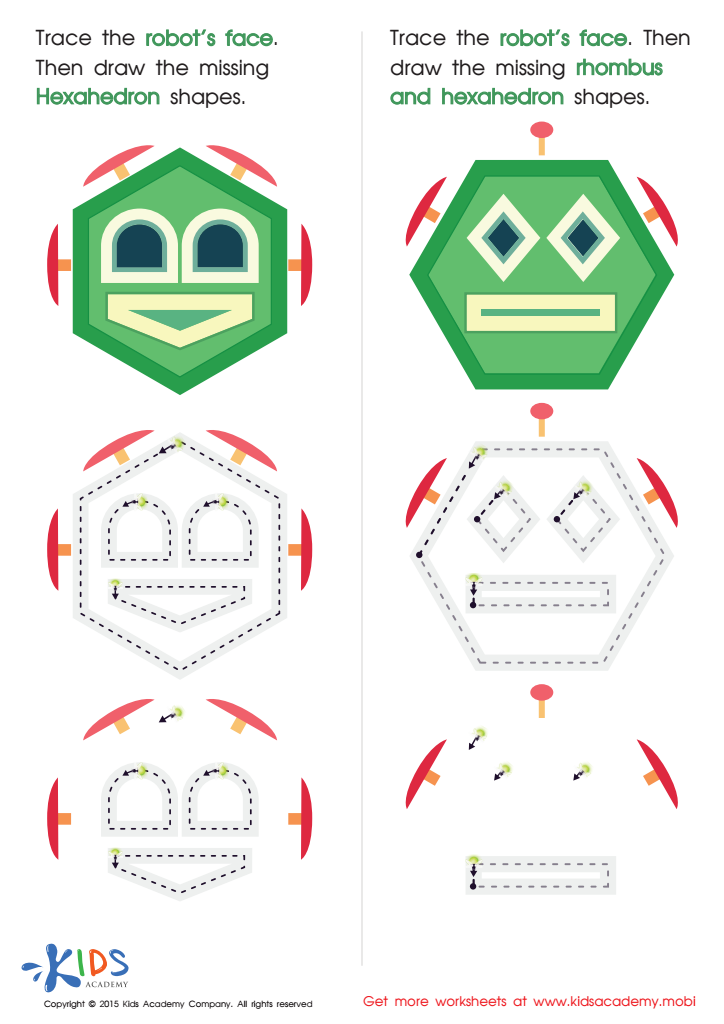
Practice Drawing Hexahedrons And a Rhombus Worksheet
 Assign to My Students


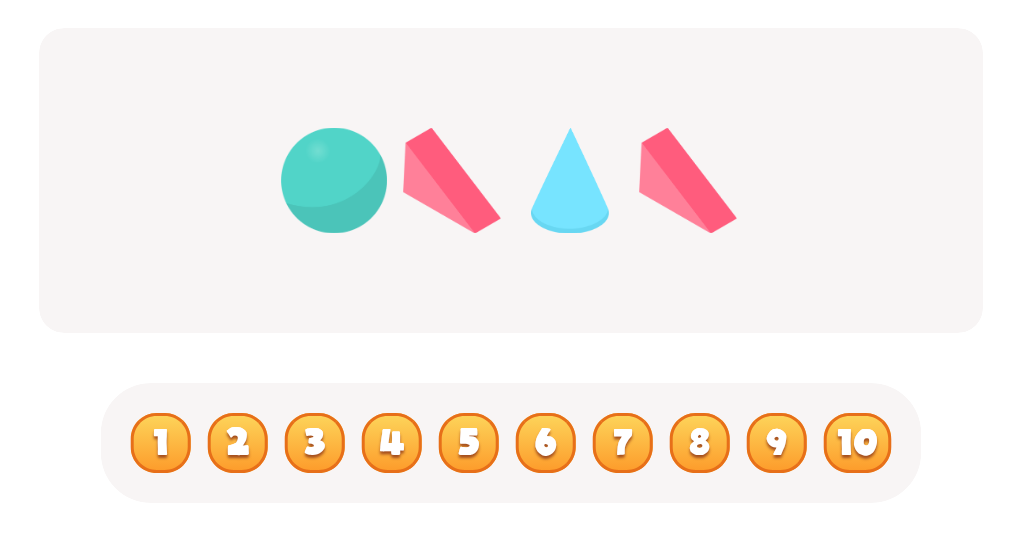


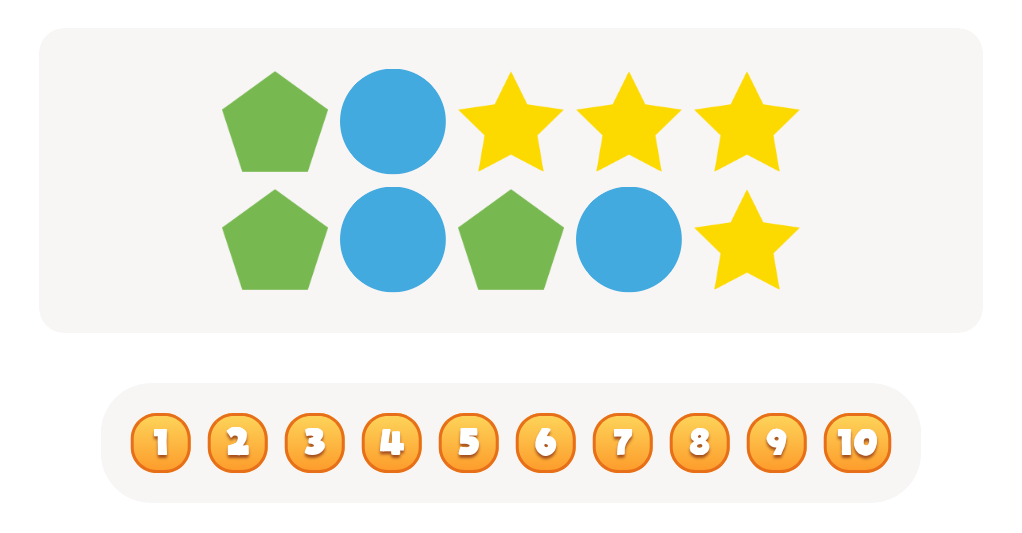

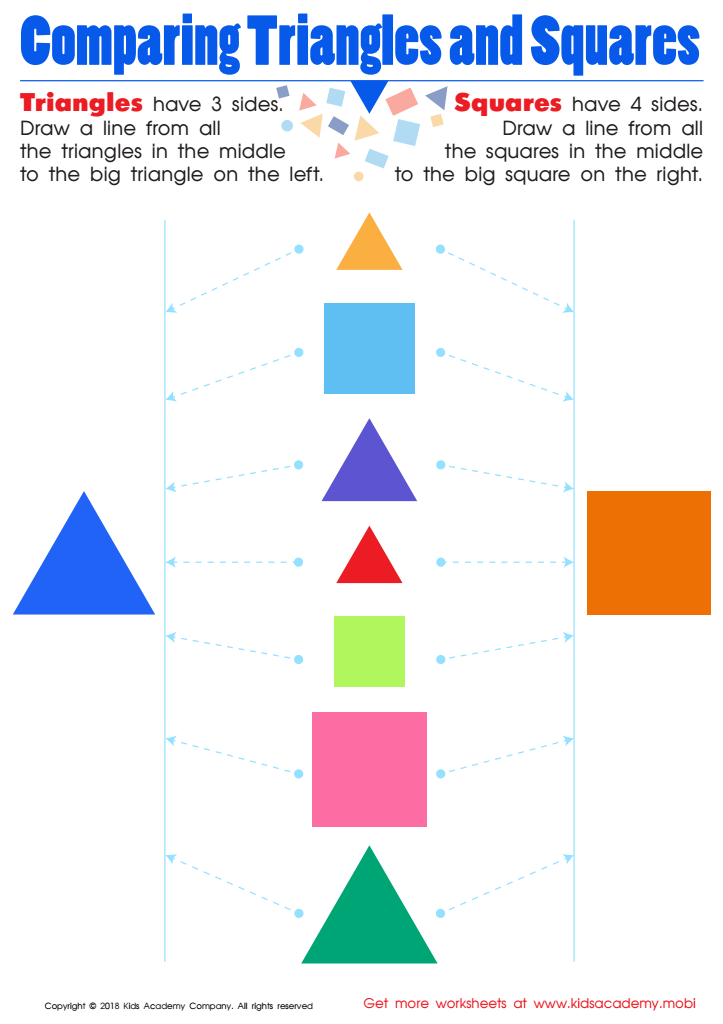
Comparing Triangles Squares Worksheet
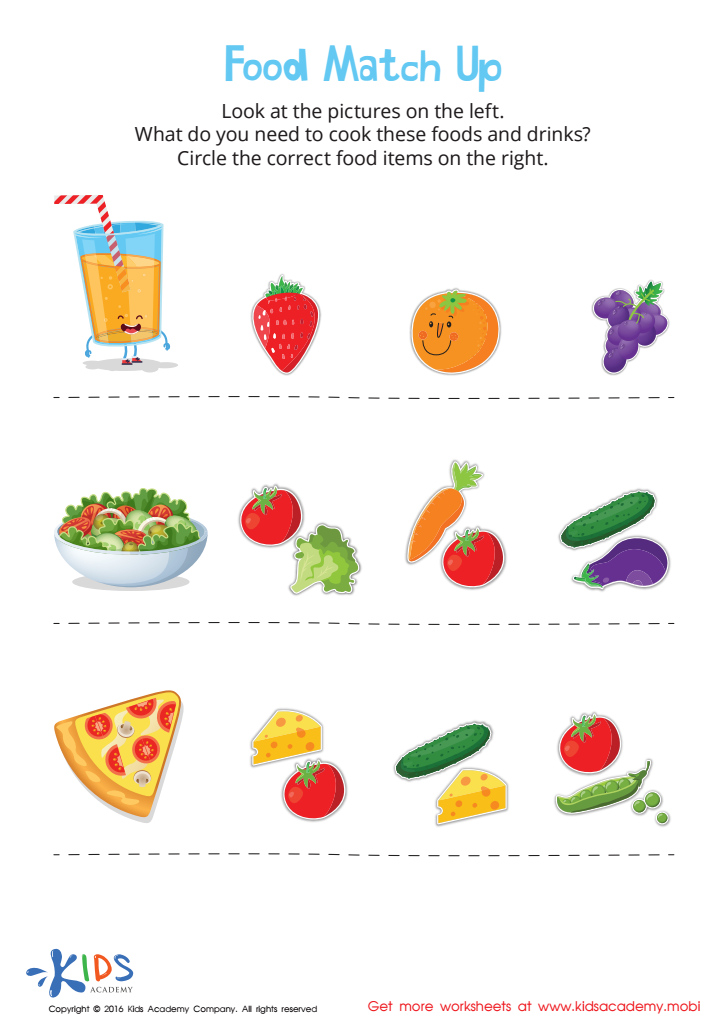
Food Match Up Worksheet








Visual discrimination is a crucial skill in preschool geometry that involves the ability to notice, compare, and differentiate shapes, sizes, and spatial relationships. It lays the foundation for early math and literacy development. Parents and teachers should care about this skill because it significantly impacts children's cognitive processes and influences their academic success.
First, visual discrimination enhances a child's ability to recognize shapes and patterns, which are fundamental concepts in mathematics. This skill helps children classify objects, understand measurements, and lay the groundwork for more complex mathematical concepts in the future. For instance, recognizing that a square has four equal sides while a rectangle has differing lengths introduces them to geometry.
Second, visual discrimination supports literacy skills. It allows children to distinguish letters and words, crucial for reading and writing. By recognizing the subtle differences between letters like 'b' and 'd,' they can improve their reading accuracy.
Moreover, fostering visual discrimination in playful, engaging ways can spark enthusiasm for learning in young children. Activities such as sorting games, puzzles, or shape hunts can make learning fun while promoting essential cognitive skills. Therefore, supporting visual discrimination in preschool settings not only prepares children academically but also builds critical thinking skills they will use their entire lives.